

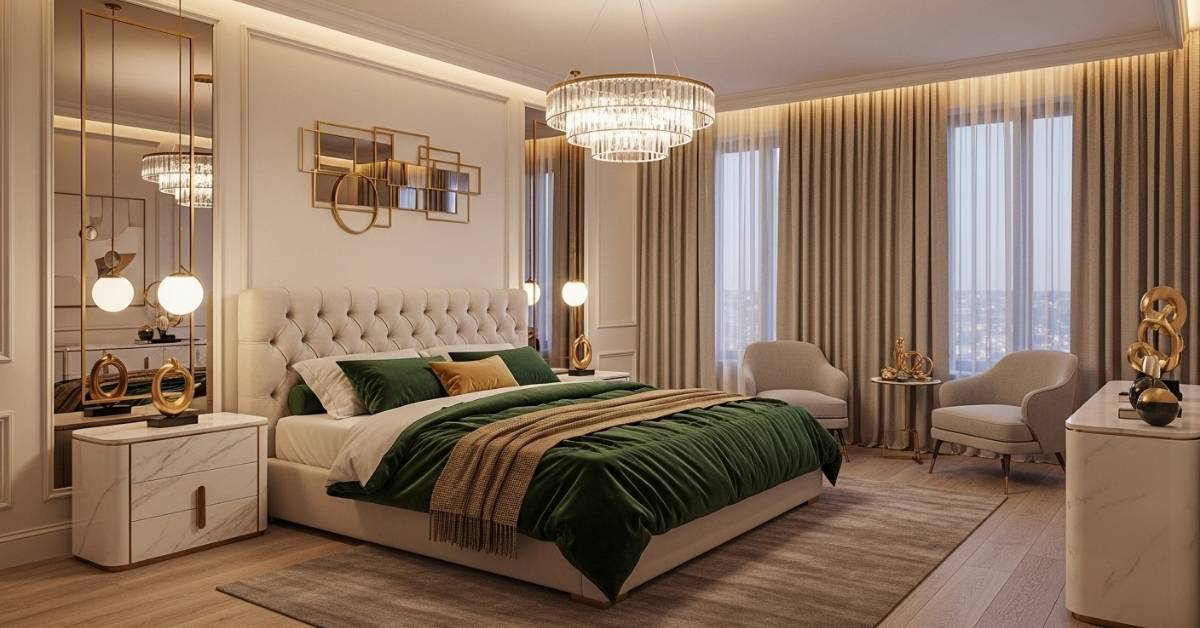
That “expensive hotel room” feeling isn’t reserved for five-star suites and it definitely isn’t reserved for people with five-star budgets. More and more people are figuring out that a bedroom that feels calm, layered, and polished usually comes down to a handful of deliberate choices, Luxury Bedroom Ideas on a Budget not a full renovation. The right bed placement. A light source you actually want to be near. Textures that don’t compete.
If your bedroom currently feels like it’s almost there but something’s off, the layout feels flat, the lighting is harsh, or it just doesn’t feel like a room you’d want to slow down if these ideas are for you. Most of them cost under $100 to execute. Some cost nothing at all.
Layer Your Bedding Instead of Buying a New Set

A single flat duvet on a bed reads as functional. Stack it with a duvet, a folded waffle-knit throw across the bottom third, and two different-textured pillow covers in the same tonal family and the same bed looks like it belongs in an editorial shoot. The eye reads depth as effort, and effort reads as expense. In my experience, the throw placement matters most: drape it slightly off-center rather than folded perfectly flat. That asymmetry is what looks intentional vs. staged. This works especially well in small bedrooms where you can’t add much furniture; the bed itself becomes the focal point.
Mount Your Curtains as High as Possible
If your curtains start at the window frame and end at the sill, the room will always feel low regardless of how nice everything else looks. Hang the rod 4–6 inches below the ceiling, use curtains that graze the floor (or pool slightly), and the same room will feel dramatically taller. This is one of the few layout tricks that costs nothing beyond longer curtain panels and the visual difference is immediate. Linen or linen-look panels in ivory or warm white read as expensive without the price tag. Works in any size room, but the effect is most striking in spaces with lower ceilings where height is already at a premium.
Read More About : 27 Minimalist Clean Bedroom Ideas That Actually Make Your Space Feel Bigger and Calmer
Use a Tall Headboard to Anchor the Bed Wall

When a bed sits low and the wall behind it is empty, the room feels unresolved. A tall upholstered headboard, even a simple slab in boucle or linen fabric fills vertical space and immediately makes the bed feel intentional. You don’t need to buy an expensive one: DIY versions using plywood and batting run under $80 and look nearly identical to retail options three times the price. The headboard also solves the “what do I hang above the bed” problem, since a tall headboard means you don’t need art at all. Best for renters or anyone who can’t paint an accent wall.
Replace Overhead Lighting with Layered Warm Sources
Overhead lighting in a bedroom does the room no favors. It’s flat, it casts unflattering downward shadows, and it makes even beautiful furniture look like a showroom floor. Swap to layered sources: two table lamps on nightstands, a floor lamp in the corner, and if your layout allows a small LED strip along the back of the bed or beneath a floating shelf. The result isn’t just warmer; it creates visual zones that make the room feel larger by giving different areas their own light. Bulbs matter: 2700K is the sweet spot for warmth without going orange.
Add a Linen Bedskirt or Platform Bed Frame to Hide Under-Bed Storage

Nothing breaks the calm of a well-made bed faster than visible storage bins and tangled cords underneath it. A linen bedskirt (under $40 on most platforms) hides all of it and adds a finished, tailored look. Alternatively, a low platform bed with solid sides eliminates the problem entirely. The goal is a clean floor line when the space beneath the bed disappears visually, the room suddenly feels more composed. Especially useful in smaller bedrooms where under-bed storage is a necessity but you don’t want it to show.
Style Your Nightstand Like a Vignette, Not a Catch-All
The nightstand is one of the most photographed surfaces in a bedroom and also the most neglected. Clearing it down to three intentional objects: a lamp, one or two books, and a small ceramic tray or dish instantly reads as composed. The tray does real work here: it contains small items (jewelry, earbuds, lip balm) so they stop visually scattering across the surface. IMO, a small sculptural object or dried stem in a bud vase does more for the room than any decorative pillow. Works in any space; especially valuable when your nightstand is small or visually busy.
Create a Gallery Wall with Intentional Negative Space

Gallery walls work against you when frames are too close together and the wall becomes completely covered. Space them generously 6–8 inches apart minimum and the same collection of art suddenly breathes. Matching frame finish (all black, all natural wood, all white) is more important than matching frame size; mixing sizes within the same finish actually adds visual interest. Black-and-white photography or abstract neutral prints are the most budget-friendly way to fill frames without the art reading being cheap. This works on any wall size, but a smaller curated grouping on a large wall looks more intentional than a grid that fills edge to edge.
Use a Neutral Area Rug to Define the Sleeping Zone
A rug that’s too small floats in the room and doesn’t connect to anything. Size up: the rug should sit under the front legs of the bed at minimum, ideally extending 18–24 inches on either side so your feet land on it when you get up. In a bedroom, this matters functionally stepping onto cold hardwood in the morning doesn’t feel luxurious regardless of anything else you’ve done. Jute, cotton flatweave, or low-pile wool options are budget-friendly and add texture without competing with the bedding. Avoid high-contrast patterns unless you’re keeping everything else very neutral.
Position the Bed Against a Solid Wall (Not a Window)

Bed placement is the most underrated layout decision in bedroom design. Placing the bed against the window disrupts light, privacy, and the visual weight of the room. Against a solid wall, ideally the one directly across from the door, the bed becomes the clear focal point when you walk in, and the window becomes a secondary light source that works with the room instead of behind it. In smaller rooms, this placement also opens up floor space on at least two sides of the bed, which improves flow and makes the room feel less cramped. Start here before anything else.
Add a Bench or Ottoman at the Foot of the Bed
A bench at the foot of the bed does three things: it adds a layered, hotel-room quality to the composition; it provides a functional surface for getting dressed; and it visually grounds the bed so it doesn’t float in the room. Storage ottomans serve the same purpose with the added bonus of holding extra blankets or pillows. The key is proportion the bench should be roughly 2/3 the width of the bed, no wider. Too wide and it blocks circulation; too narrow and it reads as an afterthought. Thrifted or flat-pack options are easy to reupholster if the original fabric doesn’t fit your palette.
Swap Plastic Hardware for Aged Brass or Matte Black

Hardware is the jewelry of furniture. Swapping stock plastic knobs on a cheap dresser or nightstand for aged brass, brushed nickel, or matte black pulls takes under an hour and costs $20–$40 total. The finish change is often enough to make a flat-pack piece read as intentional design. In 2026, unlacquered brass with a natural patina is particularly strong; it adds warmth without feeling dated. The visual contrast between quality hardware and simple furniture actually works in your favor; it draws the eye and signals care. Renters can do this without permanent changes.
Use a Single Oversized Mirror to Expand the Room
A large mirror opposite or adjacent to a window does two things simultaneously: it bounces daylight deeper into the room and doubles the apparent depth of the space. The leaning floor mirror has become a staple for exactly this reason, no installation required, easy to reposition, and it reads as intentional design even at budget price points. Warm wood or metal frames work better in most bedrooms than frameless mirrors, which tend to feel more clinical. Avoid positioning mirrors directly across from the bed if that bothers you at night. This is one I’d actually recommend trying first because the spatial impact is immediate and the setup takes five minutes.
Introduce One Organic Texture to Break Up Flat Surfaces

A bedroom that’s all smooth surfaces, painted walls, linen bedding, polished wood starts to feel flat, even when the palette is beautiful. Adding one organic texture, a rattan basket, a terracotta pot, and a woven throw creates the contrast that makes everything else look more intentional. This isn’t about adding more stuff; it’s about surface variation. Dried botanicals (pampas, eucalyptus, dried cotton stems) work especially well because they add height, softness, and warmth without requiring maintenance or competing with the color palette. Budget: under $30.
Read More About : 31 Neutral Bedroom Decor Aesthetic Ideas That Feel Calm, Curated, and Completely Livable
Create a Cozy Reading Nook with a Single Chair and Floor Lamp
If your bedroom has a corner that’s doing nothing, a chair-and-lamp setup turns dead space into the most appealing part of the room. It also changes how the room functions. A bedroom with a reading nook doesn’t feel like just a place to sleep; it feels like a retreat. The chair doesn’t need to be expensive; a secondhand armchair recovered in a simple boucle or linen reads as intentional in the right setting. The floor lamp should arc over the chair slightly rather than sit beside it. That overhead angle is more useful for reading and looks more editorial.
Paint an Accent Wall in a Deep, Muted Tone

A deep accent wall behind the bed is one of the most cost-effective ways to make a bedroom feel designed rather than default. In 2026, deep olive, warm charcoal, rust-adjacent terracotta, and muted navy are all performing strongly in bedroom spaces; they add warmth and intimacy without darkening the whole room. The wall behind the bed is the right wall: it frames the bed like a built-in backdrop. One gallon of paint covers the average bedroom accent wall and costs $30–$50. Renters should check their lease, but many allow paint with a written notice of intent to repaint before moving out.
Use Matching Bedside Lamps for Visual Symmetry
Symmetry is the fastest path to a bedroom that looks considered. Two matching lamps, even inexpensive ones on matching or similar nightstands, create a visual frame around the bed that immediately reads as intentional. Mismatched lamps work in eclectic spaces, but in a bedroom where the goal is calm and polish, matching hardware signals intention. Ceramic bases with simple linen shades are the most forgiving option across different styles and budgets. Placement matters: the base of the lampshade should sit roughly at shoulder height when you’re sitting up in bed.
Incorporate Floating Shelves for Bedside Storage Without Bulk

Standard nightstands add visual mass and can make a small bedroom feel cluttered. Wall-mounted floating shelves solve the same storage problem while keeping the floor fully visible which makes the room feel airier and larger. A single deep shelf (10–12 inches) per side holds a lamp, phone, book, and small tray without looking crowded. In very small bedrooms or rooms with narrow clearance, this might be the only viable nightstand option. Installation takes about 30 minutes and the shelves themselves are typically $15–$30 each.
Fold a Throw Blanket Over One Chair Back
Throws look best when they’re not perfectly folded. Draped casually over the back of a chair, one end slightly lower than the other, they read as lived-in luxury, the kind of detail that photography stylists put in intentionally. A chunky knit or faux-cashmere throw in a neutral (sand, ivory, warm grey) adds texture without disrupting the color palette. This trick works anywhere in the room over a bench, a chair arm, or even across one corner of the bed but the chair placement gives it the most visual breathing room.
Use Scent as a Layering Tool

A room that smells intentional feels more premium than one that doesn’t, full stop. This isn’t about overpowering fragrance, it’s about a subtle, consistent scent that you associate only with your bedroom. A small diffuser with a single clean note (sandalwood, cedar, clean linen), a linen spray used after making the bed, or a simple soy candle during evenings creates a sensory layer that no amount of styling fully replaces. Budget options (IKEA, Paddywax, Amazon basics) work just as well as high-end ones for bedroom use. The room becomes more memorable and more calming both real benefits that cost under $25.
Organize Visible Storage with Matching Containers
Clutter doesn’t make a room feel cheap, visible disorganized clutter does. When storage containers match in tone (all natural, all white, all matte black), the same amount of stuff looks composed. A ceramic dish for jewelry, a woven basket for extra blankets, a lidded linen box for miscellaneous items each is under $20, and together they turn a cluttered surface into a considered display. The rule is palette consistency, not brand consistency; mixing materials within the same color family (natural jute + cream ceramic + warm wood) reads as intentional.
Introduce Soft Plants for Scale and Warmth
[Image: bedroom corner with large fiddle-leaf fig or monstera in simple cement pot, natural morning light from window, warm neutral walls, the plant visible from the doorway]
A large plant in a bedroom corner does something furniture can’t: it adds organic height, movement, and warmth simultaneously. The scale of a floor plant (fiddle-leaf fig, monstera, bird of paradise) makes the room feel more considered, and the contrast between soft foliage and structured furniture adds the kind of depth that even expensive decor sometimes misses. Simple cement or terracotta pots keep the look grounded and budget-friendly. In bedrooms with lower light, pothos, ZZ plants, or snake plants are better options and equally effective visually. Position near the window rather than against it to keep the plant healthy and the light direction working for you.
What Actually Makes These Budget Luxury Bedroom Ideas Work
There’s a pattern across every idea on this list, and it’s worth naming directly: luxury in a bedroom is mostly about resolution. A resolved room is one where nothing is fighting for attention, every surface looks intentional, and the light is warm enough to feel like a choice rather than a default.
The ideas that have the highest impact tend to address one of four things: light quality (lamps over overhead, warm bulbs, mirror placement), visual hierarchy (tall headboard, curtains to ceiling, bed on solid wall), surface editing (matching containers, cleared nightstands, intentional vignettes), or texture layering (throws, organic materials, varying finishes). When even two of these work together, the room shifts.
Budget constraints don’t change any of this logic; they just require more sequencing. Doing the layout work first (bed placement, curtain height) costs nothing and unlocks the rest.
Budget Luxury Bedroom Ideas: Quick Reference
| Idea | Best For | Space Type | Approx. Cost |
| Layered bedding | Any bedroom | All sizes | $20–$60 |
| Ceiling-height curtains | Low ceilings, renters | Small–medium | $30–$80 |
| Tall upholstered headboard | Empty bed walls | All sizes | DIY: $60–$80 |
| Layered warm lighting | All bedrooms | All sizes | $40–$120 |
| Oversized area rug | Cold floors, floating furniture | Medium–large | $50–$150 |
| Floating shelf nightstands | Small rooms, no clearance | Small | $30–$60 total |
| Accent wall in deep tone | Renters (check lease), owners | All sizes | $30–$50 |
| Hardware swap | Flat-pack furniture refresh | N/A | $20–$40 |
| Leaning floor mirror | Dark or small rooms | Small–medium | $50–$120 |
How to Make a Small Bedroom Feel Like a Luxury Space Without Adding More Furniture
The instinct when a room feels flat is to add something. In small bedrooms especially, that’s usually the wrong direction. More furniture makes a compact room feel tighter, not richer. Here’s what works instead:
Fix the light first.
In small rooms, overhead lighting creates a flattened, evenly-lit look that removes all shadow and depth. Switching to table lamps and a floor lamp introduces shadow and shadow is what makes a room look dimensional. A room with defined shadow zones reads as larger because the eye can’t fully map it at once.
Use the vertical plane.
Floor space in a small bedroom is finite; the walls aren’t. Ceiling-height curtains, a tall headboard, floating shelves, and vertically-framed art all move the eye upward, which makes the horizontal footprint feel more generous. This is one of those spatial tricks that takes 30 minutes to implement and changes how the room reads completely.
Edit aggressively.
In a small bedroom, every visible surface competes for attention. One carefully styled nightstand reads as designed; three items on a nightstand surrounded by four other surfaces of miscellaneous objects reads as cluttered. The goal is for everything visible to look chosen.
Use one statement piece instead of many small ones.
A single large plant, one oversized mirror, or one well-placed bench does more for a small room than five smaller decorative objects scattered across it. Scale is important: one large item anchors the space; multiple small items fragment it.
FAQ’s
What makes a bedroom look expensive without spending a lot?
The biggest factors are light quality, visual order, and texture layering. Warm lighting from table lamps, a cleared and styled nightstand, and bedding with at least two different textures (duvet + throw + varying pillow covers) do more for a bedroom’s perceived quality than any single piece of new furniture.
How do I make a small bedroom look luxurious?
Start with layout: bed on a solid wall (not under the window), curtains hung near the ceiling, and a large enough rug. Then reducing what’s visible clutter in a small room is amplified. One large mirror opposite the window adds depth and bounces light.
Is an accent wall worth it in a rented bedroom?
Often yes, depending on your landlord and lease terms. Many landlords allow painting with advance notice and the understanding you’ll repaint before leaving. The cost is $30–$50 in paint and a few hours of time the return in visual impact is significant, especially if the wall is behind the bed.
What’s the best rug size for a bedroom?
For a queen or king bed, an 8×10 or 9×12 rug is the right starting point. The rug should extend at least 18 inches on the sides and foot of the bed. A rug that only sits in front of the bed without going underneath it reads as decorative, not functional, and tends to look too small.
Do matching nightstands and lamps actually make a difference?
Yes, symmetry around the bed is one of the most effective visual signals that a room is designed rather than assembled. It doesn’t have to be expensive: two identical table lamps from IKEA on two similar-height surfaces is enough. The match matters more than the price point.
Floating shelves vs. traditional nightstands which is better for small bedrooms?
Floating shelves for small bedrooms, traditional nightstands for medium or larger rooms. Floating shelves keep the floor visible, which makes narrow rooms feel wider. Traditional nightstands add storage depth (drawers) and visual weight that larger rooms can absorb without feeling cramped.
What lighting is best for a luxury bedroom feel?
Aim for 2700K bulbs (warm white) across all sources. Layer at least two light sources per side of the bed: a table lamp plus something lower (like a plug-in sconce or LED strip behind the headboard). Overhead lighting should either be on a dimmer or avoided entirely during evening use.
Conclusion
A bedroom that feels calm, polished, and genuinely comfortable doesn’t require a renovation budget; it requires sequencing decisions in the right order. Get the layout right first (bed placement, curtain height, rug size), then address light quality, then layer in texture and small styling edits. Most of the ideas here build on each other, and the combined effect of even four or five of them done well outperforms a room where one expensive element is surrounded by nothing else that’s been considered.
Start with one or two ideas that address your specific friction point, harsh lighting, a flat bed wall, visible clutter and work from there. The goal is a room that feels like a choice was made in every corner, and that’s entirely achievable on a careful budget. Pick one thing this week and see how it shifts the rest of the room.
