

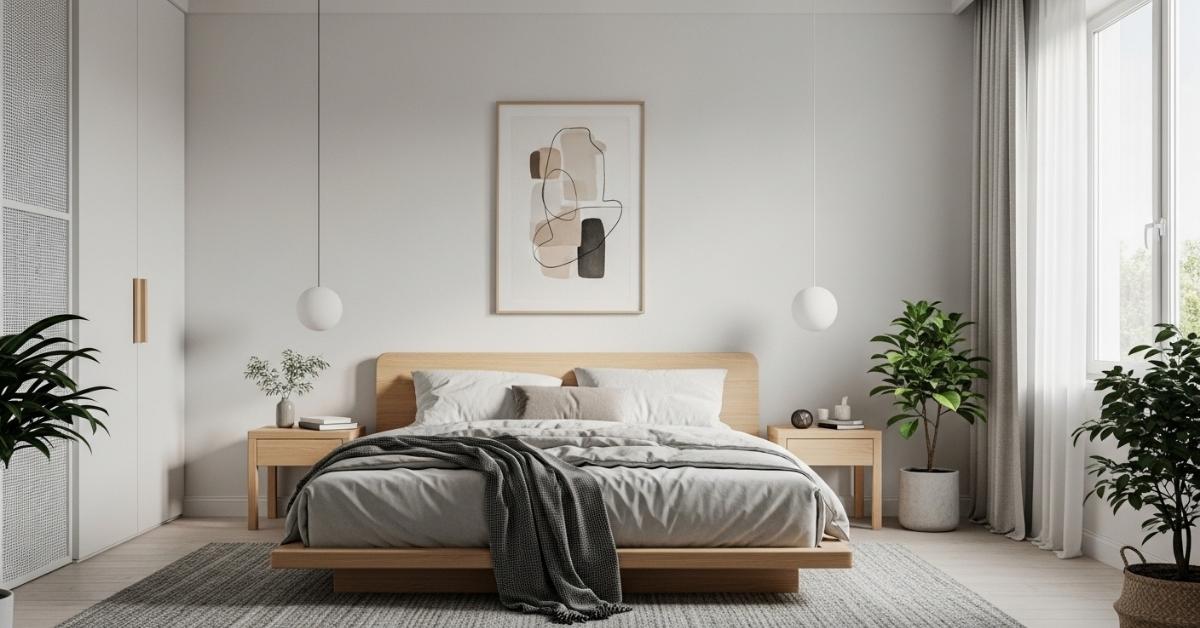
There’s a specific kind of tiredness that comes from walking into your bedroom and feeling like the room itself is cluttered before you’ve even sat down. Too much furniture,Minimalist Clean Bedroom Ideas shelves full of things you don’t use, lighting that’s either too harsh or too dim it adds up. The result is a space that’s technically functional but never quite restful.
Minimalist bedrooms fix this. Not by making rooms look stripped or cold, but by editing down to what genuinely serves the space. The best examples feel deliberate without feeling sterile and in 2026, the direction is moving away from stark white-on-white and toward warmer neutrals layered with natural textures. It’s still minimal, but it breathes.
If your bedroom feels cluttered, cramped, or just perpetually unfinished, this list is built around practical setups that work in real homes, not just staged photos.
Low Platform Bed on Natural Wood Frame

A low platform bed changes the visual math of a room immediately. When the tallest piece of furniture drops to around 14–18 inches off the floor, the ceiling reads higher and the room feels less packed. Pair a simple wood frame something in walnut, oak, or even raw pine with linen bedding in off-white or warm sand, and you get a grounded, calm look that doesn’t require decorating around it.
This works especially well in rooms under 150 square feet, where a tall headboard eats visual space. It also works for renters who want impact without installation. The trade-off is storage underneath, so it pairs best with other built-in or under-bed solutions, or rooms where you’ve already dealt with clutter elsewhere.
Floating Nightstands to Free Up Floor Space
Floor-standing nightstands take up more visual real estate than their footprint suggests. A floating shelf or wall-mounted table at bed height gives you the same function: lamp, book, glass of water while keeping the floor plane clear. That continuous stretch of visible floor is one of the fastest ways to make a small bedroom read as larger.
Go for a shelf depth of around 10–12 inches and mount it flush with your mattress height. Natural wood, matte white, or black metal all work depending on your base palette. This is a particularly good option in rooms where the nightstand sits right next to a doorway or in tight corridors alongside the bed.
Neutral Linen Bedding Layered With a Single Texture Throw

Minimalist bedding isn’t about having less, it’s about having fewer competing elements. A linen duvet cover in warm white, cream, or pale stone, plus one textured throw (boucle, waffle knit, or chunky cotton) at the foot of the bed, creates enough visual interest without becoming a styling project every morning.
Skip the decorative cushion towers. Two sleeping pillows in simple white cases are enough. The result is a bed that looks pulled-together in 30 seconds, which matters more than it sounds in rooms where the bed is the dominant visual anchor.
Read More About : 31 Neutral Bedroom Decor Aesthetic Ideas That Feel Calm, Curated, and Completely Livable
Sheer Curtains With Blackout Lining for Light Control
Most minimal bedrooms rely on natural light as a design element, not an afterthought. Floor-length sheer curtains in white or ecru let diffused light fill the space during the day, which softens shadows and makes the room feel airy. Adding a blackout lining keeps the look from the outside while giving you actual sleep functionality.
Mount the rod as close to the ceiling as possible and let the curtains break slightly at the floor; this creates vertical height without a single piece of furniture. For renters, tension rods in the window frame work for lighter linen panels and skip the drilling entirely.
Built-In or Recessed Wall Shelving Instead of Freestanding Units

Freestanding shelving units bring a lot of mass into a room. Even slim ones cast shadows and take floor space. If the layout allows, a recessed niche or shallow built-in (as little as 6–8 inches deep) gives you display and storage without the visual weight of a standalone piece.
In older homes this sometimes means working with existing alcoves. In newer construction, it can be as simple as framing a section of drywall. The key in a minimalist bedroom is keeping what goes on those shelves edited one plant, a few books, nothing decorative that doesn’t earn its place.
Monochromatic Wall Color Matched to Bedding
Matching your wall color to your bedding not identically, but within the same tonal family creates a cocoon effect that reads as intentional rather than underdressed. A warm greige wall with cream linen bedding, or a soft sage green with natural white, pulls the eye across the room smoothly instead of stopping at each element.
This works particularly well in rooms without much natural light, where contrast can feel stark rather than crisp. The tonal approach makes the space feel larger and more continuous. In my experience, this one change does more for a bedroom’s sense of calm than almost any furniture decision.
Pendant Light Over Each Nightstand Instead of Table Lamps

Table lamps on nightstands add height and clutter to a surface that’s already doing a lot of work. Swapping to pendant lights hung at nightstand height typically around 20–24 inches below the ceiling clears the surface and adds a considered, architectural quality to the room.
Use matte globe bulbs or simple linen shades for warmth without glare. For renters without ceiling outlet access, plug-in pendants with a visible cord in black or natural linen work just as well and don’t require any rewiring. This is one I’d actually recommend trying first because the before-and-after difference is immediate and costs less than most furniture upgrades.
Full-Length Mirror Leaned Against the Wall
A full-length mirror in a minimalist bedroom does two things: it gives you a functional place to check your outfit, and it bounces light across the room in a way that feels natural rather than staged. An oversized mirror leaned against the wall rather than hung flat reads more casual and architectural, less like a bathroom addition, more like a considered piece.
In smaller bedrooms, position it where it can reflect a window. Even in north-facing rooms, this amplifies whatever ambient light exists. Stick with a thin black metal frame or a simple natural wood surround to keep it from becoming a statement piece when the rest of the room is quiet.
Concealed Wardrobe With Flush Panel Doors

Open clothing and visible storage is one of the fastest routes to a bedroom feeling chaotic. Floor-to-ceiling wardrobes with flat panel doors, no decorative trim, no visible hinges, push-to-open or bar-pull hardware read as part of the wall rather than as furniture. The room retains its calm even when the inside of the wardrobe is less curated.
This is a slightly larger investment than most items on this list, but it’s worth mentioning because it solves one of the most stubborn minimalist bedroom problems: clothing storage that doesn’t fight for visual attention. If full built-ins aren’t an option, Ikea PAX units with custom flat panel fronts come very close at a fraction of the price.
Bed Placed Against the Wall to Create Open Movement Space
Centering a bed in a small bedroom is sometimes the wrong instinct. Pushing it to one wall or into a corner frees up floor space on the open side and gives the room a single clear pathway which is what makes a space feel organized even with the same amount of furniture.
This layout also means one nightstand can go against the wall (wall-mounted or floating), which reduces the number of freestanding pieces. Honestly, most bedrooms under 120 square feet feel better with an asymmetric arrangement than a centered one.
Jute or Wool Area Rug Centered Under the Bed

A rug does more than add texture; it defines the sleeping zone and keeps the room from feeling like a collection of objects floating on a floor. In a minimalist bedroom, go for something neutral and low-pile: natural jute, flat-weave wool, or a simple cotton weave in cream, sand, or warm gray.
Size matters more than pattern. The rug should extend at least 24 inches on each side of the bed and 18 inches at the foot. A rug that’s too small looks like a bath mat and makes everything feel smaller. Get the sizing right and the bed becomes an anchor for the whole room.
Bare Walls With One Large-Scale Art Piece
Gallery walls and clustered frames are the opposite of minimal. One large-scale piece either a single photograph, an abstract painting, or even a framed textile makes a stronger statement and keeps the walls clean. Scale is important: a piece that reads correctly is usually wider than you’d think, ideally at least two-thirds the width of what it’s hanging above.
Black and white photography works well because it integrates with almost any neutral palette without competing. A single unframed canvas or a print mounted directly to the wall reads as more modern than a heavy ornate frame, and keeps the overall visual weight lower.
Read More About : 27 Romantic Bedroom Decor Ideas for Couples That Actually Feel Intimate (Not Cheesy)
Under-Bed Storage Drawers Instead of Visible Boxes

Visible storage under a bed, plastic bins, random boxes, luggage undermines the clean floor effect immediately. Platform beds with integrated pull-out drawers solve this cleanly: the storage is there, but the room doesn’t advertise it. This is especially useful in smaller bedrooms where a separate dresser would crowd the space.
If you have a standard bed frame without built-in storage, low-profile drawers on wheels that roll completely under the base work similarly. The rule is simple: if you can see it from the doorway, it breaks the calm.
Warm White or Soft Ambient Lighting Instead of Overhead Fluorescents
Overhead lighting in a bedroom is almost always the wrong tool for the job. A single overhead fixture, especially a ceiling flush-mount, flattens the room and creates a harsh, utilitarian feel. In a minimalist bedroom, layer two or three lower light sources bedside pendants or lamps, a small floor lamp if the room is large enough all at around 2700–3000K for a warm, amber-toned output.
The result is a room that changes its character at night in the right direction: quieter, warmer, more restful. Smart bulbs make this even more practical since you can dim everything without installing new hardware.
Simple Wooden Dresser With Hidden Hardware

A solid wood dresser with clean lines and recessed or push-open drawers stores clothing without becoming a visual event. The wood brings warmth that avoids the cold feeling some minimalist bedrooms tip into, and the lack of visible hardware keeps the silhouette simple.
This is also one of the more durable furniture investments a well-made solid wood piece in walnut or oak will outlast most trends. Look for pieces with dovetail joints and full-extension drawers. The quality shows in the details even when the design is deliberately quiet.
Plants Used Sparingly One Statement Piece, Not a Collection
Plant styling in a minimal bedroom is less about accumulation and more about placement. One substantial plant, a snake plant in a tall planter, an olive tree in a terra cotta pot, or a monster with room to spread, reads as a considered design decision. A collection of small plants reads as a hobby shelf.
Position the plant where it catches indirect light (most indoor plants prefer this anyway) and keep the planter simple: raw ceramic, matte white, or natural clay. The plant itself provides the organic texture; the pot should disappear into the background.
Linen or Boucle Cushion in a Single Accent Tone

If you want a single note of color or texture without complicating the palette, one or two cushions in a muted accent tone are more than enough. Think dusty terracotta, muted sage, or a warm camel, something that relates to the neutrals already in the room rather than contrasting sharply.
Two cushions of the same style placed symmetrically is the cleaner version. One cushion slightly off-center on a made bed is more editorial and works well if the rest of the room is very quiet. Avoid heavily textured or oversized cushions that add bulk rather than character.
Floating Bed Frame With No Visible Legs
A floating bed frame, one mounted directly to the wall or with a base that obscures the legs creates a clean horizontal line that makes the room feel more intentional. The floor plane stays continuous, which is especially effective on light hardwood or pale stone tiles.
Wall-mounted floating frames do require solid wall anchoring, but several furniture brands now offer freestanding frames that mimic the floating look by using a recessed base. The difference is visual more than structural: from the door, the bed appears to hover, and the room looks less furniture-heavy as a result.
Wabi-Sabi Textures: Linen, Raw Wood, Natural Stone

The wabi-sabi direction which has stayed relevant for a reason works specifically well in minimalist bedrooms because it replaces visual complexity with tactile variety. A linen duvet, raw wood bedside table, and a single piece of natural stone (a small tray, a lamp base, a vase) give a room enough sensory interest without adding objects.
The materials do the work that color and pattern would otherwise do. This is especially useful in rooms with very little natural light, where warm raw textures read as more alive than a clean white setup would.
Dark Accent Wall Behind the Bed
A single dark wall charcoal, deep forest green, muted navy behind the bed creates a sense of enclosure that makes the sleeping area feel deliberate without requiring a headboard or heavy furniture. The contrast with lighter bedding and furniture grounds the room.
This works in rooms of any size. In smaller rooms, the dark wall recedes rather than closes in, which paradoxically makes the space feel more intentional. In larger rooms, it prevents the bedroom from feeling oversized and cold. Keep the other three walls light to let the accent do its work.
Minimalist Bedside Lamp With Adjustable Arm

A wall-mounted articulated lamp solves the nightstand clutter problem by moving the light source off the surface entirely. Models with a swing-arm mechanism let you direct light exactly where you need it reading, ambient and fold back against the wall when not in use.
Matte black and aged brass are both durable finishes that age well. If wall mounting isn’t an option, a table lamp with a long adjustable arm on the nightstand works similarly: the arm tucks back, the shade is small, and the base takes up minimal surface area.
Minimal Entryway Into the Bedroom With a Single Hook or Hook Rail
The area just inside the bedroom door is often where clutter starts, clothing draped over chairs, bags on the floor, items that never made it to where they belong. A single slim hook rail with 3–4 hooks directly beside the door gives these items a legitimate home without taking over the room.
Keep the hooks minimal in design: matte black, brushed brass, or simple wooden pegs. This isn’t a focal point, it’s a functional solution that prevents the rest of the room from absorbing overflow. The chair becomes decorative again when it doesn’t have to be a clothing valet.
Thin Profile Metal Bed Frame in Black or Brushed Steel

A thin metal bed frame in black or brushed steel occupies the room visually without dominating it. The frame outlines the bed without adding mass; you see the shape rather than the furniture. Paired with simple linen bedding, this works especially well in rooms where the floor is also dark, because the frame transitions between the two tones without abruptness.
Look for frames with a headboard height between 20–30 inches tall enough to be functional, low enough that it doesn’t bisect the wall. Slatted metal bases keep airflow under the mattress and eliminate the need for a box spring, which reduces the overall bed height by 6–8 inches.
Storage Ottoman at the Foot of the Bed
A storage ottoman at the foot of the bed does triple duty: seating, surface, and hidden storage. In minimalist bedrooms where every piece needs to justify its presence, this is one of the easiest multi-use wins. Extra bedding, seasonal clothing, bulkier items they all go inside, and the top stays clean.
Choose an upholstery that relates to your bedding boucle, linen, or a plain weave cotton in a coordinating neutral. Keep the height low enough that it doesn’t block the view of the bed from the doorway. Around 15–18 inches is typical for a bedroom setting.
Indoor-Outdoor Neutral Rug for Easy Maintenance

Flat-weave indoor-outdoor rugs have improved significantly in texture and design. They clean easily, don’t hold pet hair or dust like high-pile options, and sit lower to the ground which matters under beds with minimal clearance. In a minimalist bedroom where the rug is a neutral base rather than a design statement, this is a practical choice that doesn’t read as a compromise.
Look for natural-looking tones: sand, pale jute, warm ivory. The material now reads very similarly to sisal or wool at first glance, and the maintenance difference is significant over time.
Reading Chair in Boucle or Linen in the Corner
A single reading chair in the corner of a bedroom adds function and a softer visual anchor than a second dresser or shelving unit would. It’s also a genuinely useful place to put tomorrow’s clothes without using the bed or floor. Choose a smaller silhouette: a barrel chair, a low armchair, or an egg-style seat that doesn’t push into the room.
In boucle or linen, the chair reads as warm and considered without competing with the bed for attention. Keep the floor beside it clear or add a very small side table, one surface, one lamp, nothing else.
Scent and Soft Sound as the Invisible Layer

This is the one that often gets left out of visual design lists: a minimalist bedroom that looks calm and feels calm requires more than furniture placement. A simple ceramic diffuser with a single scent (cedarwood, sandalwood, or clean linen), a small speaker tucked out of view, and a bedtime routine that doesn’t start on a phone screen are the functional elements that make the design work in practice.
I’ve noticed this tends to be what separates bedrooms that photograph well from bedrooms that actually rest well. It’s not decorating it’s designing for the experience of being in the room, not just looking at it.
What Actually Makes These Ideas Work
The ideas above range from a furniture swap to a light bulb change, but the common thread is spatial logic. Each one either clears the floor plane, reduces visual clutter on the walls or surfaces, improves how light moves through the room, or adds a functional purpose to something that would otherwise just take up space.
The mistake most people make in minimalist bedrooms isn’t adding too much, it’s choosing the wrong things to remove. A bare room without warmth or function isn’t minimal, it’s just empty. The goal is a room where everything present earns its place: the bed is comfortable, the lighting works for how you actually use the room, the storage solves a real problem, and the materials bring enough texture that the room doesn’t feel sterile.
Start with the floor. If the floor is visually clear, no visible bins, no chair covered in clothes, no visible cable mess the room reads as 70% done regardless of what else is in it.
Minimalist Bedroom Setup Guide
| Idea | Best Space Type | Main Benefit | Problem It Solves |
| Low platform bed | Small bedrooms under 150 sq ft | Opens vertical space | Room feels cramped |
| Floating nightstands | Narrow bedside spaces | Clears floor plane | Crowded circulation |
| Concealed wardrobe | Any size room | Hides clothing storage | Visible clutter |
| Pendant lights | Rooms with limited surface space | Frees nightstand surfaces | Too much on surfaces |
| Dark accent wall | Any bedroom size | Grounds the sleeping area | Room feels unfinished |
| One large art piece | Rooms with plain walls | Adds focus without clutter | Walls feel bare |
| Storage ottoman | Rooms with no closet overflow space | Adds hidden storage | Visible extra items |
| Floating bed frame | Modern, small-to-medium rooms | Creates seamless floor | Room feels furniture-heavy |
| Floor-length sheer curtains | Rooms with good windows | Amplifies natural light | Harsh or dim lighting |
Common Minimalist Bedroom Mistakes That Make Your Space Feel Smaller or Cluttered
Rugs that are too small.
This is one of the most common layout errors in bedroom styling. A rug that only sits under the foot of the bed or worse, only under the nightstands breaks the room into disconnected zones and makes the bed feel like it’s floating in the wrong way. Size up one level from what you think you need.
Too many light sources competing.
Minimalism in lighting doesn’t mean fewer lights, it means fewer types of lighting that don’t relate to each other. Three different lamp styles, each a different shade and finish, creates noise. Two or three sources in the same finish family, all at the same color temperature, create a cohesive ambient layer.
Curtains mounted at window-frame height.
Curtains hung at the top of the window frame rather than at ceiling height make the ceiling look lower and the window look smaller. Mounting the rod within 4–6 inches of the ceiling even on a standard window visually adds 2–3 feet of perceived height to the room.
Nightstands that don’t match the bed height.
A nightstand that sits 4+ inches below your mattress means you’re reaching down for your water glass at 2am, which is a functional problem. But visually, a large gap between mattress and nightstand surface also makes the bed look off-balance. Aim for the surface to sit level with or no more than 2 inches below the top of the mattress.
Visible cables.
In a room where every element is edited, a tangle of charging cables beside the bed breaks the entire visual logic. Clip cables along the back of the nightstand, use a small charging dock, or mount a simple outlet shelf behind the headboard. It’s a small fix with an outsized effect.
FAQ’s
What is the key principle of a minimalist clean bedroom?
A minimalist bedroom prioritizes function and visual calm over decoration. The core approach is keeping surfaces clear, choosing furniture with clean lines and concealed storage, and using a cohesive neutral color palette so the room doesn’t draw attention to individual objects.
How do I make a small bedroom look minimalist without feeling empty?
The goal isn’t removing everything it’s choosing fewer things that work harder. A textured linen duvet, one natural wood piece, and a floor-length curtain mounted at ceiling height give a small room warmth and scale without visual clutter. Texture does the job that excess decoration would otherwise do.
Do minimalist bedrooms work for renters who can’t paint or drill?
Yes, most of these ideas require no permanent changes. Floating nightstands can be replaced with freestanding narrow shelves. Ceiling-height curtains work on tension rods for lightweight panels. Floor-leaning mirrors, storage ottomans, and platform beds all create significant impact without touching the walls.
Low platform bed vs. standard frame which is better for a small bedroom?
A low platform bed generally works better in rooms under 150 square feet because it lowers the visual center of gravity and makes the ceiling feel higher. A standard frame is easier to store things under but draws more attention to itself. If storage is the priority, a platform bed with integrated drawers solves both problems.
How many colors should a minimalist bedroom use?
Three at most: a base neutral (walls and main furniture), a secondary tone (bedding or curtains in a close-but-not-identical shade), and one accent (a cushion, a plant pot, a throw) in a muted version of one color. The accent should relate to the base palette rather than contrast with it sharply.
Is it worth investing in a built-in wardrobe for a minimalist bedroom?
For a long-term home, yes concealed storage is one of the most effective changes you can make for a clean bedroom aesthetic. For renters or shorter-term spaces, Ikea PAX wardrobes with flat custom-front panels come close to a built-in look at a significantly lower cost.
What lighting setup works best for a minimalist bedroom?
Layer two or three warm-toned light sources at bed level or lower bedside pendants, a small table lamp, possibly a floor lamp in a corner. Avoid relying on overhead lighting as the primary source. Aim for 2700–3000K bulbs for a warm, restful output that shifts the room’s atmosphere in the evening.
Conclusion
A minimalist bedroom doesn’t require starting from scratch or spending a lot. It requires being more intentional about what stays and how it’s arranged. Clear floors, considered lighting, concealed storage, and materials with enough texture to feel warm are the practical levers, and most of them don’t involve buying anything new.
Start with one or two ideas that address your specific problem: if the room feels cluttered, focus on storage solutions first. If it feels cold or unfinished, look at lighting and textiles. Small, deliberate changes compound quickly in a bedroom, where the space is simple enough that each adjustment is visible.
