

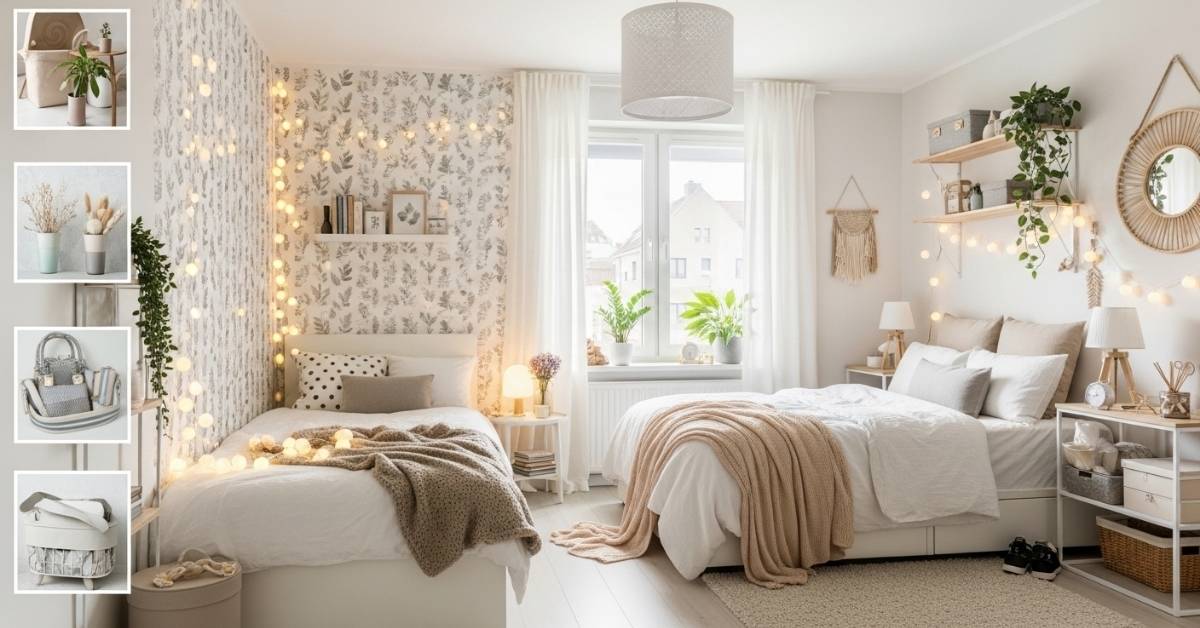
You know that moment when you move into a rental and the bedroom just feels like a placeholder white walls, beige carpet, overhead lighting that belongs in a hospital? DIY Apartment Decor Ideas for Renters Bedroom That’s not a personality problem. It’s a layout and layering problem, and the good news is that most of it is fixable without a drill, a lease violation, or a budget that makes you nervous.
If you’re working with a rental bedroom that needs to feel like your space is functional, warm, and worth coming home to, these ideas are built for exactly that situation. No permanent fixtures, no landlord calls, no regrets.
Peel-and-Stick Wallpaper on One Accent Wall

An entire room of removable wallpaper gets expensive and risky. One wall, done right, changes everything. The key is choosing a textured option (grasscloth or linen-look) rather than a loud print, so the effect reads as intentional warmth rather than temporary decoration. Place it behind the bed to create a defined headboard zone without mounting anything. In my experience, this works best when the wallpaper tone is slightly warmer than the rest of the room; it pulls the eye back and makes the bed feel anchored.
This solves the blank white wall problem that’s almost universal in rentals, and because the material is repositionable, there’s no adhesive residue when you move out. It works especially well in narrow bedrooms because it adds depth on the focal wall without taking up floor space.
Freestanding Wardrobe to Add Storage and Visual Weight
Most rental bedrooms have either too little closet space or none at all, and shoving a clothing rack in the corner rarely looks pulled together. A freestanding wardrobe especially in a dark wood or matte black finish solves the storage problem while adding real furniture weight to the room. Push it flush against the wall, add a basket or two on top, and suddenly the room has structure. The visual effect is a more defined bedroom zone, especially useful in studio apartments where the sleeping area bleeds into everything else.
Go for something with simple paneling if your walls are white it creates enough contrast to feel intentional without overwhelming the space.
Floor-to-Ceiling Curtains Hung High and Wide

This is one of the most effective spatial tricks available to renters, and it costs less than most people think. Hanging curtain rods (using tension rods or removable adhesive hooks rated for the weight) as close to the ceiling as possible and extending the rod 8–10 inches past each side of the window makes windows look significantly larger and ceilings feel taller. In bedrooms specifically, layering a sheer panel under a blackout curtain gives you both daytime softness and actual sleep-quality darkness.
The movement of fabric also adds a warmth that painted walls simply don’t. This works in nearly every rental layout, and it’s one of the first things I’d recommend trying before anything else.
Read More About : 27 Bedroom Wall Decor Ideas Above Bed That Make the Whole Room Feel More Intentional
Bed Frame With Built-In Storage to Eliminate Under-Bed Clutter
Under-bed storage bins exist, but exposed plastic bins sticking out from under your bed do a lot of visual damage. A bed frame with integrated drawers removes that clutter from sight entirely, and the floor space around the bed stays clean which makes a small bedroom feel significantly more open. The lower profile of most storage bed frames also helps in rooms with lower ceilings.
This is especially practical in apartments where closet space is limited and off-season clothing, extra bedding, or shoes need to live somewhere. The investment is higher upfront, but it replaces the need for extra dressers or bins, which actually frees up square footage.
Renter-Friendly Gallery Wall Using Adhesive Strips

A gallery wall sounds commitment-heavy, but adhesive picture-hanging strips have improved enormously; the Command Large Picture Strips hold up to 16 pounds per pair, which covers most frame weights. The key to making this look right (rather than random) is treating the wall like a grid before you hang anything: lay the frames out on the floor first, photograph the arrangement, then transfer it to the wall. Use one or two frame finishes maximum mixing more than two creates visual noise rather than curated contrast.
In a rental bedroom, this works best above a desk, dresser, or short bookshelf somewhere it’s framed (literally) by furniture below it.
LED Strip Lighting Behind the Headboard for Ambient Depth
Overhead rental lighting is almost always unflattering, usually one central fixture that casts flat, shadowless light across the room. LED strips tucked behind a headboard or along the back edge of a floating shelf create a completely different atmosphere. The indirect glow adds depth, reduces eye strain, and makes the room feel intentionally designed rather than lit by default.
Warm white (2700K–3000K) is the range to stay in for bedrooms; cooler temperatures keep you alert, which is the opposite of what a bedroom should do. These plug directly into an outlet and peel off cleanly, making them genuinely renter-friendly.
A Statement Rug to Define the Sleeping Zone

Hard floors in rental bedrooms are common, and without a rug the space feels unfinished regardless of what else you do. The mistake most people make is buying a rug that’s too small. It sits in front of the bed rather than under it, and the effect is a floating rectangle on the floor. Go big: in a standard bedroom, a 8×10 rug should slide under the bottom two-thirds of the bed with 18–24 inches of visible rug on each side.
This single change does more spatial work than almost any other decor decision. It defines the sleeping zone, softens the room acoustically, and adds color or pattern without touching the walls.
Removable Tile Panels on a Plain Dresser
Rental furniture tends to be whatever was affordable when you moved which often means basic flat-front dressers that look temporary. Peel-and-stick tile panels (the kind designed for backsplashes) can be cut to fit drawer fronts and give an entirely different material feel without paint or modification. A warm wood-look or a textured stone panel on drawer fronts upgrades the dresser from “starter furniture” to something that looks considered.
This also works on the side panels of a nightstand or the back of a bookshelf where the wall shows through. Honestly, it’s one of the more underused renter tricks available.
Floating Shelves Using Adhesive Wall Anchors

Standard floating shelves require wall anchors and drilling but there are adhesive-mounted shelf solutions (like IKEA LACK shelves used with heavy-duty mounting tape, or purpose-built adhesive floating shelves) that hold 15–25 pounds when installed correctly on smooth painted drywall. In a bedroom, two shelves staggered vertically on one wall add vertical storage, get things off flat surfaces, and create a layered visual effect.
Keep styling minimal: one trailing plant, a few books stacked horizontally, a small lamp. The shelf should feel purposeful rather than collected.
Curtained Closet Conversion for Open-Concept Storage
Bi-fold closet doors are one of the most annoying things about rental bedrooms. They’re flimsy, they stick, and they eat into the room when open. Replacing them with a tension rod and a linen or velvet curtain panel is fully renter-reversible and often improves both the look and functionality of the closet. The curtain travels fully open, making it easier to access clothing, and when closed it looks cleaner than most bi-fold options.
Choose a curtain that’s the full height of the opening for the cleanest line.
Mirror Placement to Expand Visual Space

A large leaning mirror placed opposite or adjacent to the window bounces natural light across the room and makes the space read as larger than it is. This works specifically because of reflection geometry: the mirror doubles the perceived depth of the wall it faces. In narrow rental bedrooms, placing a full-length mirror on the narrower wall extends the perceived length of the room without adding any furniture mass.
No mounting required. Lean it against the wall, angle it slightly forward (it reads better than perfectly vertical), and let it do its work.
Read More About : 27 Aesthetic Boho Bedroom Decor Ideas That Actually Work in Real Homes
Peel-and-Stick Removable Tiles for Boring Floors
Beige vinyl or flat laminate floors are almost universal in rentals, and they’re one of the hardest things to live with aesthetically. Peel-and-stick vinyl planks especially in herringbone or wide-plank format go directly over existing smooth flooring and lift with a heat gun when you move. The visual effect of a wood-tone floor in a bedroom is significant: it makes the room warmer, photographs better, and works with almost every furniture finish.
Check that the existing floor is smooth and clean before applying bubbles are the main failure mode.
A Canopy Frame Over the Bed Without Ceiling Mounts

Bed canopies are typically associated with ceiling hooks which most rentals won’t allow without damage. Freestanding canopy frames (essentially four-post bed frames with a top rail) get around this entirely. Hang sheer panels from the frame and the effect is enclosure, coziness, and a defined sleeping zone within the larger bedroom. This reads especially well in high-ceilinged apartments where the room otherwise feels open in a cold way rather than an airy way.
Layered Bedding to Add Visual Depth Without Redesigning
A flat duvet on a bed looks finished but not designed. Layering adds dimension: start with a fitted sheet, add a duvet in a neutral tone, fold a different-textured throw across the lower third of the bed, and stack two or three pillows in varying sizes behind the sleeping pillows. The contrast between materials linen, cotton, knit is what makes this work, not the number of pieces. This is one I’d actually recommend trying first because the cost is low and the visual upgrade is immediate.
Removable Wallpaper Panels as DIY Headboard

If you don’t want to wallpaper an entire wall, a single large panel of removable wallpaper cut into a rectangle or arch shape creates a headboard effect directly on the wall. This works particularly well with darker or more graphic patterns, since the contrast with a white wall makes the shape readable. Measure the width of your bed plus about 10 inches on each side, and the height from the mattress to approximately 24–30 inches above the pillows.
The panel removes cleanly and leaves no residue.
String Lights Used Thoughtfully (Not Decoratively)
String lights get a bad reputation because they’re usually deployed without intention scattered across walls or wrapped around headboards in a way that reads as dorm-room decor. Used structurally to run along the top edge of a shelf, behind a curtain rod, or along the top of a window frame as a soft cove-lighting substitute they become ambient lighting rather than decoration. Use warm Edison-style bulbs (2200K–2700K range) and run them in a single, continuous line rather than layered loops.
The goal is light quality, not visual flair.
A Small Armchair in the Corner to Define a Reading Zone

Most bedroom corners are dead space, a bit of floor with a pile of whatever didn’t find a home anywhere else. A small chair (an accent armchair or even a large floor cushion and a low side table) creates a second functional zone within the bedroom, which has a big effect on how intentional the room feels. The chair doesn’t need to be used daily; its presence alone breaks the room out of single-function mode and creates visual interest in a corner that would otherwise fade.
A floor lamp positioned over the shoulder of the chair locks in the reading-nook feeling without overhead lighting.
Command Hook Pegboard for Renter-Safe Wall Organization
Pegboards typically require screws, but adhesive command hook grids (or even a series of well-spaced hooks) do the same organizational work in a bedroom. In rooms where closet space is limited, a grid of hooks near the entryway wall handles daily-use items bags, hats, scarves that would otherwise end up on chairs or the floor. Styled with some intention (things at the same height, grouped by type), it reads as intentional storage rather than a panic solution.
Plants as Architectural Elements

A single large plant in the bedroom, a snake plant, a rubber tree, or a monster in a floor-level pot does different work than a cluster of small plants on a shelf. Floor-level plants add height and fill vertical space in a way that furniture can’t without taking up floor area. They also soften corners, which is where rental rooms often feel most stark. Snake plants are particularly functional in bedrooms because they thrive in lower light and require infrequent watering.
Tapestry or Textile Wall Hanging as a Soft Art Alternative
Large art is expensive and sometimes difficult to hang safely with adhesive strips due to weight. A woven tapestry or textile wall hanging is lighter, more flexible, and often more visually interesting than a framed print at the same scale. Hang it above the bed using a wooden dowel and a single adhesive hook at each end the weight distributes well and the look is deliberate. Woven textures also add a warmth to rental bedrooms that prints don’t quite deliver.
Bedside Table Alternatives for Awkward Spaces

Standard nightstands don’t always fit the layout of a rental bedroom especially when the bed is positioned in a corner or the room is too narrow for furniture on both sides. A small upholstered stool, a wooden crate turned on its side, or even a stack of large books with a tray on top works equally well at function and looks more flexible than a piece clearly chosen because it was the right size. The key is to keep the surface at mattress height and limit what’s on it to things that earn the space.
Under-Shelf Lighting to Add Warmth to Dark Corners
The floor corner below a shelf or beside a wardrobe is often the darkest, most forgotten part of a bedroom. Plug-in under-shelf lighting (LED puck lights or a short strip light) aimed downward creates a layered light source that fills this zone without requiring electrical work or wall modifications. The effect is a warmer, more layered room atmosphere especially at night when the overhead fixture is off.
Folding Room Divider for Studio Apartment Privacy

In studio apartments, the bedroom doesn’t exist as its own room which makes sleep quality, focus, and general sense of personal space harder to maintain. A folding room divider (wooden, rattan, or fabric-paneled) creates a physical and visual boundary between sleeping and living zones without construction. Position it parallel to the foot of the bed, angled slightly, and the sleeping area instantly reads as its own space.
This is one of the most practical investments for studio renters.
Decorative Baskets as Floor-Level Storage
Open storage often looks cluttered, but the right container changes that. Large woven baskets at floor level against a wall, in a corner beside the wardrobe, or at the foot of the bed hold blankets, pillows, or accessories while adding warmth through texture. Rattan and seagrass materials work especially well in neutral rental bedrooms because they add visual interest without competing with any color scheme.
Painted (or Removable) Dresser Hardware Upgrade

This is the detail most people skip, and it’s one of the fastest ways to make budget furniture look intentional. Swapping out standard silver or plastic drawer pulls for matte black, brushed brass, or ceramic knobs costs between $2 and $8 per pull and requires only a screwdriver. Keep the old hardware in a labeled bag and swap back before you move out. The difference in perceived quality between stock hardware and an upgraded pull is significant at close range.
Curtain Room Divider for Walk-In Closet or Entry Zones
Adhesive curtain track systems (available for drywall ceilings) allow you to install a full-width curtain panel without drilling rated for lighter curtain weights and standard ceiling heights; they create room zones that feel architectural rather than improvised. In a bedroom where the entry opens directly into the sleeping area, a curtain drawn closed while sleeping adds privacy and reduces noise from adjacent rooms.
Bookshelf Styling as a Design Element, Not Just Storage

A bookshelf full of randomly arranged books is storage. A bookshelf where some books are stacked horizontally, some vertical, with small objects and plants filling the gaps, with a consistent color range that’s a design feature. In a rental bedroom, a styled shelf acts as built-in decor, a display surface, and storage simultaneously. The investment is time, not money.
Keep the color range of book spines in a two-to-three-tone family (neutrals plus one accent) and limit decorative objects to things that are genuinely interesting up close.
What Actually Makes These Ideas Work in a Rental Bedroom
Most renter-friendly decor advice focuses on individual pieces: a better rug, some new pillows, removable wallpaper. That’s useful, but the real gains come from understanding how layers interact. Here’s what to pay attention to:
Lighting is the foundation.
Rental bedrooms almost universally have insufficient and unflattering lighting. Before anything else, introduce at least two additional light sources below eye level: a floor lamp, a bedside lamp, under-shelf lighting, or LED strips. Once the lighting is layered, the rest of the room looks considerably more intentional regardless of what else changes.
Define zones even if you have one room.
A bedroom where every corner serves the same purpose (sleeping, and also bags-on-chairs, and also laundry-on-the-floor) feels unfinished. Even a single armchair in one corner, a dedicated bedside setup, and a bookshelf against another wall creates a room that reads as multi-functional and considered.
Contrast between materials matters more than color.
In a rental where you can’t paint the walls or replace the flooring, the visual interest in the room has to come from material contrast: a woven basket beside a smooth wooden dresser, a linen throw on a cotton duvet, a glossy lamp beside a matte wall. Rooms that use only one material category (all smooth, all soft, all matte) feel flat even when well-styled.
Scale your textiles to the room.
The most common mistake is undersized rugs and curtains that are too short. Both of these signal “I didn’t plan this” to the eye, even when everything else is nice. Go bigger than feels right before you buy.
Renter Bedroom Decor at a Glance
| Idea | Space Type | Problem It Solves | Renter-Safe? | Budget Level |
| Peel-and-stick accent wall | Any size | Blank white walls | Yes | $$ |
| Freestanding wardrobe | Small to medium | Storage shortage | Yes | $$$ |
| Floor-to-ceiling curtains | Any | Low ceilings, bare windows | Yes | –– –$ |
| Storage bed frame | Any | Under-bed clutter | Yes | $$$ |
| Gallery wall (adhesive) | Any | Empty walls | Yes | $$ |
| LED strip lighting | Any | Flat overhead lighting | Yes | $ |
| Large area rug | Any | Cold/hard floors, undefined space | Yes | |
| Leaning mirror | Narrow rooms | Dark, tight spaces | Yes | $$ |
| Canopy bed frame | Medium to large | Lack of warmth/enclosure | Yes | $$$ |
| Folding room divider | Studio apartments | No bedroom separation | Yes | $$ |
| Plant (large, floor-level) | Any | Stark corners | Yes | $ |
| Hardware upgrade | Any | Budget furniture looks cheap | Yes | $ |
Common Renter Bedroom Mistakes That Make the Space Feel Smaller
Undersized rug.
A 5×7 rug beside a queen bed just floats in the middle of the floor. The rug needs to go under the bed to properly anchor the space.
Too many light sources at the same height.
Three lamps all at desk height don’t create an atmosphere, they create a flat field of light. Vary heights: one floor lamp, one table lamp, one overhead source.
Furniture pushed against every wall.
This feels counterintuitive, but pulling furniture 2–4 inches off the walls creates more visual breathing room, not less. It makes the room feel less like a storage unit and more like a designed space.
Curtains hung at the window frame.
Hanging curtains at the window frame instead of at the ceiling height compresses the room vertically. Always hang high and wide.
Over-decorating instead of editing.
Rental bedrooms often accumulate objects because there’s a fear of empty space. Editing down to fewer, larger pieces reads as more intentional than many small ones.
FAQ’s
What decor is renter-safe in a bedroom?
Renter-safe decor means anything that doesn’t require drilling, permanent adhesive, or modification of surfaces. This includes peel-and-stick wallpaper, adhesive picture strips, tension rods, freestanding furniture, and removable LED strips. Always check your lease, but most of these are low-risk options for standard rental agreements.
How do I make a rental bedroom look more expensive?
Focus on lighting, scale, and material contrast rather than buying more pieces. Swap overhead lighting for layered lamp sources, upgrade drawer hardware, invest in one large quality rug, and use linen or textured bedding rather than synthetic-feel duvet covers. These changes have more visual impact than adding more decor.
What’s the best way to hang things in a rental bedroom without damage?
Command strips and adhesive hooks have improved significantly. Large Picture Strips hold up to 16 pounds per pair on smooth painted drywall. For heavier items, use a freestanding display approach: a leaning shelf, an easel, or gallery-wall arrangements that stay within strip weight limits. Always follow the manufacturer instructions for surface prep.
Can I put peel-and-stick wallpaper in a rental?
Generally yes, but results depend on the wall surface and the product quality. Peel-and-stick wallpaper works best on smooth, flat painted drywall. Textured walls or wallpaper-over-wallpaper situations cause lifting at edges. Always test a small section first and leave it for 24 hours before committing to a full wall.
How do I define a bedroom in a studio apartment?
A folding room divider, a large area rug under the bed, and a curtain track system are the three most effective tools. The goal is to create a visual and physical boundary between the sleeping zone and the living area, even a partial divide (a bookshelf at the foot of the bed, for instance) significantly changes how both zones feel to use.
Is a storage bed frame worth it for renters?
Yes, especially in apartments with limited closet space. A storage bed frame eliminates the need for extra dressers or exposed bins, keeps floor space clear, and the storage is invisible. The upfront cost is higher but the trade-off in floor space and visual clarity is usually worth it.
What size rug should I use in a small bedroom?
In most bedrooms, an 8×10 is the baseline; it should slide under the lower two-thirds of the bed with 18–24 inches visible on each side. In very small rooms (under 10×10), a 6×9 works if positioned the same way. The most common mistake is going smaller, not larger.
Conclusion
A rental bedroom doesn’t have to feel temporary. The constraint of not painting walls or drilling hooks is real, but it’s also more workable than it sounds. The ideas that actually shift a room (lighting, scale, material contrast, zone definition) are mostly renter-safe by nature. Even making two or three of these changes in the right combination makes a measurable difference in how a space feels to be in.
Start with lighting and one textile decision: a rug or curtains before anything else. Those two changes address the most common problems in rental bedrooms (flat light, undefined space) and set up everything else to work better. Build from there at whatever pace fits your budget and timeline.
