

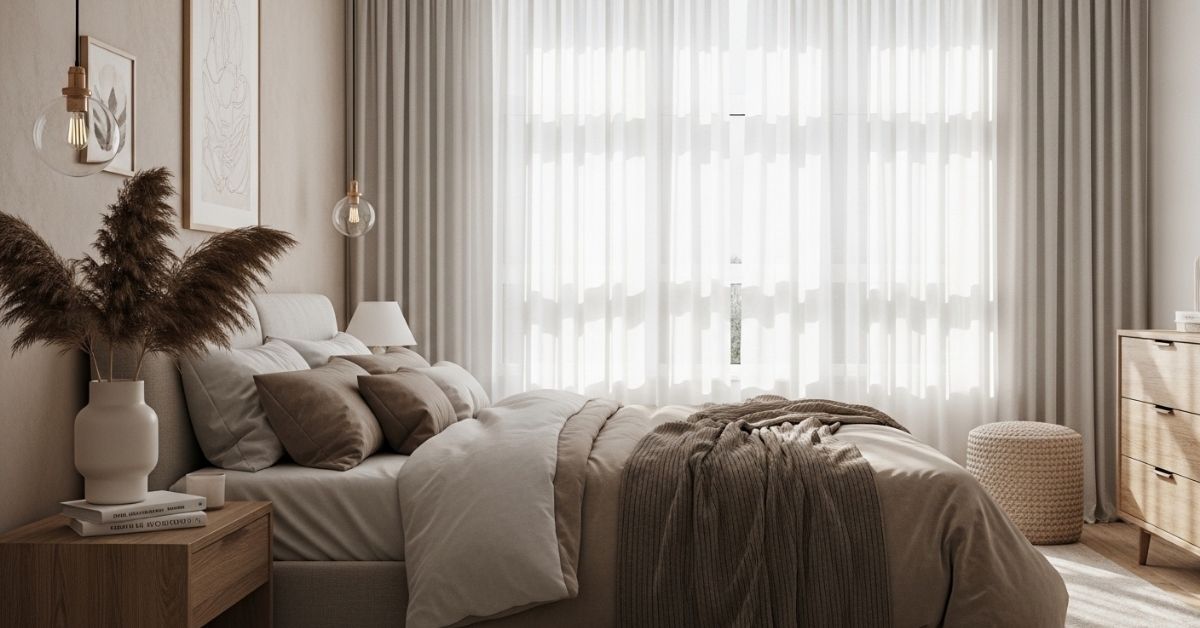
There’s a specific kind of exhaustion that comes from walking into a bedroom that doesn’t quite feel restful. Maybe the colors are competing with each other, or the furniture layout makes the Neutral Bedroom Decor Aesthetic Ideas room feel boxed in, or everything just looks slightly unfinished. That’s rarely a furniture problem, it’s a cohesion problem.
The neutral bedroom decor aesthetic has taken hold for a real reason. It’s not about beige-on-beige monotony. It’s about building a room where nothing visually competes for attention, which makes the space feel genuinely calm the moment you step inside. For smaller bedrooms especially, a well-executed neutral palette can make the room read as significantly more open than its actual square footage.
If your style leans minimal, warm, or quietly layered, these ideas are built around real rooms with real constraints, not just mood boards that ignore layout, lighting, or budget.
Low Platform Bed With Layered Linen Bedding

A low platform bed shifts the entire visual weight of a room downward, which makes ceilings feel taller by contrast. Pair it with linen bedding in an off-white or warm oatmeal tone and the result is a grounded, horizontal composition that feels intentional rather than minimal by default. Layer two pillow textures, smooth cotton cases under linen euros and add a chunky knit throw draped loosely at the foot. This setup is especially effective in rooms with lower ceilings or compact square footage, where keeping furniture close to the floor opens up the upper half of the room visually. It solves the “space feels cramped” problem without a single structural change.
Limewash Accent Wall Behind the Bed
Limewash paint is one of the defining finishes of 2026 interiors, and it works particularly well in neutral bedrooms because it adds visual depth without adding color saturation. Unlike a bold accent wall, a limewash finish in warm greige or muted clay reads as texture first, tone second. The subtle variation in the finish catches light differently throughout the day, giving the room a quiet movement that flat paint simply can’t replicate. This is an especially smart move for renters painting just one wall with its low commitment with a noticeably elevated result.
Sheer Linen Curtains Hung High and Wide

The way curtains are hung matters more than the curtains themselves. Mounting the rod several inches above the window frame and extending the panels well past each side makes windows appear larger and ceilings feel taller without touching a single wall. Sheer linen in a natural or pale cream tone diffuses light softly rather than flooding the room, which is far easier to work with in east-facing bedrooms that catch harsh morning sun. A slight pool of fabric at the floor adds softness without looking sloppy. This is one I’d actually recommend trying first because the visual impact is immediate and the cost is relatively low.
Warm Greige Walls With White Trim
Cool grays can feel clinical in a bedroom, especially in rooms with limited natural light. Warm greige, a gray-beige hybrid sits in a more comfortable middle ground. It reads as neutral without pulling blue or purple undertones under artificial lighting, which is where a lot of gray paint choices go wrong. Pair it with crisp white trim and door frames to create definition without contrast overload. The combination works across furniture styles it holds its own next to natural wood, brushed brass, and matte black equally well.
Textured Neutral Gallery Wall Using Natural Materials

A gallery wall doesn’t have to mean framed prints in a grid. In a neutral bedroom, the more interesting approach is mixing materials: a small woven wall hanging next to a simple wood-framed artwork, next to a linen-matted print. The key is keeping the tone range tight: warm whites, tans, soft taupes. The variation in texture of woven fiber, smooth glass, raw wood does the visual work instead of color. This is particularly useful for large blank walls above a bed where a single piece of art tends to look undersized, and it’s easily adjustable without repainting or patching.
Rattan or Cane Headboard With Neutral Bedding
Cane and rattan headboards introduce organic texture that photographs beautifully and reads as elevated in person. Against neutral bedding, particularly an all-white or warm ivory set, the woven pattern creates contrast without color, which keeps the room feeling calm. The open structure of the cane also means it doesn’t visually block the wall the way a solid upholstered headboard does, which helps in smaller rooms where furniture mass is a real concern. Pair with wall-mounted pendant lights on either side to keep the nightstand surfaces clear.
Read More About : 27 Romantic Bedroom Decor Ideas for Couples That Actually Feel Intimate (Not Cheesy)
Neutral Bedroom With Layered Rug Strategy

A single rug under the bed is straightforward. Two layered rugs with a large flat-weave jute as the base with a smaller, softer wool or boucle rug on top adds dimension and warmth that a single rug can’t quite achieve. The jute grounds the space and defines the room’s footprint, while the top rug adds comfort underfoot where it matters most (directly beside the bed). This works especially well in rooms with hard flooring in cooler tones, where the layered neutral textiles bring the warmth that the floor itself isn’t providing.
Built-In Shelving in the Same Color as the Wall
Painting built-in shelving the exact same color as the surrounding wall makes the storage feel like part of the architecture rather than furniture that was added later. In a neutral bedroom, this creates a seamless, almost editorial quality especially when the objects on the shelves are kept to a tight neutral range: a few books, a ceramic, a small plant. This technique is particularly effective for awkward alcoves or recessed walls that might otherwise feel like wasted space. It’s also a smart fix for builder-grade shelving that looks too basic on its own.
Warm Wood Furniture Against a White or Cream Base

Light to medium wood tones oak, ash, walnut do significant work in a neutral bedroom because they bring warmth without introducing color. Against white or cream walls and bedding, wood furniture creates the kind of contrast that feels natural rather than designed. The grain pattern adds subtle visual texture, and unlike painted furniture, it reads differently depending on the light throughout the day. This is a setup that works across a wide range of room sizes, and it ages particularly well; the combination doesn’t date the way trend-forward color choices can.
Upholstered Bed Frame in Oatmeal or Warm Taupe
An upholstered bed frame adds a softness to the room that wood or metal frames can’t quite match. In an oatmeal or warm taupe fabric, particularly a textured boucle or performance linen it becomes the room’s visual anchor without competing with anything else. The absence of hard edges makes the overall layout feel more relaxed, which matters in a bedroom specifically. This works best in rooms where the floor is also warm-toned pale wood, warm-tinted tile where the soft frame completes the tonal continuity rather than interrupting it.
Minimal Nightstands With Single Sculptural Lamp

Nightstand clutter is one of the fastest ways to undermine a calm neutral bedroom. Keeping each nightstand to three items maximum lamp, one practical object, one small decorative piece preserves the clean quality that the rest of the neutral palette is trying to achieve. A sculptural lamp in an organic shape (curved ceramic, an irregular stone base) adds visual interest without adding color. Honestly, the lamp does more design work here than most people expect it’s both functional and the room’s quiet focal point after dark.
Ceiling Treatment in a Warm Off-White
Most people default to flat white ceilings regardless of wall color. Painting the ceiling in a warm off-white one or two shades lighter than the walls creates a subtle tonal shift that makes the room feel more enveloped without feeling dark. In a neutral bedroom, this is a low-risk move with a noticeably cohesive result. The warm undertone prevents the ceiling from reading as cold or clinical under artificial lighting, which is a common issue with stark white ceilings paired with warm-toned walls and bedding.
Linen Storage Baskets Under the Bed or on Open Shelving

Storage that’s visible in a bedroom needs to be visually consistent with the rest of the room otherwise it becomes clutter even when technically organized. Linen or woven baskets in natural tones (undyed cotton, natural seagrass, tan linen) blend seamlessly into a neutral palette while keeping everyday items out of direct sight. Under-bed storage in matching baskets solves the “where does everything go” problem in a small bedroom without adding any furniture footprint. This is one of the more practical ideas on this list for anyone working with limited closet space.
Matte Black or Brushed Brass Accents in Small Doses
In a neutral bedroom, metal accents function like punctuation they define without dominating. A brushed brass lamp base, drawer pulls on a dresser, or a thin metal mirror frame adds a material contrast that prevents the room from feeling flat. The key word is small doses: two or three metal moments throughout the room rather than a full set of matching accessories. Matte black works better in rooms with cooler neutral tones (soft whites, light grays), while brushed brass fits more naturally in warmer palettes (cream, taupe, warm beige).
Read More About : 21 Small Bedroom Layout Ideas That Actually Make the Most of Your Space
Soft Ambient Lighting With Dimmer Switch

Overhead lighting in a bedroom is almost always too harsh and too high. Switching to layered ambient sources: two table lamps, a wall sconce, or a low pendant and putting everything on a dimmer changes the entire atmosphere of the room after dark. In a neutral bedroom especially, warm-toned bulbs (2700K or lower) make the pale walls and natural textiles glow rather than look washed out. The shift from overhead to layered lighting is one of the highest-impact, lowest-cost changes you can make in a bedroom that otherwise looks fine but doesn’t feel restful.
Floating Wall Shelves in Matching Wood Tone
Floating shelves in a neutral bedroom serve a different purpose than in a living room here, they’re not for display so much as for keeping frequently used items off surfaces. A pair of shelves in a wood tone that matches the rest of the furniture (or is at least in the same warm family) reads as intentional rather than utilitarian. Keep objects to a strict edit: one small plant, one book stack, one ceramic piece. The shelf itself does more visual work when what’s on it is minimal.
Organic Shape Mirror Above Dresser

Rectangular mirrors are functional. Organic-shaped mirrors arched, oval, irregular are functional and compositionally interesting. Above a dresser in a neutral bedroom, an organically shaped mirror softens the right angles of the furniture below and adds a design element that’s hard to overdo. The reflective surface also bounces light further into the room, which is particularly useful in bedrooms with a single window or north-facing orientation. This works in small rooms precisely because it adds visual complexity without taking up floor space.
Tonal Bedding Mix (No Patterns, Multiple Textures)
Pattern-free doesn’t mean visually flat. A bed made entirely in neutral tones white, warm cream, soft oatmeal but in multiple fabric textures (waffle weave duvet, linen euro shams, smooth cotton pillowcases, chunky knit throw) has more visual depth than most patterned bedding sets. The texture variation catches light differently and gives the bed a layered, considered quality. This approach also simplifies purchasing decisions you’re matching tone rather than pattern, so adding or replacing pieces over time is much easier.
Indoor Plants in Neutral Ceramic Pots

A plant in a bedroom does two things: adds organic color (the one color neutral bedrooms can always absorb) and introduces a living scale reference that makes the room feel occupied rather than staged. The pot matters as much as the plant. Matte white, warm terracotta, or unglazed ceramic keeps the neutral palette intact while still making the planter feel like a design choice rather than an afterthought. A single large plant in a floor pot (fiddle leaf, olive tree, tall snake plant) is more impactful than several small ones scattered around.
Window Seat With Built-In Storage and Neutral Cushion
An underused window with enough depth below it is an opportunity for a built-in bench seat with storage underneath. Topped with a thick neutral cushion in performance linen or outdoor-grade fabric (practical for daily use), it becomes both a reading spot and a furniture piece that earns its footprint. This setup works particularly well in bedrooms where closet space is limited; the drawers below handle seasonal items, extra bedding, or anything else that doesn’t have a home. It also turns a wall that often goes unused into the room’s most functional corner.
Monochromatic Neutral Palette From Floor to Ceiling

A monochromatic neutral bedroom doesn’t mean everything is the same color, it means the tonal range stays tight from floor to ceiling. Pale wood floor, warm white walls, cream ceiling, oatmeal bedding, tan linen curtains. Each element sits within a two-shade range of each other, which creates a visual continuity that makes the room feel larger and more cohesive than a space where each element is chosen independently. In my experience, this works best when you start with the floor tone and build upward rather than picking wall color first.
Curved Furniture Pieces for Softness
Straight lines dominate most bedroom furniture, which can make a room feel rigid particularly in a neutral palette where there’s less color contrast to add visual energy. Introducing one or two curved pieces, a round nightstand, a dresser with curved drawer fronts, an arched mirror softens the overall composition without changing the color scheme at all. This is particularly effective in minimally decorated neutral rooms, where the shape of furniture becomes a primary design variable rather than a secondary one.
Woven Wall Art or Macramé Panel in Natural Fiber

Wall art in a neutral bedroom works best when it introduces texture rather than color or pattern. A large woven panel or restrained macramé piece in natural ivory, undyed cotton, or tan fiber reads as a material object first and a decorative object second which is a useful distinction in a room where the goal is calm rather than visual stimulation. The scale matters: one larger piece works better than multiple small ones, and positioning it centered above the bed or on the largest uninterrupted wall gives it proper visual weight.
Bedside Pendant Lights Instead of Table Lamps
Wall-mounted or ceiling-hung pendant lights beside the bed free up the entire nightstand surface which is a significant practical win in a small bedroom where surface space is limited. Pendants in a warm metal (brushed brass, antique bronze) or a simple paper shade complement the neutral palette while adding a slightly architectural quality to the bedside area. The light direction from a pendant also tends to be softer and more directional than a table lamp, which suits a bedroom environment better. This works in both small and larger rooms, though the visual payoff is especially clear in tighter spaces.
Neutral Bedroom With Natural Wood Ceiling Beams

Exposed ceiling beams whether structural or decorative add architectural interest that most bedrooms lack entirely. In a neutral palette, natural wood beams (left unstained or finished in a light matte seal) bring warmth and a sense of craftsmanship without introducing color. The horizontal lines of the beams also draw the eye across the ceiling rather than straight up, which can make a room with lower ceilings feel wider. This is particularly effective in bedrooms with otherwise plain white ceilings where the space feels unfinished from above.
Linen Roman Shades for a Clean Window Treatment
Roman shades in an unlined or lightly lined linen are one of the cleaner window treatment options for a neutral bedroom. Unlike heavy drapes, they stack neatly at the top when raised and don’t take up the visual real estate of floor-length panels which is a practical advantage in rooms where space beside the window is tight. The linen texture softens the look compared to flat roller shades, and the natural fiber tones fit easily into any warm neutral palette. For bedrooms that need light control but feel too small for full curtains, this is a reliable middle-ground solution.
Decluttered Dresser Top as a Styled Vignette

A dresser top is one of those surfaces that accumulates clutter faster than any other spot in the bedroom. Treating it as an intentional vignette, a small tray to corral daily items, one sculptural object, a single candle keeps it functional while making it feel like a considered part of the room rather than overflow storage. The tray is the key element: it creates a visual boundary that makes even a few practical items look placed rather than dumped. In a neutral bedroom, keeping the objects to a tight material palette (ceramic, wood, linen, glass) makes the dresser top feel like it belongs to the room rather than sitting on top of it.
What Actually Makes a Neutral Bedroom Aesthetic Work
A neutral bedroom can easily tip into feeling empty or unfinished if the foundation isn’t right. The ideas above work when they’re built on three core principles.
Tonal consistency beats color matching.
The goal isn’t to find pieces that are the exact same shade, it’s to stay within a tonal family (warm or cool) so nothing reads as out of place. Mixing a warm cream duvet with a cool gray rug introduces a subtle tension that the eye registers as “off” even if you can’t immediately identify why.
Texture is doing the work that color isn’t.
In a room without bold color, materials become the primary variable. Smooth plaster walls against a linen duvet against a rough jute rug against a matte ceramic lamp create visual interest that keeps a neutral room from feeling sterile.
Scale matters more than quantity.
A common mistake in neutral bedrooms is adding more objects to make the space feel complete. Usually the better move is fewer, larger pieces. One substantial plant instead of three small ones. One large piece of wall art instead of a cluster of small frames. Scale creates presence; quantity creates clutter.
I’ve noticed this style tends to look most cohesive when the room is edited down further than feels comfortable. At first the restraint usually looks better in person than it does in the planning stage.
Neutral Bedroom Decor: Setup Comparison Guide
| Setup | Best For | Space Type | Problem It Solves | Effort Level |
| Low platform bed + linen bedding | Small rooms, low ceilings | Compact or studio | Visual heaviness | Low |
| Limewash accent wall | Renters, texture-seekers | Any size | Flat, lifeless walls | Medium |
| Layered neutral rugs | Hard floor bedrooms | Medium to large | Cold floors, lack of warmth | Low |
| Tonal bedding mix (no pattern) | Minimalists, light sleepers | Any size | Pattern overload | Low |
| Built-in shelving (wall color match) | Awkward alcoves, small rooms | Small to medium | Dead wall space, clutter | High |
| Pendant bedside lights | Limited surface space | Small bedrooms | Nightstand clutter | Medium |
| Monochromatic floor-to-ceiling | Style-focused, open layouts | Medium to large | Disconnected elements | Medium |
| Organic mirror above dresser | North-facing or dim rooms | Any size | Poor light, rigid lines | Low |
How to Design a Neutral Bedroom That Doesn’t Feel Flat or Empty
The most common issue with neutral bedrooms isn’t the color choice, it’s the execution. Here’s how to approach the layout and material decisions so the room actually feels finished.
Start with the largest surface: the walls.
Before choosing furniture, decide on the wall tone. Warm neutrals (greige, cream, warm white) anchor everything that comes after. Cool neutrals (soft gray, blue-white) require more deliberate material choices to avoid feeling clinical.
Place the bed first, everything else second.
The bed is the room’s primary focal point and should be positioned to face the door or the room’s natural sightline. Centering it on the longest wall gives you the most balanced layout in most rectangular rooms, and it leaves equal nightstand space on both sides which matters both functionally and visually.
Bring in at least three material types.
A neutral bedroom needs material contrast to compensate for the absence of color contrast. A practical minimum: one soft textile (linen, boucle, cotton), one natural raw material (wood, rattan, stone), and one smooth surface (ceramic, glass, painted plaster). Without this range, the room flattens visually regardless of how well the colors coordinate.
Leave floor space intentionally.
One of the most underestimated elements of a calm bedroom is the amount of visible floor. Rooms that feel cramped often have too much furniture relative to the square footage or furniture placed in a way that interrupts the natural walking path. Keeping at least 24–30 inches of clear floor on either side of the bed improves both function and the room’s perceived spaciousness.
Edit the surfaces before adding anything new.
Dresser tops, nightstands, and windowsills accumulate objects quickly in a bedroom. A useful rule: every surface should have at least 40% empty space. That margin is what makes the items that are there look intentional rather than leftover.
FAQ’s
What is a neutral bedroom decor aesthetic?
A neutral bedroom decor aesthetic is a design approach that uses a limited palette of muted, natural tones whites, creams, beiges, warm grays, and taupes combined with natural materials and textural variation to create a calm, visually cohesive space. The focus is on material and tonal contrast rather than color contrast.
How do I make a neutral bedroom look interesting without adding color?
Texture is the primary tool. Layer different fabric types (linen, cotton, boucle, waffle weave) in similar tones, and mix material types across furniture and decor (wood, ceramic, woven fiber, glass). Organic shapes, curved furniture, irregular mirrors, sculptural lamps also add visual interest without introducing color.
What paint colors work best for a neutral bedroom?
Warm whites and greiges consistently outperform cool grays in bedroom settings because they hold their warmth under both natural and artificial light. Specific tones to consider include warm off-whites with yellow or pink undertones (rather than blue), and greiges that lean beige rather than gray. Always test paint samples at multiple times of day in your specific room before committing.
Is a neutral bedroom a good idea for a small room?
Yes, a neutral palette is one of the most effective strategies for making a small bedroom feel larger. Keeping walls, bedding, and curtains in a close tonal range reduces the number of visual “stops” the eye makes as it scans the room, which creates a sense of continuity and openness. Pair with low-profile furniture and high-hung curtains for maximum effect.
Neutral bedroom vs. minimalist bedroom: what’s the difference?
A neutral bedroom is defined by its color palette; a minimalist bedroom is defined by object quantity. A neutral bedroom can have significant layering and texture, multiple textiles, decorative objects, full gallery walls as long as the tones stay within a neutral range. A minimalist bedroom might use bold color or pattern but keeps furniture and decor to an absolute minimum. The two approaches overlap often but aren’t the same.
What’s the biggest mistake people make with neutral bedroom decor?
Choosing all cool-toned neutrals and then wondering why the room feels cold or hospital-like. Cool grays and blue-whites require very specific lighting and material choices to feel warm. The safer starting point for most homes is a warm neutral base cream, greige, warm white which reads as calm and inviting across a wider range of lighting conditions.
How do I add warmth to a neutral bedroom without using color?
Focus on material and light. Natural wood furniture, jute or wool rugs, linen textiles, and ceramic accessories all introduce warmth through material rather than color. On the lighting side, bulbs in the 2700K range (warm white) make neutral walls and textiles glow rather than look flat or cool. A dimmer switch on bedside lamps is one of the highest-impact changes for evening warmth.
Conclusion
A neutral bedroom works not because it’s simple, but because it’s intentional. The ideas here are built around real constraints: limited square footage, rented walls, everyday use and the common thread is that restraint in color allows other design variables (texture, scale, light, material) to do more meaningful work.
Start with one or two setups that fit your current room and budget. Adjust the lighting first if you haven’t. It’s the lowest-effort, highest-impact change on this list. From there, work through bedding, then surfaces, then walls. Small, specific adjustments compound quickly in a bedroom, and the goal doesn’t have to be a complete overhaul to make the space feel noticeably better.
