

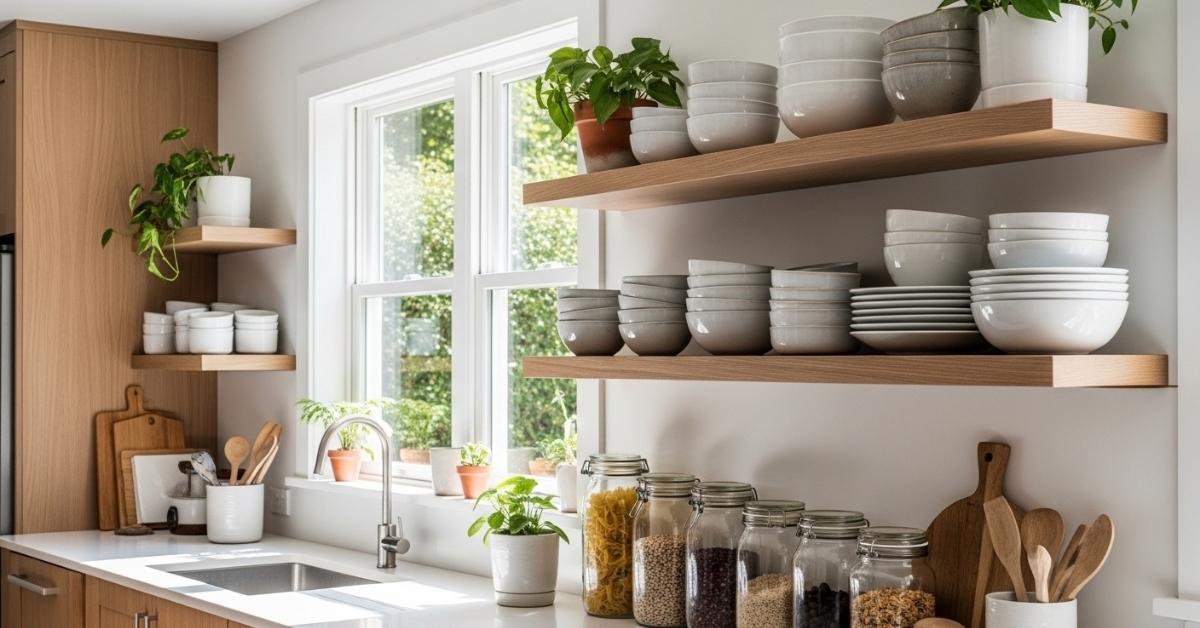
Open shelf kitchens have been having a moment for a while now and in 2026, the trend is maturing. Less “Instagram-perfect arrangement,” more “genuinely functional and good-looking.”Open Shelf Kitchen Decor Ideas If you’ve been thinking about removing your upper cabinets or you already have open shelving and aren’t sure how to style it, this is for you.
The real challenge with open shelf kitchen decor isn’t finding pretty things to put up there. It’s figuring out how to make it feel intentional rather than cluttered, livable rather than staged. These ideas focus on exactly that practical setups that work in real kitchens, whether you’re renting, renovating on a budget, or just tired of everything feeling disorganized.
If your kitchen is on the smaller side or you’re working with a rental where you can’t knock anything down, several of these setups will be especially useful.
Stack Everyday Dishes by Color, Not by Type

Most people arrange their dishes by category plates here, bowls there which ends up looking random from a distance. Sorting them by color family instead (whites with creams, earthy terracottas together) creates a quiet visual rhythm that reads as organized without any real effort. In my experience, this single switch makes a shelf look more cohesive than adding any decorative object would. It works especially well in kitchens with limited shelving where everything has to earn its spot. The practical bonus: you naturally use what’s in front, which keeps things rotating.
Read More About : 30 Kitchen Counter Styling Ideas That Actually Work in Real Homes
Use the Bottom Shelf as a Countertop Extension

The shelf closest to the countertop gets the most traffic, so it makes sense to style it like a prep station rather than a display surface. Keep cutting boards upright against the wall, a small bottle of oil, a wooden bowl for fruit or garlic. This makes the bottom shelf genuinely functional while the upper shelves carry the visual weight of the room. It’s particularly helpful in narrow kitchens where counter space is limited the shelf becomes extra workspace, not just storage.
Layer Textures With Linen, Wood, and Matte Ceramic
Three materials tend to do a lot of the visual work on open shelves: matte ceramic (absorbs light rather than reflecting it), raw or oiled wood (adds warmth), and linen or cotton textiles (softens the geometry of stacked objects). When you have all three, the shelf feels layered and considered rather than sparse or busy. This setup works in both all-white kitchens and darker, more moody spaces the contrast shifts, but the texture relationship stays balanced.
Keep One Shelf Entirely Clear

This sounds counterintuitive, but leaving one shelf visually empty or with just one object gives the others room to breathe. It’s how high-end retail spaces make products feel premium: by not filling every inch. In kitchens where there’s a lot happening on the counter already, a clear shelf pulls visual noise down and makes the whole wall feel more open. This works best on the top shelf, where it reads as intentional from below.
Group Objects in Odd Numbers
Odd-number groupings (three mugs, one plant, one wooden utensil jar) feel naturally balanced in a way that even numbers don’t. It’s not arbitrary design theory it’s because the eye moves between three objects rather than splitting down the middle between two. This is one I’d actually recommend trying first because it requires zero new purchases. Rearrange what you have into clusters of three and see what shifts. Works in any size kitchen, any shelf depth.
Use Floating Shelves at Varying Heights

Standard shelf spacing treats all your objects equally, which often means tall bottles are cramped and small cups get lost. Installing shelves at different heights leaving more room at the top for taller items, less below for everyday dishes solves this practically and adds movement to the wall. This layout also visually separates “display” objects from “daily use” objects without needing labels or zones. Best for kitchens with longer empty walls where you’re starting from scratch.
Let One Plant Anchor the Whole Setup
A single trailing plant a pothos, a small vine, or even fresh herbs in a small pot can do more for open shelf decor than any styled object. It brings in organic scale and softens the edges of stacked hard materials. The key word is one. More than that and it starts competing with everything else. Place it at one end of the shelf rather than in the center so it frames the arrangement without dividing it. This works in almost any kitchen style, including modern and industrial.
Display Spices in Uniform Jars on a Dedicated Shelf

Uniform spice jars are one of the most practical open shelf moves you can make they eliminate visual chaos from a category of items that normally looks messy, and they’re genuinely easier to use when everything is the same size. A dedicated shelf just for spices, arranged in a single row, keeps the rest of the shelving free for items with more visual variety. This is especially good for renters who can’t install a spice rack inside cabinet doors.
Use the Space Above the Sink for Everyday Glasses
If there’s any open shelf placement that makes everyday life easier, it’s one directly above the sink for glasses. You fill them, rinse them, and put them back without crossing the kitchen. When the glasses are simple and clear (or have a subtle tint), they also look good backlit by natural light which is a nice side effect of a purely practical decision. This works best in kitchens where the window is positioned near the sink, which is most of them.
Add Woven or Rattan Baskets on Lower Shelves

Open shelves often struggle with the awkward question of what to do with items that aren’t pretty but need to be accessible root vegetables, snack packets, miscellaneous items. Woven baskets solve this by hiding the contents while adding texture that fits naturally in most kitchen styles. On lower shelves, they’re at an easy reach height and don’t interrupt the visual flow of the shelf above. Honestly, this is one of the quickest, cheapest fixes for open shelving that feels chaotic.
Read More About : 23 Modern Living Room Decor Ideas That Actually Work in Real Homes
Mix Open Shelves With One Closed Cabinet
This is a good option for anyone who likes the look of open shelving but has a realistic amount of stuff that doesn’t photograph well. A closed cabinet even a small one in between open shelves gives you the visual rhythm of open decor without requiring everything to be display-worthy. It also creates a natural visual break that keeps the wall from feeling overwhelming. This setup works especially well in family kitchens where function has to win over aesthetics more often than not.
Style With a Neutral Color Palette

Working within a tight color range warm whites, creams, muted tones makes open shelves look more cohesive with almost no effort. It doesn’t mean everything has to match exactly, but it does mean filtering out objects that pull in too many different directions. This is especially useful if you have eclectic dishes or a mix of materials, because the color consistency ties them together visually. In smaller kitchens, it also helps shelves recede rather than compete with the rest of the room.
Use Shallow Shelves for Spices and Deep Ones for Storage
Shelf depth matters more than most people realize. Shallow shelves (around 6 inches) are ideal for spices, small jars, and single-row displays everything stays visible and nothing gets lost behind something else. Deeper shelves (10–12 inches) work for stacked plates and bowls. When you have both, each shelf works the way it’s supposed to rather than forcing you to dig behind things. If you’re installing new shelves, this combination is worth the extra planning.
Frame the Shelves With Small Pendant Lights

Lighting changes everything on open shelves not in a vague, hand-wavy way, but concretely. Objects that look flat and ordinary in overhead lighting often look completely different with a warm light source positioned at the same height as the shelf. Small pendant lights on either side of a shelf section do this without requiring any rewiring if you use plug-in versions. The warm light also makes the kitchen feel noticeably more livable in the evening.
Lean Art or a Small Mirror Against the Back Wall
A small piece of art or a mirror leaning against the back wall of a shelf adds depth and personality without committing to gallery-wall decisions. It’s also one of the easiest things to swap out when you want a change. The mirror version has a specific practical function: it reflects objects in front of it, making the shelf feel deeper and the items on it feel more intentional. Works best with shelves that are at least 10 inches deep so the lean angle is natural.
Keep Cookbooks Upright With a Simple Bookend

Cookbooks get used more when they’re easy to see and grab which is exactly what open shelving enables. A simple bookend (marble, concrete, or a heavy ceramic object) keeps them upright without looking fussy. Limit the stack to three or four books that you actually use; the rest can live in a drawer or a different storage spot. This setup tells the story of the kitchen without requiring any styled accessories, and it takes up exactly as much room as it needs to.
Hang Mugs From Small Hooks Beneath the Shelf
Mugs take up a disproportionate amount of shelf space given how much they’re used. Hanging them from small hooks installed on the underside of the shelf frees up the top surface entirely for other things. It also makes your mug collection easier to access no stacking, no digging. This is especially useful if you have a dedicated coffee corner below the shelf, since everything is within arm’s reach. Small cup hooks cost almost nothing and leave no real damage, which makes this one of the better options for renters.
Use One Statement Piece to Anchor Each Shelf

Every shelf needs something that catches the eye and tells you where to start looking a larger ceramic piece, a tall bottle, a statement bowl. Without it, the eye wanders and the shelf feels like a collection of random objects even if each one is nice individually. One anchoring piece per shelf doesn’t have to be expensive; a tall olive oil bottle in good packaging or an oversized ceramic mug works just as well as a decorative vase. The size contrast between the anchor and the smaller surrounding objects is what does the work.
Keep the Wall Color Behind the Shelves Light and Matte
The wall behind open shelves functions as the background of everything you put up there. A flat, matte finish especially in white, warm white, or a very light neutral makes the objects pop without competing. Gloss finishes create reflections that distract, and dark walls can be beautiful but require much more careful curation to keep from feeling heavy. For most kitchens, especially those with limited natural light, a light matte wall behind the shelves is the lowest-effort, highest-return decision.
Create a Dedicated Breakfast Setup on One Section

Zoning one section of open shelving for a specific meal or task a breakfast station with cereal jars, a couple of bowls, and mugs within reach makes the kitchen more functional and easier to navigate in the morning. This kind of zone-based approach also makes styling easier because you’re not trying to make every object work together; they already share a purpose. I’ve noticed this style tends to work especially well in open-plan homes where the kitchen is visible from the living area, because the zoning gives the eye something specific to understand.
Install a Floating Shelf Inside a Window Frame
A narrow shelf installed within a window recess or between window frames uses space that typically goes ignored and puts plants or small objects in the best light possible literally. The natural backlighting makes even a single small plant look considered. This works best in kitchens where the window is deep enough to hold even a shallow shelf (4–6 inches is enough) and where the windowsill itself isn’t already doing double duty. Good for renters using removable adhesive hardware.
Use a Tiered Display on a Deep Shelf

A tiered display where some objects sit on a small riser at the back while others sit at normal height in the front adds depth and makes it easier to see everything at a glance. Without the height variation, everything sits at the same plane and the shelf looks flat even if the objects are attractive. A small wooden riser, a couple of stacked books, or even a piece of cut wood can create this effect cheaply. Works best on shelves that are 10 inches or deeper.
Use Labeled Glass Jars for Dry Goods
Dry goods in glass jars (pasta, lentils, rice, oats) are one of those rare cases where a purely practical storage decision also looks good. The transparency, the varying fill levels, and the consistency of the jars create visual interest without any deliberate styling. Labels with clean typography printed or handwritten add a layer of polish that doesn’t take much effort. This setup works in any kitchen size but is especially useful in smaller kitchens where pantry space is limited and the shelves have to work hard.
Balance Light and Dark Objects Intentionally

Open shelves that are all light feel cold; all dark feels heavy. Distributing a few darker objects a cast iron piece, a matte black bowl, dark wooden objects among lighter ceramics and white dishes creates a balance that feels grounded. The trick is to spread the darker items across the shelf rather than clustering them together. This isn’t a strict rule, but it’s a useful starting point when a shelf feels like it’s missing something without being clear why.
Use the Space Below Open Shelves for Hanging Storage
The space between the bottom of a shelf and the counter below is often underused. A simple tension rod, a mounted bar, or S-hooks attached to the shelf itself can hold pots, utensils, or dish towels freeing up counter space and adding a professional kitchen feel. This is especially useful in small kitchens where every inch of vertical space matters. It also means the things you use daily are visible and accessible without taking up shelf surface.
Display One or Two Heritage or Vintage Pieces

One older or more personal piece on open shelves a ceramic from a trip, a bowl that belonged to someone in your family, something from a local market grounds the display in something real. It prevents the shelf from looking like it was styled for a catalog, and it gives visitors (and you) something to actually notice. The key is limiting it to one or two pieces so they stand out rather than getting lost in the arrangement.
Rotate Seasonal Decor Without Overhauling Everything

Open shelves give you the rare opportunity to update the feel of your kitchen without any renovation. Swapping one or two items seasonally dried citrus slices in winter, fresh herbs in spring, dried seed pods in fall changes the mood without disrupting the functional setup. Keep the practical items fixed (dishes, jars, daily-use items) and treat one small section of each shelf as the flexible zone. This keeps the kitchen feeling current without requiring ongoing effort or budget.
What Actually Makes Open Shelf Kitchen Decor Work
The common thread across all these setups isn’t a particular aesthetic it’s intentionality. Open shelves work when everything on them has a reason to be there, whether that’s functional (it gets used daily), visual (it adds contrast or texture), or both. The shelves that feel chaotic are usually ones where things accumulate over time without a deliberate edit.
A few principles worth keeping in mind:
Editing is more important than adding.
Before buying anything new for your shelves, do a pass of what’s currently there. Removing two or three objects usually does more than adding one more.
Depth matters.
Objects look better when they’re not crowded against each other. Give things a centimeter or two of breathing room on all sides.
Practicality drives it.
The more the items on open shelves are things you actually use, the less maintenance the styling requires. Daily-use items rotate naturally and stay looking fresh because they’re in constant circulation.
Open Shelf Kitchen Decor Quick Setup Guide
| Idea | Best For | Space Type | Key Problem Solved |
| Color-sorted dishes | Any kitchen | All sizes | Visual randomness |
| Uniform spice jars | Organized setups | Small kitchens | Chaotic pantry area |
| Odd-number groupings | Beginners | All sizes | Scattered, unbalanced look |
| Rattan baskets on lower shelves | Practical kitchens | Any | Hiding non-display items |
| Mug hooks below shelf | Coffee lovers | Small kitchens | Wasted shelf space |
| Tiered risers | Deep shelves only | Medium-large | Flat, one-dimensional display |
| Rotating seasonal section | Active stylists | Any | Decor feeling stale |
| Floating shelf in window | Renters, plant lovers | Small | Unused vertical space |
| Dedicated breakfast zone | Busy households | Open-plan | Lack of kitchen function |
Common Open Shelf Kitchen Mistakes That Make Your Space Feel Cluttered
Even well-styled shelves can start feeling off over time. Here’s what’s usually behind it:
Mixing too many colors.
Open shelves amplify color chaos because everything is visible at once. If you have three different color stories happening on one shelf, the eye doesn’t know where to settle. The fix is rarely adding something it’s removing the outlier pieces.
Forgetting negative space.
Fully packed shelves feel more chaotic than organized, even when each object is nice. The instinct is to fill every gap, but gaps are doing visual work. Leave them.
Placing the heaviest-looking objects at the top.
This makes a shelf feel visually top-heavy and slightly unstable. Heavier, darker, or larger objects tend to work better on lower shelves where they anchor the arrangement rather than dominate it.
Ignoring the back of the shelf.
The wall behind the objects is part of the visual. If it’s scuffed, marked, or a color that clashes, it undermines everything in front of it. A quick coat of paint behind the shelves is one of the most effective and overlooked upgrades.
Letting packaging stay.
The fastest way to make open shelves look messy is to leave things in their original packaging boxes, bags, or branded containers. Even decanting just two or three items into neutral jars shifts the whole feel of a shelf.
FAQ’s
What should you not put on open kitchen shelves?
Avoid anything you rarely use it accumulates dust and makes rotation harder. Items in loud, varied packaging are also worth decanting or relocating, since original packaging introduces a lot of visual noise. Anything that needs humidity control (some spices, certain foods) is better in a closed cabinet.
How do you make open kitchen shelves look less cluttered?
Start by editing, not rearranging. Remove anything you haven’t used in the past week, then give the remaining items more breathing room. Grouping in odd numbers, sticking to a neutral color range, and leaving at least one shelf section with minimal objects will do more than any new purchase.
Are open kitchen shelves practical for everyday use?
Yes, when the items on them are things you actually use daily. The mistake most people make is treating them like display cases. Shelves that hold your most-used dishes, glasses, and jars work well because the constant rotation keeps them looking fresh without deliberate upkeep.
What’s the best shelf depth for an open kitchen shelf?
For most kitchens, 10–12 inches works well it holds stacked dishes comfortably without losing small items behind larger ones. Shallower shelves (6 inches) are better dedicated to spices or a single row of small jars. Anything deeper than 12 inches tends to create dead space at the back that’s hard to style without a tiered riser.
Open shelves vs. upper cabinets: which is better for a small kitchen?
It depends on what you’re working with. Open shelves make a small kitchen feel larger because they don’t create visual barriers, but they require more editing discipline. If you have a lot of mismatched items or things you’d prefer to keep hidden, upper cabinets are more forgiving. A hybrid approach one run of open shelves and one closed cabinet section tends to be the most practical middle ground.
How do I style open shelves if I’m renting and can’t install brackets?
Freestanding shelving units, tension-rod organizers, and adhesive picture ledges (rated for light loads) are all renter-friendly options. For existing shelves in a rental, focus on the arrangement and editing rather than the hardware what’s on the shelves matters more than the shelves themselves.
What’s trending in open shelf kitchen decor in 2026?
The current shift is away from the maximalist “shelfie” aesthetic toward more restrained, functional arrangements. Earthy ceramics, unglazed stoneware, and handmade-looking pieces are replacing polished, uniform sets. There’s also more interest in hybrid setups mixing open shelves with one or two closed storage elements rather than going fully open throughout the kitchen.
Conclusion
A well-styled set of open shelves doesn’t require a full kitchen renovation or a large decor budget it mostly requires a clear eye and a willingness to edit. The ideas in this list cover everything from simple rearrangements that take five minutes to more intentional setups that take an afternoon, and most of them rely on objects you likely already have.
Start with one or two that fit your kitchen’s actual constraints your wall space, your shelf depth, what you cook and how often. A single change, like sorting dishes by color or clearing one shelf section entirely, often shifts the feel of the whole kitchen more than a full restyle would. Work from there.
