

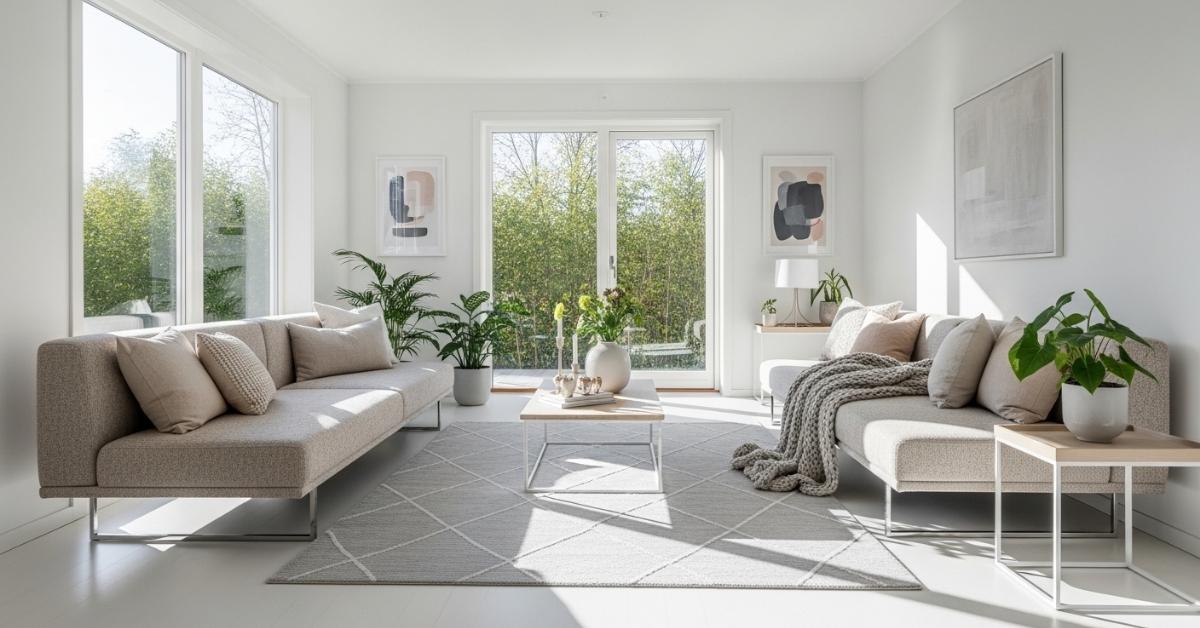
Soft, uncluttered, and quietly intentional that’s the direction living rooms are moving in 2026. Not the stark, cold minimalism of a decade ago, but something warmer: spaces that feel edited rather than empty, layered rather than loud. Modern Living Room Decor Ideas If your living room has been feeling a little “off” lately functional but not quite right chances are it’s a layout or layering issue, not a budget one.
This list is especially useful if you’re working with a mid-size or compact living room that needs to feel cohesive without looking overdone. Every idea here is grounded in real spatial logic: furniture placement, light behavior, material contrast, and flow. No filler.
Low-Profile Sofa With a Floating Arrangement

Pushing furniture against every wall is one of the most common layout mistakes in modern living rooms. A low-profile sofa think seat height around 16–17 inches placed a few feet from the wall immediately opens up the room’s vertical space and creates a sense of intentional arrangement. Pair it with a slim console table behind the sofa to define the zone without adding visual bulk. This setup works especially well in square rooms where awkward wall spacing makes everything feel pushed and crowded. The breathing room around the sofa also makes the ceiling feel higher than it is.
Layered Neutral Palette With One Textural Anchor
Neutrals work in modern living rooms when they’re layered by texture rather than color. Start with a base linen sofa, matte walls, jute rug then introduce contrast through one textural anchor: a boucle armchair, a raw stone side table, or a ribbed ceramic vase. The contrast between smooth and rough surfaces creates visual depth without needing pattern or color. In my experience, this approach works best when you commit to warm-toned neutrals (creams, taupes, warm whites) rather than mixing cool and warm grays, which tend to read as unresolved. Rooms that rely purely on color contrast often feel busy; texture contrast feels calm.
Read More About : 27 Living Room Ideas That Actually Work in Real Homes (Not Just on Pinterest)
Oversized Area Rug That Extends Under Furniture

If the rug in your living room looks like an island floating in the middle of the floor, it’s likely undersized for the space. In a modern living room, the rug should be large enough for at least the front legs of all major seating to rest on it this visually connects the furniture grouping and anchors the whole room. A 9×12 or 10×14 rug in most standard living rooms does this without overwhelming the space. Stick to low-pile options (flatweave, wool loop, or subtle texture) that don’t compete with the furniture scale. This single change does more for spatial cohesion than most decor additions.
Tall Curtains Hung Close to the Ceiling
Curtain placement is underestimated in modern living room design. Hanging curtains just above the window frame the default for most people cuts the wall and makes ceilings feel lower. Mount the rod 4–6 inches below the ceiling line instead, and use curtains that fall all the way to the floor. The vertical line this creates draws the eye upward and makes the room feel significantly taller. Linen and cotton in light neutrals work best for modern spaces they filter light softly rather than blocking it. This works in any room regardless of actual ceiling height, but it’s especially effective in apartments with standard 8-foot ceilings.
Statement Coffee Table as the Room’s Visual Anchor

In a well-edited modern living room, the coffee table often does more design work than anything on the walls. A table with visual weight stone, solid wood, concrete, or metal grounds the seating arrangement and gives the eye a natural resting point. Avoid tables that are too small for the sofa length; a general rule is the table should be roughly two-thirds the sofa’s length. Go for organic shapes (oval, irregular) if the room has a lot of angular furniture, or a clean rectangular slab if the palette is already soft and rounded. Styling it with three objects max keeps it from becoming a surface clutter trap.
Wall-Mounted Media Setup Without the Bulky TV Unit
TV units are often the most visually dominant and spatially wasteful piece of furniture in a living room. Mounting the TV directly on the wall and replacing the unit with a slim floating shelf for the essentials only reclaims significant floor space and creates a cleaner sightline. The key is cord management: in-wall cable routing or a slim raceway keeps the setup looking intentional. Flank the TV with two wall sconces to frame it as a considered design decision rather than an afterthought. This is especially useful in smaller living rooms where floor space directly affects how open the room feels day-to-day.
A Reading or Accent Chair That Doesn’t Match the Sofa

Matching the sofa and accent chair exactly is a dated approach and honestly, it tends to make rooms feel showroom-flat. Instead, choose an accent chair in a different material or a muted contrast color: a linen sofa with a leather or boucle chair, or a gray sofa with something in warm brown or dusty terracotta. The chair reads as collected and considered rather than packaged. Position it at a slight angle to the sofa not perfectly parallel so the conversation feels natural and the layout doesn’t look forced. This is one of the easier swaps in a modern living room that shifts the room’s feel without touching the main furniture.
Warm Ambient Lighting Through Multiple Sources
Overhead-only lighting is one of the fastest ways to make a modern living room feel flat and clinical. The shift to layered lighting floor lamp in one corner, table lamp near the sofa, a small lamp or LED strip on a shelf creates warmth and dimension without any structural changes. Use warm-white bulbs (2700K–3000K) consistently across all sources so the light reads as cohesive. The effect is most noticeable in the evening, but warm directional lighting also improves how the room photographs. For renters especially, this is one of the most impactful changes available without any permanent modifications.
Open Shelving With Intentional Negative Space

Shelves packed edge-to-edge with objects are visually exhausting. Modern living room shelving works best when at least 30–40% of the surface is left empty. Group objects in odd numbers, vary the height within each cluster, and place a few taller items at the back. Books can anchor the practical side, while ceramics, trailing plants, or a framed photo add personality without chaos. In my experience, the emptier a shelf looks on first edit, the better it tends to look once you’ve lived with it for a week. What feels sparse initially almost always settles into feeling calm and intentional.
Large-Scale Art That Fills Dead Wall Space
A single large piece of art above the sofa consistently outperforms a gallery wall in terms of spatial impact. The art should be roughly two-thirds to three-quarters the width of the sofa wide enough to feel intentional, not like a postcard pinned to a wall. In modern living rooms, abstract work in earthy or muted tones adds visual interest without imposing a theme. Center it at eye level (roughly 57–60 inches from floor to center). The most common mistake is hanging art too high it disconnects from the furniture below and makes the wall feel mismatched.
Read More About : 27 Living Room Decor Ideas for an Aesthetic Cozy Space That Actually Feels Like Home
Incorporate Natural Materials to Break Up the Palette

A modern living room built entirely from synthetic or manufactured finishes tends to feel a little sterile, even if the layout is good. Introducing one or two natural materials an oak side table, a jute rug, a woven basket, a stone bowl adds warmth and tactile variation that anchors the room visually. This works with any base palette: neutral, dark, or colorful. The natural material doesn’t need to be expensive; a simple rattan tray or linen throw achieves the same effect as a high-end marble table in terms of texture contrast. The spatial impact comes from material variation, not price.
A Compact Sofa-and-Loveseat Layout for Odd Room Shapes
Not every living room is rectangular, and the standard two-sofa parallel setup doesn’t work in L-shaped or asymmetrical spaces. A compact sofa paired with a loveseat positioned on adjacent walls rather than facing each other often solves this better than trying to force a symmetrical arrangement. This creates a natural conversation area in one corner while leaving the rest of the room open. The key is keeping the coffee table small relative to the seating something round or compact so movement through the space stays easy. This layout also works well in rooms that function as both living and dining without a formal separation.
Dark Accent Wall Behind the Sofa

A dark accent wall in a modern living room creates depth and frames the main seating area without darkening the whole room. Position it behind the sofa so the furniture reads against it as a composed vignette. Colors that work consistently: deep charcoal, warm black, forest green, navy, or muted terracotta. The contrast between a light sofa and a dark wall is stronger than most people expect in real life it tends to make the room feel more intentional and visually resolved. This works in both large and small living rooms, though in smaller spaces it helps to keep the adjacent walls light.
A Thin-Legged Coffee Table to Preserve Visual Floor Space
In rooms where floor space is limited, a solid-base coffee table can feel like a visual block in the center of the room. Swapping to a table with thin metal or wood legs hairpin, tapered, or angled preserves sightlines across the floor and makes the seating area feel less crowded. The transparency of the leg design matters more than the tabletop itself. This is particularly effective when the rug beneath is a pattern or texture you want to keep visible. Pairs well with a sofa that also has exposed legs rather than a skirt base.
Vertical Greenery or a Single Large Indoor Plant

A single large plant placed in a corner or beside a floor lamp does more for a modern living room than a collection of small plants scattered across surfaces. The height adds a vertical element that most furniture can’t provide, and the organic shape contrasts well with the clean lines typical of modern decor. Position it where it gets natural light ideally near a window so it stays healthy rather than slowly declining in a dark corner. Fiddle leaf figs, monsteras, rubber plants, and tall snake plants all work. The planter matters too: woven baskets and matte ceramics sit better in neutral modern spaces than plastic grow pots.
Built-In or Freestanding Bookcase as a Room Divider
In open-plan apartments or studio layouts, defining zones is often harder than decorating them. A tall open bookcase freestanding or styled to look built-in works as a room divider that’s functional on both sides and doesn’t block light. Position it perpendicular to the main wall, facing the living area from the dining side. Style it with a mix of books, objects, and empty space so it reads well from both directions. This approach creates two defined zones without requiring any structural changes, which makes it particularly useful for renters.
Pendant Light Over the Seating Area (Not Just the Dining Table)

Pendant lights are almost always installed over dining tables, but a single pendant hung low over the coffee table in a modern living room creates an unexpectedly polished effect. It defines the seating zone the same way a pendant defines a dining area by creating a visual center. Keep the hang height between 36–42 inches above the table surface, low enough to feel intimate but not obstructive. Choose a shade that diffuses light warmly: paper, linen, or frosted glass. This works best in rooms with higher ceilings (9 feet and above) where a lower pendant doesn’t interrupt sightlines from across the room.
Mirrored or Glass Element to Bounce Light
A large mirror placed on a wall adjacent to not directly opposite a window reflects light back into the room without creating a flat glare effect. In modern living rooms, arch mirrors and oversized round frames work better than traditional rectangular mirrors, which can read as dated. Position the mirror so it reflects a pleasant part of the room (a plant, the sofa vignette, the window view) rather than a doorway or hallway. Leaning a large mirror against a wall rather than mounting it adds a relaxed, editorial quality that feels very current in 2026 interiors. In narrow or north-facing rooms, this is one of the most functional decor decisions you can make.
Mixed Metals Done With Restraint

The “no mixing metals” rule is largely outdated, but doing it badly is still easy. In modern living rooms, the key is keeping the ratio uneven: one dominant metal (let’s say brushed brass for all lighting), with one secondary metal appearing only in small quantities (matte black in cabinet hardware or a picture frame). Three or more metals in equal amounts reads as disorganized. The metals should also share a finish quality all matte or all with a slight sheen which keeps them visually compatible even when the tones differ. This is more about weight and proportion than matching.
A Slim Console Table Behind the Sofa
When a sofa is floated away from the wall, a slim console table behind it serves a functional and visual purpose simultaneously. It creates a backing for the sofa, provides a surface for lamps or objects, and defines the seating zone from the room behind it. The console should be close in height to the sofa back usually around 28–32 inches so it sits flush visually rather than towering behind. In open-plan layouts, this is a better solution than leaving dead space between the sofa and the rest of the room. Style it simply: a lamp, a plant, and one or two small objects at most.
Monochromatic Color Scheme With Tonal Variation

A monochromatic room doesn’t mean one flat color it means one color family expressed in different values, finishes, and textures. A warm white living room, for example, might include a cream sofa, ivory curtains, an off-white rug, and one wall in a warm greige. The variation in tone and texture prevents the room from reading as sterile, while the shared color family keeps it from feeling busy. This is one of the more demanding approaches to get right because small tonal clashes become obvious, but when it works, it’s the most cohesive-feeling modern living room layout available. IMO, it photographs better than any other palette too.
Functional Storage That Doubles as Display
Storage in modern living rooms works best when it’s partially concealed and partially displayed. A sideboard or media console with closed lower doors and an open top shelf gives you hidden storage for clutter and an intentional surface for display. This is more space-efficient than a bookcase (which requires depth and ceiling height) and more design-forward than a pure storage bench. Keep the display surface sparse three to five objects maximum, with clear breathing room between them. The contrast between the concealed zone and the curated display is what makes the piece look considered rather than purely functional.
A Soft, Layered Throw and Pillow Setup

Sofa styling is frequently overdone in ways that make the space feel like a set rather than a home. For a modern living room, two to three pillows in coordinated solids (not identical) and one throw loosely draped not folded and centered reads as casual and intentional at the same time. Vary the pillow sizes rather than using uniform squares, and mix textures (a smooth cotton with a ribbed or boucle option). The throw should look like someone used it, not like it was placed for a photoshoot. This approach reduces visual noise while still making the sofa feel finished and lived-in.
Built-In Look With Freestanding Furniture
A genuine built-in is expensive and often impractical for renters. But a built-in look is achievable with freestanding pieces arranged intentionally. Flanking a central bookcase or media unit with two matching low cabinets, positioned against the same wall and painted the same color as the unit (or the wall), creates the visual effect of a built-in without the cost or commitment. The continuity of color or material across multiple pieces is what creates the illusion. Even flat-pack furniture reads differently when given this treatment.
Decluttered Surfaces With One Focal Vignette

Modern living rooms in 2026 are moving decisively away from maximalism not toward bare minimalism, but toward deliberate curation. Rather than decorating every surface, leave most clear and dedicate one surface (the coffee table, a single shelf, or a windowsill) to a focused vignette: a stack of books, a candle, a small plant or bowl. The contrast between the empty surfaces and the single styled area draws attention to the vignette and makes the room feel calm rather than sparse. This is more about editing than adding, and it’s easier to maintain day-to-day.
Window Seat or Bay Window Turned Into a Functional Nook
If your living room has a bay window or deep windowsill, building it into a seating nook makes it the most used corner in the room. A simple cushioned bench even plywood with upholstered foam creates a reading or lounging spot that maximizes the natural light coming through that window. Add two pillows and a small side table, and the nook becomes a genuinely functional zone. In smaller living rooms, this also frees up floor space that would otherwise go to an extra chair. The window light makes it the most pleasant spot in the room regardless of the season.
Black Framing Details for a Grounded, Modern Edge

Black as an accent in a modern living room works through repetition in small doses: window frames, mirror borders, picture frames, furniture legs, lamp bases. Used consistently across four or five small elements, black creates a through-line that makes the room feel grounded and cohesive without any single piece feeling heavy. The contrast against neutral walls and light furnishings is sharp without being dramatic. This approach works in rooms of any size and sits comfortably in both warm and cool neutral palettes. It’s one of the more low-cost ways to add definition to a space that feels a little soft or undefined.
What Actually Makes These Modern Living Room Ideas Work
The difference between a modern living room that feels put-together and one that’s still “off” despite multiple changes is usually about three things: scale, layering, and restraint.
Scale
is the most commonly misjudged. A rug that’s too small, art that’s too narrow, a coffee table that’s too low or too small for the sofa these mismatches create visual tension even when individual pieces are good. Before adding anything, check the proportional relationships between what’s already there.
Layering
means introducing depth across multiple dimensions: materials (soft and hard, matte and sheen), lighting (ambient and accent), and height (low furniture, mid-level shelving, vertical plants or art). A room that’s all at the same visual level furniture the same height, one type of lighting, uniform surfaces feels flat regardless of how nice the individual pieces are.
Restraint
is the hardest one because it means doing less. Most modern living rooms are improved more by removing things than adding them. A side table cleared of everything except one lamp reads better than the same table with four objects on it. Restraint isn’t minimalism for its own sake it’s about making what you keep more visible.
Modern Living Room Idea Comparison Guide
| Idea | Best For | Space Type | Problem It Solves | Effort Level |
| Low-profile sofa, floating layout | Any room | Small–medium | Cramped, pushed-in feel | Low |
| Layered neutral palette | Renters, neutral lovers | Any | Flat, uninspired look | Low |
| Oversized area rug | Most layouts | Medium–large | Disconnected furniture | Low |
| Tall curtains near ceiling | Low ceilings | Any | Ceiling feels short | Low |
| Wall-mounted TV + floating shelf | Small rooms | Small–medium | Bulky TV unit, lost floor space | Medium |
| Layered lighting (no overhead) | Any room | Any | Flat, cold lighting | Low |
| Dark accent wall | Bold personalities | Medium–large | Undefined focal wall | Low–medium |
| Pendant over coffee table | High ceilings | Medium–large | Undefined seating zone | Medium |
| Mirror for light bounce | North-facing, narrow rooms | Small | Poor natural light | Low |
| Freestanding built-in look | Renters | Any | Expensive built-ins | Medium |
| Single large plant | Any room | Any | Lacks vertical element | Low |
Common Modern Living Room Layout Mistakes That Make the Space Feel Smaller or Cluttered
Furniture pushed against every wall.
This is the most widespread layout instinct, and it almost always backfires. Pulling furniture away from walls even by 6–12 inches creates a more composed and open-feeling arrangement. The gap between the sofa and the wall is not wasted space; it’s breathing room.
Too many small decorative objects.
Three small vases on a shelf read as clutter. One larger vase reads as a design choice. Scale matters more than quantity, and modern living rooms tend to benefit from fewer, larger objects rather than collections of small ones.
Ignoring the ceiling height in lighting decisions.
Pendant lights and hanging fixtures change proportion based on ceiling height. In a standard 8-foot ceiling, even a moderately sized pendant can feel oppressive if hung too low. Check clearance before committing to any overhead addition.
Mismatched rug size for the room.
An undersized rug makes a living room feel like the furniture is floating unconnected. The rug should be large enough to anchor the seating front legs at minimum, full seating group ideally. This is one of the most impactful and fixable layout issues in most rooms.
Treating lighting as a single source.
One overhead light fixture, even a good one, produces flat, even light that reads as functional rather than atmospheric. Modern living rooms almost always benefit from three or more light sources at varying heights.
FAQ’s
What is the most impactful change you can make to a modern living room?
Adjusting the rug size and furniture placement tends to have the highest visual return. An appropriately sized rug that anchors the full seating group, combined with furniture pulled slightly from the walls, resolves most layout issues without purchasing anything new.
How do I make my living room feel modern without a full renovation?
Focus on three elements: lighting layers (add a floor lamp and table lamp, ditch the single overhead), one large art piece above the sofa, and decluttered surfaces. These three changes require no structural work and are accessible at most budget levels.
How many throw pillows should a modern sofa have?
Two to three is the standard for a modern look. Use two larger pillows (20×20 or 22×22) in coordinating solids, and one smaller or lumbar pillow as an accent. Avoid matching sets variety in texture with a shared color palette reads as more intentional.
What’s the difference between modern and contemporary living room decor?
Modern decor refers to a specific mid-century design movement clean lines, organic materials, functional forms. Contemporary is fluid and reflects what’s current right now. Most living rooms labeled “modern” today are actually a blend of both: clean lines with warmer textures and layered lighting. The distinction matters mostly when sourcing furniture.
Is a dark accent wall a good idea in a small living room?
Yes, when used correctly. A dark wall behind the sofa creates depth rather than closing the room in the key is keeping the adjacent walls light and not adding heavy furniture in front of the dark wall. Rooms that go all-dark on multiple walls feel enclosed; one dark wall with light surroundings adds dimension.
How do I choose a rug size for my living room?
Measure the seating arrangement first. The rug should be large enough for at least the front legs of the sofa and chairs to rest on it. In most standard living rooms, a 8×10 or 9×12 works. If the furniture group sits entirely off the rug, it’s too small for the space.
Can I mix furniture styles in a modern living room?
Yes and it often looks better than a perfectly matched set. The approach is to mix within a shared material or color language: a mid-century sofa with a contemporary armchair works if they share a warm wood tone or a similar palette. The mixing should feel collected, not accidental.
Conclusion
A modern living room doesn’t require a complete overhaul to feel significantly better. Most of what makes a space feel off disconnected furniture, flat lighting, cluttered surfaces, undersized rugs is fixable through arrangement and editing rather than replacement. The ideas in this list are designed to work in real rooms with real constraints: rentals, odd layouts, standard ceiling heights, and mid-range budgets.
Start with the changes that address your specific problem: if the room feels cramped, try floating the sofa and pulling in a slim coffee table. If it feels flat, add two additional light sources and replace the rug with a larger one. Pick one or two ideas that directly match your space and try them before moving on. That focused approach almost always yields better results than trying to redesign everything at once.
