

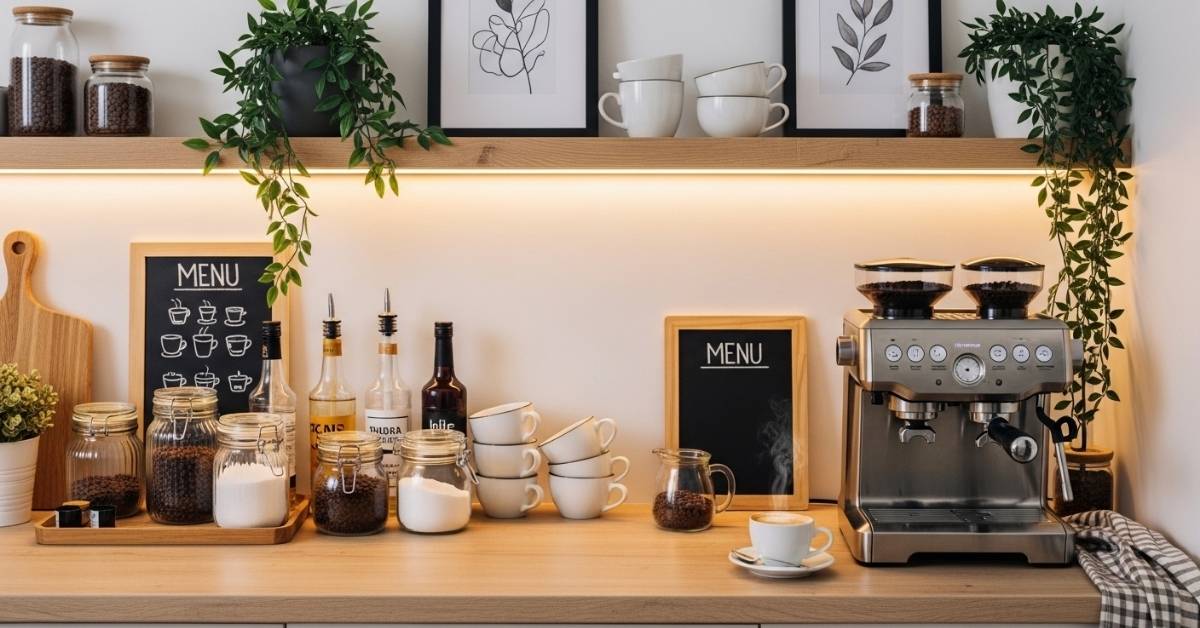
If your morning coffee routine happens at a cluttered kitchen corner between the toaster and a stack of mail, you’re not alone. A dedicated home coffee bar, even a small one changes how your kitchen feels and functions. It gives your daily ritual a proper place, reduces counter chaos, and brings a sense of intentional design to a space you use every single day.
This isn’t about replicating a café aesthetic or spending a lot. It’s about organizing what you already have, adding the right pieces, and setting up a zone that works for your specific space whether that’s a studio apartment, a rented kitchen with no storage, or a larger home where the coffee area has slowly taken over the entire counter.
If you’re working with a tight layout or just trying to make your kitchen feel more organized, these 27 home coffee bar setup ideas cover everything from floating shelf builds to compact rolling cart solutions and dedicated nook designs.
The Floating Shelf Stack Vertical Storage for Small Kitchens

Walls are the most underused storage surface in most kitchens. A two- or three-shelf floating arrangement mounted at counter height and above gives you vertical room to keep your espresso machine at eye level while stacking mugs, beans, and small accessories on the shelves above. In my experience, wood shelves with black metal brackets tend to hold the most visual weight without looking heavy in the room. This setup works especially well in narrow kitchens where counter space is essentially non-negotiable. The problem it solves: your counter stays clear, and every coffee item has an assigned spot.
The Bar Cart Coffee Station Flexible and Renter-Friendly
A bar cart doesn’t require a single drill hole, which makes it the most practical option for renters or anyone who likes to rearrange. The two-tier format keeps your machine on the upper level closer to the outlet while mugs, a small syrup rack, and a sugar canister sit below. Choose a cart narrow enough to tuck beside a refrigerator or roll into a corner when not in use. The wheels matter more than the aesthetic: look for ones that lock, so nothing slides when you’re pulling the portafilter. This setup doesn’t require a dedicated nook or any permanent changes to your kitchen layout.
The Built-In Cabinet Nook Concealed and Organized

If you have a cabinet with adjustable shelves, converting one section into a recessed coffee nook creates a built-in look without actual construction. Remove a shelf at machine height, add a small LED puck light inside for ambiance, and dedicate the drawer below to pods, filters, or accessories. The visual effect is a cleaner kitchen where the machine disappears into the cabinet rather than sitting on the counter. This approach works best in kitchens where existing cabinetry already runs floor to ceiling and you want to use what’s already there rather than add to it.
The Open Shelf + Pegboard Combo High-Function, Low Footprint
Pegboard solves the storage problem for compact setups that still need a lot of organization. A half-sheet of pegboard (roughly 24″ x 24″) mounted above a single shelf gives you a hanging system for mugs, a measuring spoon, a small plant, and a travel tumbler all without using a single inch of counter space. The shelf below handles the heavy equipment. This is one of the few setups that genuinely scales: add hooks as your collection grows, rearrange when your routine changes. It’s especially practical in kitchens with limited upper cabinet space.
The Corner Counter Setup Using Awkward Angles

Corner counter space is often wasted because nothing fits cleanly into an L-shaped layout. A rotating tray or small lazy susan transforms that awkward zone into the most efficient part of your coffee setup. Position your machine in the corner (where counter depth is deepest), and use the rotating tray for canisters, sweeteners, and syrups you want within arm’s reach. The rotation means nothing gets buried in a corner you can’t see. Under-cabinet lighting even peel-and-stick LED strips makes this area feel intentional rather than like leftover space.
The Sideboard Coffee Bar Living Room or Dining Area Option
Not every home has kitchen counter space to spare. A low sideboard in the dining room or living area is a surprisingly effective coffee bar surface at its counter height, has drawer storage, and often has cabinet space below for a small pod organizer or coffee subscription boxes. This setup works particularly well in open-plan homes where the kitchen flows into the living area, because the sideboard doesn’t look out of place. The key is matching the machine’s finish to the sideboard’s hardware so the whole thing reads as intentional rather than thrown together.
Read More About : 21 Minimalist Kitchen Setup Ideas That Actually Work in Real Homes
The Tiered Kitchen Tray Setup Compact and Portable

A tiered tray system doesn’t take much space but creates a defined zone on an open counter. The lower tier holds the machine and a drip mat; the upper tier has small canisters, a sugar bowl, or a small plant for visual balance. The benefit of this approach is portability: you can pick up the tray and move it when you need the counter for meal prep. Honestly, this is one I’d recommend trying first if you’re not ready to commit to shelves or a cart. It costs almost nothing if you already have a tray, and it immediately gives your coffee area a boundary.
The Minimalist Countertop Bar Single Machine, Zero Clutter
Not every coffee bar needs to hold twelve mugs and a syrup display. A minimalist setup: one machine, one mug, one canister works well for single-person households or anyone who finds visual clutter stressful in the morning. The layout logic here is simple: everything that isn’t used daily goes in a drawer or cabinet. The only items on the counter are the ones you touch every single morning. This keeps the area fast to clean and easy to maintain, which is ultimately why most coffee setups fail; they become clutter zones because there’s no containment rule.
The Pantry Coffee Nook Hidden From the Kitchen

If you have a walk-in pantry or even a deep pantry cabinet, moving your coffee bar off the main kitchen counter entirely is a real option. Mount a power strip on the inside wall, install a short shelf at a comfortable height, add a few hooks on the side panel for mugs, and your entire coffee setup lives hidden away. The kitchen counter stays completely clear. I’ve noticed this style tends to work especially well for households where the kitchen aesthetic matters more than the coffee routine being on display, think formal dining spaces or professionally styled kitchens where appliances are typically hidden.
The Drawer Organizer Coffee Station For Closed-Kitchen Lovers
A dedicated coffee drawer, not a counter setup at all keeps everything in one pull-away spot. A deep drawer below your machine’s counter location becomes a self-contained system: pods in one section, filters in another, the frother tucked beside a spare bag of beans. Bamboo dividers are the most practical option because they’re adjustable and food-safe. This pairs well with a countertop that has only the machine visible; everything else disappears below. The problem it solves: the search for accessories every morning, especially when other kitchen items keep migrating into the coffee area.
The Ladder Shelf Coffee Bar Living Room or Kitchen Use

A ladder shelf leans against the wall, requires no mounting, and offers four to five tiers of storage in a narrow footprint. Place the machine on the second shelf from the bottom for stability and the right ergonomic height, mugs and small canisters on the shelf above, and use the top tiers for decorative items or backup supplies. Ladder shelves are particularly useful in apartments where wall damage from mounting isn’t allowed, and they’re easy to move when you rearrange. The leaning angle naturally draws the eye upward, which makes even low-ceilinged spaces feel a bit taller.
The Under-Cabinet Machine Mount Pure Counter Space Savings
Under-cabinet coffee machine mounts are an increasingly common 2026 kitchen upgrade and they genuinely work for freeing counter space in tight kitchens. Some machines are specifically designed for under-cabinet installation; others use aftermarket mounting brackets. The machine folds down for use and sits flush against the cabinet underside when not in use. This is most practical in kitchens with limited counter depth (around 18–20 inches), where a standard machine takes up a disproportionate share of the workspace. If you’re in a small apartment kitchen where every inch matters, this is worth serious consideration.
The Open Shelving Vignette Styled and Functional

Open shelving works best when it balances function with a bit of styling. The coffee vignette approach treating one or two shelves as a curated display keeps items visible and accessible while creating a visual focal point in the kitchen. The formula that tends to work: machine on the counter below, mugs stacked in two rows on the first open shelf, a glass canister of beans beside them, and one non-coffee item (a small plant, a cookbook) to break up the utility. The visual contrast between materials copper machine, white mugs, green plant does most of the heavy lifting aesthetically.
Read More About : 27 Kitchen Makeover Ideas on a Budget That Actually Work in Real Homes
The Breakfast Bar Coffee Setup Counter Extension as a Station
If your kitchen has a breakfast bar or island, the end cap is often underused. A small section of island or breakfast bar counter roughly two feet wide is enough for a machine, a mug rail mounted beneath the overhang, and a small tray for supplies. This setup keeps the coffee area separate from the main food prep counter, which helps maintain organization. The pendant light above the island usually provides good task lighting right where you’re working, which is something many countertop coffee setups lack.
The Hutch Coffee Bar Vintage and Practical

A hutch either original to the home or sourced secondhand gives you the most complete coffee storage solution without custom cabinetry. The lower section holds the machine and prep area; the upper glass-door cabinets store mugs, glasses, and specialty syrups. Hutches are particularly good at hiding the visual weight of a coffee setup because the upper doors contain what would otherwise be an open shelf situation. Sourcing a secondhand hutch and painting it to match your kitchen trim is one of the higher-impact, lower-cost setups you can do if you have the floor space for it.
The Rolling Kitchen Island Coffee Bar Movable Prep Station
A compact rolling kitchen island with a butcher block top gives you extra counter space specifically for the coffee setup without permanently altering your kitchen layout. The open lower shelves hold mugs and accessories; the top surface has enough room for a machine, a grinder, and a small tray. Rolling it toward an outlet is straightforward, and rolling it out of the way when you need open kitchen floor space is equally easy. This works particularly well in kitchens that lack an island but have enough floor area to accommodate one part-time.
The Reclaimed Wood Shelf Bar Warm and Textured

Reclaimed wood shelves bring texture and warmth to kitchen walls that tend to feel flat especially in kitchens with all-white cabinetry and tile. A single thick plank (around 2 inches deep) mounted on hairpin or pipe brackets can hold a full-size machine plus mugs with room to spare. The visual roughness of the wood creates contrast against smooth tile or painted drywall, which gives the coffee area a deliberate, styled quality without requiring any other décor changes. This is the setup that photographs well and actually improves in person the warmth of the wood reads differently in person than in images.
The Nespresso + Mug Drawer Combo For Pod-Machine Simplicity
Pod machine setups benefit from a single organizational rule: pods always go in one specific drawer. A pull-out drawer insert with separate compartments for different pod varieties keeps the counter clear and makes morning choices automatic, no rummaging, no searching, no leaving pods scattered across the counter. The machine sits above, the drawer directly below. This is as much about workflow as it is about aesthetics. The right physical arrangement creates a predictable routine, which is what makes a coffee station genuinely useful rather than just visually appealing.
The Backlit Shelf Display Lighting as the Main Feature

LED strip lighting mounted along the underside or back of a shelf changes the entire visual register of a coffee area. In a darker kitchen one without much natural light backlit shelving creates depth and warmth where there otherwise wouldn’t be any. The key is color temperature: 2700K warm white, not daylight white, which reads clinical. This setup works best on a single shelf with intentional, minimal items; the lighting is the feature, so clutter undermines it. Glass canisters and clear mugs reflect the light particularly well, which amplifies the effect.
The Vintage Caddy + Tray Setup Budget-Friendly Organization
A countertop caddy, the kind typically used for utensils or office supplies, works surprisingly well for organizing pods, stirrers, a travel frother, and small accessories in one compact vertical footprint. Pair it with a flat tray underneath to define the coffee zone without using an additional counter surface. The tray serves as a visual boundary: everything on the tray is coffee, everything off the tray is kitchen. This is one of the most affordable ways to add structure to a counter setup. The caddy and tray together typically cost less than thirty dollars, and they require zero installation.
The Coffee Nook with Chalkboard Wall Personalized and Playful

A chalkboard-painted section of wall even just two square feet behind your coffee area adds a layer of personalization that most kitchen setups lack. Use it to write out a weekly coffee menu, track which beans you have open, or list your favorite brewing ratios. It also functions as a visual anchor for the coffee zone: the dark rectangle behind the setup gives it a defined background, which makes even a basic machine-and-mug arrangement look like it belongs somewhere specific. Chalk paint is easy to apply and relatively forgiving, making it a good option for renters who can repaint on move-out.
The Two-Tone Cabinet Coffee Corner Color Blocking for Visual Definition
Color-blocking one section of cabinetry in a contrasting color deep navy, forest green, or charcoal designates the coffee zone visually without requiring any physical separation. The machine sits on the counter above the painted section, and the color cue tells everyone in the household (and every guest) that this is the coffee corner. This approach works particularly well in kitchens where the layout doesn’t naturally create a coffee nook and you want to define one without adding furniture. Cabinet paint is lower-commitment than it sounds: a quart can, a small brush, and one afternoon.
The Farmhouse-Style Coffee Bar Cabinet Standalone Furniture Piece

A purpose-built or repurposed coffee bar cabinet, typically a freestanding piece with a countertop surface, open upper shelving, and enclosed lower storage gives you the most self-contained setup possible. Everything lives in one furniture piece that can move with you or be sold. For farmhouse or transitional kitchens, white or cream painted wood with minimal hardware keeps the piece from competing visually with the rest of the kitchen. The lower enclosed section is useful for larger items: a travel mug collection, a bag of beans, a spare grinder.
The Spice Drawer + Machine Setup Smart Repurposing
A spice drawer repurposed for coffee accessories small containers of cinnamon, vanilla powder, cocoa, and other additions keeps specialty ingredients next to the machine without adding any items to the counter. Pull the drawer open, grab what you need, close it. This works best directly below or beside your machine position, so the physical distance between machine and accessories stays minimal. Workflow efficiency matters more in the morning than most people expect a setup that requires walking to three different spots to make one cup will eventually get abandoned.
The Gallery Wall Coffee Nook Art-Integrated Design

Combining a gallery wall with the coffee bar area makes the machine feel like part of a designed moment rather than a standalone appliance. Keep the framed prints above the machine, leave a small shelf within the gallery arrangement for a plant or a canister, and let the art extend the visual zone upward. This is particularly useful for anyone who finds the typical coffee bar setup too “kitchen-utilitarian” and wants the space to feel more like a styled corner of the home. The key is scale: prints that are too small will look lost around a full-size espresso machine.
The Industrial Pipe Shelf Coffee Bar Strong Visual Character
Galvanized or black pipe shelf brackets, the kind you’d typically see in industrial or loft-style spaces, bring strong visual character to a coffee setup that needs a focal point. The bracket-and-plank shelf holds the machine and a mug tree; the pipe hardware adds enough visual weight to make the coffee area feel like an architectural feature of the kitchen rather than an afterthought. This setup pairs well with exposed brick, painted black accent walls, or matte subway tile. It’s more installation-intensive than a standard bracket shelf, but the result is durable and genuinely high-impact.
The Window Ledge Coffee Bar Natural Light as a Feature

A deep window ledge twelve inches or more is one of the most underutilized surfaces in a kitchen. Position a compact machine in front of the window, and you immediately create a morning ritual spot that has the best natural light in the room. The daylight changes throughout the morning, which makes the corner feel dynamic rather than static. The caveat: direct south-facing sunlight can degrade coffee beans quickly, so keep beans in an opaque canister rather than a glass jar. For any kitchen with a genuine window ledge and a smaller machine, this is the most atmospheric setup on the list.
What Actually Makes a Home Coffee Bar Setup Work
The difference between a coffee area that holds together for years and one that becomes cluttered within three weeks almost always comes down to one thing: containment rules. Every item in the setup needs a specific home, not a general area, but an assigned spot. When that structure is missing, accessories migrate, the tray fills up with non-coffee items, and the whole thing unravels.
A few practical considerations that rarely get addressed: outlet placement matters more than most people account for when planning a coffee bar. Ideally, your machine should sit within direct reach of an outlet without a cord crossing the counter in a visible line. If that means rearranging your layout to put the machine in a slightly less “ideal” spot aesthetically, the functional payoff is worth it. Cord management, a simple adhesive cable clip or a routed cord channel under the counter is the most overlooked detail in coffee bar setups.
Storage proximity is the other major factor. The more steps between your machine and your accessories (beans, milk, cups), the more friction your morning routine has. The goal isn’t a beautiful arrangement, it’s a fast one. Organized beautifully within arm’s reach of everything is the actual target.
Home Coffee Bar Setup Comparison Guide
| Setup Type | Best For | Space Required | Storage Capacity | Renter-Friendly | Budget Level |
| Floating shelf stack | Small kitchens with wall space | Minimal | Medium | No (wall mounting) | Low–Mid |
| Bar cart | Renters, flexible layouts | Small–Medium | Medium | Yes | Low–Mid |
| Cabinet nook | Existing full-height cabinetry | Minimal | High | Yes (no changes) | Low |
| Pegboard + shelf | High-accessory setups | Small | High | Mostly | Low |
| Sideboard | Living/dining area use | Medium | Medium–High | Yes | Mid |
| Ladder shelf | Apartments, no-mount zones | Small | Medium | Yes | Low–Mid |
| Rolling island | Kitchens lacking an island | Medium | High | Yes | Mid |
| Farmhouse cabinet | Standalone furniture preference | Medium–Large | High | Yes | Mid–High |
| Window ledge | Compact machines, natural light | Minimal | Low | Yes | Low |
| Backlit shelf | Low-light kitchens, ambiance | Small | Low–Medium | No (wiring) | Mid |
Common Home Coffee Bar Mistakes That Make the Space Feel Cluttered
Overloading the surface from day one.
Most coffee bar setups fail because they start with too many items rather than too few. A machine, a canister, and two mugs is a starting point not an endpoint. Add items only when you identify a genuine daily need, not because the surface “has room.”
Ignoring the vertical dimension entirely.
A flat counter-only setup hits a storage ceiling quickly. Even one shelf above the machine doubles your usable space. This is especially true in small kitchens where the counter is already doing too much work.
Mixing coffee storage with general kitchen storage.
When the coffee drawer also holds batteries, twist ties, and takeout menus, it stops functioning as a coffee drawer. Dedicated zones require actual boundaries, physical dividers at minimum, a separate drawer or shelf at best.
Choosing aesthetics over outlet proximity.
A beautiful coffee corner positioned three feet from the nearest outlet means a cord running across the counter, draped behind items, or routed awkwardly. This is worth solving before committing to a layout or choosing a different wall.
Ignoring scale.
A compact Nespresso machine on a large sideboard looks sparse and disconnected. A large dual-boiler espresso machine on a narrow floating shelf looks precarious and crowded. Match the machine’s scale to the surface, and build the rest of the setup around that relationship.
FAQ’s
What is the best home coffee bar setup for a small kitchen?
A floating shelf stack or a bar cart typically works best in small kitchens because both use vertical space rather than counter space. A cart requires no installation and can be moved, making it ideal for renters. A floating shelf over the counter keeps the machine accessible without giving up the prep area.
How do I set up a coffee bar without taking up counter space?
Floating shelves, under-cabinet machine mounts, ladder shelves, and bar carts all allow you to keep a full coffee setup without permanently occupying counter space. A cart can be rolled out when in use and tucked away after; shelves move the storage vertical rather than horizontal.
Do I need a dedicated space to set up a home coffee bar?
No. A coffee bar is defined by organization and containment, not a specific type of furniture or room. A tray on a kitchen counter, a section of a sideboard, or a corner of a pantry can all function as a coffee station as long as the items are intentional and within easy reach of an outlet.
Bar cart vs. floating shelf: which works better for a coffee station?
A bar cart is better for renters and anyone who wants flexibility; it requires no installation and can be repositioned. Floating shelves offer more stability, hold heavier machines more securely, and work better if you want the setup to feel permanent and architectural. The right choice depends on your living situation and how often your layout changes.
How do I keep a coffee bar from looking cluttered?
Limit the counter surface to items used daily. Everything else backup pods, extra beans, accessories used occasionally goes in a drawer, cabinet, or closed storage. Using a tray or mat to define the zone visually helps contain items and makes the area easier to clean. Consistency matters more than aesthetics: if items always return to the same spot, clutter doesn’t accumulate.
What’s the most budget-friendly coffee bar setup?
A tray-based counter setup using items you already own is the most affordable starting point, often free. A bar cart from a thrift store or a discount retailer, combined with a few hooks and a canister, keeps the budget under fifty dollars for a complete setup. The floating shelf approach with basic brackets and a pine plank is also low-cost and high-impact.
Is a dedicated coffee bar worth it in a rented apartment?
Yes, particularly if you make coffee daily. The functional benefit of a defined, organized area where everything is within reach reduces morning friction significantly. Renter-safe options like bar carts, ladder shelves, and removable adhesive hooks mean you can create a full setup without risking your security deposit.
Conclusion
Getting your home coffee bar setup right isn’t about having the most equipment or the most space, it’s about designing a small zone that works every single day without requiring effort to maintain. The ideas here range from zero-installation solutions to more permanent shelf builds, which means there’s a workable option for almost every kitchen type, budget, and aesthetic preference.
Start with one or two ideas that match your actual constraints, your outlet location, your counter depth, whether you rent or own. Adjust from there. A coffee bar that functions well in your space will always serve you better than one that looks impressive in a photo but doesn’t survive the morning routine.
