

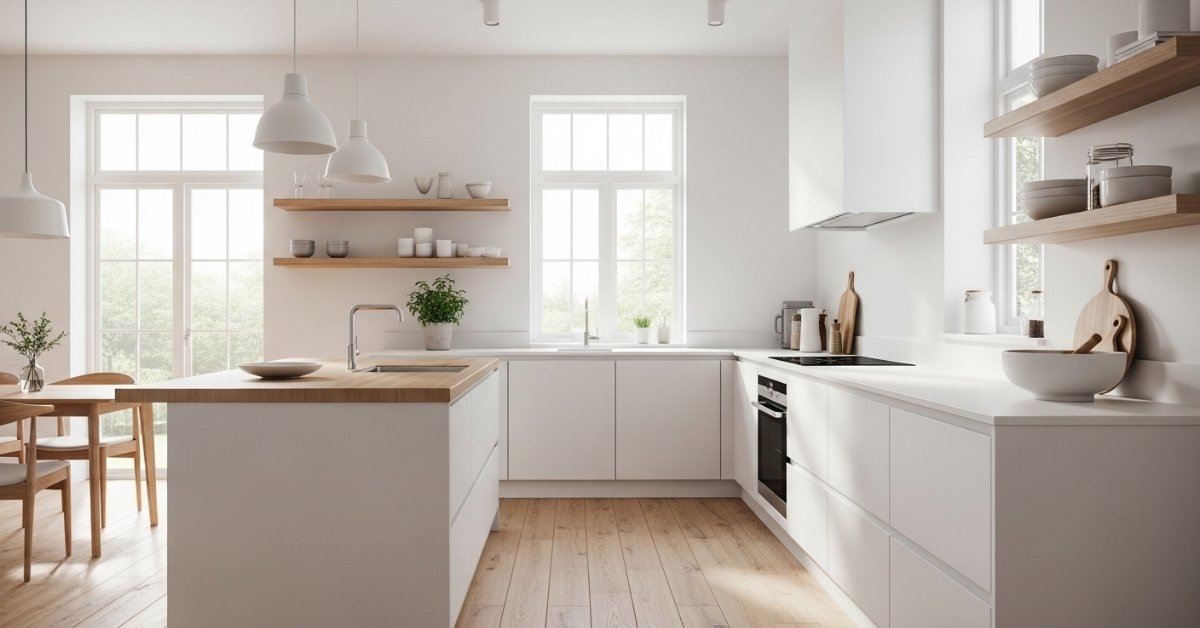
A cluttered kitchen doesn’t just look messy, it makes cooking feel harder than it needs to be. When counter space disappears under appliances, mail, and miscellaneous items, the room stops functioning the way it should. A minimalist kitchen setup isn’t about having less; Minimalist Kitchen Setup Ideas it’s about keeping only what earns its place.
If you’re working with a small kitchen, a galley layout, or an open-plan space that bleeds into the living area, these ideas are designed for real constraints not magazine shoots. The focus here is on layout logic, smart storage, and visual calm that holds up in daily use.
In 2026, the minimalist kitchen trend has shifted away from cold, sterile white boxes toward warmer neutrals, natural materials, and intentional negative space. It’s minimal, but it actually feels livable.
Clear Counter Policy With a Single Appliance Rule

The fastest way to make a kitchen feel twice as large is to limit what lives on the counter permanently. Pick one appliance, the one you use every single day and let everything else live inside a cabinet. Most kitchens default to appliance sprawl because there’s no system; this setup creates one. It works especially well in galley kitchens where counter depth is already limited and visual clutter compresses the space further. The result isn’t just aesthetic: fewer items on the counter means faster prep and easier cleaning.
Open Shelving With Intentional Negative Space
Open shelving only works when restraint is part of the plan. The mistake most people make is treating shelves like extra cabinet space filling every inch. Instead, leave deliberate gaps between groupings: three stacked bowls, one small plant, two glasses. That breathing room is what makes the eye read the shelf as designed rather than disorganized. This approach works best in kitchens with good natural light, since open shelves in dark spaces can feel heavy. For renters, floating shelves are an easy install that avoids permanent changes.
Handleless Cabinet Fronts for a Seamless Wall Effect

Push-to-open or recessed-grip cabinet doors eliminate the visual interruption that traditional handles create. When every cabinet front is flush, the wall reads as one continuous surface rather than a collection of individual units. This setup is particularly effective in small kitchens where hardware can make cabinetry feel chunky or dated. It’s not just a style move; handleless fronts also make wiping down surfaces faster and keep the layout looking intentional without adding cost to every panel.
Integrated Appliances That Disappear Into Cabinetry
When appliances match cabinet panels, the kitchen stops reading as a room full of machines and starts reading as a cohesive space. A panel-ready refrigerator, dishwasher, or even microwave drawer eliminates the visual interruption of stainless steel boxes competing with your cabinetry. This works best in kitchens that open into a dining or living area integrated appliances help the kitchen blend rather than dominate. It’s a longer-term investment, but honestly, it’s one of the highest-impact changes you can make to a minimalist setup.
A Single Tonal Color Palette (Including Inside Cabinets)

Choosing one color family and committing to it walls, cabinets, even interior shelf lining creates a depth that makes a kitchen feel more expensive and more calm simultaneously. The key is variation in finish rather than color: matte cabinets against a slightly warmer matte wall, with a satin backsplash. This setup solves the problem of kitchens that feel “busy” despite being mostly neutral. I’ve noticed this style tends to photograph well on Pinterest precisely because there’s no visual competition; the eye has one place to rest.
Undermount Sink With Seamless Countertop Flow
A drop-in sink creates a visible edge that interrupts the counter surface. An undermount sink removes that line entirely, letting quartz or stone run continuously from prep zone to basin. Beyond aesthetics, it’s genuinely more functional wiping crumbs directly into the sink becomes a one-motion task with no rim to catch debris. For minimalist kitchen setups, this is one of those details that reads as high-effort but actually improves daily usability in a very practical way.
Read More About : 27 Kitchen Makeover Ideas on a Budget That Actually Work in Real Homes
Under-Cabinet Lighting as the Primary Task Light

Overhead lighting alone leaves the counter in shadow especially if upper cabinets block the ceiling fixture. Installing LED strips under wall cabinets directs light exactly where you need it: the cutting board, the stove, the prep area. This is a small-budget change (most systems run on plug-in or direct wire) that dramatically improves how functional the kitchen feels after dark. It also adds a subtle warmth to the room that pendant lights positioned overhead don’t create. In minimalist kitchens, where there’s often less visual complexity, lighting becomes the primary mood setter.
Vertical Storage on Empty Walls Using Magnetic or Rail Systems
If counter space is limited, the wall above the counter is underused real estate. A horizontal rail system with S-hooks and small baskets can hold knives, utensils, small pots, or even a plant without taking up drawer or counter space. This is especially useful in studio kitchens or compact galley layouts where every square foot counts. The visual effect is intentional rather than cluttered when kept to one wall zone and limited to items actually used daily. Wall rails are also renter-friendly when installed with the right anchors.
A Monochrome Backsplash That Extends to the Ceiling

Most backsplashes stop at the bottom of the upper cabinets, a logical but limiting choice. Running tile from counter to ceiling (especially in a niche or along a cooking wall) creates a sense of height and continuity that makes small kitchens feel significantly taller. It also eliminates the awkward painted strip between cabinet tops and the ceiling that often collects grease and dust. Choose a low-contrast grout in the same tone as the tile to preserve the seamless effect. This setup works best in kitchens with at least some natural light, since floor-to-ceiling tile in a dark kitchen can feel heavy.
A Portable Kitchen Island With Hidden Storage
A rolling island adds prep surface and storage without committing to a fixed layout. In smaller kitchens, this matters: you can push it against a wall when you need movement space, or position it centrally when you’re cooking. Look for models with lower shelving rather than doors, since open storage makes it easier to grab what you need quickly. Butcher block tops add warmth to an otherwise cool-toned kitchen without the cost of stone. This is one of the most flexible investments in a minimalist kitchen setup, especially for renters.
Decanted Pantry System in a Single Closed Cabinet

Keeping food packaging visible cereal boxes, chip bags, and random cans is one of the fastest ways to make an open pantry or kitchen feel chaotic. Decanting dry goods into uniform glass or ceramic containers and storing them behind a closed door solves the problem entirely. It’s not about display; it’s about containment. The closed cabinet part matters decanting into open shelving works on Pinterest but rarely works in kitchens that get actual daily use. For the minimalist kitchen setup, the goal is calm when the cabinet is open and invisible when it’s closed.
Slim-Profile Floating Shelves for Frequently Used Items
Not every item needs to be hidden. A few well-chosen objects displayed on slim floating shelves, an olive oil bottle, a cutting board you use every day, a single plant add visual interest without clutter. The key word is slim: shelves under 8 inches deep keep the display feeling intentional rather than storage-overflow. This is different from open shelving as a full storage strategy; this is more about one small, curated zone that gives the kitchen a lived-in but edited feel. It works well in kitchens that lean all-white or all-neutral and need one grounding element.
A Deep Single-Basin Sink for a Cleaner Counter Setup

Divided sinks require you to work around the divider dishes pile on one side, the other becomes a catch-all. A single deep basin removes that constraint and makes the sink area feel more open and purposeful. For minimalist kitchens, the basin style matters less than depth: a deeper sink means fewer dishes sitting on the counter while soaking. This is a practical choice that also happens to photograph well, which is why it’s become a consistent feature in minimal kitchen design in 2025 and into 2026.
No Upper Cabinets on One Wall Open to the Wall Instead
Removing upper cabinets from one wall, especially the wall facing you as you cook creates an immediate sense of openness. It makes the ceiling feel higher and the room feel wider, even in a small kitchen. The trade-off is storage, which means this works best when paired with a well-organized lower cabinet system and pantry. In my experience, this works best when the wall you open up gets some natural light, a window wall, or the wall opposite a window, where the light reflects and adds brightness.
A Simple Linear Layout With One Continuous Work Triangle

The work triangle, the movement path between sink, stove, and refrigerator is the most important functional element in any kitchen layout. In a minimalist setup, the goal is to keep this flow clear and unobstructed. That means no kitchen island that blocks movement, no appliances mid-counter that break the prep zone. A galley or L-shaped layout with one clear counter run handles this best. When the layout makes physical sense, the kitchen doesn’t just look more minimal it works more efficiently.
Matte Black or Brass Hardware as the Only Accent Detail
When the rest of the kitchen is tonal and restrained, hardware becomes the single design decision that carries a lot of weight. Matte black hardware on white or warm cabinetry adds contrast without adding busyness. Brass hardware on greige or sage tones adds warmth. The rule is one finish, used consistently: faucet, handles, light fixture if there is one. Mixing metal finishes is the most common way a minimalist kitchen setup starts to feel unresolved. Pick one and commit.
A Hidden Charging and Tech Station Inside a Drawer

Phones, tablets, and small devices tend to accumulate on kitchen counters because there’s nowhere else to put them. A drawer with a built-in charging strip (USB-A and USB-C) keeps devices accessible without occupying counter space. This is a low-cost modification; most charging strips can be retrofitted into an existing drawer with a drill and cable clips. For anyone who works from home or uses a kitchen counter as a catch-all, this one change keeps the counter genuinely clear rather than clear-except-for-the-phone.
Recessed Toe-Kick Drawers for Flat Pan Storage
The space between the bottom of base cabinets and the floor the toe kick is almost always wasted. Toe-kick drawers use that depth to store flat items: sheet pans, cutting boards, pizza stones, oven trays. These items are bulky, awkward to store vertically, and don’t need to be easily accessible, making the toe kick an ideal location. It’s one of those solutions that makes an architect friend nod slowly in approval. The kitchen looks identical from the outside; the storage capacity increases noticeably.
A Concrete or Quartz Countertop With No Visible Seam

A long, uninterrupted counter surface with no tile breaks, no material switches is one of the easiest ways to make a kitchen feel intentional. Quartz slabs can run full counter length in most kitchens without a seam, and the absence of grout lines or joints means the surface reads as one clean horizontal plane. It’s a practical choice too: fewer seams means fewer places for bacteria and debris to collect. For the minimalist kitchen setup, this is the countertop choice that does the most visual heavy lifting.
A Monochrome Kitchen Mat or Runner in a Tonal Match
A rug or mat in a kitchen is often the thing that either grounds the space or disrupts it. A tonal match cream mat in a cream kitchen, grey mat in a cool-grey kitchen adds comfort underfoot without breaking the visual calm. Avoid patterns, logos, or contrast-heavy color in a minimalist kitchen setup; they fight with the simplicity of everything else. A flat-weave or low-profile style also makes cleaning easier. It’s a small detail, but in a room with few decorative elements, small details matter more.
Read More About : 27 Kitchen Organization Aesthetics That Make Your Space Feel Intentional (Not Just Tidy)
A Window Above the Sink Left Completely Unobstructed

The most underrated move in a minimalist kitchen is simply not adding anything to the window above the sink. No valence, no curtains, no collection of plants on the sill. Just glass. Natural light is the most flattering and functional light source in a kitchen, and blocking it even partially changes how the whole room feels. If privacy is a concern, frosted lower panes or a simple roller shade pulled to the top 80% of the window handles it without adding visual weight. Let the light in, and let the window be architecture rather than decoration.
What Actually Makes a Minimalist Kitchen Setup Work
It’s not the absence of things, it’s the logic behind what stays. A minimalist kitchen that works in real life is built around three principles: storage capacity that matches daily use, a counter system that defaults to clear, and a layout that doesn’t create friction.
Storage first, aesthetics second.
If the storage is insufficient, items overflow onto counters, and the minimal look collapses immediately. Before styling, audit what you actually use weekly versus monthly. Daily items deserve accessible storage. Monthly items can go deep in cabinets or even outside the kitchen entirely.
Layout logic matters more than visual choices.
A beautiful kitchen that positions the refrigerator at the far end from the stove creates inefficiency in every meal. Get the work triangle right before choosing cabinet colors.
Material restraint carries more weight than color choice.
Mixing too many materials: wood, marble, concrete, tile, stainless, brass is what makes kitchens feel busy regardless of color palette. In a minimalist setup, limit primary surfaces to two materials maximum.
Minimalist Kitchen Setup: Layout and Style Comparison
| Setup Type | Best For | Space Type | Key Benefit | Difficulty |
| Handleless cabinets + integrated appliances | High-impact minimal look | Any size kitchen | Seamless wall effect | Medium (renovation) |
| Open shelving + restraint system | Renters, budget-friendly setups | Small to medium kitchens | Light, airy feel | Easy |
| Galley with clear work triangle | Efficiency-focused households | Narrow or compact kitchens | Maximum flow and function | Low |
| Tonal palette + no upper cabinets on one wall | Visual openness seekers | Small kitchens with good light | Sense of space and height | Medium |
| Portable island + wall rail storage | Flexible layouts, renters | Studio or compact open-plan | Flexible function, zero commitment | Easy |
| Toe-kick drawers + decanted pantry | Organization-focused setups | Any kitchen with base cabinets | Hidden capacity, clean counter | Medium |
How to Avoid Common Minimalist Kitchen Mistakes That Make Your Space Feel Cluttered
Buying storage containers before auditing what you own.
This is the most common trap. People invest in decanting systems, drawer organizers, and baskets before deciding what actually needs to live in the kitchen. The result: the same volume of stuff in slightly more attractive containers. Audit first remove anything that hasn’t been used in two months then organize what remains.
Treating “minimal” as “nothing on the walls.”
Blank walls in a kitchen can feel unfinished rather than calm. The goal is purposeful, not empty. One wall rail, two floating shelves, or a single piece of functional art does more for the room than bare drywall.
Ignoring the ceiling and floor.
Light fixtures that are too decorative or too industrial break the tonal calm. Floors with strong patterns compete with everything else. In a minimalist kitchen setup, the ceiling and floor should support the design rather than add another layer of visual decision-making.
Choosing open shelving without a maintenance plan.
Open shelves look minimal in photos because they’ve been edited for the shoot. In daily life, they accumulate dust and visual drift quickly. Go with open shelving only if you’re genuinely committed to keeping it edited otherwise, closed cabinetry serves the look better.
Overlighting the space.
A minimalist kitchen doesn’t need five different light sources. One ambient ceiling fixture, under-cabinet task lighting, and possibly one pendant over an island or peninsula is enough. More lights mean more fixtures, more visual elements, more decisions the opposite of what the setup needs.
FAQ’s
What is a minimalist kitchen setup?
A minimalist kitchen setup is a kitchen organized around only the essentials: clear counters, intentional storage, and a limited material palette. The focus is on function and visual calm rather than decoration. It prioritizes layout logic, easy daily use, and surfaces that default to clear.
How do I start creating a minimalist kitchen without renovating?
Start with the counters: remove everything that isn’t used daily and find it a home inside a cabinet. Then audit what’s inside cabinets; items used monthly or less can move to pantry storage or leave the kitchen entirely. Storage containers, wall rails, and under-cabinet lighting are all low-cost changes that don’t require structural work.
Is a minimalist kitchen practical for families or heavy cooks?
Yes, but it requires better storage organization than a typical kitchen. The key is ensuring that everything used frequently is genuinely accessible, not buried. A minimalist kitchen that forces you to dig for common tools fails the family cook. Focus on smart storage (pull-out drawers, toe-kick drawers, rail systems) before reducing what’s visible.
Open shelving vs. closed cabinets: which works better for minimalist kitchens?
Closed cabinets are more practical for most households. Open shelving works well in smaller kitchens with good light and for people who consistently keep items edited. For daily-use kitchens with multiple cooks, closed cabinetry keeps the visual calm more reliably. A hybrid mostly closed with one small open section tends to work best in real homes.
What colors work best for a minimalist kitchen setup?
Warm whites, off-whites, warm greiges, and sage greens are the most livable choices in 2026. Pure bright white is less common now warmer neutrals feel more grounded and age better under different lighting conditions. The key isn’t the specific color; it’s staying within one tonal family for walls, cabinets, and countertops.
How do I keep a minimalist kitchen looking minimal in daily life?
The counter rule is everything: nothing lives on the counter that isn’t used at least once a day. Build a return habit every item gets put away after use. This is a behavioral system more than a design system. The kitchen layout should make putting things away as easy as leaving them out.
Do minimalist kitchens work in older homes with limited storage?
They can, but storage has to be addressed first. Older kitchens with limited cabinetry benefit from wall rails, portable islands with storage, and pantry cabinets added to adjacent walls or hallways. The aesthetic can still be minimal even in an older space; it just takes a more creative storage strategy.
Conclusion
A minimalist kitchen works best when the decisions behind it are practical, not just visual. Clear counters, intentional storage, and a coherent layout make the room easier to cook in, easier to clean, and easier to maintain which is why the style has held up while other trends have cycled through.
Start with one or two ideas that fit your specific space and how you actually use the kitchen. If counter clutter is the main problem, begin with the single-appliance rule and a storage audit. If the layout feels cramped, look at removing upper cabinets from one wall or adding a portable island. Small, deliberate changes compound quickly in a kitchen. The key is starting with what will have the most practical impact on your daily routine.
