

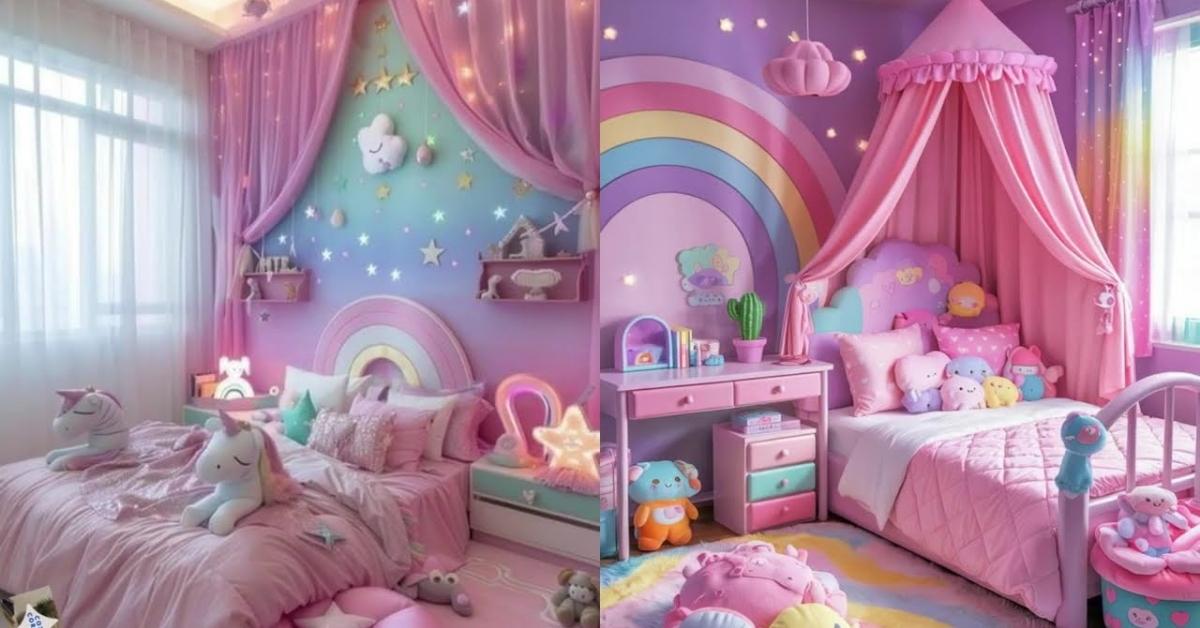
Picking a kids room theme sounds exciting until you’re three months in and your child has moved on from dinosaurs to outer space and the mural you painted is still very much a dinosaur mural. Kids Room Decor The real challenge isn’t finding a theme that looks good in a Pinterest grid. It’s finding one that holds up through phases, works with your actual space, and doesn’t require a full renovation every two years.
If you’re setting up a room for a toddler, a school-age kid, or even a shared space that needs to serve two kids with completely different personalities, the ideas below are built for real homes not styled photo shoots. Most of these work in small bedrooms, rentals, and tight budgets, and several are designed to grow with your child rather than age out by next birthday.
Adventure Camping Theme With a Canopy Tent Bed

A low-profile bed tucked under an A-frame canopy instantly turns a corner into a destination. Layer in forest green bedding, a small woven rug, and warm string lights overhead, and the whole room reads “campground” without a single themed decal. This works particularly well in smaller rooms because the canopy defines the sleeping zone without using wall space. The visual effect is cozy containment; kids love the sense of having “their own” enclosed space. Crate-style shelves double as nightstands and toy storage, keeping the floor clear for play. IMO, this is one of the most flexible setups because swapping out the canopy color or bedding can shift the feel entirely as tastes change.
Outer Space Theme With a Dark Accent Wall and Glow Details
Instead of wallpapering the entire room, paint a single wall in deep navy or charcoal and layer it with peel-and-stick star maps or constellation stickers. The contrast between that one dark wall and lighter surrounding walls makes the room feel larger, not smaller which is counterintuitive but consistently effective in low-ceiling rooms. Add a star projector on the ceiling at night and suddenly bedtime becomes something kids actually look forward to. In my experience, this setup works best when the furniture stays light (white or natural wood) so the room doesn’t feel cave-like during the day. Rocket-shaped shelves or planet mobiles add the theme without overwhelming the space.
Jungle and Botanical Theme With Real and Faux Plants

This theme works because it leans into texture and color in a way that actually improves the atmosphere of the room, not just the look of it. A peel-and-stick tropical leaf wallpaper on one wall, combined with a few oversized faux monstera plants in the corners, creates a layered, immersive effect without clutter. Rattan or cane furniture fits the aesthetic and is genuinely durable for kid spaces. The green tones have a calming effect, which is worth considering if you have a high-energy child who struggles to wind down. This theme also ages well by the time your kid is 10, it reads more “eclectic botanical” than “toddler jungle.”
Princess and Fairy Tale Theme That Doesn’t Look Overwhelming
The mistake most people make with princess themes is going too literal crowns, carriages, hot pink everything. A more livable version uses soft blush, dusty rose, and ivory as the base, then adds the fantasy layer through texture and light. A sheer canopy over the bed, fairy lights in a wreath above the headboard, and gold star decals on a white wall hit the same emotional note without boxing the room into one era of childhood. This setup is especially practical for renters because everything from the canopy to the decals is removable. It also transitions easily, pulls the canopy, changes the bedding, and the room shifts into a more grown-up aesthetic within an afternoon.
Dinosaur Theme With a Modern, Graphic Edge

Skip the roaring cartoon dinosaurs and go graphic instead. Large-format dinosaur skeleton prints in black frames, sage green walls, and olive bedding create a room that’s clearly about dinosaurs but in a way that actually looks considered. The key is treating the theme like an interest rather than a costume: let the accessories (figurines on shelves, fossil-print pillow) carry the content while the walls and furniture stay clean. This approach makes phase transitions much easier when the dinosaur interest fades, you’re swapping out a few accessories, not repainting the entire room.
Ocean and Underwater Theme With a Layered Blue Palette
Gradient painting going from a deeper blue at the baseboard up to a soft sky blue near the ceiling creates an immersive underwater feel without a single mural. It’s a technique that takes about a weekend and costs less than wallpaper. Pair it with rope-detail mirrors or shelves, seagrass storage baskets, and a mix of ocean creature decals at different heights to suggest depth. This theme works well in narrow rooms because the vertical color gradient draws the eye upward, making ceilings feel higher. If you’re working with a rented space, the decals do the storytelling and the gradient can be neutralized with two coats of paint when you move.
Woodland and Forest Theme With Earthy Neutrals

Woodland themes have staying power because they’re built on a neutral palette of beige, rust, terracotta, forest green that doesn’t feel aggressively childish as kids get older. A set of framed fox, deer, or mushroom prints functions as actual wall art. A mushroom-shaped nightlight doubles as a design object. The overall effect is warm and story-like without being theme-park loud. This works especially well in shared kids rooms where the aesthetic needs to bridge two different personalities, because it’s soft enough to feel cozy for younger kids and understated enough not to embarrass older ones.
Read More About : 24 Kids Room Storage Ideas That Actually Keep the Chaos Under Control
Rainbow Theme Done in a Muted, Modern Way
A classic rainbow theme can easily tip into sensory overload, but the 2026 version of this look uses dusty, muted tones terracotta instead of red, sage instead of neon green, soft mustard instead of yellow. A large rainbow arch decal above a bookshelf or reading nook anchors the theme on one wall without committing the entire room. From there, the color story plays out through storage bins, cushions, and small accessories rather than painted walls. The result is a room that feels cheerful and age-appropriate without looking like it belongs in a daycare. Honestly, this is one of the easier themes to execute on a budget because the color comes from textile and storage choices rather than custom furniture.
Boho Kids Room With Layered Textiles and Macramé

Boho translates naturally into kids rooms because it’s inherently about layering, and kids rooms already have a lot of objects to organize. A macramé wall hanging above the bed takes the place of a headboard, saving floor space. Layered rugs and a flatweave under a smaller shag add softness without wall-to-wall carpeting. The rattan pendant light brings warmth and texture to what might otherwise be a bland overhead fixture. This theme works especially well in shared spaces because its aesthetic absorbs a range of colors and styles rather than requiring everything to match. It also suits renters perfectly and every element is removable.
Superhero Theme With a Graphic Poster Wall
The instinct with superhero rooms is to go branded and literal character bedding, logo decals, themed pillowcases. A more durable approach uses graphic design as the framework instead: bold typography prints, color-blocked poster art, and comic-inspired patterns that feel more editorial than merchandise. Red, navy, and yellow work as a base palette that’s unmistakably superhero without referencing a specific character (helpful when your child rotates through Avengers phases). A gallery wall of framed comic-style prints ages into teen-friendly “vintage graphic” territory, which is a much softer landing than a room full of Iron Man stickers.
Transportation Theme With a Road Map Play Rug

Transportation themes are most functional when the floor does the heavy lifting. A large road map play rug becomes the activity zone, the visual anchor, and the conversation piece all at once. Kids play on it, organize their toy cars around it, and it takes up zero wall or storage space. Keep the walls clean with a few vintage-style vehicle prints in simple frames and let the rug and toy storage tell the story. Wooden toy garages or airplane hangers double as storage and display. In my experience, this layout works best in rooms where floor space is prioritized, push the furniture to the perimeter and let the rug define the play zone in the center.
Reading Nook Theme Built Into a Bedroom Corner
This is less a visual theme and more a functional one but it’s genuinely one of the best investments in a kids room because it creates a place the child actually returns to. Two short bookshelves placed at right angles define the nook. A cushioned bench or large floor pillow goes inside. String lights above and a small lamp beside it provide the right quality of light for reading without straining. The surrounding walls can carry whatever theme the rest of the room has the nook functions as its own zone within it. This setup works in rooms as small as 9 by 10 feet if the shelves are low and the cushion sits on the floor rather than a built-in platform.
Music and Rockstar Theme With a Gallery Wall of Album Art

This theme skews toward older kids 8 and up but it’s one of the most naturally adaptable because music taste evolves without requiring a room overhaul. A gallery wall of framed album covers (printed at home and framed cheaply) is the visual anchor. Mount a guitar on the wall if they play, or use instrument-shaped wall hooks for bags and headphones. The palette leans darker charcoal, black, warm wood which works well in rooms with decent natural light and suits kids who are starting to want a more grown-up feel. By the time they’re in high school, the room reads “creative studio,” not “kids theme.”
Science Lab and STEM Theme With Organized Display Storage
A STEM-inspired room works because it makes the kid’s actual interests the design system. A pegboard wall in white holds tools, art supplies, or science kits in an organized but visually active way. Clear specimen jars on open shelves display rocks, shells, or collections. A framed periodic table or star map functions as wall art that’s also genuinely useful. The furniture should prioritize the desk this theme centers on doing rather than displaying, so workspace quality matters more than aesthetics. This setup works particularly well for kids who are already readers or hobbyists because the room reflects and supports those habits rather than projecting a theme onto them.
Sports Theme That Doesn’t Look Like a Locker Room
The difference between a sports room that works long-term and one that feels dated in two years usually comes down to whether it’s tied to a specific team. A team-agnostic sports theme, vintage athletic posters, jersey numbers as typographic art, a clean navy and white palette is far more flexible. Trophy and gear shelves handle the memorabilia without becoming clutter. Wall hooks near the door take care of the bag-and-jacket dump zone that happens in every sports kid’s room anyway. This is one of those themes where function drives the aesthetic: the storage system and gear organization become design elements by default.
Farmhouse Kids Room With Shiplap and Warm Wood Accents
Farmhouse style works in kids’ rooms because its material palette white, natural wood, linen is calm enough to support sleep while warm enough to feel nurturing rather than clinical. A shiplap feature wall (or shiplap-look peel-and-stick panels for renters) behind the bed creates texture without color commitment. House-shaped nightlights, rope basket storage, and a simple wooden barn door on a sliding track (even as a closet cover) reinforce the theme without any branded merchandise. This setup is particularly useful for shared sibling rooms because the neutral palette doesn’t heavily favor one gender or age group.
Travel and World Explorer Theme With Maps and Flags

A large vintage world map printed on canvas or as a wall mural panel does more spatial work than most pieces of wall art in this size range. It fills a full wall, starts conversations, and actually teaches something without trying to. Layer in a string of international pennant flags above the window, a globe on the bookshelf, and a vintage suitcase or trunk at the foot of the bed for storage. The palette tends toward warm earth tones, which pairs well with natural wood furniture. This theme grows naturally into a teen room without modification by middle school, it reads as worldly and curious rather than childish.
Read More About : 27 Shared Kids Room Ideas for Boy and Girl That Actually Work in Real Homes
Fairground and Circus Theme With Playful Stripes
Circus themes have a bad reputation for veering into clown territory, but a graphic, vintage-fair version is genuinely charming. Red and white vertical stripes on one wall (painted or through wallpaper) create height and energy. Vintage-style circus posters in simple frames animals, acrobats, big top graphics add character without feeling juvenile. Edison string lights across the ceiling mimic the warm glow of a fairground at night. This works best in rooms with higher ceilings where the stripes can extend to full height in low-ceiling rooms, stop the stripe at chair-rail height and paint above in a neutral.
Cozy Hygge Kids Room With Layered Neutrals

Hygge the Danish concept of cozy, intentional comfort translates into kids rooms as a philosophy of less-but-warmer. Low-profile furniture keeps the room feeling open while still being functional. A layered textile approach (linen duvet, knit throw, sheepskin rug) creates softness and warmth without visual noise. The palette is deliberately limited: warm white, oat, natural wood. There’s no dominant “theme” per se the design logic is in how the room feels rather than what it depicts. This works especially well for sensitive kids who are easily overstimulated, or for parents who want a room that supports genuine rest rather than constant visual input.
Vintage Toy and Retro Theme With Collectibles on Display
This one works best when the child already has a collection and most kids do. The design move is to elevate the collection into a display system rather than letting it pile up in bins. Open shelving at different heights, organized by category or color, turns the toys into wall art. Warm amber lighting on the shelves makes the display feel considered rather than chaotic. The furniture leans mid-century tapered wood legs, clean lines which supports the retro feel without requiring any branded décor. This is also one of the few kids room setups that actually improves as the collection grows.
Glow-in-the-Dark Galaxy Theme With Ceiling Stars

This is one setup where the ceiling is the main event. Apply glow-in-the-dark star stickers in actual constellation patterns Orion, the Big Dipper, Cassiopeia rather than random scatter, and the ceiling becomes both beautiful and educational. The walls can stay relatively neutral (soft navy, gray, or even white) so the room doesn’t feel oppressive during the day. At night, with the lights off, the ceiling does something genuinely magical that kids respond to emotionally, not just visually. This is a particularly good option for kids with anxiety around bedtime. The familiar glow overhead is reassuring in a way that nightlights alone aren’t.
Montessori-Inspired Room Theme With Low Furniture and Open Access
Montessori-style rooms are designed around child independence which, practically speaking, means floor-level beds, low shelves the child can reach, and a limited number of toys on display at a time. The “theme” here is the design philosophy itself: natural materials, calm colors, order. A floor bed on a simple wooden frame with a quality mattress looks intentional, not sparse. Open shelving at child height with rotating toys (only 6–8 out at a time) keeps the room tidy and keeps the child engaged. Too many options create overwhelm, not play. This approach is especially useful for ages 1–6, and the furniture and layout remain fully functional well past that age range.
Art Studio Theme for Creative Kids

The defining feature of an art studio theme is that it actually functions as one not just looks the part. A chalkboard panel (either paint or a mounted board) on one wall gives unlimited creative surface that wipes clean. Open shelving with matching containers keeps supplies visible and accessible without cluttering. An adjustable-height art table grows with the child and prevents the permanent-crouch posture of standard kids’ tables. Pegboard keeps tools organized and visible. The palette should be controlled to let the artwork and supplies provide the color, with the walls and furniture in neutral or warm tones. This works particularly well in rooms with good natural light.
Sports Car and Racing Theme With a Track-Inspired Layout
The race car bed is the signature piece of this theme and it works because it’s genuinely exciting for young kids (roughly 2–7) while the rest of the room can stay fairly neutral around it. A checkered flag border at ceiling height is a graphic detail that reads as intentional design rather than an afterthought. A city racetrack wall decal above the toy shelf ties in without taking over. The color palette red, white, black, yellow keeps things bold without becoming chaotic. As the child ages out of the race car bed, swap it for a standard low bed and the room shifts without much additional change needed.
Harry Potter–Inspired Theme Without the Licensed Merchandise

This works best when you treat it as “magical study” rather than official Harry Potter merchandise. Deep navy and gold bedding, arched bookshelf headboard, candle-style wall sconces, and Edison pendant lights create the atmosphere of a Hogwarts common room without a single logo in sight. Old telescopes, globes, or orrery-style decorative objects reinforce the aesthetic through actual props rather than branded products. This approach is better for the long term; the room reads as intellectual and magical rather than licensed, which means it ages gracefully into a teen’s space. Dress the bookshelf with books that have classic or vintage covers alongside actual Harry Potter editions.
Cloud and Sky Theme for Dreamy Toddler Spaces
For the youngest kids, the sky theme works because it’s sensorially calm and visually simple and because clouds photographed in real life genuinely delight toddlers. A pale blue ceiling with peel-and-stick cloud decals (removable, paintable-over) creates the overhead interest without competing with the walls. White furniture keeps the room bright. A sun-shaped mirror, a pom-pom mobile, and a few rainbow prints add detail without overstimulating. This theme is especially practical for nurseries because it’s completely gender-neutral, suitable from infancy through early childhood, and easy to update by just swapping the ceiling color and removing the decals when the child is ready for something new.
Nature and Outdoor Explorer Theme With Natural Materials

This theme is grounded in the idea that the room itself should feel like an extension of the outdoors not a depiction of it. Wooden branch hooks on the wall hold bags and jackets in a way that feels deliberate. A small canvas tent in the corner functions as both reading nook and play space. Open glass trays display natural collections of rocks, shells, and pinecones that the child has actually gathered, making the room feel personal and genuinely theirs. The palette is warm earth beige, tan, soft green, rust with natural materials throughout. In my experience, this theme works best when parents let the child contribute objects to the room over time, building a space that evolves with their actual curiosity.
What Actually Makes These Kids Room Themes Work Long-Term
The best kids room themes share a structural logic that has nothing to do with which characters or colors are involved. The most durable setups separate the permanent layer (wall color, furniture, flooring) from the theme layer (decals, textiles, accessories). When those two layers stay distinct, changing themes as kids grow becomes a weekend project instead of a renovation.
Scale also matters more than most people expect. Oversized murals or fully upholstered themed beds lock the room into a specific age range. In contrast, a well-chosen accent wall color with swappable accessories gives you flexibility without sacrificing the overall feeling. Theme layers should sit on furniture and textiles first because those are the easiest to swap and only move to walls when you’re confident in a longer-term commitment.
Lighting is consistently underused in kids rooms. Most rely on a single overhead fixture that does too much work and creates a flat, institutional quality of light. A bedside lamp, a string light element, and a nightlight (functional or decorative) create a layered system that adjusts the room’s atmosphere for different activities: play, homework, and sleep all benefit from different light levels.
Kids Room Decor Theme Guide
| Theme | Best Age Range | Space Type | Key Feature | Long-Term Flexibility |
| Camping / Canopy Tent | 3–10 | Small to medium | Enclosed sleeping zone | High swap canopy + bedding |
| Outer Space | 4–12 | Medium, any ceiling height | Star projector + accent wall | High wall repaints easily |
| Jungle / Botanical | 2–12 | Any size | Faux plants + leaf wallpaper | Very high reads adult-ready later |
| Montessori Natural | 0–8 | Small spaces, renters | Floor bed + toy rotation | High neutral base ages well |
| Art Studio | 5–14 | Room with natural light | Chalkboard wall + art table | Very high grows with interests |
| Galaxy Glow | 4–10 | Any size | Ceiling constellation stickers | Medium stickers peel off |
| Travel / World Maps | 6–teenage | Medium to large | World map wall art | Very high reads teen-ready |
| Woodland / Forest | 2–10 | Shared rooms | Neutral earthy palette | High doesn’t skew by gender |
Common Kids Room Decor Mistakes That Make the Space Feel Chaotic or Short-Lived
Going too literal with the theme.
Licensed merchandise character bedding, logo wall decals, branded curtains dates a room fast and limits flexibility when the phase ends. The more effective approach is to capture the feeling of a theme (adventure, magic, curiosity) rather than the exact imagery. Your child is just as happy with a canopy tent as they are with a specific character’s branded version and the canopy tent will still look good in three years.
Filling all four walls.
Kids’ rooms often suffer from an everything-everywhere approach: decals on every surface, posters on every wall, shelves on every available inch. This creates visual noise that actually makes it harder for kids to settle, play, or sleep. One strong feature wall and three calm walls give the room a focal point without constant visual competition.
Ignoring the floor as a design element.
In most kids’ rooms, the floor is where the child spends the most time. A flat, hard floor with no rug or a single small mat creates a cold, underused play zone. A large, soft rug that defines the play area ideally centered in the room with furniture at the perimeter gives kids a clear, comfortable space without adding furniture or clutter.
Choosing furniture that only works for one age.
Toddler-specific furniture (very low chairs, character-shaped storage) works for two or three years at most. Furniture that scales a standard low bed, a full-height shelf with adjustable brackets, a desk with an adjustable chair works for a decade or more and represents a significantly better investment.
Overlooking acoustic comfort.
Hard floors, bare walls, and single-layer window treatments create rooms that echo. That acoustic quality makes them louder and harder to concentrate on, which matters more as kids move into school age. Rugs, curtains, and soft textiles on the walls (macramé, tapestries, upholstered headboards) do double duty as theme elements and sound absorbers.
Frequently Asked Questions
What is the most popular kids room decor theme right now?
Nature-inspired and botanical themes are leading in 2026, followed by space and adventure setups. The shift is toward themes built on neutral, earthy palettes that parents don’t need to repaint in two years. Character-specific themes remain popular for younger kids but are declining in favor of concept-based designs.
How do I choose a kids room theme that will last more than a few years?
Focus on themes tied to broad interests rather than specific characters or franchises. A “space” theme, a “forest explorer” room, or an art studio setup can evolve with the child’s age and taste far more easily than a room built entirely around a single movie or show.
What’s the best kids room theme for a small bedroom?
Camping and canopy tent setups work particularly well in small rooms because the canopy defines the sleeping zone without adding furniture footprint. Montessori-style layouts with floor beds and low shelving also maximize small square footage by keeping sightlines clear and open.
How do I do a kids room theme on a tight budget?
The most budget-effective approach is to invest in one statement piece: a canopy, a large wall decal, or a feature rug and build everything else around it with simple, affordable accessories. Avoid buying full themed sets; mix and match basics with one or two theme-specific items.
Should a kids room theme match the rest of the house decor?
It doesn’t need to match, but it should feel intentional rather than jarring. If the rest of your home is minimal and neutral, a wildly maximalist kids room can feel disconnected. Keeping the kids room palette within a similar temperature range (warm vs. cool tones) as the rest of the home creates visual continuity without making the room feel adult.
How do I transition a kids room theme as my child gets older?
The easiest transition strategy is to keep walls and furniture neutral and let the theme live in textiles, accessories, and decals. When the child is ready for a change, swap the bedding, remove the decals, and update the accessories the bones of the room (furniture, wall color) stay put. This typically costs a fraction of a full redesign.
What kids room theme works best for two kids sharing a room?
Themes based on neutral palettes woodland, nature, travel, or boho work best for shared rooms because they don’t strongly favor a single personality or gender. Letting each child own one section of the room (their bed area, their shelf) within a cohesive overall theme reduces conflict and gives each child a sense of ownership.
Conclusion
A kids room that works well isn’t necessarily the one with the most elaborate theme, it’s the one that supports how the child actually uses the space. Good lighting, accessible storage, a clear play zone, and a palette that doesn’t fight itself go further than any amount of branded merchandise or custom murals. The theme is the personality layer; the design fundamentals are what make the room livable.
Start with one or two ideas that fit your space constraints, your child’s current interests, and your real budget, not your aspirational one. Swap out a rug, add a canopy, hang a gallery wall of prints, or rearrange the furniture to create a reading corner. Small, intentional changes in kids rooms consistently produce more impact than complete overhauls, because the design problem is usually a layout or lighting issue, not a lack of theme.
