

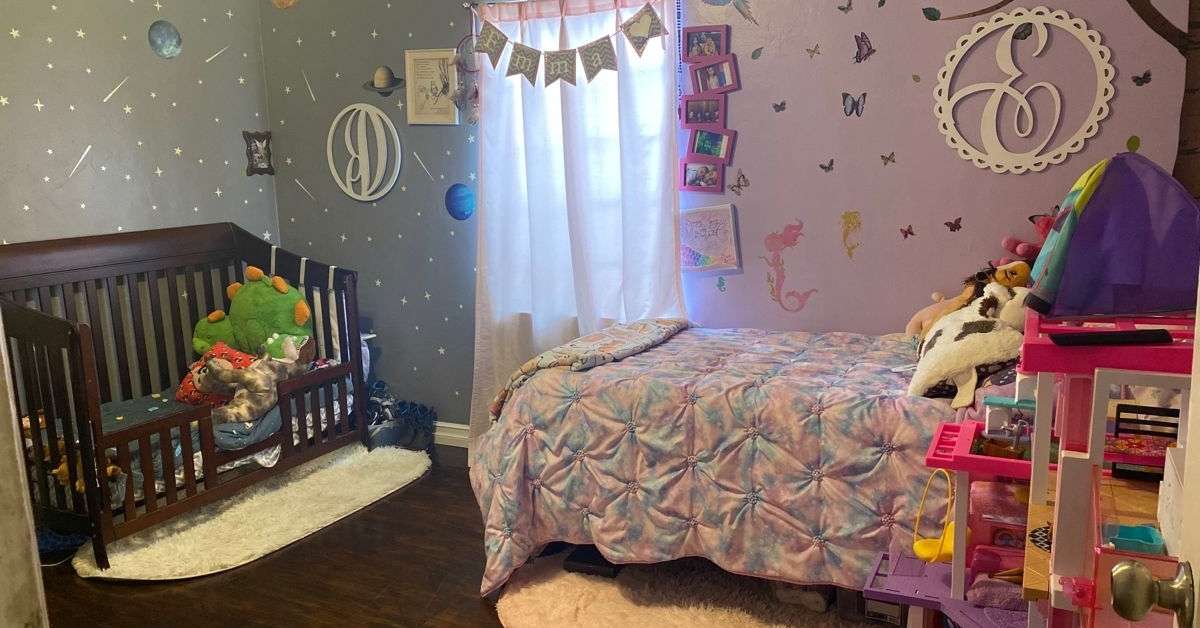
A shared bedroom for a boy and girl doesn’t have to be a negotiation nightmare. The challenge isn’t just aesthetic, it’s spatial, functional, and deeply personal for two kids who each want to feel Shared Kids Room Ideas for Boy and Girl like the room is theirs. If you’re working with one room and two very different personalities, the right setup can make it feel intentional rather than compromised.
These ideas focus on layouts, zoning, and setups that hold up in real apartments and houses, not just curated spaces with unlimited square footage. Whether you’re dealing with a 10×10 box or a narrow rectangular room, there’s a workable approach here.
Split the Room with a Bookshelf Divider

A freestanding double-sided bookshelf placed perpendicular to the longest wall creates two distinct zones without blocking light or requiring a renovation. Each child faces their own side; one might have a reading corner, the other a play mat while the shelf itself holds shared books, toys, or storage baskets. In my experience, this works best when the shelf is secured to the wall at the top for safety and positioned so natural light still reaches both zones. It solves the classic problem of two kids constantly encroaching on each other’s space, and it’s reversible for renters.
Bunk Beds with Personalized Bedding
Bunk beds are the obvious space-saver, but the way you personalize each level matters. Give each child a completely different bedding palette: navy stripes on the top bunk, dusty pink on the bottom so both feel like their sleep space belongs to them. Add a small reading light clipped to the frame of each level, and consider a privacy curtain for the bottom bunk. The vertical layout frees up the floor for play and movement, which is the real payoff in smaller rooms.
Two Distinct Desk Zones Along One Wall

Side-by-side desks sound like they’d cause conflict, but when each workspace has its own character, a different desk lamp, different small corkboard above it, kids tend to claim their spot naturally. Keep a 6-8 inch gap between the two desks as a visual separator. Use floating shelves above each desk for personal items and framed art, which defines ownership without physical partitions. This layout is especially useful in rooms where kids share the space for homework in the evenings.
A Gender-Neutral Color Base with Personal Accent Walls
Instead of splitting the room into pink and blue, paint all four walls a shared neutral warm white, sage, or greige and let each child have one accent: a removable wallpaper panel, a gallery wall above their bed, or a colored headboard. This approach keeps the room visually cohesive while giving each kid genuine ownership over their corner. It’s far less chaotic than trying to blend two competing color schemes across every surface.
Loft Beds with Individual Activity Zones Below

When ceiling height allows (ideally 9 feet or more), a loft bed for each child turns the space underneath into a personal zone; one kid gets a reading nook with floor cushions, the other gets a building table or art station. Each child’s “world” is stacked rather than spread horizontally, which actually makes a shared room feel more spacious overall. Use the same loft bed frame in the same finish to maintain visual unity.
A Shared Play Rug in a Neutral Zone
The middle of the room is shared territory. Treat it that way. A large, gender-neutral rug (think terracotta, olive, or charcoal geometric) anchors the play area and signals “this part belongs to both of you.” Furniture stays along the walls, keeping the central zone open for movement. Honestly, this single decision does more for the room’s functionality than almost any other; it reduces clutter drift and makes cleanup more intuitive.
Matching Bed Frames, Different Headboards

Same frame, different headboard this is a simple way to achieve visual cohesion while letting each child have something personal. A neutral wood platform frame works for both kids; one has a fabric panel headboard in forest green, the other in terracotta. The room reads as designed, not accidentally assembled.
Read More About : 26 Small Kids Room Ideas That Actually Work in Tight Spaces
Color-Coded Storage Systems
Assign each child a color for storage bins, drawer pulls, and hooks. Keep the colors muted dusty blue for one, warm rust for the other so the scheme feels deliberate rather than toy-like. Wall-mounted hooks near the door, low open shelving in their assigned color, and labeled bins under the bed creates a system that kids can actually maintain. This solves the “that’s mine” argument at the organizational level.
A Curtain Divider on a Ceiling Track

A ceiling-mounted curtain track running down the center of the room gives each child the ability to create full privacy when needed for dressing, quiet time, or just wanting their own space. During the day, the curtains pull fully to one side and the room feels open. This is one I’d actually recommend trying first for renters, because it requires no permanent modification and costs relatively little. Use a linen or cotton canvas in a neutral tone that doesn’t visually chop the room.
A Shared Reading Corner in One Corner of the Room
Two small bean bags or floor cushions, a low bookshelf, and a warm pendant light dedicate one corner to reading that both kids share equally. This creates a “third zone” in the room that neither child exclusively owns, which can actually reduce territorial conflict over the individual sleeping areas. It also gives the room a purpose-built area that doesn’t default to clutter.
Identical Nightstands with Different Lamps

Matching nightstands create symmetry; different lamps break the monotony and give each child a personal touch. A ceramic lamp in terracotta versus a rattan shade in natural tan both feel cohesive but distinct. This also solves the “whose is whose” question without any labels or negotiation.
A Themed Shared Zone (Like Space or Nature)
Choose one theme that genuinely excites both kids’ space, forest, ocean, maps and apply it only to shared areas: the rug, curtains, ceiling decor, and reading corner. Each child’s personal zone (bed, desk) stays individually styled. This creates a unifying story for the room without forcing one child’s theme onto the other’s space.
Under-Bed Storage Drawers as Personal Zones

Platform beds with built-in drawers give each child their own “drawer” for personal items, the ones they don’t want on display. In a small shared room, under-bed storage is essential because floor space is limited. Assign two drawers per child and don’t cross-contaminate. It sounds simple but it removes a significant daily source of conflict.
Floating Shelves Above Each Bed
Each child gets their own floating shelf above their bed for personal items, small figurines, books, or art. The height keeps it visual and decorative without taking up floor space. Use the same shelf style in the same wood finish to keep the room cohesive let the objects on each shelf do the individual expression work.
A Pegboard Station for Each Child

A painted pegboard panel on the wall beside each desk gives kids a place to organize their own supplies, hang art, and personalize their space with hooks, small shelves, and clips. Keep the boards the same size and finish but let kids arrange their own. This is especially useful for kids who like visual organization and it scales with them as interests change.
Separate Closed Wardrobes Side by Side
Open wardrobes make shared rooms feel messier; closed wardrobes keep each child’s belongings private and visually contained. Two identical wardrobe units placed side by side look intentional rather than cluttered. Add a name plaque or small personalized detail to the door of each to reinforce ownership without changing the furniture itself.
Read More About : 22 Home Office Wall Decor Ideas That Make Your Space Feel Intentional (Not Just Filled)
A Mural or Accent Wall in the Neutral Zone

Commission or DIY a large mural on the wall that runs between both sides of the room behind the headboards or on the opposite wall. A forest panorama, a city skyline, or an abstract landscape creates a visual throughline that ties both halves together. This is more effective than two separate accent walls, which tend to fight each other visually.
Height-Adjustable Desks for Growing Kids
Kids grow fast, and a shared room often needs to evolve with them. Height-adjustable desks that can shift from seated to standing are a smart investment for a room that needs to work across ages. I’ve noticed this setup tends to get more use as kids get into middle school years when homework demands increase and each child wants genuine separation at work time.
A Shared Toy Kitchen or Sensory Table as Room Centerpiece

For younger children sharing a room, a large play kitchen or sensory table placed at the center of the room acts as a shared focal point that encourages play together rather than parallel play in separate corners. It reduces the instinct to claim and defend individual areas and creates a genuinely functional piece both kids can use simultaneously.
A Canopy Over Each Bed for Privacy
Even in a fully open room, a light canopy draped over each bed creates a soft sense of enclosure that makes each child’s sleeping space feel personal. For a shared boy-girl room, go for the same canopy style in different muted colors rather than different shapes. The canopy frames the bed visually and reduces the “floating in a shared room” feeling that bothers some kids.
A Gallery Wall on the Shared Main Wall

The wall both children face when they walk in the focal wall is an opportunity for a shared gallery. Mix artwork from both kids, framed prints of things they both love, and a few family photos. Keep frames matching (same color, same style) to make the mix feel curated. This creates a visual point of connection rather than division.
Murphy Bed for One, Standard Bed for the Other
In very tight rooms (under 120 square feet), a Murphy bed for one child that folds up during the day can effectively double the usable floor space during waking hours. The second child keeps a standard bed. This works particularly well when one child tends to use the room more during the day for play or reading, giving them an open floor to work with.
A Shared Chalkboard Wall for Creative Expression

One full wall painted with chalkboard paint becomes a shared canvas neutral enough to belong to no one, creative enough to belong to everyone. Rotate who gets to lead the wall mural each week. It also functions as an informal message board and activity wall, which reduces the need for paper and supplies scattered elsewhere.
Tiered Storage Tower Between the Beds
A narrow tiered storage tower placed between two side-by-side beds serves as both a visual divider and shared storage for nighttime items: water bottles, books, small toys. Assign the top two shelves to one child and the bottom two to the other. It’s a compact solution for rooms where the beds are parallel rather than bunk-style.
A Window Seat That Belongs to Both

If the room has a window with enough depth, build or install a window seat with hinged storage underneath. Make it a clearly shared space neutral cushion, two small pillows, a low side table that doesn’t belong to either child’s “zone.” This gives kids a third place in the room to land besides their beds, which helps reduce territorial friction around personal spaces.
A Personalized Doorway for Each “Zone”
Use a short curtain rod or painted arch detail at the entrance to each child’s zone, not a full wall, just a framing device that marks where one child’s space begins. A painted arch in a muted color or a simple doorway curtain in each child’s accent color creates a psychological sense of entry without physically dividing the room.
A Sleep Schedule Wall Chart as Functional Decor

For younger kids especially, a visual sleep routine chart framed and hung on the wall near the door keeps bedtime structured and reduces nightly negotiations. Made in a gender-neutral style with illustrated icons in greens, oranges, and cream it reads as decor but functions as a routine anchor. In my experience, visual schedules make shared bedtime significantly calmer when kids have different wind-down preferences.
What Actually Makes These Shared Room Ideas Work
The most successful shared boy-girl rooms aren’t the ones with the most creative furniture, they’re the ones with clearly defined zones. Even in a small room, a child’s sense of “mine” is mostly visual. They need to see where their space starts and where it ends.
Zone definition beats color matching.
Trying to blend two children’s color preferences across the whole room usually results in a room that feels like a compromise. Instead, choose a shared neutral base and let each child’s accent color live only in their zone. The room reads as unified while each child still has personal expression.
Symmetry is underrated.
Matching furniture pieces, same bed frame, same desk, same nightstand create a sense of fairness that matters deeply to kids. Personalizing within that symmetry (different lamps, different bedding, different shelf arrangements) satisfies both the need for fairness and the need for identity.
Floor space is the most valuable resource.
Every piece of furniture that goes vertical bunk beds, loft beds, wall shelves, pegboards liberates floor space for play. In a shared room, that open floor is where cooperative play happens. Protect it.
Storage needs to be owned.
Communal storage bins get ignored or fought over. Assigning specific bins, drawers, hooks, and shelves to each child even in very young kids reduces clutter and conflict simultaneously.
Shared Kids Room Ideas: Quick Comparison Guide
| Setup | Best Room Size | Main Benefit | Solves |
| Bunk beds | Small (under 120 sq ft) | Maximum floor space | Space constraint |
| Loft beds with activity zones | Medium (120–180 sq ft) | Dual-purpose use | Layout + function |
| Bookshelf room divider | Any size | Visual zoning | Privacy + ownership |
| Curtain ceiling divider | Medium to large | Full visual separation | Privacy on demand |
| Side-by-side desks | Any size | Homework separation | Shared study conflict |
| Murphy bed + standard bed | Very small (under 100 sq ft) | Daytime space recovery | Extreme space constraints |
| Matching beds + contrast headboards | Any size | Cohesion + individuality | Aesthetic conflict |
| Color-coded storage | Any size | Ownership clarity | Clutter + arguing |
Common Shared Kids Room Mistakes That Make the Space Feel Chaotic
Treating the whole room as one decorating project.
When a room is designed as one unified space without zones, neither child feels it belongs to them and both tend to treat it more carelessly. The room ends up feeling like a hotel room with extra toys.
Choosing furniture at different scales.
A twin bed on one side and a full bed on the other, or a small desk paired with an oversized one, creates visual imbalance that makes the room feel accidental. Go for matched scales even if the styles differ slightly.
Underestimating lighting as a zoning tool.
Overhead lighting treats the room as one space. Adding a small bedside lamp or clip-on reading light to each child’s sleeping zone creates a sense of personal atmosphere that purely spatial changes can’t achieve. It also means one child can read while the other sleeps which matters enormously in practice.
Ignoring the floor plan entirely.
Many parents start by buying furniture and then figuring out placement. In a shared room, layout should come first. Map out where the beds, desks, and storage go before purchasing, and prioritize traffic flow. Each child should be able to get to their bed, wardrobe, and desk without crossing the other’s zone.
Going too “theme-heavy” in shared areas.
A full dinosaur theme in the shared zone works until the girl decides she hates dinosaurs, or vice versa. Lean neutral on shared surfaces (rug, curtains, mural) and save themed elements for each child’s personal corner, where preferences can shift without a full room redo.
FAQ’s
What’s the best bed setup for a shared boy and girl room?
Bunk beds are the most space-efficient option for rooms under 130 square feet, freeing up floor space for play. Loft beds with activity zones below are a strong alternative for medium-sized rooms, especially when kids need dedicated homework or creative space.
How do you divide a shared bedroom for a boy and girl without building walls?
The most effective non-permanent dividers are ceiling-mounted curtain tracks, freestanding bookshelves placed perpendicular to the wall, and furniture zoning placing each child’s bed, storage, and desk on opposite sides. Visual dividers like rugs and area lighting also help reinforce zone boundaries without any construction.
What colors work for a shared boy and girl room?
Stick to a neutral base of warm whites, sage green, greige, soft terracotta and use each child’s accent color only in their personal zone (bedding, desk accessories, wall decor). This keeps the room visually unified while giving each child genuine ownership over their corner.
How do you give two kids privacy in a shared room?
A ceiling-mounted linen curtain divider is the most practical option for renters or those without renovation budgets. Canopies over individual beds also create a softer sense of enclosure. For older kids, establishing “no-cross” zones by mutual agreement backed by clear visual boundaries tends to be more effective than any physical barrier.
What should go in the shared zone of a kids room?
The shared zone (typically the center of the room) works best with a large neutral rug, a play area or reading corner, and shared storage for communal toys or books. Keep individual belongings in clearly assigned zones to prevent the shared space from becoming a default dumping ground.
Is a gender-neutral shared kids room actually achievable?
Yes, and it works best when you stop trying to split the room visually by gender and instead split it by individual personality and preference. One child might prefer green and trains; the other might prefer yellow and art. Neither is gender-specific, meeting each child’s actual preferences matters more than sticking to a color-coded gender scheme.
At what age should shared boy-girl siblings stop sharing a room?
There’s no fixed rule, but most families start renegotiating the arrangement around ages 8–10, when kids begin to want more personal privacy. A well-zoned shared room can work longer than many parents expect. Clear physical zones, personal storage, and lighting control go a long way toward making it sustainable.
Conclusion
A shared room for a boy and girl works best when it’s designed around the specific kids in it, not around a generic his-and-hers template. The ideas here are flexible enough to adapt to a narrow apartment bedroom or a generously sized family home room. The underlying principle is the same regardless: each child needs to see their space clearly, own their storage, and feel like the room reflects something real about them.
Start with one or two changes that address your biggest current friction point whether that’s a lack of storage, unclear zones, or a layout that makes homework impossible. A single shelf divider, a ceiling curtain, or matched furniture with contrasting bedding can shift the dynamic more than a full redecoration would. Work with what the room gives you, and build from there.
