

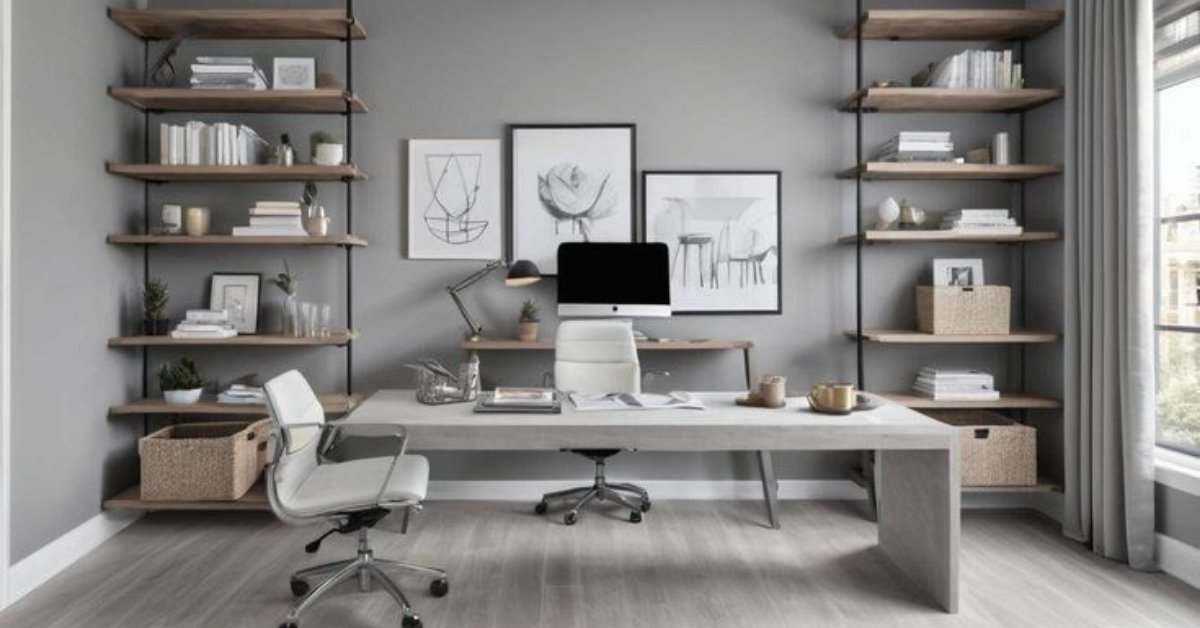
Working from home should feel like an upgrade, not like you’ve shoved a desk into a corner and called it a day. Yet that’s exactly how most home offices end up: functional on paper, frustrating in practice. Modern Home Office Decor Ideas The setup doesn’t support focus, the lighting is wrong, and nothing about the space makes you want to sit down and actually work.
Modern home office decor in 2026 has shifted away from the stark, all-white minimalist look that dominated the early remote work era. What’s replacing it is warmer, more layered, and surprisingly livable spaces that feel professional without feeling sterile, and personal without feeling cluttered.
If you’re working with a spare bedroom, a living room corner, or a dedicated studio, this list covers real setups that improve how your space functions, not just how it photographs.
The Floating Desk Wall Setup

A floating desk mounted directly to the wall does something a freestanding desk can’t: it visually extends the floor, making any room feel larger than it is. The setup works especially well in rooms under 120 square feet, where every inch of floor space matters. Choose a solid wood slab in oak or walnut; these materials add warmth without competing with whatever’s on your monitor. Leave 6–8 inches between the desk surface and any shelving above it so the wall doesn’t feel compressed. This is particularly useful for renters who can’t build out a single wall-mounted piece that looks intentional and is easy to remove.
The Built-In Bookshelf Backdrop
Built-ins behind a desk aren’t just storagethey function as a visual anchor that makes the entire workspace feel considered. The key is styling them in organized thirds: one section books, one section objects, one section left partially open. That open space is what keeps it from reading as chaotic. This setup works best in rooms where the desk faces a wall, giving you a background that looks professional on video calls without requiring a ring light or a fake backdrop. In my experience, the most effective built-in setups keep the color palette of the objects tighttwo or three tones max.
Corner Office With an L-Shaped Desk

An L-shaped desk in a corner is one of the most spatially efficient setups for anyone managing multiple screens or switching between tasks throughout the day. The corner placement means the desk takes up dead space that would otherwise go unused, while giving you a wraparound work surface that reduces the need to pivot constantly. This layout is especially practical in multi-use rooms where the office needs to coexist with a living or sleeping area; the corner naturally creates a boundary between zones. The mistake most people make is choosing an L-desk that’s too large for the room; go for one that leaves at least 36 inches of clearance on each open side.
Warm-Toned Minimalist Setup
The shift toward warm minimalism in 2026 is real, and it works particularly well in home offices because it reduces visual noise without making the space feel cold. This means cream or off-white desks instead of stark white, warm-toned lighting under 3000K, and natural materials like ceramic or rattan for any accessories. The trick is keeping the surface nearly emptyone monitor, one lamp, one plant. Everything else goes into a drawer or cabinet. For people who find all-white setups exhausting to work in, this warmer version holds attention better and feels easier on the eyes during long work sessions.
Gallery Wall Behind the Desk

A gallery wall behind the desk does double duty: it fills what would otherwise be a blank wall and creates a strong visual reference point that anchors the whole setup. Stick to one frame colormatte black works across almost every desk finish and keep the content cohesive: all prints, all photos, or all a mix of both in a consistent subject matter. Grid arrangements with equal spacing between frames read more structured and professional than salon-style layouts, which tend to feel busier. This is one I’d actually recommend trying first because it’s low-commitment you can rearrange or swap prints without repainting or buying furniture.
Read More About : 24 Work From Home Setup Ideas That Actually Make You More Productive (Without Buying a Desk)
Biophilic Desk Corner With Large Leaf Plants
Positioning your desk near a large-leaf planta fiddle leaf fig, monstera, or bird of paradise does something to a workspace that no amount of wall art replicates: it introduces scale and organic contrast that makes the space feel genuinely alive. The plant should sit beside or slightly behind the desk, not directly on it, so it reads as part of the room rather than a prop. Natural light from a nearby window is essential where you want the light to hit both the plant and the desk surface, creating a layered warmth that overhead lighting can’t achieve. This setup works best in rooms with at least one south- or east-facing window.
Japandi-Inspired Office With Low Furniture

Japanese minimalism crossed with Scandinavian warmth has moved from trend to long-term design direction, and it translates well into home offices because it prioritizes calm over visual stimulation. A low-profile walnut desk paired with clean drawer units and a single paper pendant light creates a workspace that doesn’t feel like it’s trying too hard. The floor-level proportions reduce the visual weight of the furniture, which makes rooms feel more open even when they’re not particularly large. This setup is best suited to people who work alone and value a sense of quiet focus over the look of a high-powered executive office.
Dual Monitor Setup With Cable Management
Nothing undermines a well-designed home office faster than visible cables. A dual monitor arm setup where both screens are mounted on a single articulating arm removes the monitor bases from the desk entirely, freeing up significant surface area. Route all cables through a desk grommet or along a cable raceway mounted to the back of the desk. Under-desk cable trays keep power strips off the floor. This isn’t aesthetic for aesthetic’s sake it’s a functional decision that makes cleaning easier, reduces distractions, and lets you reclaim roughly 30% of your desk surface. For small desks especially, that recovered surface space changes how the whole setup feels to work in.
Moody Dark Office With Deep Wall Color

A dark-walled office sounds counterintuitive until you actually work in one. Deep greens, charcoal blues, and rich earth tones absorb light in a way that reduces glare on screens and creates a feeling of enclosure that some people find genuinely easier to focus in. The key to making it work is contrast: white trim, a warm brass or matte gold lamp, and intentionally light-toned objects on shelves. Without those contrast elements, a dark room reads as dim rather than moody. This is a particularly good option for rooms that receive harsh afternoon light the dark walls neutralize the glare that light-colored rooms amplify.
Pegboard Organization Wall
A pegboard above the desk solves the organization problem that most home offices never fully crack: where to put the small items that aren’t quite drawer-worthy but clutter the surface when left out. Headphones, charging cables, small scissors, sticky notes, pensall of it lives on the pegboard, visible but contained. Paint it the same color as the wall behind it and it reads as a design feature rather than a utility wall. Leave a third of the hooks empty so it doesn’t look like a storage emergency. In my experience, this setup works particularly well for creative workers who need quick access to physical tools throughout the day.
The Dedicated Reading Nook Corner

An office with a second seating area, even just a single chair fundamentally changes how you use the space. Having a reading chair or a soft seat separate from the desk lets you break the work mode when needed without leaving the room, which is especially useful in spaces that also function as a home library. The chair should face away from the desk so the two zones don’t bleed visually into each other. A floor lamp positioned over the chair provides task lighting without requiring an overhead fixture. This setup is most practical in rooms that are at least 12 feet by 10 feet anything smaller and the chair starts to feel like an obstacle.
Minimalist Open Shelving With Intentional Styling
Open shelves above a desk only work if the styling is deliberate. Two shelves not three is usually the right call: enough for practical storage without tipping into visual overload. Each shelf should have a clear organizing logic: one for functional items (books, notebooks, a small speaker), one for decorative objects (ceramics, a framed print, a trailing plant). Keep the object heights varied short, tall, short so the eye moves naturally rather than scanning a flat lineup. Avoid filling every inch. The empty space is part of the design.
Industrial Modern Office With Metal Accents

The industrial-modern home office is durable, low-maintenance, and holds up better over time than trend-heavy setups because it’s built on materials/steel, concrete, leather rather than color palettes or decorative moments. A steel-frame desk paired with pipe shelving reads as structured and intentional rather than cold, especially when warmed up with a leather desk mat or a wooden stool. This setup works particularly well in basements, converted garages, or apartments with exposed concrete ceilings, the office aesthetic already aligns with the architecture rather than fighting it. Go for matte black over chrome; chrome dates faster and picks up fingerprints.
Arched Mirror Over the Desk Area
Leaning a tall arched mirror beside or slightly behind the desk is one of the more spatially intelligent moves you can make in a small home office. It reflects natural light back into the room, visually extends the wall line, and adds an architectural shape to what is often the most visually flat part of the space. The key is placement: the mirror should catch window light, not the glare of your monitor. Arched frames work better than rectangular ones in office settings because they soften the otherwise linear, rectilinear shapes of furniture and equipment. This works in rooms as small as 9 by 10 feet.
Window-Facing Desk for Natural Light

Positioning the desk so it faces a window rather than sits beside one makes a measurable difference in how energizing the workspace feels during the day. Natural light coming from directly in front of you illuminates your face evenly (useful for video calls), reduces eye strain compared to side or back lighting, and gives you a visual break point, something to look at when you need to rest your eyes. Use sheer curtains rather than blackout panels so you maintain the light while diffusing glare on the screen. This is the desk placement I’d recommend before any other change, because nothing else compensates for bad lighting.
Textured Accent Wall Behind the Desk
A textured accent wall limewash paint, plaster effect, or even a panel of reeded wood adds dimension to a home office without requiring furniture or shelving. The texture catches light differently throughout the day, so the wall shifts in appearance from morning to evening, which prevents the room from feeling static. Limewash in a warm greige or dusty sage works across most desk finishes. This is also a renter-friendly option: limewash paint applies over standard latex and, in many cases, can be painted over when you leave. The wall becomes the design; the desk just sits in front of it.
Under-Stair Home Office Nook

The space under a staircase is one of the most underused corners in a home, and it converts into a surprisingly functional office nook when built out properly. A custom-fitted desk surface or even a butcher block cut to fit with cabinet storage below and a wall sconce overhead creates a complete, self-contained workspace in under 30 square feet. The enclosed geometry of the under-stair space naturally reduces distraction because your peripheral vision is partially blocked on both sides. This is the right setup for open-plan homes where the office needs to be carved out of shared living space.
Monochromatic Office in Warm Neutrals
A monochromatic setup where the walls, desk, shelving, and soft furnishings all operate in the same tonal familyworks in a home office because it eliminates visual competition between elements. The space reads as cohesive without requiring careful color-matching across pieces. The key is varying the materials so the room doesn’t read as flat: matte plaster walls, a linen chair cushion, a wood desk in a whitewashed finish, a cotton rug. Each surface reflects light differently, which gives the room depth even when the palette is tight. Warm neutrals (cream, oat, stone) are easier to sustain visually across a full workday than stark white.
Read More About : 27 Home Office Organization Ideas That Actually Work in Real Spaces
Statement Desk Lamp as the Design Focal Point

Most desk lamps are an afterthought, a functional item bought for brightness, not design. Reversing that logic and choosing the lamp first changes how the whole desk reads. An architectural lamp in matte black or aged brass with a strong silhouette becomes the focal point of the setup, which means the desk itself can be simpler. Look for lamps with adjustable arms rather than fixed necks, they’re more functional and the mechanical quality of the joint reads as a design detail. This approach works especially well on otherwise understated desk setups where there’s no gallery wall or shelving to carry the visual weight.
Linen Curtains to Define the Office Zone
In open-plan spaces, curtains can function as a soft partition creating a visual boundary between the office zone and the living area without requiring a wall or screen. Floor-to-ceiling panels in natural linen hung from a ceiling track define the workspace while keeping the room feeling open when pulled back. This is a practical setup for people working in studio apartments or large single-room spaces where the desk is visible from the sofa. Linen is the right fabric for this because it diffuses light rather than blocking it; the zone feels distinct without feeling isolated.
Vertical Storage With Modular Wall Units

Vertical storage in a home office frees up floor space by moving all the function to the wall. Modular wall units/systems like those from IKEA or similar flat-pack brands let you configure open shelves, closed cabinet doors, and desk surfaces in whatever combination your space and workflow require. The practical advantage is flexibility: as your needs change, you can reconfigure the modules rather than replacing furniture. Keep the lower half of the unit in closed storage and the upper half open; this creates a visual dividing line that makes the wall feel organized even if the shelves aren’t perfectly styled.
Vintage-Modern Mix With Warm Wood and Contemporary Pieces
The most livable home offices usually aren’t fully designed in one direction; they mix periods in a way that feels collected rather than matched. A mid-century walnut desk paired with a contemporary monitor arm, a vintage ceramic lamp, and a modern chair creates a setup that has a point of view without feeling like a showroom. The key to making the mix work is keeping the floor plan clean and the palette consistent; the eclecticism lives in the objects, not the layout. This is a particularly good approach for people who already own furniture pieces they like but haven’t found a way to make them cohere.
Dedicated Tech-Free Zone Within the Office

An analog corner within the home office, a small side table or tray with a notebook, a pen, and nothing else gives you a designated space for non-screen thinking. It sounds simple, but separating physical writing from digital work changes how you use both. Sketching, note-taking, and planning feel different (often better) when they have a physical home that isn’t competing with a monitor. A small round side table with a task lamp is enough. Keep it clear of clutter; it only works if it remains intentionally spare.
Acoustic Panels as a Design Feature
Acoustic treatment usually comes in ugly foam tiles which is why most home offices skip it entirely and deal with the echo. Fabric-wrapped acoustic panels solve both problems: they reduce sound bounce and function as wall art when arranged intentionally. Choose panels in one or two complementary earth tones, terracotta and cream, charcoal and sand and mount them in a deliberate pattern above the desk. This is especially worthwhile in rooms with hard floors and no soft furnishings, where sound reflection during calls becomes a practical problem. It’s one of those upgrades that makes a bigger difference than its cost suggests.
Warm LED Lighting Layers

Overhead lighting alone is the fastest way to make a home office feel clinical. A layered lighting setup, overhead light for general illumination, a task lamp for the desk surface, and strip lights under shelves or behind a monitor for ambient glow changes the atmosphere of the room entirely after dark. Each layer operates at a slightly different brightness and angle, which reduces eye strain and makes the room feel warmer without reducing visibility. Use bulbs rated at 2700–3000K across all three layers so the tones match. The result is a workspace that transitions naturally from a bright daytime setup to a warmer evening environment.
Compact Home Office in a Wardrobe or Closet
A closet or “cloffice”works not because it’s trendy but because it solves a real problem: containment. When the workday ends, you close the doors and the office disappears. This matters more than it sounds in small apartments where the visual presence of a work setup bleeds into every other activity in the room. Fit a floating desk to the back wall, add a pegboard or two shelves above it, and use a battery-powered or plug-in light strip for overhead illumination. The inside of the doors can be painted a contrasting color for a deliberate touch that makes the nook feel purposeful, not improvised.
Scandi-Inspired Home Office With Natural Materials

Scandinavian design in a home office means prioritizing function and then using natural materials to make that function feel warm. A light birch or ash desk, a linen-covered pin board, a terracotta pot, a wicker basket for filingnone of these are expensive, but together they create a coherent palette that feels considered. The Scandi principle of leaving surfaces mostly clear applies here: one item per square foot of desk space is a useful mental rule for keeping the setup functional rather than styled. This is the setup that photographs well year-round because the materials age gracefully rather than going out of season.
What Actually Makes These Home Office Ideas Work
The ideas above cover a range of styles and layouts, but they share a few underlying principles that separate offices that work from ones that just look good in photos.
Light comes first.
Every decision about desk placement, wall color, and artificial lighting should be made in relation to where your natural light comes from. A beautiful dark-wood desk in a north-facing room with no lamp feels oppressive by 3pm. The same desk near an east-facing window with a warm task lamp feels completely different.
Scale matters more than style.
Furniture that’s too large for the room eliminates the sense of space; furniture that’s too small reads as incomplete. A desk should give you 48–60 inches of surface width for a single monitor setup; anything narrower starts limiting what you can actually do at it.
Define the zone before decorating it.
In shared or open-plan spaces, the biggest mistake is treating the office as just a desk in a room. A rug under the desk, curtains along one side, or even a change in wall color behind the workspace establishes a boundary that improves how the space functions even when other people are in the room.
Visual noise kills focus.
This is different from clutter. Visual noise is competing focal pointsa gallery wall next to a busy shelving unit next to a patterned rug. Each element competes for attention. The best home offices have one strong visual moment and a clear, simple rest of the room.
Home Office Setup Comparison Guide
| Setup | Best For | Space Type | Key Benefit | Difficulty |
| Floating desk wall | Renters, small rooms | Under 120 sq ft | Frees floor space | Easy |
| Built-in bookshelf backdrop | Video call-heavy workers | Medium rooms | Professional look, storage | Moderate |
| L-shaped corner desk | Multi-taskers, dual monitors | Corner space | Surface efficiency | Easy |
| Dark moody wall | Focus-oriented workers | Any size | Reduces glare, adds depth | Easy |
| Cloffice (closet office) | Studio apartments | Small spaces | Work/life visual separation | Moderate |
| Japandi minimal setup | Solo workers, creatives | Any size | Calm, low-distraction feel | Easy |
| Modular wall units | Flexible workers | Medium-large | Reconfigurable storage | Moderate |
| Acoustic panel wall | Remote call workers | Hard-floored rooms | Sound + visual design | Moderate |
Common Home Office Mistakes That Make the Space Feel Smaller or Harder to Work In
Placing the desk against the wrong wall.
Most people push the desk against the first available wall, often the one farthest from the window. This puts your back to the light source, which causes screen glare and makes the room feel smaller because you’re facing a flat surface with no depth. Face the window if possible; if not, position the desk so the light comes in from the side.
Choosing a chair that doesn’t fit the desk height.
A chair that’s too low or a desk that’s too high creates sustained physical tension throughout the workday. Standard desk height is 28–30 inches; your chair should allow your elbows to rest at roughly a 90-degree angle with your feet flat on the floor. This sounds obvious until you actually measure it.
Skipping the rug.
In hard-floored rooms, the absence of a rug makes the office feel temporary and acoustically harsh. A rug under the desk large enough to sit under the chair even when pulled back visually anchors the workspace and reduces sound reflection during calls. It doesn’t need to be expensive; it needs to be the right size.
Over-accessorizing the desk surface.
Three decorative objects on a desk is a design choice. Eight is visual clutter that competes with actual work. The rule of thumb: if it doesn’t serve a function in your daily workflow, it belongs on a shelf or out of the room entirely.
Ignoring the view behind you on video calls.
Honestly, this one costs nothing to fix and most people never address it. Clear the wall behind your desk, add a single framed print or a shelf with two or three objects, and your calls immediately look more professional without a ring light or a backdrop filter.
FAQ’s
What makes a home office feel modern without feeling sterile?
Warmth through materials is the key. Modern doesn’t mean coldit means clean. Use natural wood tones, linen textiles, and warm-toned lighting (under 3000K) to soften the clean lines of contemporary furniture. One organic elemental plant, a ceramic object, a textured rug does a lot of work.
How do I set up a home office in a small bedroom without the two spaces bleeding together?
Create a visual boundary first. Position the desk to face away from the bed if possible, use a rug that defines the work zone, and keep the desk surface clear when you’re not working. If the room allows it, a curtain or open shelving unit between the two areas reinforces the separation without requiring a wall.
Is a standing desk worth it for a home office?
For most people who work 6+ hours at a desk daily, yesbut only if you actually use the standing function. A sit-stand desk that stays in sitting position is just an expensive fixed desk. If you’re uncertain, a standing desk converter (which sits on top of a regular desk) is a lower-cost way to test whether you’ll use it before committing to a full-height adjustable frame.
Which desk shape works best in a small home office rectangular or L-shaped?
A rectangular desk in the 48–55 inch range is usually the better choice for rooms under 120 square feet. L-shaped desks need corner placement and substantial clearance on both sides to function wellin tight rooms, they can crowd the space and limit movement. Fit the desk to the room size, not the other way around.
How do I make a home office look good on video calls without spending much?
Clear the wall directly behind your desk. Add one simple visual element framed print, two books upright on a small shelf, or a plant in a solid-color pot. Position a lamp to your side and slightly in front of you rather than overhead. That combination-clean background, side lighting, one design detail reads as polished on screen without costing more than the frame.
What lighting setup works best for a home office?
Three sources at different heights create the most functional and visually comfortable setup: an overhead light for general illumination, a desk lamp for task lighting, and either shelf lighting or a floor lamp for ambient warmth. Match all bulbs to 2700–3000K. Avoid cool white or daylight bulbs (5000K+) in the evening; they interfere with sleep and make the room feel clinical.
How do I add personality to a home office without making it feel unprofessional?
Keep the desk surface clean and limit décor to one or two items that mean something: a book you’re reading, a plant, a lamp you actually like. Put the personality in less functional areas: a gallery wall behind you, an interesting shelf arrangement, or a distinctive chair. The desk itself should stay focused on work; the room around it can carry the character.
Conclusion
A home office that works well is less about style and more about decisions where the light falls, how much surface you actually have, whether the space feels distinct from the rest of your home. The ideas here cover different room sizes, budgets, and setups because there’s no single layout that works for every situation.
Start with the changes that will have the most impact for your specific space: desk placement relative to the window, lighting layers, and surface clarity. Nail those three things first, and the rest of the design follows more easily. Pick one or two setups from this list that match your room’s dimensions and your actual workflow then build from there.
