

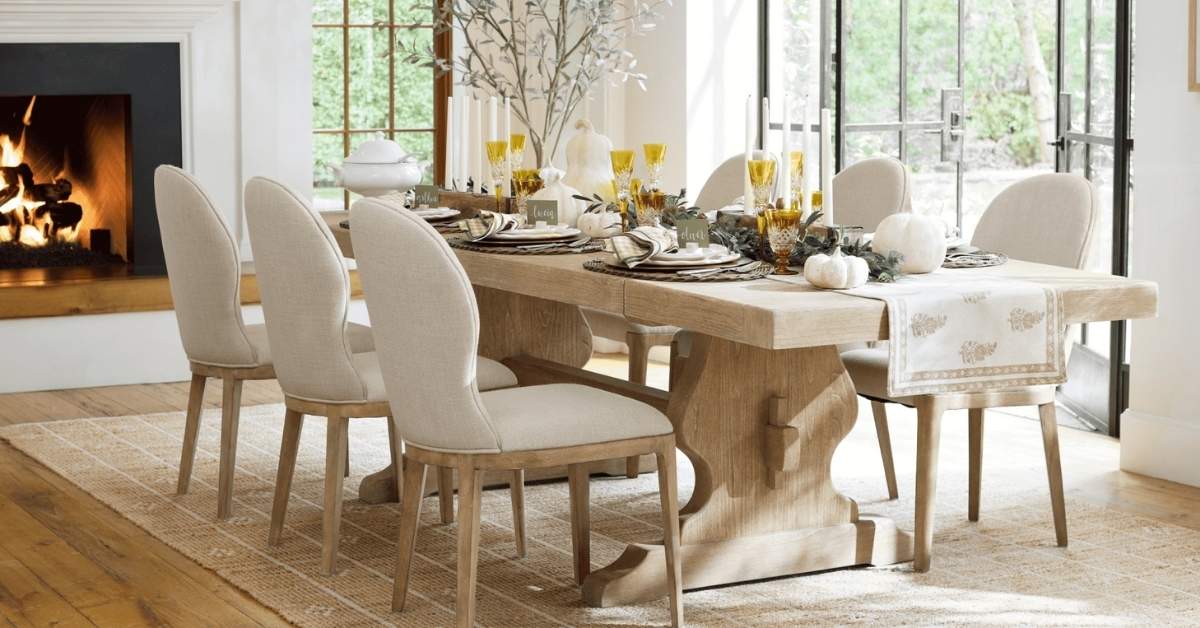
There’s a specific frustration that comes with a dining room that never quite looks finished and nine times out of ten, it comes down to the light above the table. Too high, too dim, too cold, or just the wrong fixture for the space, and even a beautifully set table feels flat. Overhead lighting in a dining room isn’t just functional. Dining Room Lighting Over Table Ideas It defines the mood, sets the visual anchor for the room, and honestly makes or breaks every meal in that space.
If your dining room feels like it’s missing something warmth, presence, or just a sense of intention this is usually the first thing worth changing. And the good news is, you don’t need a full renovation. The right pendant, chandelier, or layered setup can completely reframe the room around the table.
For anyone working with a small dining area, a rented apartment, or a combined living-dining layout, these ideas are built around real constraints, not just showroom setups.
A Single Oversized Pendant Hung Low Over a Round Table

A single large pendant 20 to 24 inches in diameter hung 28 to 32 inches above the tabletop creates an immediate focal point without needing anything else on the ceiling. This setup works especially well over a round table because it mirrors the geometry: circular fixture, circular table, symmetrical visual weight. The key is going lower than instinct suggests. Most people hang pendants too high, which scatters the light and loses the intimate glow that makes a dining room feel intentional. When the fixture drops into the visual field while you’re seated, it anchors the space. The room stops feeling like a hallway with a table in it.
Two Mini Pendants in a Row Over a Rectangular Table
Where one large pendant can feel overpowering on a long table, two smaller ones solve the proportion issue while adding visual rhythm. Space them roughly a third of the table length apart and center the pair over the table, not the room. This is a detail that gets missed often: the fixture should follow the table, not the architecture. The exposed cord on modern pendants makes height adjustment simple, which matters in rooms with low ceilings. In my experience, this setup is the one I’d recommend first for anyone with a table over 60 inches long, because it distributes light evenly without requiring dimmers or secondary fixtures.
A Rattan or Woven Chandelier for Warm, Diffused Light

Woven pendants and rattan chandeliers are having a sustained moment in 2026, and for good reason they soften light in a way that metal and glass simply don’t. The material itself filters the bulb, throwing a warm, dappled glow onto the table rather than a direct beam. This works particularly well in dining rooms with hard surfaces (tile floors, painted walls, glass doors) where sound and light both need softening. The visual texture also adds depth to neutral color palettes without adding pattern through textiles or paint. It’s a good option for renters too, because the fixture does the decorative work that paint or wallpaper can’t.
A Black Metal Linear Chandelier for Open-Plan Dining Rooms
Open-plan layouts create a visual challenge: the dining table often floats in the middle of a larger space with no walls anchoring it. A linear chandelier, a long, horizontal fixture with multiple bulbs or shades along one bar gives the table its own defined zone. The horizontal line visually matches the length of the table and creates a strong ceiling-to-table relationship that reads as intentional even from across the room. This setup solves the “is this even a separate dining area?” problem that most combined kitchen-dining layouts struggle with. Go matte black if the kitchen hardware is black or dark; go brushed brass if the space has warm metal tones.
Plug-In Pendant for Renters Who Can’t Modify Wiring

Not every apartment lets you hardwire a new fixture, but that doesn’t mean you’re stuck with a central ceiling light that doesn’t work. Plug-in pendants which connect to a standard outlet and hang from a ceiling hook have gotten significantly better looking in the last few years. The cord becomes part of the design when you choose a fabric-wrapped or braided version in a color that suits the room. The limitation is cord management: you’ll need to route it cleanly to avoid a tangled look. Use adhesive cable clips along the ceiling edge or a cable cover. This is a genuinely practical solution for small dining spaces where a strong overhead fixture makes a disproportionate impact.
Clustered Pendant Group at Varying Heights
Clustered pendants three to five individual fixtures hung from a canopy plate at different cord lengths add sculptural interest in a way that a single fixture can’t. The staggered heights create movement in the ceiling plane, which is especially useful in dining rooms with high ceilings that feel cold or empty. Clear glass globes keep the look light while letting the filament bulbs become part of the visual. Where this works best: dining rooms with 9-foot or higher ceilings, and spaces where you want the fixture to feel like a design statement rather than just lighting. One thing to keep in mind clustered pendants need more horizontal clearance above the table to avoid feeling chaotic. Ideal for round tables with chairs on all sides.
A Lantern-Style Pendant for Traditional or Transitional Dining Rooms
Lantern fixtures open cage or glass-enclosed metal frames bridge the gap between traditional and modern without committing fully to either. The open frame lets light spill in multiple directions, which creates ambient warmth in addition to table-level focus light. Pair with candle-style filament bulbs rather than standard A-shape bulbs to maintain the intentional look inside the fixture. This style works especially well in dining rooms with wood-heavy or classic furniture, where a sleek drum pendant would feel like a mismatch. The cage frame also reads as less visually heavy than an opaque shade, which matters in smaller rooms.
A Statement Chandelier in a Small Dining Room

Conventional wisdom says small rooms need small fixtures and that’s actually backwards for dining rooms. A statement chandelier in a compact space draws the eye up and makes the ceiling feel taller, especially when the fixture has vertical elements. The key is proportioning it correctly: the diameter should be roughly half the table width, and it should be hung so the bottom of the fixture is 28 to 30 inches above the tabletop. The visual drama of a bold fixture in a small room gives the space a purpose and an identity. Honestly, a tiny chandelier in a tiny room just reads as an afterthought sizing up changes the energy entirely.
Warm Filament Bulbs as a Lighting Strategy, Not Just Aesthetic
The bulb matters more than most people realize. Filament-style LEDs, the ones that replicate the warm amber glow of old incandescent bulbs, emit light at around 2200K to 2700K color temperature, which is the spectrum that makes food and skin look warm and flattering. Contrast that with a 4000K daylight LED, which creates a clinical brightness that works well in kitchens but makes dinner feel like a cafeteria. If you’re keeping an existing fixture, swapping to a warm filament LED is a low-cost change that genuinely shifts the atmosphere. This works across fixture types, pendants, chandeliers, sconces so it’s a useful fallback when the fixture budget is limited.
Read More About : 22 Boho Dining Room Decor Ideas That Actually Work in Real Homes
Dimmer Switch Installation for Full Lighting Control

A dimmer switch might not be a fixture, but it’s arguably the most functional upgrade in dining room lighting. The ability to drop from full brightness for task lighting to 30-40% for dinner service changes how the room reads hour to hour. Most standard pendant and chandelier setups are dimmable as long as the bulbs are dimmer-compatible (check the bulb packaging not all LEDs are). A smart dimmer adds the option to set scenes via app or voice, which sounds more complicated than it is. For anyone who uses their dining room as a homework zone by day and a dinner space by night, this one change makes the room feel like it has two different modes. Worth doing before buying a new fixture.
Layered Lighting with Wall Sconces Alongside the Pendant
A single overhead fixture, even a well-chosen one, creates flat, one-directional light. Layering in wall sconces on either side of the dining room adds depth and softness that overhead lighting can’t achieve alone. This is especially effective when the sconces flank a sideboard or buffet table, creating a sense of visual balance around the room. The combination of downward pendant light and upward or ambient sconce light eliminates the harsh single-source shadow effect that makes rooms feel smaller than they are. I’ve noticed this setup tends to work particularly well in dining rooms that double as gathering spaces. The layered light makes the room feel complete even when the table isn’t set.
Brass or Gold Fixtures for Warm Metallics in Neutral Rooms

Brass and antique gold fixtures have maintained their design relevance into 2026 because they do something specific: they warm up neutral color palettes without adding a competing color. A brass pendant over a white, cream, or warm gray dining room creates contrast while staying within the warm side of the spectrum. The material reflects light slightly differently than chrome or matte black it adds a subtle warmth to the room even when the light itself is off. Go brushed rather than polished if the room is otherwise matte-finished, since polished brass can read as formal rather than current.
Industrial Pipe Pendants for Dining Rooms with Exposed Elements
Industrial-style pipe pendants black or aged metal with exposed hardware and minimal shading, are a natural match for spaces with raw materials: exposed brick, concrete, reclaimed wood, or open beam ceilings. The visual vocabulary is consistent, which is exactly the point. A porcelain or rattan pendant in the same space would create visual friction. What makes this style function well in a dining room specifically is the exposed bulb: the bare filament becomes the light source and the visual detail simultaneously. One practical note without a shade, bare bulb setups can create glare when seated. Position them slightly off-center from seated eye level, or use lower-wattage filament bulbs to keep the brightness comfortable.
A Drum Shade Chandelier for Soft, Diffused Illumination

Drum shades cylinder-shaped fabric shades that enclose the bulb entirely or on the sides filter light in a way that works particularly well in dining rooms with all-white or light-colored interiors. The shade prevents hot spots and glare while letting a warm, even glow diffuse through. Linen, silk, and paper shades all produce slightly different textures in the light, with linen being the most forgiving and naturalistic. The visual weight of a drum shade is also balanced; it doesn’t read as heavy from below the way some opaque shades can. This is a good option for dining rooms that need light coverage over a larger oval or rectangular table without the visual complexity of a chandelier.
Low Hung Pendants in a Breakfast Nook or Small Dining Corner
In a breakfast nook or enclosed dining corner, a low-hung pendant creates a sense of enclosure that reads as cozy rather than cramped. The lower the fixture, the more it brings the ceiling visually closer which in a nook with banquette seating on two or three sides creates a booth-like intimacy. Go for a fixture no wider than 12 to 14 inches in diameter, and hang it so the bottom sits roughly at eye level when seated around 48 to 52 inches from the floor. The confined space means a smaller fixture can have outsized visual impact. Skip large, wide shades in favor of globe, cone, or narrow cylinder shapes that don’t intrude on the seated sightline.
A Sculptural or Geometric Pendant as Art and Light Combined

Geometric pendants, icosahedral frames, asymmetric wire constructions, angular multi-arm designs function as ceiling sculpture in addition to light sources. The shadows they cast on walls and ceilings are part of the effect, especially against white walls where the pattern is most visible. This style works best in dining rooms that are otherwise quite minimal, where the fixture can carry the visual interest without competing with other decorative elements. A room with patterned wallpaper, busy textiles, or heavy furniture will overwhelm a geometric fixture. It needs breathing room. The trade-off is directional light: open geometric frames provide ambient rather than focused illumination, so a dimmer switch or secondary light source is a practical complement.
Mixing Metals in Dining Room Lighting for a Current, Layered Look
The rule against mixing metals has mostly expired in interior design, and dining room lighting is one of the better places to test that out. A brass chandelier in a room with stainless or chrome fixtures reads as intentional layering rather than a mismatch as long as the metals share a warmth or coolness direction. Warm metals (brass, copper, bronze, gold) mix well together. Cool metals (chrome, nickel, gunmetal) do the same. Where it gets tricky is mixing a warm and a cool metal in the same eyeline. In practice, the lighting fixture has enough visual prominence to anchor a warm or cool palette even if the surrounding hardware doesn’t fully match. It’s one I’d actually recommend experimenting with before replacing existing fixtures elsewhere in the room.
Canopy Ceiling with Multiple Cord Pendants for a Modern Organic Look

A canopy plate with multiple individual cords and shades in varying lengths creates a modern organic look that sits somewhere between clustered pendants and a chandelier. The cords themselves, especially in twisted fabric or braided leather, become part of the design detail when they’re visible above the shades. This style is gaining traction as an alternative to the traditional chandelier for people who want visual complexity without classical ornamentation. It works in medium to large dining rooms where the ceiling can absorb the visual noise of multiple elements. For smaller dining areas, stick to three cords maximum to avoid the setup reading as cluttered from below.
Read More About : 25 Dining Room Wall Decor Ideas That Make Every Meal Feel Like an Occasion
Flush Mount or Semi-Flush for Low Ceiling Dining Rooms
Not every dining room has the ceiling height for a pendant or chandelier, and forcing a fixture that hangs too low creates both a safety issue and a visual one. Flush and semi-flush mounts have improved dramatically in design terms; the category now includes proper warm-toned globes, cage enclosures, and minimal disc shapes that read as intentional rather than builder-grade. The key distinction: a semi-flush drops 4 to 8 inches from the ceiling, which gives enough visual separation to feel like a chosen fixture rather than a compromise. For ceilings at or below 8 feet, this is the practical choice that doesn’t sacrifice design quality.
Smart Bulbs for Scene Control Without New Wiring

Smart bulbs which fit into any standard socket and connect to WiFi allow color temperature and brightness adjustment through an app or voice command. For a dining room that needs to shift from homework lighting at 4000K during the day to dinner-ready warmth at 2200K by 7pm, smart bulbs do the switching without any rewiring or new fixtures. The practical setup: install smart bulbs in the existing fixture, group them in the app, and set scenes for different uses. This is the easiest entry point for lighting control and works in rental situations where you can’t install a dimmer switch. The initial cost is higher per bulb, but the flexibility is genuine.
Statement Pendant Over a Bar Cart or Sideboard in the Dining Room
The table doesn’t have to be the only light destination in the dining room. A small, focused pendant hung over a sideboard or bar cart creates a secondary light moment that makes the room feel curated and finished even when the table isn’t set. The practical benefit is surface illumination for serving, which is useful when hosting. The design benefit is that it gives the room visual depth: two light sources at different heights and positions create a three-dimensional effect that a single overhead fixture can’t achieve. Choose a fixture that’s noticeably smaller than the main pendant to establish hierarchy, same finish family, smaller scale.
What Actually Makes Dining Room Lighting Over a Table Work
Getting the fixture right is half the equation. The other half is installation and setup and this is where a lot of dining rooms still underperform despite having the right light.
Hang height is the most commonly wrong variable.
The standard recommendation is 28 to 34 inches from the tabletop to the bottom of the fixture. Most people hang higher, which loses the intimate pool of light that makes a dining fixture feel connected to the table. Measure before you hang, not after.
Fixture width relative to table width sets the proportional balance. A fixture that’s too narrow over a wide table looks forgotten. A fixture too wide creates visual crowding. The general guideline: pendant diameter should be 12 inches less than the table’s narrowest dimension, or roughly half to two-thirds of the table’s width for chandeliers.
Bulb color temperature changes the room more than the fixture does.
A 2700K bulb in a standard fixture looks warmer than a 4000K bulb in a designer chandelier. If the room feels cold or clinical, change the bulb before changing the fixture.
Dimming is a function, not a feature.
A dining room fixture that can’t dim is only doing half the job. Make sure the fixture, bulb, and switch are all dimmer-compatible before purchasing.
Dining Room Lighting Over Table: Setup Comparison Guide
| Setup | Best For | Space Type | Problem It Solves |
| Single oversized pendant | Round tables, simple rooms | Small to medium dining rooms | Lack of visual anchor over table |
| Two mini pendants in a row | Rectangular tables, modern style | Medium to large dining rooms | Uneven light distribution over long tables |
| Linear chandelier | Open-plan or combined layouts | Large open spaces | Defining the dining zone in an open floor plan |
| Clustered pendants at varying heights | High-ceiling dining rooms | Large rooms, formal dining | Empty ceiling plane, lack of sculptural interest |
| Rattan or woven pendant | Neutral or natural material rooms | Any size | Hard light in rooms with too many reflective surfaces |
| Flush/semi-flush mount | Low ceiling constraints | Rooms under 8-foot ceiling | Fixture clearance and safety |
| Plug-in pendant | Renters, no rewiring | Studio or apartment dining nooks | Wiring limitations without sacrificing design |
| Wall sconces + pendant layering | Formal or multipurpose dining rooms | Any size | Flat, one-directional light that flattens the space |
| Smart bulbs in existing fixture | Budget-first, versatility needed | Any | Inflexible light for rooms used across multiple times of day |
Common Dining Room Lighting Mistakes That Make the Space Feel Unfinished
Hanging the fixture too high.
This is the single most common error. When the pendant sits more than 36 inches above the table, the light disperses before it reaches the surface and the fixture loses its visual connection to the table below it. The room ends up with a light in the middle of the ceiling rather than a light over the table, a meaningful difference.
Choosing a fixture based on appearance in the store, not in the room.
Fixtures in showrooms are usually displayed against high white ceilings with no competing elements. The same fixture in a room with colored walls, lower ceilings, or existing furniture reads completely differently. Always check the fixture diameter against your table dimensions before purchasing, and visualize it in the context of ceiling height, not showroom staging.
Ignoring the table’s relationship to the room’s center.
Many dining tables are centered on the wall, not the room which means the ceiling electrical box is off-center relative to the table. Hanging the fixture from the box puts it off-center from the table, which creates visual imbalance. Swag hooks and canopy extensions can reposition the drop point without major electrical work.
Using a single bulb at full brightness as the only light source.
One bare bulb at maximum output creates glare and shadows simultaneously bright at the center, dark at the edges. A shade that diffuses the light, or secondary sources that fill in the perimeter, solve this without requiring a complete fixture change.
FAQ’s
What size pendant or chandelier do I need over my dining table?
As a general rule, the fixture diameter in inches should equal roughly the table’s width in feet multiplied by 12, then subtract 12. For a 4-foot-wide table, that’s about 36 inches. For chandeliers, aim for a diameter that’s roughly one-half to two-thirds the table’s width. The fixture should feel proportional to the table, not the room.
How high should I hang a pendant light over a dining table?
The standard range is 28 to 34 inches from the tabletop to the bottom of the fixture. Lower within that range creates a more intimate pool of light; higher increases ambient spread but loses some of the table-connected effect. Avoid hanging above 36 inches; it visually disconnects the fixture from the table.
Can I put a chandelier in a small dining room?
Yes, in fact, a properly scaled chandelier often works better in a small dining room than a miniature fixture, because it draws the eye upward and makes the ceiling feel taller. The key is getting the dimensions right: keep the diameter in proportion with the table (not the room), and maintain the correct hang height.
What light color temperature is best for a dining room?
For dining rooms, 2200K to 2700K is the ideal range; this is the warm amber tone that makes food, surfaces, and skin look appealing. Anything above 3000K starts to feel more functional than atmospheric, which works against the dining experience. Filament-style LEDs in this range are the most practical choice for both aesthetics and energy use.
Do I need a dimmer switch with my dining room light?
Not required, but strongly recommended. A dimmer allows the room to transition from daytime brightness to dinner-appropriate warmth without changing fixtures or bulbs. Make sure the dimmer, bulb, and fixture are all compatible LED dimmers differ from incandescent ones, and not all LED bulbs are dimmable.
How do I choose between a pendant and a chandelier for my dining room?
Use a pendant when you want a cleaner, more minimal look or when the ceiling height is limited. Use a chandelier when the room has height to spare and you want the fixture to be a visual centerpiece. For long rectangular tables, a linear chandelier or two pendants in a row often works better than either a single pendant or a traditional chandelier.
What if my dining room has low ceilings under 8 feet?
Skip pendants and chandeliers that hang more than 6 to 8 inches below the ceiling. Semi-flush mounts are the practical choice; they’ve improved significantly in design and give enough visual separation from the ceiling to feel intentional. Look for globe or cage semi-flush options in warm finishes to maintain the atmospheric quality that a pendant would normally provide.
Conclusion
Dining room lighting over the table is one of those details that functions invisibly when it’s done right the room just feels warm, finished, and intentional. But when it’s off, the space never quite settles into itself, no matter what else is in it. Most of the improvements here don’t require a full renovation. The right fixture hung at the right height, with the right bulb temperature and a dimmer switch, is often enough to change how the room reads entirely.
Start with one or two ideas that match your space and constraints whether that’s a rattan pendant for a neutral room, a plug-in option for a rental, or simply swapping the bulb color temperature in an existing fixture. Small adjustments in dining room lighting tend to produce outsized results. Pick the one that fits, try it, and build from there.
