

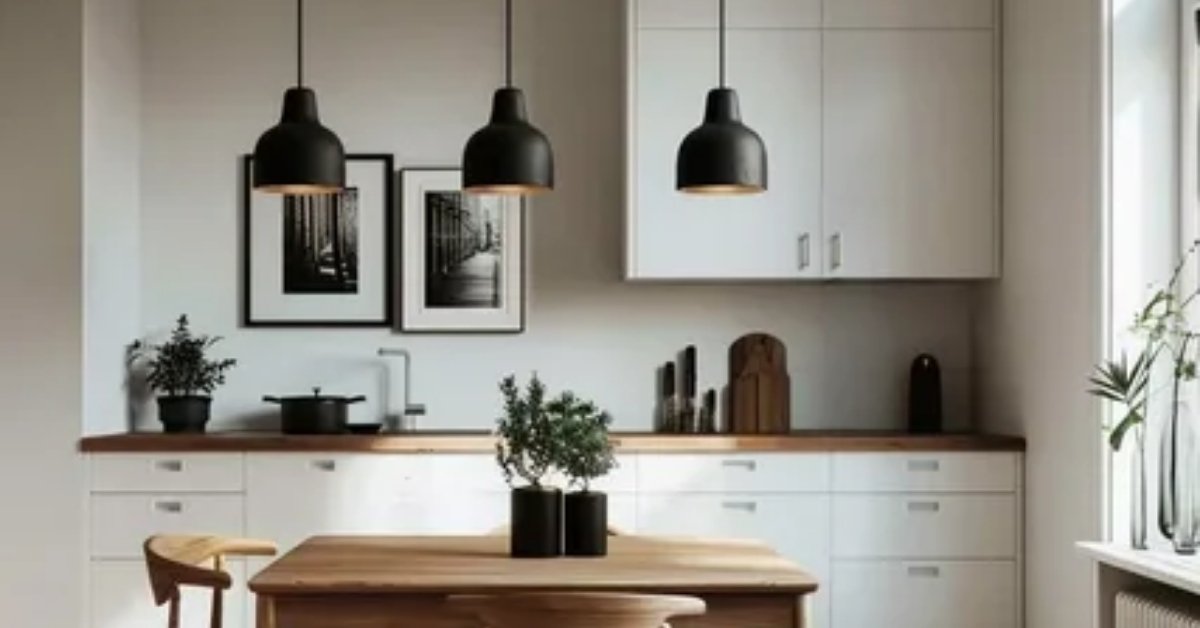
A dining room that feels cluttered or visually busy is exhausting to sit in even if you can’t immediately pinpoint why. The table’s fine, the chairs are decent, but something keeps the space from feeling settled. More often than not, it comes down to too much competing for attention: mismatched lighting, overstuffed Minimalist Dining Room Setup Ideas shelving, or furniture that doesn’t scale with the room.
Minimalist dining room setups solve this not by stripping everything out, but by making deliberate choices. The right table-to-chair ratio, a single pendant over the center, a neutral palette with one textural layer, these decisions compound into a space that feels calm, considered, and genuinely easy to eat in.
If you’re working with a small or awkward dining area or a combined living-dining layout this approach is especially worth it. You don’t need to start over. You need fewer, better decisions.
A Rectangular Wood Table With Bench Seating on One Side

Bench seating along one wall does something a full chair-set can’t: it creates a visual break. The bench reads as one continuous horizontal line rather than four individual chair legs competing for the eye’s attention. Pair it with two or three chairs on the opposite side, and the asymmetry actually makes the room feel more relaxed. This works especially well in narrow dining rooms where pulling chairs out becomes awkward; the bench slides in and out without disrupting flow. Light oak or walnut on the table keeps warmth in the palette without going heavy.
A Round Table in a Square Room
Square rooms tend to create dead corners, rectangular furniture just accentuates them. A round table solves this by centering the room visually and improving movement around every side. You’re not maneuvering around corners to reach a seat. In my experience, this setup works best when the table diameter is no larger than half the room’s width, so walking space stays open on all sides. It also scales down more naturally than a rectangle, which means a 90cm round table can seat four people in a room where a six-seater would feel overwhelming.
Floating Shelves Instead of a Sideboard

Sideboards are useful but bulky; they anchor one entire wall and cut into the sense of openness. Two or three floating shelves in their place hold the same functional items (serving pieces, glassware, a plant) without the visual mass. The wall reads as lighter because you can see the floor beneath. This is especially practical for renters who want to avoid large furniture investments, and it keeps the room flexible for reconfiguration later. Go for shelves in a finish that matches the table with the same wood tone or matte black bracket to keep it intentional, not random.
A Statement Pendant Light as the Only Decoration
When walls are bare and surfaces are clear, a single architectural pendant light carries the room. This isn’t about choosing the trendiest fixture, it’s about scale. The shade should be wide enough to throw light evenly across the table without leaving edges in shadow. A drum shade or open rattan style works well. Honestly, this approach challenges the instinct to fill walls, and that discomfort usually means it’s working. The pendant becomes the visual anchor, and everything else recedes into calm. Best for minimalists who want personality without clutter.
An All-White Setup With One Natural Wood Element

All-white dining rooms read as either sterile or sophisticated depending on one factor: texture. Flat white on every surface flattens the room. But a white linen tablecloth, a matte ceramic vase, and one warm wood element, a tray, a shelf, a chair seat create enough contrast to feel considered. The wood grounds the palette so it doesn’t read clinical. This setup is one I’d actually recommend trying first because the starting investment is low: a white table and secondhand chairs in the same color can pull it together for much less than a styled set.
A Japandi-Inspired Setup With Low Seating
Japandi, the blend of Japanese and Scandinavian minimalism, is gaining real traction in 2026, and the dining room is where it translates most naturally. A low rectangular table with floor cushions or low-profile stools shifts the entire room’s energy. Ceilings feel higher. The room feels less formal. The trade-off is obvious: it’s not comfortable for everyone, and it doesn’t suit households with older family members or frequent formal hosting. But for smaller apartments or casual everyday dining, it removes the visual bulk of standard table-and-chair height entirely.
Matte Black Chairs Against Light Walls

Matte black chairs work because they create definition without demanding attention. Against light walls, they function almost like a line drawing. The silhouette of the chair reads clearly, but the color doesn’t compete with anything. This matters in small rooms where strong color in furniture can feel visually heavy. Metal frame chairs (hairpin or cross-back styles) keep the visual weight low while the matte finish absorbs light instead of reflecting it, which reads as more settled in a minimal space. Pair with a light oak or concrete-finish table for contrast that doesn’t clash.
A Dining Nook Built Into a Corner
Corner nooks use space that standard furniture arrangements completely ignore. A built-in or semi-built-in bench on two walls with a square or round table in the center creates a self-contained dining zone especially useful in open-plan apartments where defining the dining area is as important as furnishing it. Under-bench storage is a practical bonus, and the enclosed feeling actually makes it more comfortable for everyday meals. The key is scale: the table shouldn’t be so large that getting in and out becomes a squeeze.
Read More About : 23 Dining Table Centerpiece Ideas That Actually Work in Real Homes
A Concrete or Stone Table With Soft Seating

Hard materials need soft counterparts, or the room reads as cold. A concrete or stone-finish table (or a concrete-look laminate for budget setups) paired with upholstered chairs in cream, oatmeal, or sage balances the visual weight. The seating softens the material contrast and adds the tactile warmth that makes a dining room actually inviting. A jute or wool rug underneath ties both elements together and marks the dining zone clearly, which matters in open layouts where the dining area bleeds into a living room.
Open Wall Space Used Intentionally Not Filled
The instinct to fill dining room walls is strong, but in a minimalist setup, restraint is the move. One piece of art framed, properly sized, hung at eye level does more than a gallery wall ever could in a small dining space. The surrounding empty wall amplifies it rather than competing with it. What problem does this solve? The visual chaos of a room that feels like it’s trying too hard. Empty wall space in a small room reads as confidence, not neglect as long as the furniture is intentional.
Slim-Leg Furniture to Maintain Visual Floor Space

The amount of visible floor in a room directly affects how spacious it feels. Furniture with thick legs or solid bases blocks the eye’s ability to read the floor as continuous. Slim tapered legs on both the table and chairs allow light and sight lines to pass underneath, which makes a small dining room feel noticeably more open. This is one of those things that sounds subtle but registers immediately in real life. It works best on lighter floors, pale wood, stone tile, or light-colored rugs where the contrast between leg and floor is clear.
A Neutral Palette Anchored by One Tactile Material
Neutral doesn’t mean flat. A beige-and-white dining room with a smooth table, smooth walls, and smooth chairs reads as blank. Introduce linen chair covers, a textured ceramic centerpiece, or a woven pendant shade, and the same palette suddenly has depth. The tactile contrast is what makes neutral rooms feel warm rather than empty. This approach is particularly useful for renters who can’t paint or make permanent changes. Swapping chair covers and adding a few organic-material objects can shift the whole room’s atmosphere without touching the walls.
Plants Used as the Only Decorative Layer

One large-scale plant in the corner of a dining room pulls more visual weight than a shelf of small decorative objects and with far less visual noise. A fiddle-leaf fig, olive tree, or large monstera reads as architectural in the right space. The plant adds organic shape, color, and life without adding more horizontal surfaces to manage. This is especially effective in rooms with good natural light, where the plant will stay healthy and grow into the space naturally. It’s also a budget-friendly way to add personality without committing to a specific decor style.
A Single Runner Instead of a Full Table Covering
A full tablecloth changes the room’s formality level dramatically and not always in the right direction. In a minimalist setup, a narrow linen or cotton runner down the center of a bare wood table keeps the material visible (which is usually the point of a wood table) while adding a layer of softness and definition. It also marks the table as a dining surface without over-decorating it. For everyday use, a runner is more practical, easier to wash, quicker to reset, and more flexible than a full cloth.
Warm Lighting Layered From Two Sources

Overhead-only lighting is one of the most common reasons dining rooms feel flat or unflattering after dark. A pendant centered over the table handles functional light, but a secondary source: a wall sconce, a buffet lamp on a shelf, or even a floor lamp in the corner adds warmth and dimension. The two light sources create depth in the room and prevent the single-source flatness that makes spaces feel like workrooms rather than dining rooms. Warm bulb temperatures (2700K–3000K) across both sources keep the palette consistent.
A Monochromatic Setup in Warm Greige Tones
Monochromatic doesn’t mean boring, it means intentional repetition. A dining room where the walls, table, and chairs share the same greige or warm gray family creates a cohesive, low-contrast environment that feels restful rather than stimulating. The variations in material (matte wall, wood grain, upholstered seat) provide enough visual interest within that palette. This is a strong approach for open-plan spaces where the dining zone needs to feel connected to the living area without competing with it.
Hiding Storage Behind Clean-Front Cabinetry

If your dining room has to hold more than just dining things, linens, serving pieces, children’s items, visible shelving or an open sideboard will work against the minimalist goal. Flat-front cabinetry, either built-in or from a modular system like IKEA’s SEKTION line, lets you store everything while reading as a simple, unbroken wall surface. The key is keeping the cabinet fronts in the same color as the walls. This blending effect makes the storage nearly disappear, leaving the table and chairs as the room’s only visual focus.
Read More About : 24 Dining Room Decor Ideas That Make Every Meal Feel Like an Event
A Raw-Edge or Organic-Shape Table as the Focal Point
When the table itself is the most interesting object in the room, nothing else needs to compete with it. A live-edge or organically shaped table brings natural variation no two are identical into an otherwise controlled palette. Pair it with the most understated chairs you can find (solid color, simple frame) so they support the table without drawing attention away from it. This approach works well in larger dining rooms where the table has enough physical scale to anchor the space. In very small rooms, a bold table can feel overwhelming.
Mixing Warm Wood With Cool Metal for Contrast

The pairing of warm wood with cool metal is one of those combinations that consistently works because the contrast is clear without being jarring. A warm oak or walnut table with matte black or brushed steel chairs creates balance, the wood adds warmth, the metal keeps it from reading too rustic. This is a particularly useful approach for men’s apartments or shared spaces where the goal is something neutral and modern that doesn’t skew too cozy or too cold. The ratio matters: more wood than metal keeps the room warm.
A Wall-Mounted Drop-Leaf Table for Multi-Use Rooms
In studio apartments or rooms that need to serve multiple functions, a drop-leaf table mounted to the wall solves the fundamental conflict between having a dining surface and having floor space. When folded up, it reads as a shelf or wall panel. Unfolded, it seats two to four people. Paired with stackable or folding stools, the entire dining setup can be collapsed in under a minute. The minimalist appeal is practical, not aesthetic: it removes the permanent footprint of a standard dining set in rooms where that footprint isn’t justified by daily use.
A Chandelier-Scale Pendant in a Small Room

Conventional advice says to scale fixtures to room size but in minimalist setups, going slightly oversized with a pendant can anchor a small room in a way that proportional fixtures simply don’t. A wide rattan or sculptural pendant in a small dining room draws the eye upward, which adds perceived height, and creates a strong visual center that eliminates the need for any other decorative layer. The fixture becomes the room’s identity. This works best in rooms with higher ceilings (8ft+) where the pendant hangs at the right height above the table without crowding the space.
What Actually Makes a Minimalist Dining Room Work
Most minimalist dining rooms fail not because they’re too bare, but because the editing process wasn’t deliberate enough. A few things that consistently separate the ones that feel calm from the ones that feel empty:
Scale is the first decision.
Before anything else, the table needs to fit the room not just physically, but proportionally. A table that seats six in a room meant for four creates a layout where movement feels cramped and the eye reads the table as dominating. The standard guide is 36 inches of clearance on all sides of the table for comfortable chair pull-out and walking space.
Lighting sets the room’s personality more than furniture does.
You can have a beautiful table and chairs and still have a dining room that feels uninviting if the only light source is a bright overhead with no warmth or direction control. A dimmer switch on a pendant is, IMO, one of the highest-return investments in a dining room.
Material repetition creates coherence.
If your table is wood, include one other wood element: a shelf, a frame, a tray. If your chairs are metal, the pendant bracket can carry that finish. This repetition is what gives minimalist rooms their sense of intention. Without it, even simple rooms read as unfinished.
Minimalist Dining Room Setup Comparison Guide
| Setup Type | Best For | Space Type | Key Benefit | Budget Level |
| Round table + slim chairs | Small or square rooms | Under 120 sq ft | Improves movement flow | Low–Mid |
| Bench + chairs combo | Families, narrow rooms | Rectangular layouts | Seats more, reduces visual clutter | Mid |
| Drop-leaf wall table | Studios, multi-use rooms | Very small or shared | Frees floor space when not in use | Low |
| Built-in corner nook | Open-plan apartments | Corner or alcove spaces | Defines dining zone, adds storage | Mid–High |
| Statement pendant only | Confident minimalists | Any size | Eliminates need for wall decor | Low–Mid |
| Japandi low-table setup | Casual, flexible households | Medium rooms | Reduces visual mass, adds calm | Mid |
| Monochromatic palette | Open-plan or connected rooms | Any size | Creates cohesion across zones | Low |
Common Minimalist Dining Room Mistakes That Make the Space Feel Off
Choosing a table that’s too large for the room.
A dining table that fills the room feels imposing rather than grounded. The result is a space where you’re always aware of the furniture rather than the experience of being in the room. If in doubt, go smaller; a table that seats four and feels comfortable is more functional than a six-seater that crowds the room.
Using too many different materials with no repetition.
Wood table, plastic chairs, chrome pendant, and ceramic accessories each one individually fine, together visually incoherent. Minimalist rooms need material through-lines. Choose two or three materials and repeat them deliberately across objects.
Centering art that’s too small.
A single piece of wall art hung in a minimalist dining room needs to be properly sized. A small frame on a large wall reads as an afterthought. The art should occupy enough horizontal space that it feels placed rather than lost.
Relying only on overhead lighting.
Recessed lights or a single ceiling fixture on full brightness creates a flat, commercial feel. Add a dimmer and a secondary light source at a lower level to create atmosphere, especially for evening use.
Neglecting the space under the table.
A rug that’s too small that only fits under the table legs when chairs are pushed in breaks the room’s proportion. The standard rule: a dining room rug should extend at least 24 inches beyond the table on all sides so chairs stay on the rug when pulled out.
FAQ’s
What is a minimalist dining room setup?
A minimalist dining room setup uses a limited number of furniture pieces, a controlled palette, and intentional material choices to create a dining space that feels calm and uncluttered. The goal isn’t emptiness, it’s removing anything that doesn’t serve a clear visual or functional purpose.
How do I make a small dining room look minimalist without feeling bare?
Focus on texture over quantity. One linen runner, a textured pendant shade, and organic-material chairs can add warmth and visual interest to a bare-bones layout. The room doesn’t need more objects, it needs more material variety within the objects it already has.
Which table shape works best in a minimalist dining room?
Round tables work best in square or small rooms because they remove dead corners and improve movement. Rectangular tables suit narrow or longer rooms. The shape matters less than the scale; a correctly sized table of any shape will always read better than an oversized one.
Is a minimalist dining room practical for families?
Yes, with the right setup. Bench seating on one side of the table is family-friendly; it’s easy to wipe down, flexible on how many people it fits, and removes the clutter of individual chair backs. Under-bench storage and durable materials (like sealed wood or stone-look laminate) make the setup more functional for daily family use.
What lighting works best in a minimalist dining room?
A centered pendant over the table on a dimmer, paired with one secondary source (wall sconce or buffet lamp), covers both function and atmosphere. Bulb temperature should stay between 2700K and 3000K for warmth. Avoid cool white bulbs in dining spaces they read as too clinical for a room meant for relaxed meals.
How do I add personality to a minimalist dining room without cluttering it?
Choose one element to carry the personality: a sculptural pendant, a live-edge table, or a single oversized plant and let everything else recede. Personality in a minimalist space comes from the quality and character of individual pieces, not the volume of objects.
Should a minimalist dining room have a rug?
In most cases, yes. A rug defines the dining zone (which matters in open-plan spaces), adds warmth underfoot, and softens the acoustic environment. Size correctly the rug should extend at least 24 inches beyond the table on all sides so chairs stay on it when pulled out.
Conclusion
A minimalist dining room doesn’t require starting from scratch or replacing everything at once. The ideas here work because they’re based on practical layout logic scale, material contrast, lighting, and visual flow rather than aesthetic trends that date quickly. Even one or two of these changes can shift how a room feels on a daily basis.
Start with what’s already not working: a table that feels too big, lighting that’s too flat, or surfaces that feel visually busy. Pick one or two ideas that fit your actual space and budget, adjust slowly, and trust that restraint applied deliberately almost always improves the room more than adding something new.
