

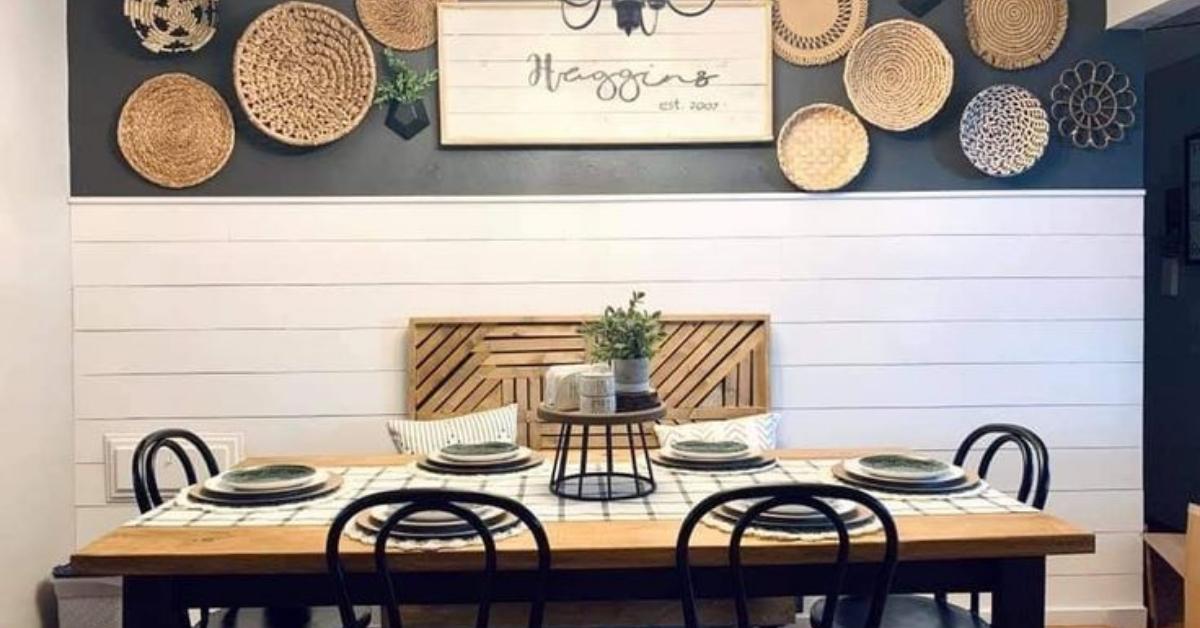
Boho dining rooms are having a serious moment in 2026 and not the maximalist, cluttered version that dominated a few years ago. The shift is toward intentional layering: warm textures, Boho Dining Room Decor Ideas handmade details, and natural materials that make a dining space feel lived-in and collected rather than decorated overnight.
If your dining room feels generic or flat like it could belong to anyone, boho decor is one of the most effective ways to build character without a full renovation. The key is knowing which ideas scale well for your space size and which ones require some commitment.
For anyone working with a mid-size or small dining room, good news: most of these setups are designed with proportional rooms in mind, not sprawling open plans.
A Rattan Pendant Over a Solid Wood Table

The pendant light is doing more work in a dining room than most people realize. A woven rattan shade casts a warm, dappled pattern across the table surface when lit the kind of ambient texture that no flat-shade fixture can replicate. Pair it with a solid wood table (raw edge or smooth, either works) and you’ve established the room’s visual identity before anything else touches the walls. This setup works especially well in rooms with 8-9 foot ceilings where a large shade won’t overwhelm the space. It solves the “boring overhead light” problem that makes dining rooms feel like break rooms.
Mismatched Chairs Around a Unified Table
The rule used to be: match your chairs. That logic made sense when furniture was expensive and hard to replace. Now, intentional mismatching is one of the most effective ways to make a dining room look curated rather than catalog-sourced. The setup works when you follow one constraint: pick chairs from the same tonal family. Warm honey-toned rattan, bleached wood, and a cream linen upholstered chair can coexist because they’re pulling from the same palette. Where this works best is in open-plan dining spaces where a fully matched set would look too rigid against the rest of the room.
A Jute or Sisal Rug That Anchors the Whole Setup

A lot of dining rooms skip the rug entirely either out of practicality concerns or because they can’t visualize how one would function. In a boho setup, a jute or sisal rug does something specific: it grounds the furniture arrangement visually and adds a layer of texture underfoot that hardwood or tile alone can’t provide. Size is the thing most people get wrong. The rug needs to be large enough that all chairs remain on it even when pulled out. In my experience, most people size down by one increment and go bigger than your instinct says. This is especially useful in rooms with light floors, where the furniture would otherwise feel like it’s floating.
An Arched Macramé Wall Hanging as a Focal Point
Blank walls behind dining tables are one of the most common layout problems in mid-size rooms. Art is often too small; mirrors can feel overdone. A macramé wall hanging, particularly an arched or arch-framed one fills vertical space in a way that feels organic and textural rather than decorative in a flat, 2D way. The fiber adds physical dimension to the wall, which matters more in dining rooms than people think because you’re looking at that wall every time you eat. This works best if the wall is otherwise uninterrupted with no outlets, no vents and if the dining table is rectangular or bench-style, which gives the hanging space to breathe horizontally.
Wicker Chargers and Linen Napkins as Everyday Tablescape

Most boho dining rooms look great in photos and then revert to bare tables in daily life. The fix is building a “base layer” tablescape with items you don’t have to put away: wicker charger plates, loosely folded linen napkins in a neutral color, and a central candle grouping. This creates the visual warmth of a styled table without the effort of restyling before every meal. Practically, it also reduces the impulse to pile things in the center of the table because there’s already something intentional there. Works well in households where the dining table doubles as a gathering spot during the day.
Open Shelving With Collected Ceramics and Trailing Plants
Open shelving in a dining room is functional if you use it right. In a boho context, it becomes part of the room’s visual composition, a place to display handmade ceramics, gathered vessels, and a few trailing plants that soften the edges. The key is treating it like a composition, not a storage solution. Keep roughly 30-40% of each shelf visually open, and vary the heights of objects so there’s movement across the row. Trailing plants like pothos or heartleaf philodendron work particularly well because they add diagonal lines that break the horizontal repetition of the shelf. This is one I’d actually recommend trying first because it’s entirely renter-friendly and reversible.
A Bench on One Side for a Relaxed, Laid-Back Feel

Swapping one set of chairs for a long bench changes the energy of a dining room more than most single furniture decisions. It creates an informal, layered look especially with a cushion or folded throw on top and it seats more people in tight configurations without looking overcrowded. Visually, the bench creates a long horizontal plane that works particularly well against a window wall or under open shelving. For smaller spaces, a bench also takes up less visual weight than four individual chair backs. The practical bonus: it slides fully under the table and doesn’t create a walking obstacle when guests aren’t over.
Terracotta Walls or an Earthy Accent Wall Behind the Table
Color is the fastest way to anchor a boho dining room’s mood. Terracotta, clay, or warm ochre on the wall behind the dining table creates a saturated backdrop that makes every natural material in the room read more richly; the wood looks warmer, the linen appears creamier, the greenery pops. The key is limiting it to one wall (the one directly behind or adjacent to the dining table) so it feels purposeful rather than overwhelming. This works best in rooms with natural light, since these pigments shift significantly in artificial light. If painting feels too permanent, a large-format linen panel or fabric wall hanging in the same tonal range achieves a similar effect.
Read More About : 25 Dining Room Wall Decor Ideas That Make Every Meal Feel Like an Occasion
Low-Hanging Dried Pampas Grass in a Tall Ceramic Vase

Dried botanicals have become a boho staple for a practical reason: they look intentional and require zero maintenance once placed. Pampas grass specifically adds height, softness, and movement; the plume tips shift slightly even without a breeze from nearby air movement. In a tall ceramic or terracotta vase, it functions like a floor plant that never dies and doesn’t compete with the natural light you want to preserve in a dining room. Position it in a corner beside or slightly behind the dining table so it frames the space without blocking sightlines across the table. This is one of the most reliable ways to fill a dead corner without adding furniture.
Layered Lighting: Pendant, Candles, and a Corner Floor Lamp
Single-source lighting is why most dining rooms feel flat at night. In a boho setup, the goal is three layers: the pendant overhead for ambient fill, candles on the table for intimate warmth, and a corner floor lamp or arc lamp that lights the edges of the room so the walls don’t disappear into shadow. This isn’t about complexity, it’s about making the room feel three-dimensional after dark. The combination of warm-toned bulbs (2700K or lower) across all three sources creates the kind of golden-hour atmosphere that no amount of decor can replicate under cool white overhead light.
A Round Table to Improve Traffic Flow in Tighter Spaces

Round tables solve a specific layout problem: corners. In rectangular rooms where traffic naturally moves along the perimeter, a round or oval table allows movement around it from any direction without the furniture feeling like a blockade. For boho dining rooms specifically, round tables also look more relaxed and conversational; they don’t have a “head,” which changes the dynamic of the space. A pedestal base (one central leg) rather than four corner legs keeps the floor area cleaner and lets the rug beneath breathe visually. Best suited for rooms under 120 square feet where a rectangular table would feel imposing.
Woven Wall Baskets in a Grid or Scattered Arrangement
Wall baskets are an underrated wall treatment for dining rooms specifically because they work around vents, outlets, and uneven wall space in a way that framed art can’t. A loose cluster of 5-7 baskets in varying sizes and weave patterns creates texture and visual rhythm without requiring precise hanging alignment. The key word is “loose” if they’re too evenly spaced it reads as deliberate symmetry, which isn’t the point. Mix round, oval, and teardrop shapes, and vary the weave density. This is honestly one of the most budget-conscious options in this entire list: thrifted or imported baskets can create a compelling wall for under $80.
A Vintage or Hand-Carved Wooden Sideboard for Storage and Display

A sideboard in a boho dining room earns its space by pulling double duty: storage below and display surface above. A hand-carved or vintage piece with texture and patina brings more warmth than flat, modern console alternatives. The surface becomes an opportunity to layer objects at varying heights: a ceramic lamp, a small plant, a woven tray, and a candle grouping create a visual still life that the dining table alone can’t achieve. In rooms without a dedicated display wall, the sideboard becomes the room’s secondary focal point. Go for this if your dining room currently has no storage and relies on the table to hold everything.
Plants Grouped at Different Heights for a Garden-Like Feel
Single plants placed around a room feel decorative. Plants grouped at three heights, floor level, medium (on a stool or planter stand), and window-ledge height create something closer to a living vignette. In a dining room, this works best near a window where natural light supports plant health and where the layered greenery becomes part of the room’s backdrop. The textural variation between large leaves (monstera, fiddle leaf) and trailing vines (pothos, string of pearls) adds depth that doesn’t read as cluttered. The practical upside: grouped plants in similar conditions are easier to water and care for than scattered individual pots.
Linen or Gauze Curtains That Let Light Filter Through

Heavy curtains in dining rooms block the natural light that makes boho materials look their best. Linen or gauze panels hung from ceiling height rather than window frame height let light diffuse through while still softening the window as a focal point. The effect is a warm, almost overexposed quality of light in the room during the day that no artificial lighting can replicate. For renters, tension rods near the ceiling work as an alternative to drilling. Stick to white, cream, or warm oat tones. Anything with pattern will compete with the texture layering that’s already happening with furniture and accessories.
A Statement Ceiling With Hanging Dried Herbs or Eucalyptus Bundles
Ceilings in dining rooms are almost always ignored. If you have a visible beam or are willing to install a simple curtain rod near the ceiling, hanging dried herb bundles of lavender, rosemary, eucalyptus adds an entirely new vertical layer to the space. It reads as both decorative and functional, which is peak boho design logic. The bundles slowly dry in place and the subtle fragrance from eucalyptus, in particular, persists for weeks. This works especially well in dining rooms that connect to an open kitchen, where the culinary context makes herb display feel natural rather than forced.
A Carved or Hammered Metal Centerpiece Instead of Flowers

Flowers are the default dining table centerpiece for a reason they’re beautiful. But they’re also time-sensitive, expensive, and usually gone within a week. A carved wooden bowl, hammered brass dish, or hand-thrown ceramic vessel as a permanent centerpiece solves the maintenance problem while adding material contrast that fresh flowers can’t. Fill it loosely with dried botanicals, stones, small candles, or leave it intentionally empty. The vessel itself becomes the statement. A hammered brass or copper finish particularly picks up warm light in a way that reads as rich without being precious.
Floating Shelves With a Curated Book Stack and Ceramics
Books in a dining room feel unexpected in the best way. A floating shelf at seated eye-height with a stack of three or four books (spines faced out in similar earthy tones), a single handmade ceramic piece, and a small propagation vessel creates a quiet, intellectual corner that adds warmth without adding weight. This works particularly well in smaller dining rooms where a full gallery wall would feel oppressive. The key is editing ruthlessly one shelf, three to five objects, and negative space around them. Overcrowded floating shelves are just visual clutter at chest height.
Read More About : 23 Dining Room Budget Makeover Ideas That Actually Look Intentional
A Patterned Tile or Painted Floor as the Room’s Artisan Detail

Most people put the design investment in walls and furniture and treat the floor as background. In a boho dining room, an artisan-patterned floor of cement tiles, stenciling, or even a large pattern painted directly on wood becomes the room’s architectural feature. The table and chairs above it can stay relatively simple, because the floor is carrying the visual weight. This is one of the bolder commitments on this list, but for renters, removable floor stickers or a large patterned rug achieve a similar effect. Moroccan-inspired patterns and geometric block prints in terracotta and cream work best within the boho palette.
A Wabi-Sabi Approach to Imperfect Ceramics and Raw Edges
Wabi-sabi, the Japanese philosophy of finding beauty in imperfection and impermanence maps naturally onto boho dining aesthetics. In practical terms, this means choosing pieces that show their making: hand-thrown cups with uneven rims, raw-edge wood boards used as trivets or table risers, glazed ceramics with drips and variation in the finish. I’ve noticed this style tends to age better than perfectly finished alternatives; the patina that develops over time becomes part of the piece’s character rather than a sign of wear. This setup particularly suits people who eat around their dining table daily rather than treating it as a display space.
Linen Tablecloth Left Slightly Rumpled for an Effortless Look

There’s a specific visual quality that over-styled dining tables lack: they look like they’ve never been used. A linen tablecloth not ironed flat, not perfectly centered, but draped with intentional looseness communicates that this table is actually lived around. The texture of unwashed or stone-washed linen holds the light differently at every fold, adding dimension to the table surface without any additional objects. Layer a woven table runner perpendicular to it for depth. This is the lowest-effort, highest-return move in boho dining room styling, and one that resets itself naturally after every use.
What Actually Makes Boho Dining Room Decor Work
Boho isn’t an aesthetic defined by a specific furniture style, it’s defined by material honesty and layered texture. Understanding that principle makes the difference between a room that reads as intentionally boho and one that just looks eclectic.
The layering hierarchy matters.
Start with large surfaces: floor, walls, and the dominant furniture piece (the table). These need to be warm in tone but relatively neutral in pattern, because everything layered on top will compete if the base is already busy. A solid wood table, a jute rug, and a terracotta or off-white wall give you the canvas. The ceramics, textiles, and plants are the paint.
Natural light is non-negotiable.
Almost every material associated with boho design rattan, linen, wood grain, ceramic glazes requires warm natural light to show its texture and depth. Under cool fluorescent or overly bright overhead lighting, the same room looks flat and lifeless. Prioritize sheer curtains over blackout options, and invest in warm-toned bulbs (2700K or lower) for evening lighting.
The scale of handmade objects relative to the room.
One small handmade ceramic on a large dining table does nothing. A collection of three or four pieces at varying heights, grouped intentionally, creates the visual density that reads as deliberate curation. Scale up your instinct for object sizing in a dining room. The furniture is large and the ceiling is high, so small objects disappear.
Boho Dining Room Setup Comparison Table
| Setup | Best For | Space Type | Problem It Solves | Effort Level |
| Rattan pendant + solid wood table | Any dining room | All sizes | Flat, uninspired overhead lighting | Low |
| Mismatched chairs, unified palette | Open-plan dining | Medium–large rooms | Too-matched, catalog-style look | Low–Medium |
| Jute rug under table | Hardwood or tile floors | All sizes | Furniture feels unanchored | Low |
| Macramé wall hanging | Plain wall behind table | Small–medium rooms | Empty, unfinished wall | Low |
| Bench on one side | Casual daily dining | Small–medium rooms | Overcrowded chair-only setups | Low |
| Terracotta accent wall | Rooms with natural light | Any size | Flat, personality-lacking walls | Medium |
| Layered lighting (3 sources) | Evening dining spaces | All sizes | Flat, single-source lighting | Medium |
| Round pedestal table | Tight or awkward layouts | Small rooms | Traffic flow issues, sharp corners | Low–Medium |
| Plant grouping at 3 heights | Window-adjacent rooms | Any size | Sparse, sterile feel | Low |
| Woven wall baskets | Irregular walls | All sizes | Art that doesn’t fit the wall | Low |
How to Avoid the Most Common Boho Dining Room Mistakes
Overloading texture without a neutral anchor.
Boho relies on layered texture, but every layer needs breathing room. If the rug is patterned, the tablecloth is patterned, the wall has a hanging, and the chairs are upholstered in a print the room becomes visually exhausting. Keep one major surface (usually the rug or the wall) in a solid, neutral tone.
Ignoring the ceiling height when choosing a pendant.
A large rattan shade in a room with 7-foot ceilings will hang at face height. Most pendant shades need a minimum of 7 feet from floor to the bottom of the shade over a dining table. If your ceilings are low, opt for a flush-mount or semi-flush woven fixture instead.
Buying plants before checking the light.
The boho plant moment doesn’t work if the plants are dying. Assess which direction your dining room windows face before choosing plants. North-facing rooms need low-light tolerant species like pothos and ZZ plants. South-facing rooms can handle almost anything. Plants that look perfect in a photo shoot then yellow and drop within a month aren’t adding warmth, they’re adding guilt.
Going too global-market with the accessories.
A dining room filled exclusively with products that telegraph “boho” the same macramé, the same pampas, the same terracotta ends up looking like a set rather than a home. Mix in one or two pieces that are personal: something inherited, something local, something that doesn’t obviously “match.” That’s what gives a boho dining room its actual character.
FAQ’s
What is boho dining room decor?
Boho (short for bohemian) dining room decor is an interior style that combines natural materials wood, rattan, linen, jute with handmade or artisan objects, layered textiles, and plants. It emphasizes organic texture, warm tones, and an eclectic, collected-over-time feel rather than a matched, coordinated look.
How do I make a small dining room feel boho without it feeling cluttered?
Focus on one or two texture layers and leave the rest simple. A jute rug, a rattan pendant, and one plant grouping can establish a full boho feel in a small room without overwhelming it. In small spaces, restraint and good lighting matter more than the number of objects.
Do boho dining rooms require a lot of natural light?
Natural light helps significantly boho materials like linen, rattan, and wood grain look their best in warm daylight. If your dining room has limited natural light, warm-toned artificial lighting (2700K bulbs) and sheer curtains that maximize whatever light exists will compensate effectively.
Is boho dining room decor budget-friendly?
It can be one of the most budget-accessible styles if you prioritize thrift stores, secondhand platforms, and simple natural materials (jute rugs, dried botanicals, simple linen) over designer pieces. The aesthetic rewards objects that look imperfect and well-worn, which means inexpensive finds often look better than new retail.
Boho vs. Japandi dining room: which works better in a small space?
Japandi is typically the better choice for very small spaces; it’s more minimal and relies on negative space. Boho can work in small rooms, but requires more curation to prevent a cluttered feel. The decision often comes down to lifestyle: boho suits people who love layering and visual warmth; Japandi suits people who prefer calm and visual quiet.
What colors work best for a boho dining room?
Terracotta, warm cream, ochre, sage green, and dusty clay are the most functional boho palette anchors for dining rooms. These tones work with natural wood, linen, rattan, and ceramic finishes without competing. Avoid cool grays, pure whites, or high-contrast black accents they work against the warmth boho depends on.
How do I style a boho dining table for everyday use (not just special occasions)?
Build a permanent base layer: wicker charger plates, linen napkins in a neutral color, and a low ceramic or wooden centerpiece. These stay on the table daily and create the visual warmth of a styled table without setup effort. For meals, they simply get cleared or moved slightly rather than removed entirely.
Conclusion
A boho dining room that works in a real home isn’t about getting every element right, it’s about getting the foundation right: warm materials, layered light, and at least one handmade or living element that keeps the space from feeling static. Even small changes to a dining room’s lighting, rug, or wall treatment can noticeably shift how the whole space reads.
Start with the one or two ideas that fit your current furniture and room size. Adjust the lighting first if you haven’t it costs the least and changes the most. From there, layer in texture gradually. The best boho dining rooms look like they evolved over time, and the most effective way to replicate that is to actually let them.
