

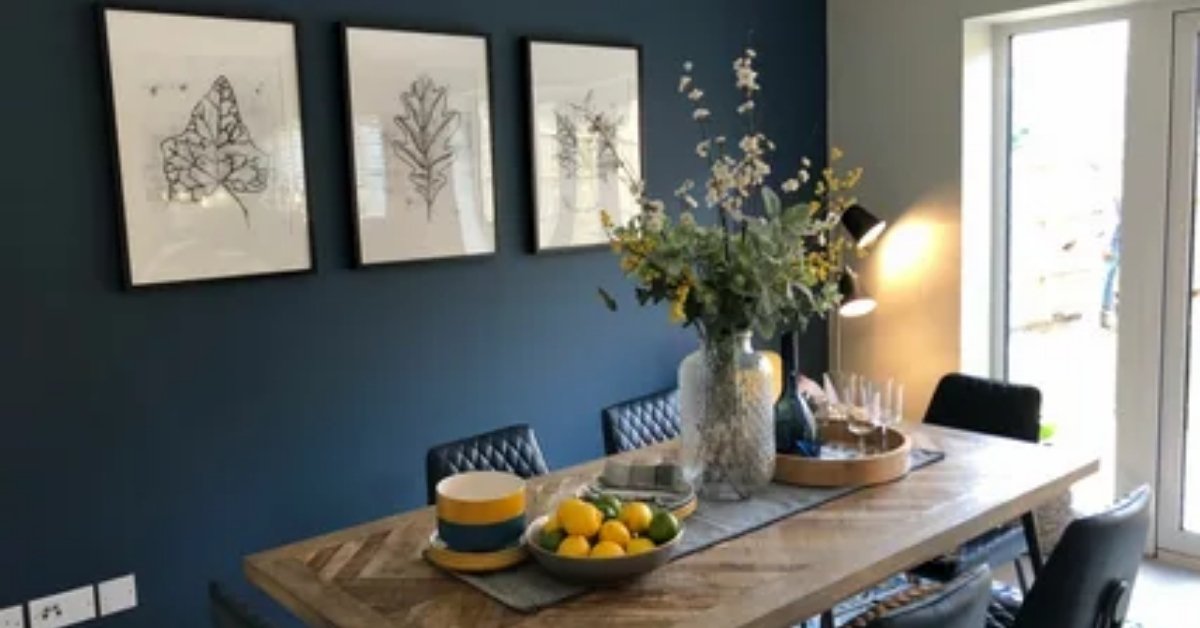
Your dining room walls are doing a lot more work than you might think. They set the mood for every dinner party, Sunday brunch, and late-night conversation that happens around your table.Dining Room Wall Decor Ideas And yet, for most people, those walls stay blank far longer than they should not because there’s no vision, but because it’s genuinely hard to know where to start.
If your dining room feels a bit unfinished, too stark, or like it’s missing that pull-it-together quality, the wall decor is almost always the missing piece. I’ve noticed that even in beautifully furnished dining rooms, bare walls make everything feel temporary like the space hasn’t been fully committed to. The good news is that you don’t need to gut the whole room. One or two intentional wall decisions can shift the entire feel.
This is especially useful if you’re working with a small or awkward dining space, a rental where you’re limited on what you can hang, or a room that pulls double duty as a workspace or living area. Most of these ideas work across budgets and room sizes, no renovation required.
A Large-Scale Art Print Centered Above the Sideboard

One large piece of art does something that a dozen smaller ones can’t; it anchors the room without cluttering it. Position a canvas or framed print centered horizontally above your sideboard or buffet, leaving about six to eight inches of breathing room between the top of the furniture and the bottom of the frame. The scale matters here. In my experience, people consistently undersize their dining room art, which is why it ends up looking like a decoration rather than an intentional design decision. If the room is 10×12 or larger, you’re looking at a print that’s at least 40 inches wide. Art in warm earth tones terracotta, ochre, warm cream works especially well under amber pendant lighting because it deepens in the evening and feels genuinely atmospheric at dinner.
A Gallery Wall That Follows the Staircase Line
This one’s for homes where the dining room lives at the base of a staircase or along a hallway wall. Instead of hanging prints in a grid, follow the diagonal angle of the stair rail with your frames ascending in size as the wall rises. The result is dynamic, fills what’s often an awkward dead wall, and draws the eye upward in a way that makes ceilings feel higher. Mix sizes (don’t match them) and use a consistent frame finish matte black or thin brass to create cohesion without rigidity. This layout is particularly effective in narrow dining rooms where the wall is long but short in height.
Woven Wall Hangings for Texture in Low-Light Dining Rooms

When your dining room doesn’t get much natural light, basement level, north-facing, or heavily shaded hard-edged art can feel flat and cold. Woven or macramé wall hangings solve this because they play with the shadows cast by your pendant or chandelier light, creating a soft, shifting texture that feels alive rather than static. Hang one large piece off-center from the table, roughly at seated eye level, rather than centered above the dining set. The asymmetry gives the room a more curated, less catalog-page feel. This works especially well in rentals because a single command hook or adhesive strip can often hold smaller hangings.
A Floating Shelf With Objects Instead of a Traditional Frame
Not every wall solution has to be flat. A single floating shelf ideally in walnut or white oak to contrast a neutral wall lets you build a three-dimensional vignette: a small framed print, two or three ceramic vessels in varying heights, and a trailing plant like pothos or string of pearls. The layering creates visual depth without commitment, and it’s endlessly adjustable. This setup works best on the wall behind or beside the dining table rather than directly opposite, where it would compete with the table’s natural focal point. For renters, a single floating shelf requires just two screws and patches cleanly when you leave.
Warm-Toned Mirrors to Double the Candlelight

A mirror in a dining room isn’t just decorative, it’s functional. Placed on the wall opposite or adjacent to your main light source, it reflects both natural and artificial light, brightening the space without adding more fixtures. Go for an arched or sunburst frame in brushed brass or unlacquered bronze. In rooms with darker wall colors (deep green, navy, charcoal), this combination gives the space that low-lit restaurant quality that’s genuinely hard to achieve with overhead lighting alone. Avoid mirror placements that reflect the kitchen directly or put the dining table’s clutter on display. You want light bounce, not a live feed of the mess.
A Ledge Rail System for Interchangeable Art Displays
Picture ledges slim horizontal rails mounted at standing eye level let you swap art whenever the mood changes without patching holes. For a dining room, run a single ledge about two-thirds the length of the wall and lean three to five prints of varying widths. Keep a consistent matte or color palette across the prints themselves so the rotation stays cohesive. This approach is especially good for people who rent, redecorate seasonally, or genuinely enjoy art and want to update their space without recommitting every few months.
A Painted Arch as a Faux Architectural Detail

This one requires zero art, zero frames, and just one can of paint. Use painter’s tape and a template (a string and pencil anchored to a nail at the arch’s center point) to paint a large arched shape directly on the wall behind your dining table. Fill it in solid with a warm tone terracotta, dusty sage, or warm taupe and position your table so it sits inside the arch’s footprint when viewed from the room’s entrance. The painted arch creates the sense of an alcove or niche, adding architectural interest to flat, plain walls. It photographs especially well and reads as intentional decor design rather than paint-over-art. This is currently one of the strongest interior paint trends moving into 2026 it’s been building for a few years and shows no sign of fading.
A Statement Tapestry in Place of Oversized Art
For rooms with high ceilings or long expanses of wall, a tapestry fills space in a way that most framed art can’t without the visual weight of a massive canvas. Go for muted, pattern-forward designs: vintage-inspired florals, abstract weaves, or geometric patterns in earthy tones. The fabric absorbs some sound, which makes a notable difference in hard-floored dining rooms that tend to echo. Hang it close to the ceiling line to make the walls feel taller, with the base of the tapestry roughly level with the top of any furniture it sits above.
A Grid of Small Prints for a Maximalist Take

Nine identically framed prints in a tight 3×3 grid read as a single cohesive piece rather than a scatter of small art. The key is consistency: same frame finish, same mat width, same print theme. Botanical drawings, abstract monochrome pieces, or architectural sketches all work well. Space frames two inches apart tight enough to read as a unit. This setup works in mid-size dining rooms where one large-scale piece would feel overwhelming, but you still want visual density and impact on an empty wall.
A Dark Accent Wall With Unlacquered Metal Sconces
Wall color and decor don’t have to be separate decisions. Paint one wall in a deep tone of charcoal, navy, deep terracotta and add unlacquered brass or iron sconces on either side of the table’s centerline. The contrast between the dark wall and the warm metal of the sconces creates a layered, jewelry-like effect that no framed print can replicate. This is one I’d actually recommend trying first for anyone who’s confident in their room’s layout and wants a high-impact change with minimal accessories.
An Oversized Clock as Functional Wall Art

A large-format clock 24 to 36 inches in diameter works as a legitimate art piece in a dining room, particularly in spaces that lean industrial, Scandinavian, or cafe-style. Choose a clean face without Roman numerals for a more modern read. Centered on the wall opposite the main window, it reflects light and adds visual weight without the complexity of gallery curation. Works especially well in open-plan layouts where the dining room flows into a living space and you want a single bold focal point that defines the dining zone.
Vertical Botanical Prints in Narrow Dining Rooms
In long, narrow dining rooms where wall width is limited but height is available, vertical prints, portrait orientation, at least 24 inches tall draw the eye up and make the room feel less corridor-like. Two prints hung with 12 to 16 inches between them on the wall parallel to your table creates rhythm without crowding the space. Botanical illustrations eucalyptus, palms, ferns work particularly well because they echo the vertical lines of real plants without requiring live maintenance.
A Pegboard or Slatwall Panel for Utility-Forward Dining Rooms

For open-plan spaces where the dining room meets the kitchen, a painted pegboard panel or slatwall section bridges the gap between decoration and function. Mount it on the kitchen-adjacent wall, paint it to match the wall color so it blends rather than shouts, and use it for a rotating display of small planters, lightweight woven baskets, or framed daily notes. This setup is particularly useful in city apartments where the dining room is also the landing zone for mail, keys, and work bags it organizes visually rather than just looking good.
Oversized Wooden Letters or Numbers With Depth
Three-dimensional wooden letters either a word, an initial, or just a large numeral add tactile depth to dining room walls in a way that flat art can’t. The shadow cast by a raised wooden letter shifts through the day as light changes, which keeps the wall feeling alive. One large letter or a short word works better than a phrase, which tends to read as craft rather than design. This is a budget-friendly option when bought raw (unpainted) and stained yourself with a matching wood finish.
Read More About : 23 Dining Room Budget Makeover Ideas That Actually Look Intentional
A Slim Console + Wall Art Combination as an Integrated Display

Rather than treating the wall and the furniture as separate things, pair a slim console table (12 to 14 inches deep) pushed against the dining room wall with wall art that reads as part of the same composition. Art anchored just above the console’s back edge, with small objects on the surface that repeat colors from the print, creates a layered, gallery-like vignette. The console also solves a practical problem: it provides a serving surface during dinner parties without taking floor space from the seating arrangement.
A Rattan or Wicker Sunburst Mirror
The rattan sunburst mirror is genuinely one of the most versatile dining room wall pieces available at multiple price points. It adds warmth (the natural material), light (the reflective mirror center), and visual interest (the radial structure) simultaneously. On a warm-toned wall terracotta, mustard, even a warm taupe it creates a tonal relationship that reads as collected rather than matched. Works in small and large dining rooms equally because the radial shape scales optically well.
A Series of Handmade Ceramic Plates

Artisan ceramic plates hung on a dining room wall are having a real moment right now and honestly for good reason. They’re functional objects used as art, which gives them a coherence that generic prints sometimes lack. Arrange five to seven plates in an organic cluster (not a grid; the variation in shape and size of each plate does better in a loose arrangement). Choose plates in a consistent palette: muted earth tones, dusty blues, or cream with hand-painted line work. The slight variation between handmade pieces gives the wall texture and authenticity at a relatively affordable price.
A Printed World Map for Globally-Inspired Dining Rooms
A large-format world map vintage-style cartography in muted navy, olive, or sepia reads as art while also working as a conversation piece. Position it above a sideboard on the dining room’s longest wall, leaving equal margin on both sides. For rooms with an eclectic or well-traveled aesthetic, this creates instant narrative without requiring curation of multiple individual pieces. Avoid glossy laminated versions; the matte or parchment-textured prints feel considerably more considered.
A Wall-Mounted Bar or Wine Rack as Decor

In dining rooms where the wine or bar setup is always on the table anyway, bringing it to the wall solves a clutter problem while creating a genuine focal point. A wall-mounted wine rack minimal steel or matte black frame turns bottles into part of the visual composition. Pair it with a small mounted shelf for glasses below. This is a particularly strong solution for dining rooms that connect directly to a kitchen, where the storage function justifies the visual weight of the installation.
A Custom Neon Sign in a Warm Tone
Neon signs in dining rooms work when they’re warm-toned (amber, warm white) and script-style rather than logo or novelty formats. A short phrase, a family name, a simple word like “gather” or “eat” doesn’t need to be large to have presence. On an exposed brick wall, raw plaster, or even a painted wall in a contrasting tone, the warm glow creates ambient light that layers with your pendant and candles. This works especially in evening-use dining rooms where you want atmosphere more than clarity.
A Fabric Panel Stretched on a DIY Frame

One of the most underrated budget dining room wall solutions: buy a yard or two of upholstery fabric with a geometric or abstract pattern, stretch it over a simple wooden frame (staple gun, four pieces of lumber), and hang it like a canvas. The result looks significantly more expensive than it is, especially in fabrics that have texture linen weaves, jacquards, or velvet-style prints in muted tones. The soft fabric also helps absorb echo in hard-surface dining rooms. A 24×36 inch panel runs roughly $30 to $80 to make, depending on fabric choice.
A Chalkboard or Blackboard Wall Panel for Rotating Content
A framed chalkboard panel mounted, not painted directly on the wall gives you a dining room wall element that can shift daily. Write the evening’s menu for dinner parties, a grocery list for practical use, or leave it for guests to add to. Framed in wood or industrial pipe with a shelf below for chalk and erasers, it reads as decor rather than classroom. This works especially well in casual, bistro-style dining rooms or open-plan kitchens where the dining room functions as a social hub throughout the day.
A Single Dramatic Piece of Botanical Art at a Surprising Scale

Go bigger than feels comfortable. A botanical art print of a single palm frond, a magnolia branch, an oversized mushroom illustration at 4×5 feet or larger makes a dining room feel deliberate and considered in a way that a grouping of smaller pieces simply doesn’t. Lean it directly on a sideboard or low console rather than hanging it if the scale feels too permanent. In rooms with high ceilings, this floor-level lean actually draws the eye down and makes the room feel more intimate rather than cavernous.
A Framed Vintage Menu Collection for Restaurant-Inspired Dining Rooms
Framed vintage menus, French bistro, mid-century American diner, Italian trattoria are inexpensive to find at estate sales or online marketplaces and look genuinely charming in a row of three or four, uniformly matted and framed. They tie the dining room to its core function in a witty, considered way that most generic art doesn’t. This is a conversation-starting choice that rewards guests who lean in to look, which makes it particularly suited to dinner-party dining rooms.
Read More About : 29 Luxury Dining Room Decor Ideas That Make Every Meal Feel Like an Event
A Wood Slat Accent Panel Behind the Dining Table

A partial wood slat panel running from floor to ceiling or from chair rail to ceiling on the wall directly behind your main seating creates the effect of architectural detail without structural work. Pre-made wood slat panels are available in kit form and can be mounted with adhesive strips or minimal hardware. In walnut, ash, or white oak, they add warmth and dimensionality to the most-photographed wall of any dining room. This is especially effective in apartments with plain drywall where the walls otherwise offer no visual interest.
An Arched Mirror Flanked by Sconces
Two flanking sconces on either side of a tall arched mirror on your dining room’s main wall creates a symmetrical, architectural composition that feels genuinely elevated. The mirror bounces light from the sconces inward, creating a warm glow that fills the room from multiple directions. In practice, this works best on a wall that’s at least five feet wide so the composition has room to breathe. Choose sconces with visible filament or flame-style bulbs for the most flattering light at dining-table height.
A Living Moss or Preserved Plant Panel

Preserved moss panels, usually boxwood or reindeer moss arranged in a frame, require zero maintenance (they’re not living, despite the name) and bring genuine organic texture to a dining room wall. They work especially well in city apartments where actual plants are hard to maintain, or in windowless dining rooms where live plants would struggle. The panels come in custom sizes and shapes and can be ordered in single-color moss or a mix of green tones. Positioned opposite or adjacent to your dining table, the texture reads differently from every angle as light shifts through the day.
What Actually Makes Dining Room Wall Decor Work
The difference between dining room wall decor that looks finished and wall decor that looks like an afterthought usually comes down to three things none of which are about choosing the “right” piece.
Scale relative to the wall, not the room.
The most common mistake is treating a large dining room wall like a small bedroom wall. A 12×14 dining room has wall surfaces that can handle and often need art at 40 to 60 inches wide. When the art is too small for the wall, it looks placed, not designed. Match the art’s width to roughly two-thirds of the furniture piece it sits above.
The relationship between wall decor and lighting.
Dining room wall decor is almost always seen in low-to-medium light pendant lights, candles, dimmers which means colors and textures read very differently than they do in a bright showroom. Warm-toned art (ochre, terra cotta, warm cream) tends to deepen and improve under warm artificial light. Cool-toned art (blues, grays, stark whites) can look flat or stark at dinner. Test your wall decor under the actual evening lighting before committing.
Vertical placement matters more than most people realize.
Standard hanging advice says “eye level,” which is usually interpreted as standing eye level roughly 57 to 60 inches from the floor to the center of the piece. In a dining room, that’s often too high, because you’re primarily seated. For wall decor above a sideboard or console, the bottom of the frame should be 6 to 10 inches above the furniture surface. For wall decor above the table itself, scale and placement should work from a seated perspective which pulls the center of the piece down by about four to six inches from the standard rule.
Dining Room Wall Decor Setup Comparison
| Setup | Best For | Space Type | Problem It Solves | Difficulty |
| Large-scale single art print | Clean, modern, minimal rooms | Medium to large | Blank walls, lack of focal point | Easy |
| Gallery wall | Eclectic, curated, personal style | Medium rooms with long walls | Too-small art, empty expanse | Moderate |
| Woven wall hanging | Low-light, warm, textural rooms | Small to medium | Cold, flat walls without natural light | Easy |
| Painted arch | Renters, flat-walled rooms | Any size | No architectural detail | Easy (paint only) |
| Mirror + sconces | Dark rooms, evening-use dining | Medium to large | Poor light distribution | Moderate |
| Wood slat panel | Apartments, modern-minimalist | Any | Plain drywall walls | Moderate |
| Ceramic plate cluster | Eclectic, globally inspired rooms | Small to medium | Generic art, budget constraints | Easy |
| Living moss panel | Urban apartments, windowless rooms | Any | No plants, sterile walls | Easy |
Common Dining Room Wall Mistakes That Make Spaces Feel Unfinished
Hanging art too high.
This is the single most pervasive error in dining room decor. Wall art hung at standing eye level in a room where people spend most of their time seated creates a disconnect: you’re looking up at the wall rather than engaging with it. Lower your hanging point by four to six inches from what “feels right” when you’re standing, and the composition will feel grounded once you’re at the table.
Using too many small pieces without a framework.
A scatter of small prints with inconsistent frames, spacing, and orientations reads as indecision rather than curation. If you love the gallery wall look, commit to a grid, a ledge system, or a deliberately tight cluster all of which create internal logic that makes the arrangement feel intentional. The problem isn’t the number of pieces; it’s the absence of a system.
Ignoring the relationship between wall color and art tone.
Warm wall tones (beige, cream, terracotta) flatten warm-toned art because there’s not enough contrast for either to register clearly. On a warm wall, cool-toned or high-contrast art creates separation and reads more clearly. On a cool or neutral wall, warm-toned art adds the depth that keeps the room from feeling cold. Think in terms of contrast, not coordination.
Centering art on the wall rather than above the furniture.
In a dining room, wall decor needs to relate to the furniture below it: the sideboard, the table, the console, not the wall as an isolated surface. Centering a piece horizontally on the wall when the furniture below it is offset creates visual imbalance that’s hard to name but easy to feel. Always center art horizontally over the specific furniture piece it accompanies, not over the full wall span.
Underestimating the visual weight of empty wall space.
A dining room wall with one small picture on a large expanse isn’t minimal, it’s unresolved. True minimalism in a dining room means one well-chosen, well-scaled piece. If your current setup looks sparse, the solution is usually to go larger on the single piece rather than adding more pieces at the same scale.
FAQ’s
What size art should I hang in a dining room?
The general rule is that your art should be roughly two-thirds the width of the furniture it hangs above, so if your sideboard is 60 inches wide, your art (or art grouping) should be around 40 inches wide. Going wider than this starts to overwhelm the furniture; going narrower tends to look undersized on the wall.
How high should I hang art in a dining room?
For dining rooms specifically, hang art so the center of the piece sits at around 54 to 56 inches from the floor, slightly lower than the general 57 to 60 inch standard. Since dining rooms are primarily seated, a slightly lower placement feels more natural and engaged from the table.
What’s the best wall decor for a small dining room?
In a small dining room, prioritize one larger piece over several small ones: a single oversized print, a sunburst mirror, or a woven wall hanging. Multiple small pieces compete visually and make a small space feel busier. A mirror is particularly effective because it reflects light and creates the optical illusion of more depth.
Can I use dining room wall decor to make ceilings look higher?
Yes. Vertical elements, tall narrow prints, vertical wood slat panels, tapestries hung close to the ceiling line, or a painted arch that extends upward all draw the eye up and make ceilings feel taller. Avoid wide, horizontal groupings in rooms where ceiling height is a concern.
Is it okay to leave dining room walls blank for a minimalist look?
It depends on what else is working in the room. A dining room can support fully blank walls if the furniture, lighting, and flooring carry enough visual weight on their own. But in most standard apartments and homes, one blank wall in a dining room reads as unfinished rather than intentional. A single well-scaled piece is usually all it takes to shift from “empty” to “minimal.”
What’s the difference between a gallery wall and a ledge rail system which is easier?
A ledge rail system is significantly easier to maintain and update. You mount one or two horizontal rails and lean prints against the wall, no measuring for every hole, no commitment to a fixed arrangement. Gallery walls require precise measuring and planning upfront but look more permanently installed once done. Go with a ledge system if you like to update your decor regularly or rent your space; gallery walls are better for long-term, curated setups.
Can I use dining room wall decor to define a dining area in an open-plan space?
Absolutely it’s one of the most effective ways to visually carve out a dining zone. A large piece of art, a wood slat panel, or a painted arch directly behind the dining table creates a visual “room within a room” effect that defines the space without walls or barriers.
Conclusion
A dining room’s walls are the backdrop for everything that happens there: the meals, the conversations, the late nights. Getting them right doesn’t mean spending a lot or committing to a permanent installation. It usually means making one or two decisions with intention and at the right scale for your space.
Start with the wall that you see most when you’re seated at the table. That’s your primary canvas, and it’s where a single strong decision is the right art size, a mirror that works with your light, a wood panel that adds texture will do more for the room than half a dozen smaller changes elsewhere. Try one idea, live with it for a few days, and build from there.
