

Modern kitchen counters are doing a lot of heavy lifting these days. They’re prep surfaces, coffee stations, visual anchors and in open-plan homes, they’re often the first thing you see when you walk in. The problem most people run into isn’t a lack of ideas; it’s figuring out which ones actually hold up when you’re cooking dinner,Modern Kitchen Counter Decor Ideas wiping down surfaces, and living in space daily.
If your counters feel either too bare or too cluttered or like they’re styled but not functional this list is for you. These are setups that balance the visual weight of a modern kitchen with the reality of actually using it.
Whether you’re working with a small galley kitchen, a rented apartment with limited wall space, or a larger layout you’re trying to make feel more intentional, there’s something here that translates directly to your space.
The Minimal Coffee Station With Intentional Layering

A coffee station works when it has defined edges meaning everything lives within a contained footprint, usually anchored by a tray or a small cutting board underneath. Place your espresso machine or pour-over setup slightly off-center, stack 2–3 mugs beside it, and add one small plant or a ceramic jar to break the horizontal line. The tray is the critical element here: it creates a visual boundary that keeps the setup from bleeding into the rest of the counter. This works especially well in narrow kitchens where one dedicated zone prevents the whole counter from feeling chaotic.
A Wooden Cutting Board Leaned Against the Backsplash
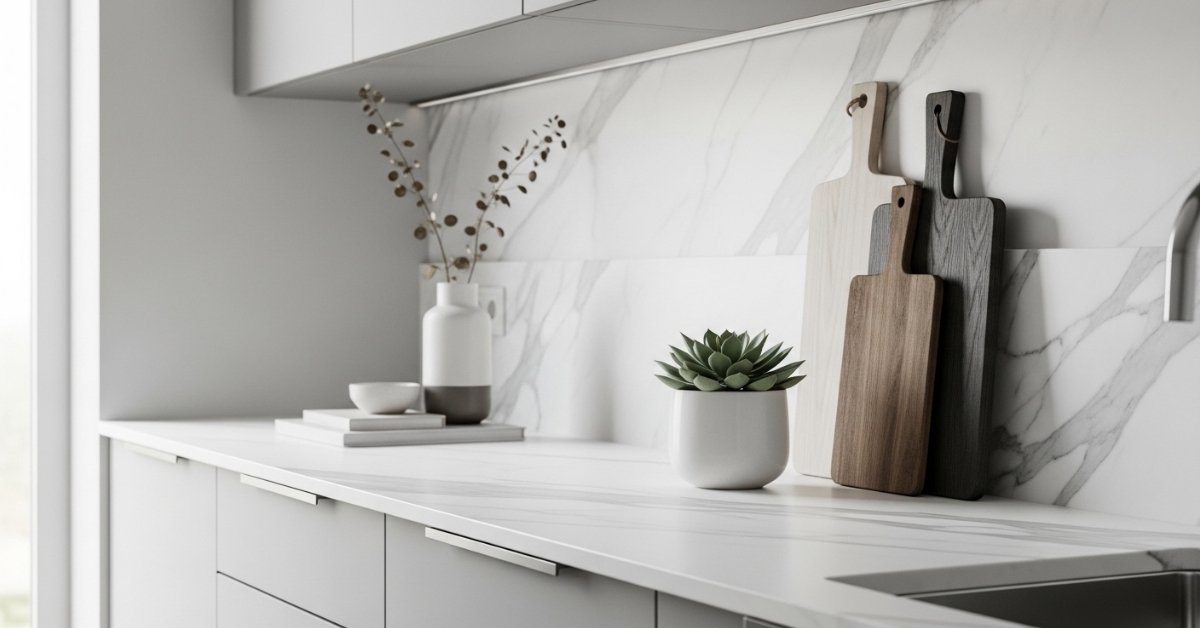
This is one of those setups that looks deliberate without requiring much effort. A large end-grain or walnut cutting board leaned upright against the backsplash adds warmth and material contrast especially effective in kitchens that lean heavily white, grey, or matte. It also solves a practical problem: boards stored flat take up more usable prep space. Leaning it vertically keeps it accessible while turning it into a visual element. In my experience, this works best when the board has some natural variation in grain or color. Uniform boards tend to disappear against light walls.
A Single Statement Plant in a Textured Pot

Not every counter needs a full herb garden. One well-placed plant in a pot with visual texture, ribbed ceramic, matte terracotta, or brushed stoneware does more for a modern kitchen than three small plants in generic white pots. Position it at the end of the counter or in a corner where it won’t interrupt workflow. Trailing varieties like pothos or tradescantia add movement without requiring much vertical space. The pot material matters as much as the plant: it’s where the design detail lives.
A Riser or Pedestal to Create Visual Levels
Flat counters with everything at the same height tend to feel visually dense even when they’re not overcrowded. A small riser marble, wood, or powder-coated metal elevates one item and immediately creates depth. Use it under a fruit bowl, a small plant, or a canister. The height variation draws the eye upward and makes the overall counter arrangement feel more considered. This is especially useful in kitchens with low upper cabinets, where vertical interest is hard to create otherwise.
An Organized Spice Setup That Doubles as Decor

Spice storage is one of those things that’s almost always on the counter by necessity. The question is whether it looks like it belongs there. Decanting into matching glass or ceramic jars (with clean, consistent labels) turns a functional necessity into a design element. A tiered wooden or black metal rack keeps them contained and adds a layered visual quality. This works particularly well on longer counters where you need multiple functional zones; the spice rack anchors one end of the “cooking zone” and signals organization without hiding anything.
Read More About : 21 Small Kitchen Decor Ideas on a Budget That Actually Make the Space Work
A Narrow Shelf Riser for Appliances
In smaller kitchens, appliances dominate the counter and leave little room for anything else. A narrow riser shelf typically 6–8 inches tall lets you tuck items like a toaster or small air fryer underneath while using the surface on top for lower-traffic items or decor. It’s a practical compression strategy that visually clears the counter without requiring more storage elsewhere. Honestly, this is one of the more underused counter ideas for compact kitchens, and it makes a more noticeable difference than most styling changes.
A Monochromatic Fruit Bowl Moment

A fruit bowl becomes a design object when it’s a monochromatic same-colored fruit, sculptural bowl, clean surrounding counter. Green apples in a concrete bowl, lemons in matte white ceramic, or deep plums in a dark stoneware dish. The simplicity of one material and one color family reads as intentional rather than just convenient. It also solves the “I want something natural but not fussy” problem that a lot of kitchens face. Keep the area around the bowl clear; the negative space is part of the composition.
A Countertop Herb Garden With Uniform Pots
Herb gardens work best when the containers are uniform. Three matching pots in a straight line near a window create a clean, almost restaurant-kitchen feel. The uniformity is what separates this from looking cluttered; different pot sizes, shapes, or colors tend to read as an afterthought. This setup is especially practical for cooks who actually use fresh herbs, because accessible herbs on the counter are used more often than herbs stored away. The functional aspect reinforces the decor rather than competing with it.
A Tray as a Counter Anchor

A tray is one of the most functional counter tools in modern kitchen styling. It contains scattered everyday items like olive oil, a small salt cellar, a plant, and a candle into a single defined zone. This reduces visual clutter without actually removing anything from the counter. The tray material should complement the countertop: marble trays on dark counters, wood trays on light stone, matte metal on concrete. The key is keeping items within the tray’s boundaries once things start migrating out, the setup loses its impact.
A Candle or Diffuser for Layered Sensory Decor
Kitchens often get overlooked when it comes to ambient layering; most people don’t think of candles or diffusers in cooking spaces. But a single taper or pillar candle at one end of the counter (away from the stove) adds a dimension that pure styling can’t. It signals that the kitchen is a space you spend time in, not just move through. Go for unscented or lightly scented if you cook frequently, strong candle scents compete with food. A simple holder in matte ceramic or hammered metal keeps it feeling grounded rather than decorative for its own sake.
Open Jar Storage for Dry Goods

Decanting pantry basics pasta, coffee, oats, rice into matching glass or ceramic canisters is one of those ideas that’s as practical as it is visual. It keeps frequently used items accessible without digging through cabinets, and a row of matching containers with consistent lids reads as an intentional design choice. This works best when you commit to a consistent container family: same lid style, same jar shape. Mixing sizes within the same line is fine; mixing brands or styles tends to break the visual logic.
A Cookbook Propped Open or Displayed Upright
A hardcover cookbook propped on a small stand or leaned against the backsplash adds personality without adding visual noise. Modern cookbook covers often have strong graphic design; they function as art objects as much as references. This works especially well in kitchens that feel too sterile or minimal, where you want warmth and personality without adding more objects. A book stand keeps it stable and slightly elevated, which makes it feel intentional rather than left there by accident.
Read More About : 31 Cute Amazon Finds for Bedroom Decor That Actually Make Your Space Feel Put Together
Under-Cabinet Lighting That Reframes the Counter

Lighting is the most underestimated counter decor element. Warm LED strip lighting installed under upper cabinets doesn’t just add task lighting it changes how the entire counter surface reads. It creates a layered glow that makes materials like stone, wood, and ceramic look richer. In darker kitchens or evening settings, it shifts the atmosphere significantly. This is especially useful for renters who can’t reconfigure overhead lighting: peel-and-stick LED strips are removable, affordable, and make a visual difference that most surface-level styling can’t.
A Marble or Slate Cheese Board as a Counter Object
A slate or marble board doesn’t need to be in active use to earn its place on the counter. Left out near the backsplash or propped against the wall, it adds material contrast and a sense of considered living. It’s also one of those dual-purpose items that looks intentional without requiring styling the material. In kitchens with mostly matte finishes, a polished marble board introduces a subtle reflective quality that lightens the space. Go for a rectangular over round for a more modern proportion.
A Small Ceramic Utensil Holder Near the Stove

Utensils on the counter are almost always necessary; it’s really about the container. A tall ceramic crock in a neutral matte glaze keeps wooden spoons, spatulas, and tongs accessible while adding a handmade-feeling detail to the cooking zone. This is one of the most functional counter setups you can create because it reduces the number of times you’re opening drawers mid-cook. The placement matters: keep it within arm’s reach of the stove but not directly beside the burners. A rounded or slightly tapered crock reads more modern than the classic cylindrical shape.
A Sculptural Object as a Focal Point
In 2026, kitchen counters are increasingly treated like small vignettes with one object that holds visual interest without serving a functional purpose. A small abstract ceramic sculpture, a smooth stone, or a single architectural object anchors a section of counter without adding clutter. This works best in kitchens that are already relatively organized: the sculptural object reads as a choice, not an accident. It’s also a way to introduce personality into kitchens that feel too showroom-clean. To keep the surrounding counter clear this setup relies on negative space.
A Linen or Cotton Hand Towel Draped Naturally

A linen hand towel sounds like a small detail, but the fabric quality and how it’s placed matters more than most people realize. A loosely draped or neatly folded natural-fiber towel adds softness and texture to a surface that’s otherwise all hard materials. Go for a neutral oatmeal, stone grey, or dusty sage in a waffle-weave or stonewashed linen texture. It signals that the kitchen is lived-in and cared for at the same time. This is especially effective in all-white or very minimal kitchens, where every material detail carries more weight.
A Petite Olive or Citrus Tree in a Clean Pot
A small potted olive tree or dwarf Meyer lemon tree does something a standard houseplant doesn’t: it references the kitchen’s function while still being a design object. The silvery-green of olive leaves works particularly well in kitchens with warm wood tones or light stone. Citrus trees add a brighter, more graphic quality. Both need good light, so position them near a window if possible. In kitchens without natural light, this setup doesn’t work as well, swap for a low-light variety like a small snake plant instead.
A Decanted Dish Soap Setup

The sink area is often the most neglected part of the counter from a styling standpoint. Swapping a plastic dish soap bottle for a ceramic or glass pump dispenser immediately cleans up the visual. Add a small ceramic dish for a sponge and a folded linen cloth, and the whole sink zone becomes a cohesive setup rather than a utility corner. This is one of the lowest-effort, highest-impact changes you can make. The items cost very little and the difference is immediate.
A Narrow Floating Shelf Above the Counter (Where Possible)
If your kitchen has a section of wall between the counter and the upper cabinets or an exposed wall at the end of the counter, a narrow floating shelf extends your display space vertically without using the counter surface. This is especially useful in kitchens where counter space is too limited to style properly. A 4–6 inch deep shelf can hold small plants, a jar or two, or a stack of small bowls. It keeps functional counters clear while still allowing for a visual element. Wall anchoring is straightforward in most kitchens, and the shelf can be removed without significant damage in rental situations.
A Coordinated Canister Set for the Baking Zone

If you bake regularly, a dedicated zone with matching canisters for flour, sugar, and coffee creates both a functional and visual anchor for that section of the counter. Coordinated canister sets in matte ceramic or glazed stoneware read as much more intentional than mixing and matching. The key is consistency in finish and scale even if the sizes vary slightly, keeping the same material and color family holds the set together visually. This setup works especially well on longer counters where you can give each zone its own defined identity.
A Small Chalkboard or Wood Sign for Personality
A small chalkboard or reclaimed wood sign adds a handmade, personal element without committing to wall installation. Leaned against the backsplash and paired with a plant or jar nearby, it creates a casual vignette that feels warm rather than decorated. This works best in kitchens with natural materials, wood counters, brick backsplash, open shelving where the informality feels at home. In very sleek, modern kitchens with high-gloss finishes, it can look out of place.
A Matching Set of Prep Bowls as Decor

Prep bowls that are actually beautiful enough to leave out are worth investing in. A nested set of matte ceramic bowls in a warm neutral linen, terracotta, dusty blue stacked near the backsplash adds texture and depth to a counter while staying fully functional. This is the kind of decor that works precisely because it isn’t purely decorative. I’d actually recommend this as a first purchase for anyone setting up a kitchen from scratch; it covers both the aesthetic and the practical without requiring two separate decisions.
A Trailing Plant on a Small Counter Stand
A trailing plant on a small elevated stand creates movement and a slightly unexpected element in the kitchen. The trailing habit pothos, string of pearls, or heartleaf philodendron draws the eye downward in a way that adds visual life to a static surface. The stand elevates the pot enough to let the trails hang freely without touching the counter, which keeps both the plant and the surface more hygienic. This setup works best on a section of counter that doesn’t see heavy daily prep.
A Bud Vase With a Single Stem

A single stem in a bud vase is a more refined move than a full floral arrangement on a kitchen counter. It adds life and color without taking up space or requiring much maintenance; dried grasses and eucalyptus last for weeks. The vase shape matters: a slim, tall neck reads more modern than a squat round vase. Position it at the end of the counter or within a tray grouping. This works in almost any kitchen size, and it’s one of the easiest things to swap out seasonally without changing anything else about the setup
A Woven or Rattan Basket for Produce Storage
Woven baskets solve the product storage problem in a way that looks deliberately chosen. Garlic bulbs, onions, small citrus, or avocados kept in a natural-fiber basket at the end of the counter add texture and warmth that no purely decorative item can quite replicate. The basket keeps produce ventilated and accessible, and the organic material softens a counter that might otherwise be all stone, metal, and ceramic. Go for a lower, wider shape for produce storage. Deep baskets make it harder to see what’s inside.
A Coordinated Morning Ritual Zone

This is one of the more intentional setups in modern kitchen styling right now: a morning ritual zone that includes everything for your first 20 minutes of the day, all contained within one tray or defined area. French press or kettle, ceramic mug, honey jar with a wooden dipper, and one small plant. The setup signals daily use without feeling like clutter, and because everything has a role, nothing looks out of place. It works especially well in kitchens that are visible from the living or dining area it reads as a lifestyle detail from across the room.
What Actually Makes These Ideas Work
The difference between a counter that looks styled and one that just looks cluttered often comes down to three things: containment, material harmony, and functional relevance.
Containment
means every item on your counter has a defined boundary either a physical one (a tray, a riser, a rack) or a spatial one (a clear zone with nothing encroaching on either side). Without containment, even beautiful objects start to feel like background noise.
Material harmony
doesn’t mean everything needs to match. It means the materials you choose should have a logical relationship: warm woods with matte ceramics, cool stone with brushed metal, linen with terracotta. When materials conflict without intention, the counter feels visually busy even when it’s not crowded.
Functional relevance
is the part most purely decorative advice skips over. Items that live on the counter permanently need to earn that spot by being used regularly or contributing visually in a way that a drawer or cabinet can’t. Anything that’s there “just in case” is probably better stored away.
Modern Kitchen Counter Decor: Setup Guide by Space Type
| Setup Type | Best For | Space Size | Primary Problem Solved | Visual Effect |
| Tray anchor with grouped items | Most kitchens | Any | Scattered clutter | Creates order without removing items |
| Coffee/morning station | Open-plan or studio kitchens | Small–medium | Counter chaos near appliances | Defined zone, lifestyle aesthetic |
| Canister set + baking zone | Frequent cooks | Medium–large | Functional disorder | Clean, organized, cohesive |
| Single plant + negative space | Minimalist or modern kitchens | Any | Sterile or empty feel | Adds warmth without clutter |
| Under-cabinet lighting | Dark or compact kitchens | Small–medium | Poor task lighting, flat surfaces | Depth, warmth, material richness |
| Riser shelf + produce basket | Galley or narrow kitchens | Small | Limited counter surface | Vertical use, visual layering |
| Sculptural object as focal point | Already-organized kitchens | Any | Too sterile or showroom-like | Adds personality, visual anchor |
Common Kitchen Counter Mistakes That Make the Space Feel Cluttered
Mixing too many materials without a connective element.
Ceramic next to plastic next to glass next to metal without any tonal or textural link makes a counter feel visually noisy regardless of how few items are on it. Pick a dominant material family and let 1–2 others support it.
Over-relying on small items.
A lot of small objects without one anchor piece creates an unfocused surface. Most well-styled counters have one larger or taller element: a cutting board, a crock, a plant that the smaller items organize around.
Ignoring the sink zone.
Most counter styling advice focuses on the main prep area and the appliance zone, but the sink area often undermines everything else. A mismatched soap bottle, a sponge left out, and a wet cloth bunched up create visual noise that bleeds into the rest of the counter. Treating the sink area with the same intentionality as the rest of the counter makes the whole kitchen feel more considered.
Styling for photography, not for use.
Counters that look great in photos but require clearing every time you cook don’t stay styled for long. The most effective setups are ones where the styled elements and the functional ones are the same things: a beautiful cutting board that you actually use, containers that you open daily.
Forgetting vertical space.
Most counter clutter happens because everything is competing for the same horizontal plane. A riser, a tiered rack, or a small shelf above the counter introduces height variation that makes the same number of items feel less crowded.
FAQ’s
What should I keep on my kitchen counter for a modern look?
Limit the counter to items used at least 3–4 times per week, plus 1–2 visual anchors (a plant, a cutting board, a tray grouping). The goal is functional items that also look intentional, not empty counters, not full ones.
How do I style a small kitchen counter without making it feel cluttered?
Use a tray to contain grouped items, choose one taller element (a plant or utensil crock) to create height, and keep at least one-third of the counter surface completely clear. Containment and negative space do more for a small counter than adding or removing items.
What’s the difference between a styled counter and a cluttered one?
A styled counter has a visual hierarchy, one anchor item, a few supporting elements, and clear space around them. A cluttered counter has items at the same height, the same visual weight, and no defined zones. The number of objects matters less than how they relate to each other spatially.
Should I decant everything into matching containers?
Not necessarily. Decanting works best for items that are out permanently spices, pantry staples, dish soap. For items you go through quickly or buy in bulk, it adds effort without proportional visual payoff. Prioritize containers for whatever is most visible on your counter.
Is under-cabinet lighting worth it for kitchen counter styling?
Yes it’s one of the highest-impact changes you can make relative to cost. It improves both the functionality (task lighting for prep) and the aesthetic (material depth, warmth) of the counter. Peel-and-stick LED strips are a good starting point for renters or those unsure about committing.
How do I make kitchen appliances look less visually heavy on the counter?
Group appliances into a defined zone rather than spreading them out. A riser shelf compresses vertical footprint. Choosing appliances in a consistent finish (all matte black, all stainless) reduces the visual competition between them. If an appliance is used less than weekly, it’s worth storing it away.
What’s a good starting point if my counter feels completely off but I don’t know why?
Start by removing everything, then put back only what you use daily. Add one tray to contain the items that cluster together. Then add one visual element: a plant, a cutting board, a canister set. Most counters that feel “off” are either over-full or lack any clear organizational logic, and this process reveals which one it is.
Conclusion
Kitchen counters are one of those surfaces that affect how your whole home feels, not just the kitchen. A counter that’s organized and visually grounded creates a sense of calm that extends into the rest of your day. It doesn’t require a renovation or a major investment; it requires thinking clearly about what belongs there and how those items relate to each other spatially.
Start with one zone, the coffee station, the sink area, or the main prep surface and apply the containment and material logic from there. Once one section feels right, the rest of the counter tends to follow naturally. Small adjustments in how you group, elevate, or frame objects on the counter make a more lasting difference than any single decorative purchase.
