

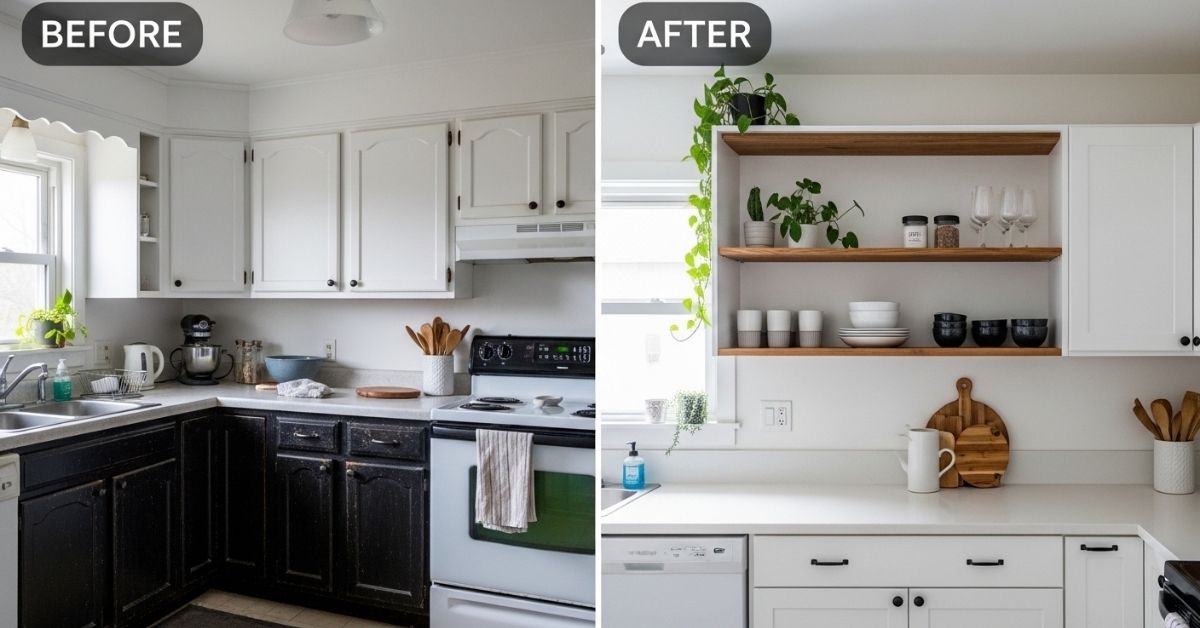
Most kitchens don’t need a full renovation; they need a reset. If your space feels outdated, cluttered, or just visually heavy, the problem is often fixable without touching a single tile or cabinet. Budget kitchen makeovers have shifted significantly in 2026, moving away from the all-white minimal look and toward warm,Kitchen Makeover Ideas on a Budget layered spaces that feel intentional without being expensive. Whether you’re renting, working with a tight timeline, or just tired of looking at the same dull countertop every morning, there’s a lot you can do with a weekend and a clear plan.
For anyone working with a smaller kitchen or a tight budget this list was built specifically for that. Every idea here is practical, rental-friendly where noted, and designed to solve a real problem: too much visual clutter, not enough light, wasted wall space, or counters that feel chaotic.
Swap Out Cabinet Hardware for an Instant Visual Shift

The easiest thing you can do to a kitchen and the one most people overlook is change the hardware. Brass, matte black, or unlacquered bronze pulls replace standard chrome in under an hour with a screwdriver, and the difference in perceived quality is significant. The existing holes usually align with standard spacing (3-inch or 3.75-inch centers), so you often don’t need to drill. This works especially well in kitchens with flat-front or shaker cabinets where the hardware does the visual heavy lifting. If your cabinets feel dated but you can’t paint them, new pulls shift the whole color story of the room.
Add Open Shelving on One Wall to Break Up a Closed-In Kitchen
One wall of open shelving, not the whole kitchen, creates breathing room without making the space feel chaotic. A pair of floating wood brackets with a pine or walnut-stained board can hold everyday dishes, glasses, or a small plant collection. The key is restraint: keep what’s on display limited to three or four categories of items, not everything you own. This setup works especially well in kitchens where the upper cabinets feel suffocating or where the layout creates a long, tunnel-like corridor. It adds visual depth and breaks the uniform cabinet-to-counter line that makes smaller kitchens feel like a wall.
Paint the Lower Cabinets Only for a Two-Tone Effect That Doesn’t Overwhelm

Painting every cabinet in a small kitchen can feel like too much commitment and too much color. Painting only the flowers lets you introduce depth and personality without boxing yourself in. Sage green, warm navy, or a deep terracotta on the base cabinets paired with white uppers gives the kitchen a grounded feel, and the contrast draws the eye downward, which actually makes ceilings appear higher. This is also a realistic DIY approach: lower cabinets are easier to sand and prime because you’re not working overhead. Use a furniture-grade paint and a foam roller for a smooth finish.
Install Peel-and-Stick Backsplash Tiles Behind the Stove
Renters, this one’s for you. Peel-and-stick tile has improved considerably; the better brands now use a rigid vinyl core that mimics ceramic, and when applied to a clean, flat surface, the seams are almost invisible. Focusing this only on the cooking zone (rather than the whole backsplash) keeps the project manageable and the cost low. A 3×6 subway or a small hexagon tile in white or warm terracotta gives the stove wall a finished, deliberate look. It also protects the wall from splatter. When you move, it comes off cleanly with a hairdryer if applied correctly.
Read More About : 27 Kitchen Organization Aesthetics That Make Your Space Feel Intentional (Not Just Tidy)
Hang a Pendant Light Over the Island or Table Instead of Relying on Overhead Lighting

Overhead kitchen lighting is usually fluorescent or a flat flush mount functional but cold. A single pendant light over the prep area or kitchen table adds warmth and draws the eye to a specific zone, which helps a large open kitchen feel more defined. You don’t need an electrician: plug-in pendant lights with a cord that drapes along the ceiling (secured with a cord clip) are widely available and require zero hardwiring. Woven rattan, black metal, and white linen shades are the strongest options in 2026; they add texture without competing with the rest of the room.
Use a Runner Rug to Define the Kitchen Work Zone
Kitchens almost never have rugs, which is a missed opportunity. A low-pile runner in front of the main work counter 2×6 or 2×8 feet depending on your space adds warmth underfoot and visually separates the kitchen from an adjacent dining or living area in open-plan layouts. Jute, cotton flatweave, and low-pile wool are practical here because they lie flat, handle foot traffic, and don’t collect debris in thick fibers. In my experience, this one change makes the kitchen feel less clinical almost immediately, particularly in spaces with all-hard flooring and white cabinetry.
Refinish or Repaint Cabinet Interiors for a Surprise Detail

The inside of a cabinet doesn’t need to match the outside. Painting the interior of glass-front or open cabinets in a contrasting color a muted clay, a dusty blue, or even a deep charcoal creates a layered effect that looks custom without touching the cabinet face. This is a low-commitment weekend project, and the paint quantity needed for interiors is minimal. It works best in kitchens that have at least one or two open or glass-door cabinets that are visible from the main sightline of the room.
Mount a Pegboard on a Blank Wall for Functional Wall Storage
A blank kitchen wall is underutilized storage. A painted pegboard white, black, or a warm neutral mounted at counter height turns wasted vertical space into organized utility. Hooks, small shelves, magnetic containers, and even a small rail for paper towels can all attach without additional hardware. The visual effect is organized without feeling industrial, particularly if you paint it to match the wall or cabinets. This is especially useful in kitchens where drawer space is limited or where utensils are currently piling up on the counter.
Replace or Resurface the Countertop With a Budget Alternative

Full slab replacement is expensive. But butcher block, laminate overlay sheets, or concrete resurfacing kits can cover existing countertops for a fraction of the cost. Butcher block in particular has maintained its popularity because it’s warm, workable as a surface, and genuinely improves with use when oiled regularly. For renters, laminate contact paper that mimics marble or concrete has gotten significantly more realistic in finish quality applied carefully without bubbles, it reads well in photos and holds up to normal kitchen use.
Add Under-Cabinet Lighting to Improve the Work Surface
Most kitchens have one overhead light source, which means the counter in the actual work area is in shadow. Plug-in or hardwire LED strip lights mounted to the underside of upper cabinets solve this without any electrical work. Warm white (2700K–3000K) keeps the tone consistent with ambient lighting and avoids the clinical brightness of cool-white strips. This is a practical upgrade that genuinely improves usability: chopping vegetables, reading labels, and cleaning are all easier with direct task lighting rather than overhead scatter.
Style the Counter With a Dedicated Coffee or Drink Station

Counter clutter usually comes from items without a designated home. Grouping your coffee or drink setup into one intentional zone: a tray, a small shelf, two hooks for mugs creates the visual impression of a curated space rather than accumulated stuff. It also contains the clutter to one area so the rest of the counter stays clear. A small wooden cutting board, a ceramic canister, and a low plant next to the machine rounds the setup out without taking up extra space. This is one I’d actually recommend trying first, because it’s low-cost and has an outsized effect on how organized the kitchen feels.
Paint an Accent Wall Behind Open Shelving in a Deep, Warm Tone
An accent wall in the kitchen feels bold, but when it’s behind open shelving it’s actually a backdrop rather than a statement. Dark terracotta, warm burgundy, deep olive, or muted forest green behind a shelf unit makes everything on the shelf read more clearly and gives the kitchen a sense of depth that light walls can’t create. The paint amount needed for one wall is minimal, often a quart is enough and it’s the kind of change that completely shifts the visual temperature of the space.
Use a Cart or Island on Wheels for Extra Prep and Storage

If your kitchen lacks counter space, a rolling cart solves two problems at once: extra prep surface and additional storage. Carts with a butcher block top, lower shelving, and hooks on the sides pack real utility into a small footprint. The rolling feature matters in galley kitchens especially; you can pull it into the work zone when cooking and push it aside when you need floor space. This works well in rentals where you can’t install a fixed island, and in kitchens that need flexibility between cooking and entertaining configurations.Add a Fabric or Curtain Skirt Below Open Shelves or a Sink
Not every kitchen has under-sink cabinet doors, and even when it does, the area below open shelves often looks unfinished. A simple linen or cotton curtain on a tension rod hides plumbing, cleaning supplies, or miscellaneous storage while adding softness to what’s usually the hardest part of the kitchen visually. This is particularly effective in kitchens with an older aesthetic or in homes where a farmhouse or cottage look fits the overall interior.
Swap a Hollow-Core Cabinet Door for Glass-Insert Panels

Replacing one or two solid cabinet doors with glass-insert panels creates the impression of more open space without committing to full open shelving. Glass fronts encourage you to organize what’s inside, and they make the kitchen feel lighter particularly in darker or smaller kitchens. This is a manageable DIY: you can purchase pre-made glass-insert doors to match standard cabinet dimensions, or have glass cut locally to fit into routed existing door frames. It’s more involved than hardware swaps, but significantly less disruptive than a full cabinet replacement.
Organize the Pantry Wall With Labeled Canisters and Baskets
Pantry walls or open shelves that hold dry goods often become visual noise. Switching to uniform glass or ceramic canisters for flour, pasta, grains, and snacks, with woven baskets below for miscellaneous items, creates a coherent look that also makes the space more functional. You can find what you need faster, and the counter and shelves stay consistently tidy. The visual payoff is significantly higher than the cost: a set of six canisters and a few baskets is a one-time investment that changes how the entire wall reads.
Read More About : 27 Modern Kitchen Counter Decor Ideas That Actually Work in Real Homes
Hang a Large Mirror or Mirrored Panel to Reflect Light in a Dark Kitchen

Mirrors aren’t typically thought of as a kitchen element, but in a north-facing or windowless kitchen, a large round or rectangular mirror on the wall opposite whatever light source exists can double the perceived brightness of the space. It also adds depth; the kitchen appears to extend beyond the wall. A frameless or thin-framed mirror in a warm metal keeps it kitchen-appropriate. This works especially well in galley-style kitchens that have one window at the far end.
Introduce Texture With a Woven or Ceramic Fruit Bowl as a Focal Point
Surfaces without texture feel flat regardless of color or layout. A woven bread basket, a handmade ceramic bowl, or a rattan tray as the counter’s central object adds visual warmth and gives the eye somewhere to land. This is less about decoration and more about visual anchoring when there’s one deliberate object on the counter, everything around it reads as intentional rather than accidental. Honest, imperfect materials like unglazed ceramic, woven seagrass, and raw wood do this better than polished or synthetic alternatives.
Create a Floating Herb Garden on the Windowsill or Wall

A windowsill herb setup serves double duty: it’s functional and it brings the kitchen to life in a way that manufactured decor can’t replicate. Basil, rosemary, thyme, and mint in small terracotta pots kept to a maximum of four stay manageable and don’t take over the sill. The terracotta pots add a warm material note that reads well against white or wood-toned cabinetry. If there’s no natural light near the sink, wall-mounted magnetic planters with a small grow light above the cooking zone work just as effectively.
Update the Kitchen Faucet for Disproportionate Visual Impact
A faucet replacement is one of the few kitchen upgrades where the investment-to-impact ratio is surprisingly strong. A matte black or brushed gold pull-down faucet costs $80–$180 on the affordable end and replaces the one chrome fixture that everyone interacts with dozens of times a day. The installation is a single-afternoon project with basic plumbing knowledge or a two-hour call from a plumber. The faucet becomes the anchor of the sink area, and updating it tends to make the countertop and sink setup read as more considered overall.
Apply a Dark Paint or Limewash Finish to a Plain Range Hood

A range hood is usually one of the largest visual elements in a kitchen, and most are a standard stainless steel or white plastic that doesn’t complement anything around it. Painting a metal or wood-bodied range hood in matte black, dark navy, or a limewash finish makes it a deliberate design element rather than an appliance. High-heat spray paint rated for appliances holds well on a cleaned and primed surface. This works best in kitchens where the hood is centrally visible and currently feels like it clashes with the surrounding materials.
Replace Standard Light Switch Covers With Brushed Metal Plates
Switch plates are one of those details that most people never notice which is exactly why replacing plastic with brushed brass, matte black, or aged bronze makes a small but meaningful difference. They cost almost nothing per plate and require a single screwdriver to swap. In a kitchen where you’ve updated hardware and lighting, having a matching switch plate completes the material story without any additional effort.
Decant Cleaning Products Into Uniform Bottles Under the Sink

Open the cabinet under your sink and the visual chaos undermines everything you’ve done on the countertop. Decanting dish soap, hand soap, and cleaning supplies into matching refillable bottles brown or amber glass with pump tops are the most popular format in 2026 is a ten-minute project that makes the most-used kitchen storage zone feel calm. Keep a small labeled basket for overflow supplies and a small bin for trash bags or gloves. It won’t affect function, but it will affect how you feel every time you open that door.
Add a Narrow Floating Ledge Above the Counter for Display
Not every kitchen wall is large enough for a full shelf, but a narrow picture ledge 3 to 4 inches deep, mounted at eye level is enough to hold a small framed print, a ceramic piece, or a plant cutting in a bud vase. This works especially well in the dining-adjacent wall or above the coffee station. It adds a layer of personality without requiring wall anchors for heavy shelving, and it’s one of the most rental-friendly approaches to a decorated wall.
Use Furniture-Grade Paint to Refinish a Laminate or Dated Countertop

If your countertop is laminate and shows its age, painting it is a real option not a stopgap. Epoxy-based countertop paints like Rust-Oleum’s countertop transformations line or similar products bond to laminate and cure to a hard finish. In dark charcoal, warm concrete gray, or bone white, a painted countertop can read convincingly at normal viewing distance. The key is the prep: thorough sanding, primer, and two thin coats with proper cure time. Done right, it holds for two to three years with careful use.
Install a Simple Pot Rail or Hanging Bar Above the Stove
Pot racks solve two problems simultaneously: they clear out the cabinet that stores your heaviest items and they give the kitchen a functional focal point. A ceiling-mounted rail or a wall-mounted S-hook bar above the stove requires two to four wall anchors and can hold everything from cast iron to colanders. The visual effect is warm and lived-in a kitchen that clearly gets used but it requires a commitment to keeping pots clean and organized since everything is permanently on display.
Use a Consistent Material Palette for Countertop Accessories to Tie the Look Together

One of the most common reasons a kitchen feels visually chaotic isn’t the cabinets or the countertop, it’s the mismatch of materials sitting on the counter. Stainless steel knife block, bright plastic dish rack, mismatched soap dispensers and the materials fight each other. Picking two or three materials to repeat across countertop accessories (wood + ceramic + linen, for example) creates cohesion without changing anything structural. Swap the soap dispenser to ceramic, the dish rack to wood or a matte powder-coated metal, and use a single style of linen dish towel. The result reads as intentional, not decorated.
What Actually Makes These Ideas Work
Budget kitchen makeovers work best when they target the right problem. Most kitchens have one or two specific issues: poor lighting, cluttered counters, dated finishes, or an absence of warm materials. Identifying the root issue matters more than layering multiple changes at once.
Surface-level updates like hardware and lighting have a compound effect: they don’t just fix one thing, they shift the visual register of everything around them. A new faucet makes a countertop look cleaner. Under-cabinet lighting makes old tile look sharper. This is why small changes can feel disproportionately significant in a kitchen: the space is compact, so every element is in constant dialogue with the others.
Materials also carry more weight than color in kitchens. Warm wood, matte ceramics, natural fibers, and unlacquered metals have a tactile quality that photography and visual description can’t fully capture but you feel it in the room. Introducing even one or two of these into a space dominated by synthetic materials changes the sensory experience meaningfully.
Kitchen Makeover Ideas by Space Type and Goal
| Idea | Best Space Type | Problem Solved | Budget Range | Difficulty |
| Cabinet hardware swap | Any kitchen | Outdated look | $30–$80 | Very easy |
| Peel-and-stick backsplash | Rentals, small kitchens | Blank/dated wall | $40–$100 | Easy |
| Under-cabinet lighting | Dark kitchens | Poor task lighting | $25–$60 | Easy |
| Open shelving (one wall) | Smaller kitchens | Heavy, closed-in feel | $50–$150 | Moderate |
| Two-tone cabinet paint | Any size | Dated or flat look | $60–$120 | Moderate |
| Rolling cart island | Galley kitchens | No counter space | $80–$200 | Very easy |
| Faucet replacement | Any | Visible dated fixture | $80–$180 | Moderate |
| Pendant light (plug-in) | Open kitchens, islands | Flat overhead lighting | $40–$120 | Easy |
| Countertop paint | Older laminate counters | Worn or dated surface | $50–$100 | Moderate |
| Pot rail above stove | Any with visible wall | Cabinet overflow | $30–$80 | Moderate |
Common Mistakes That Make Budget Kitchen Makeovers Fall Flat
Trying to fix everything at once.
The impulse to overhaul a kitchen in one weekend usually ends with half-finished projects and visual inconsistency. The kitchens that look most cohesive after a budget refresh are the ones where two or three ideas were executed well, not ten ideas executed partially.
Ignoring scale.
A pendant light that’s too small for the room, a rug that’s two feet too short, or a mirror that’s undersized for the wall scale mismatches undercut the entire visual effect of an otherwise well-chosen item. Always measure the intended space before ordering.
Choosing trendy over practical.
Certain finishes and materials are popular precisely because they photograph well not because they hold up in a kitchen. Unlacquered brass develops a patina (which many people love), but matte white or cream hardware shows grease almost immediately. Match material choice to how the kitchen actually gets used.
Neglecting the ceiling and upper wall zone.
Most people focus on the counter and cabinet level, but pendant lights, a painted ceiling, or even a narrow ledge above eye level draw the eye up and make ceilings feel higher and the room feel more complete.
FAQ’s
What’s the cheapest kitchen upgrade that makes the biggest visual difference?
Cabinet hardware replacement. A full set of pulls for 10–15 cabinets typically costs $30–$80, takes under two hours, and visibly shifts the entire look of the kitchen. It’s the lowest effort-to-impact ratio of any kitchen update.
Can you do a kitchen makeover without painting cabinets?
Yes and often it’s the better approach. Hardware swaps, open shelving, lighting updates, and countertop accessories can collectively transform how a kitchen reads without touching the cabinet color at all. Painting is effective but requires prep time and commitment.
What’s the best way to make a small kitchen feel larger on a budget?
Combine under-cabinet lighting with open shelving on one wall and a light, consistent countertop palette. The lighting makes the counter feel like it extends further, while open shelving removes visual weight that closed cabinets create. A mirror on the end wall of a galley also helps significantly.
Is peel-and-stick tile actually removable in a rental?
Most peel-and-stick vinyl tile is removable from flat, painted drywall surfaces if applied correctly and removed using gentle heat (a hairdryer). The key is surface prep. It comes off cleaner from surfaces that weren’t freshly painted in the past 30 days. Always test a small corner first.
Two-tone cabinets vs. all-one-color: which works better in a small kitchen?
Two-tone almost always works better in compact spaces. Painting only the lowers in a deeper color grounds the room and draws the eye down, making the ceiling appear higher. All-one-color in a bold tone can feel overwhelming at small scales; in white or very light tones, it reads flat.
How do I make a budget kitchen makeover look cohesive rather than pieced together?
Limit your material palette to three elements (for example: matte black hardware + warm wood accessories + white ceramics) and repeat them throughout. Consistency across small touchpoints hardware, lighting, countertop objects, textiles is what separates a thoughtful refresh from a collection of random updates.
How long does a full budget kitchen makeover typically take?
Most changes in this list hardware, lighting, rugs, styling, painting cabinets can be completed over two to three weekends depending on scope. Projects involving countertop painting or backsplash installation require a full day plus cure time. Setting a realistic timeline prevents rushing the finished work, which is where most budget makeovers go wrong.
Conclusion
A kitchen doesn’t need a full renovation to feel significantly better. The right combination of lighting, material, and organization changes can shift the experience of the room without altering its structure. The ideas here are designed for real constraints, limited budgets, rental agreements, time pressure and any two or three of them, done well, will make a noticeable and lasting difference.
Start with whatever feels most aligned with your specific frustration. If the lighting is the problem, start there. If the counters feel chaotic, start with the styling and organization changes. Pick one or two ideas that genuinely fit your space and your timeline, and build from there the most effective kitchen makeovers are almost always gradual and intentional, not rushed and all-at-once.
