

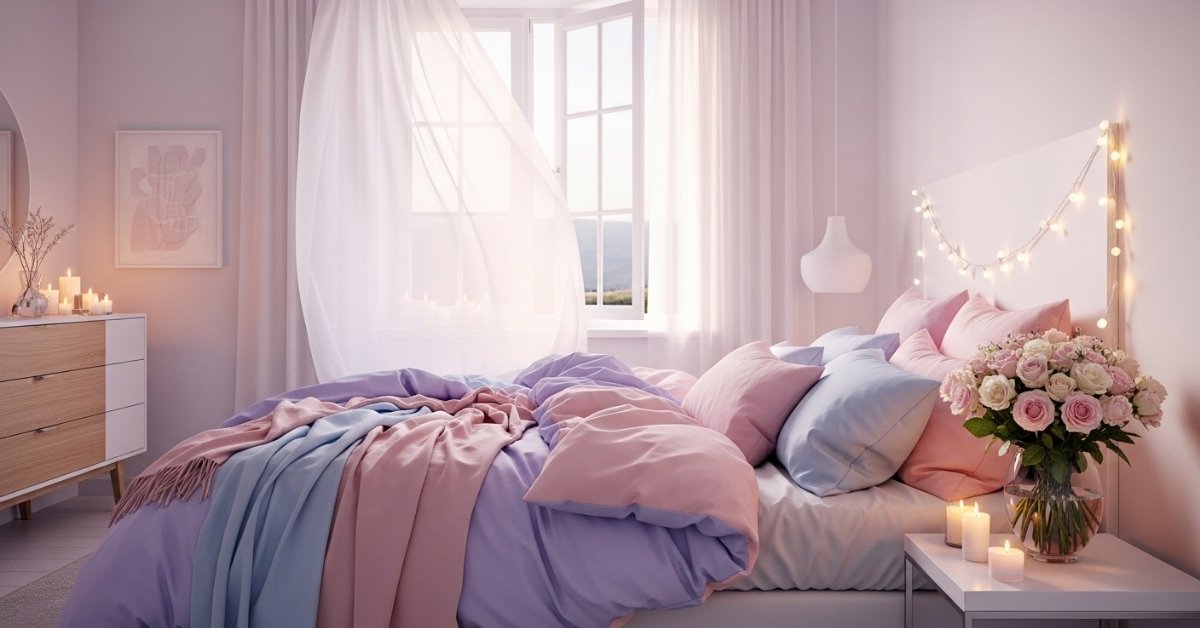
There’s a difference between a bedroom that looks romantic in photos and one that actually feels that way at the end of a long day. Soft lighting, intentional furniture placement, layered textures these aren’t just aesthetic choices. They’re the things that make a shared space feel like it belongs to both of you, not just a Pinterest board.
If your bedroom currently functions more as a storage overflow zone than a true retreat, you’re not alone. Most couples deprioritize the bedroom because it’s “just for sleeping.” But the truth is, the quality of your shared space has a real effect on how you wind down, connect, and feel at home together.
This list is for couples working with real rooms, apartments, older homes, awkward layouts who want a bedroom that feels genuinely warm and considerate without going overboard on rose petals and red velvet.
Layer Warm Lighting Instead of Relying on One Overhead Fixture

A single overhead light is the fastest way to kill the atmosphere in a bedroom. It flattens everything: the texture of your bedding, the warmth of wood tones, the softness of the room overall. Instead, build your lighting in layers: bedside lamps for task lighting, a dimmer on the overhead if you have one, and something low, a floor lamp in the corner or LED strip lighting behind the headboard for evening ambiance.
This works especially well in smaller bedrooms where you can’t fit much furniture but still want the space to feel intentional. The layered approach creates visual depth without adding physical bulk. In my experience, switching to warm-toned bulbs (2700K or lower) alone makes a bigger difference than most decor changes people spend money on.
Use a Fabric or Upholstered Headboard to Add Visual Softness
An upholstered headboard anchors the bed as the visual centerpiece of the room without requiring anything else on that wall. The soft material linen, velvet, boucle immediately reads as warmer than wood or metal, and the height creates a sense of enclosure that makes the bed feel like its own contained space within the room.
For couples sharing a bed, this setup works well because it draws the eye to one central point rather than scattering attention across mismatched pieces. It also solves the common problem of a bed that floats awkwardly in a large room. Go for a headboard that’s at least the width of your mattress, ideally a few inches wider on each side.
Position the Bed So Both Sides Have Equal Access and Nightstands

This sounds obvious, but a surprising number of couples have one person climbing over the other or sleeping against a wall with no surface to put anything on. Equal access on both sides with at least a small nightstand each creates a sense of shared ownership over the space. It’s a small functional detail that has a real effect on how the room feels.
Centering the bed on the main wall also improves the room’s visual balance. If your layout doesn’t allow for matching nightstands, even a wall-mounted shelf on the tighter side solves the problem without taking up floor space.
Read More About : 21 Small Bedroom Layout Ideas That Actually Make the Most of Your Space
Add a Canopy or Draped Fabric Above the Bed for Enclosure
A canopy doesn’t have to mean a full four-poster frame. A simple ceiling hook with sheer fabric draped on both sides of the headboard creates the same sense of intimacy at a fraction of the cost and works in rentals since you’re only making one small ceiling hole.
The effect is about enclosure: the draped fabric creates a visual boundary around the bed that makes it feel separate from the rest of the room. This works particularly well in large bedrooms where the bed can feel isolated in open space. Stick to sheer, lightweight fabrics in white, ivory, or blush heavy draping tends to feel more theatrical than cozy.
Choose Bedding in Layered Neutrals With One Textural Element

All-white bedding photographs beautifully but tends to feel clinical in person, especially in a bedroom you’re actually sleeping in. The better approach is layering neutrals a white or ivory duvet, linen shams in a warm oatmeal or taupe, and a textural throw at the foot of the bed. The variation in texture (smooth cotton + linen + knit) is what creates the visual richness without requiring bold color.
This setup is also practical: individual layers mean each person can adjust their side without disrupting the whole bed. And honestly, a well-made bed with good layering does more for a bedroom’s atmosphere than most decor additions combined.
Incorporate Scent Through a Diffuser or Candle Station
Scent is the most underused element in bedroom design. A diffuser or a dedicated candle spot, even just a small tray on one nightstand, adds a ritual quality to the space that makes it feel intentional rather than just functional. It signals that this room is a place you’ve thought about, not just somewhere you end up at the end of the day.
For couples, this works best when the scent is something neutral and shares sandalwood, cedar, light florals rather than something one person chose unilaterally. Keep it simple: one scent source is enough. A cluttered collection of half-used candles does the opposite of what you want.
Use Mirrors Strategically to Expand Light Without Adding Clutter

A well-placed mirror does two things in a bedroom: it bounces light (natural or lamp light) and it visually expands the room. Lean a tall mirror against the wall opposite your main light source, usually the window and you’ll notice the room reads as brighter and larger without any structural changes.
For couples in smaller bedrooms, this is one of the most effective layout adjustments available. The key is placement: a mirror behind the bed or centered on a dark wall tends to feel awkward. Flanking the dresser or leaning beside the wardrobe keeps it functional while still adding spatial depth.
Create a Reading or Wind-Down Corner With a Chair and Lamp

If your bedroom is large enough for even a small armchair, a dedicated wind-down corner changes how the room functions. It gives each person a spot that isn’t the bed somewhere to read, decompress, or just sit without immediately signaling “sleep.” This separation of activity zones makes the room feel more like a suite and less like a one-purpose space.
It works especially well in couples’ bedrooms where one person stays up later than the other. One person can read in the chair with a directed lamp while the other sleeps without the overhead light being on. A small tray or side table beside the chair keeps it from feeling like an orphaned piece of furniture.
Hang Artwork at the Right Height to Anchor the Headboard Wall
Artwork above the bed is one of the most common places people get scale wrong either too small (a postage stamp floating on a large wall) or hung too high (creating a visual disconnect from the bed below it). The general rule: the bottom of the frame should sit 6–8 inches above the headboard, and the piece should be roughly two-thirds the width of the bed or headboard.
For couples, choosing this artwork together matters. A single large piece with personal meaning tends to feel more intentional than a gallery wall that’s been assembled for aesthetics. Abstract art in warm tones works well because it adds visual interest without competing with the rest of the room.
Use Dark or Moody Wall Color on One Wall to Add Depth
A single moody wall behind the bed deep green, slate blue, warm charcoal does something overhead lighting and throw pillows can’t: it creates visual depth. The bed sits in front of a grounded, enveloping backdrop rather than floating in front of a blank white wall.
This works best in rooms with at least one other light source besides overhead, since a dark wall in poor lighting can make a space feel heavy rather than cozy. If you’re renting, removable wallpaper in similar tones achieves the same effect. This is one I’d actually recommend trying first if you want a significant visual shift without buying new furniture.
Add Soft Rugs Under and Around the Bed for Warmth and Texture

A rug that’s too small is one of the most common bedroom mistakes. The rug should extend at least 18–24 inches past each side of the bed so both people step onto it in the morning, not onto cold hardwood or tile. This isn’t just aesthetic; it’s functional. The feeling of stepping onto a soft surface immediately contributes to a more comfortable shared routine.
In terms of visual effect, a properly sized rug grounds the entire furniture arrangement and makes the room feel finished rather than assembled. For couples working with different preferences, a neutral, low-pile rug tends to read as cleaner and more modern while still adding texture.
Style Nightstands as Personal But Coordinated
Identical matching nightstands with identical styling look hotel-like in a way that feels impersonal. A better approach: same or similar nightstand style, but each person’s surface styled according to their actual habits. Books, reading glasses, a phone stand, a small plant, things that are actually used, arranged with a little intention.
The key is choosing matching or coordinated lamps so the two sides feel like part of the same design language even while the surfaces differ. This approach makes the room feel like two people actually live there which, for a couple’s bedroom, is exactly the point.
Read More About : 27 Cozy Bedroom Ideas Aesthetic That Make Your Space Feel Like a Real Retreat
Install Dimmer Switches for Full Lighting Control

A dimmer switch costs under $30 and changes how the room functions at every hour. Bright overhead light for getting dressed in the morning, mid-level for reading, near-off for winding down the same light source creates entirely different atmospheres depending on the setting.
This is especially useful for couples with different sleep schedules. One person can keep the room at a low level while the other gets ready without fully disrupting the sleeping partner’s environment. It’s a practical upgrade that most people overlook in favor of buying new decor.
Use Velvet or Linen Throw Pillows to Add Color Without Commitment
Throw pillows are the lowest-commitment way to introduce color or material contrast into a bedroom without repainting or buying new furniture. The difference between a flat, uninteresting bed and one that reads as styled is usually just the pillow layering: Euro shams behind standard pillows, with one or two accent pillows in front.
For couples, keeping it to a manageable number four to six total is usually the sweet spot. Velvet in a muted jewel tone (dusty rose, navy, forest green) adds richness without going bold. Linen keeps it casual and textural. Either direction works; the goal is material variety, not volume.
Incorporate Live Plants for Natural Texture and Air Quality

A single well-placed plant does more for the organic warmth of a bedroom than most decorative objects. It introduces an irregular shape and natural color that manufactured decor can’t replicate. The scale matters: one large plant in a corner (a monster, a snake plant, a fiddle leaf fig) reads as intentional, while several small plants scattered around tend to feel like a collection rather than a design element.
For bedrooms with limited natural light, stick to low-light tolerant varieties of pothos, ZZ plants, or snake plants. These are also low-maintenance, which matters in a room that’s supposed to feel restful rather than high-effort.
Frame Personal Photos in a Cohesive Gallery Format
A gallery wall of personal photos makes a bedroom feel like it belongs to specific people which is the quality most couples’ bedrooms lack. The key to doing this without it looking chaotic is cohesion: matching frame styles, a consistent color treatment (all black and white, or all printed in warm tones), and a layout that was planned before anything went on the wall.
Tape paper cutouts of each frame size onto the wall first and arrange them until the layout feels balanced. This saves an enormous amount of patching. Keeping the collection tight 4 to 6 frames is usually more intentional than 12.
Add a Bench at the Foot of the Bed for Function and Visual Grounding

A bench at the foot of the bed solves a specific problem: the visual drop-off that happens when a bed sits in a large room without anything anchoring the other end. It also functions as a surface for folded clothes, a spot to sit while putting on shoes, and a layer of visual weight that makes the furniture arrangement feel complete.
For couples, this is especially useful when one person gets dressed earlier than the other. Having a surface away from the closet reduces the amount of movement and light needed near the sleeping partner. Choose a bench in the same material family as your headboard for a pulled-together look.
Use Blackout Curtains in a Warm Tone for Sleep Quality and Atmosphere
White blackout curtains block light but tend to make a room feel like a hotel chain. Warm-toned blackout curtains, terracotta, dusty blush, warm oatmeal, or deep olive do the same light-blocking job while also adding color and visual softness to the room.
Hang them high (close to the ceiling) and wide (6–12 inches past each side of the window frame) so they make the windows look larger and the ceilings feel taller. For couples, shared sleep quality is a practical argument for blackout curtains that goes beyond aesthetics.
Create a Shared Memory Shelf With Travel Objects and Meaningful Items

A single shelf styled with objects from shared experiences, a souvenir from a trip, a book you both read, a small print from somewhere meaningful adds personality that no amount of purchased decor can replicate. It’s also one of the most frequently overlooked elements in couples’ bedrooms, which tend to be either entirely generic or one person’s aesthetic applied without the other’s input.
Keep it edited. Three to five objects on a floating shelf, with breathing room between them, looks intentional. A crowded shelf looks like overflow storage.
Install Wall Sconces for Bedside Lighting Without Nightstand Clutter

If your nightstands are small or you want to keep the surfaces clear, wall-mounted sconces solve the lighting problem without taking up any table space. They position light at exactly the right angle for reading, which floor or table lamps rarely achieve naturally from nightstand height.
For renters, plug-in wall sconces are widely available and require no wiring, just a hook or a small anchor screw. This is one of the cleanest-looking bedside setups available, and it frees up the nightstand for only the things that actually need to be there.
Use a Tray to Organize the Dresser Top Into One Intentional Display
A dresser top that accumulates random objects receipts, change, chargers, and half-finished products is one of the quickest ways to make a bedroom feel chaotic. A tray, even a simple wooden or ceramic one, creates a contained zone that makes the same collection of objects look arranged rather than abandoned.
Keep the tray to items you actually use: a perfume or cologne, a small dish for jewelry, one plant cutting in a bud vase. Anything that doesn’t fit within the tray gets a different home. This single habit has more impact on daily bedroom ambiance than most larger decor projects.
Add String or Fairy Lights for Low-Level Evening Atmosphere

String lights get dismissed as a college-dorm aesthetic, but the difference is in the execution. Warm Edison bulbs (not cool white, not multi-colored) draped along one wall or behind the headboard create an entirely different quality of light, low, diffuse, and directional in a way that makes the room feel like it’s winding down with you.
This works best as a supplement to other lighting, not a replacement. Position them at or below eye level when you’re lying down. At ceiling level, they tend to read as decoration; lower, they actually contribute to the room’s atmosphere.
Choose a Bed Frame With Storage for Clutter-Free Shared Living
A bed frame with built-in drawers or a lift-up storage base is especially practical for couples in smaller bedrooms where closet space is limited. Extra bedding, off-season clothing, shoes having designated storage underneath the bed eliminates the visual and physical clutter that tends to accumulate around shared bedroom furniture.
The visual effect is also meaningful: a bed that sits cleanly on the floor without visible storage bins or random items underneath reads as more intentional, even in a smaller room. Platform frames with storage tend to have lower profiles, which also helps rooms with lower ceilings feel more proportionate.
Introduce Warm Wood Tones Through Furniture or Accents

Cool, all-white or all-grey bedrooms photograph cleanly but often feel sterile to live in. Introducing warm wood tones, walnut nightstands, an oak bed frame, even a wooden tray or mirror frame shifts the room’s temperature without requiring a full redesign.
Wood works as a grounding element: it adds organic warmth that balances lighter textiles and wall colors. For couples who can’t agree on a bold color direction, warm wood tones are a reliable middle ground; they read as modern and warm simultaneously without committing to a specific aesthetic.
Add a Full-Length Mirror Near the Wardrobe for Practical Daily Use
A full-length mirror near the dressing area solves a practical problem that affects daily routine: getting ready without adequate reflection. But it also adds light and visual space to whatever corner it occupies, especially when positioned to catch window light.
For couples sharing one wardrobe, a full-length mirror on each side of the closet doors is even more useful. Leaning mirrors (rather than wall-mounted) offer flexibility and work well in rentals. Choose a frame that matches the room’s material direction thin black metal for modern spaces, natural wood for warmer aesthetics.
Use Symmetry as the Layout Principle, Not a Design Trend

Symmetry in a bedroom isn’t just aesthetic, it communicates visual balance and calm in a way that asymmetric layouts rarely achieve. Matching nightstands, matching lamps, a centered bed, one large piece of artwork above this setup reads as considered without requiring expensive furniture.
I’ve noticed this style tends to work especially well for couples who have different aesthetic preferences. Symmetry functions as a neutral framework: neither person’s taste dominates the room because the layout itself is the statement. Variations in styling (different objects on each nightstand, individual lamp shade choices) can then happen within that balanced structure.
Create a Scent and Texture Ritual Through a Dedicated Bedside Tray
A nightstand tray goes beyond organization; it creates a small ritual zone that signals the transition between the rest of the day and rest. A candle, a matchbox, a book you’re currently reading, a small object with personal meaning. The act of lighting the candle and settling in becomes part of the wind-down routine, not just something that happens passively.
This is a detail that costs very little but has an outsized effect on how intentional the room feels. For couples, having a small tray on each side individually styled but visually coordinated reinforces the idea that the bedroom belongs to both people equally.
What Actually Makes These Ideas Work in a Real Bedroom
The ideas above cover lighting, layout, texture, and personal detail but they’re most effective when they work together toward one goal: making the room feel like a true retreat rather than leftover living space.
Start with the basics before the details.
Lighting and furniture placement have the biggest impact on how a room feels. If the bed is pushed awkwardly into a corner and the only light source is a harsh overhead fixture, no amount of throw pillows will fix the atmosphere. Get the foundation right first.
Scale matters more than style.
A rug that’s too small, artwork that’s too narrow, a headboard that doesn’t relate to the bed size; these proportional mismatches are what make rooms feel “almost right” but never quite finished. When in doubt, go larger on textiles and art, not smaller.
Shared doesn’t mean identical.
The best couples’ bedrooms feel like two people actually use them. That means each person’s side has some individual character books they’re reading, an object they chose within a framework that’s cohesive. Matching everything makes the room feel like a showroom. Matching nothing makes it feel contested.
Lighting is the quickest fix available.
Before repainting or buying furniture, change the bulbs to warm-toned, add one floor lamp, and put the overhead on a dimmer. The room will look and feel different within an afternoon.
Romantic Bedroom Decor Ideas: Setup Comparison Guide
| Setup | Best For | Space Type | Problem Solved | Difficulty |
| Layered warm lighting | All couples | Any size | Harsh, flat atmosphere | Easy |
| Upholstered headboard | Visually unanchored beds | Small–medium rooms | Floating bed, blank wall | Easy |
| Canopy/draped fabric | Large or high-ceiling rooms | Medium–large | Empty, open feel above bed | Easy–moderate |
| Symmetrical nightstand layout | Shared daily routines | Any size | Unequal access, imbalance | Easy |
| Moody accent wall | Couples wanting depth | Medium–large | Bland, flat backdrop | Moderate |
| Storage bed frame | Cluttered shared spaces | Small–medium | Limited storage, under-bed clutter | Moderate |
| Wall sconces | Small nightstands, minimal look | Any size | Surface clutter, poor reading light | Moderate |
| Wind-down reading corner | Different sleep schedules | Medium–large | Lack of separate activity zones | Easy |
Common Romantic Bedroom Mistakes That Make the Space Feel Off
Choosing all-white everything.
White bedding, white walls, white furniture it reads as clean in photos and sterile in person. Warmth requires contrast: warm wood tones, textured textiles, a grounding color somewhere. All-white works in studios with exceptional natural light; in most other rooms, it needs layering.
Buying furniture that doesn’t match the room’s scale.
An oversized bed in a small room leaves no walking space. A small bed in a large room floats without visual grounding. Measure your room and calculate the walkway clearance (minimum 24 inches on each side of the bed) before purchasing anything.
Using only overhead lighting.
This single issue is responsible for more uninviting bedrooms than any other. Overhead lighting illuminates without atmosphere. It’s useful for functional tasks; it’s not useful for creating the kind of ambient environment a bedroom needs in the evening.
Ignoring the foot of the bed.
The wall you see when you walk in usually gets attention. The end of the bed rarely does. A bench, a folded throw, or a low dresser at the foot of the bed completes the room visually and prevents the “unfinished” feeling that comes from looking at a bed that just… ends.
Decorating for one person.
In couples’ bedrooms specifically, it’s common for one person’s taste to dominate especially if one person is more interested in decor than the other. The result is a room that feels like one person lives there. Both sides of the bed should reflect something of the person sleeping there, even minimally.
Frequently Asked Questions
What makes a bedroom feel romantic without being over the top?
The key is atmosphere over decoration. Warm, layered lighting, soft textures, and a clean, organized layout do more for a romantic feel than themed decor. Think about how the room feels when you’re actually in it, not just how it looks in photos.
How do you decorate a small bedroom for two people without it feeling cramped?
Prioritize vertical space (tall headboards, floor-to-ceiling curtains, wall sconces) and choose furniture with built-in storage. Keep surfaces edited one tray per nightstand, one piece of artwork, one rug that’s properly sized. The less visual clutter, the larger the room reads.
What lighting is best for a romantic bedroom?
Warm-toned bulbs (2700K or lower) in multiple sources: bedside lamps, a floor lamp in the corner, and a dimmer on the overhead. The combination allows you to dial the room’s atmosphere up or down depending on the time of day. Avoid cool-white or daylight bulbs in the bedroom entirely.
Should a couple’s bedroom be matching or mix styles?
A coordinated framework works better than strictly matching. Choose one material direction (warm wood, soft neutrals, a specific color accent) and let each person’s side reflect individual habits within that framework. Identical styling can feel impersonal; complete mismatch feels unconsidered.
What’s the biggest layout mistake in couples’ bedrooms?
Pushing the bed against one wall so only one person has easy access. The bed should be centered on the main wall whenever the room dimensions allow, with nightstands on both sides. This single layout change makes the room function better and feel more balanced.
Is a canopy bed worth it for a small bedroom?
A full canopy frame isn’t practical in most small rooms; it takes up visual space and can make low ceilings feel lower. A better alternative is a ceiling hook with sheer fabric draped on either side of the headboard. You get the same enclosure effect without the structural footprint.
How do you make a rented bedroom feel more romantic without permanent changes?
Focus on textiles, lighting, and movable furniture. Swap out harsh overhead bulbs, add plug-in wall sconces, layer bedding, hang a temporary wallpaper panel behind the headboard, and bring in a large mirror and area rug. None of these require permanent installation and all have a significant visual impact.
Conclusion
A bedroom that feels genuinely intimate isn’t the result of a single dramatic change; it’s the accumulation of smaller decisions that add up: the right lighting, a properly scaled rug, nightstands that actually function, textures that feel warm rather than clinical. Most of the ideas in this list require very little investment once you know what you’re aiming for.
Start with one or two adjustments that address the biggest friction in your current space. If the lighting is harsh, change the bulbs and add a lamp. If the bed feels like it’s floating, ground it with a rug and a headboard. If the room feels like it belongs to no one in particular, add one personal object on each side. Small, deliberate changes are consistently more effective than full redecorations and they’re far easier to actually follow through on.
