

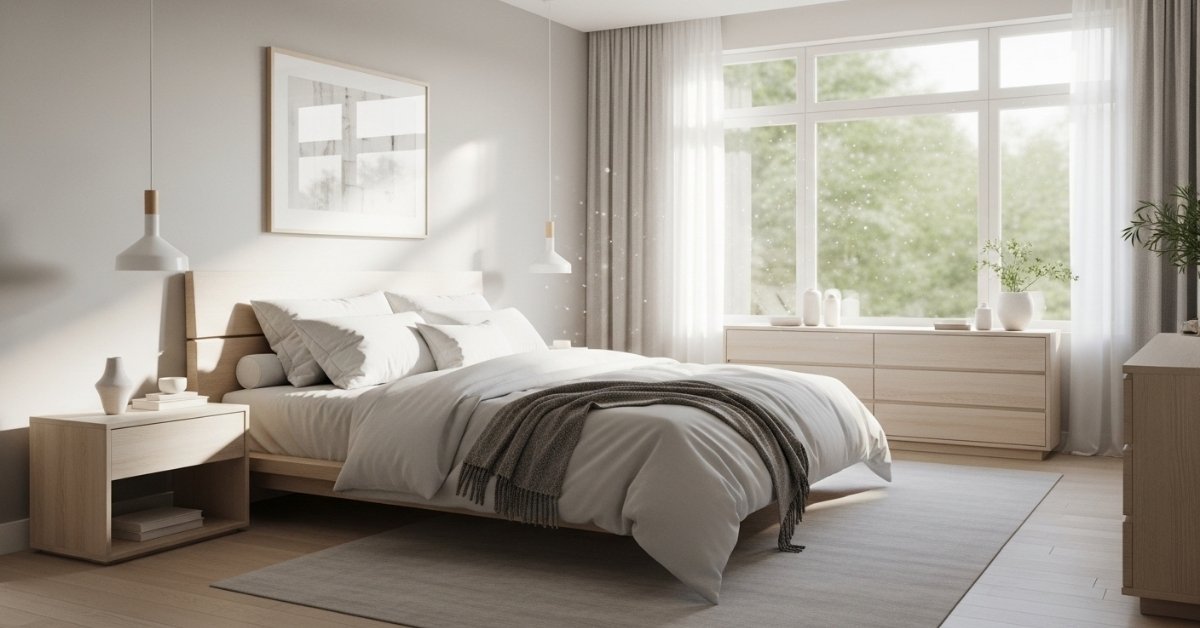
If your bedroom looks fine on the surface but still doesn’t feel quite right, maybe it’s too bare, too cluttered, or just lacking something you can’t name. You’re not alone. Most bedrooms fall into this middle zone where nothing is technically wrong, but the space doesn’t feel restful either.
The good news: bedroom decor doesn’t require a renovation or a big budget. In 2026, the shift is away from maximalist setups and toward intentional, layered spaces that prioritize how a Bedroom Decor Ideas room feels to live in, not just how it photographs. That means better lighting choices, smarter furniture placement, and a few well-chosen pieces that actually earn their place in the room.
If you’re working with a small bedroom, a rented apartment, or just a space that needs more personality without more clutter, these 27 ideas are built for real homes, not staging sets.
Layer Your Lighting Instead of Relying on One Overhead Light

A single ceiling light flattens a bedroom instantly; it removes shadow, depth, and warmth all at once. Layered lighting means combining at least two sources at different heights: a bedside lamp, a floor lamp in the corner, or a wall sconce near the bed. The result is a room that feels intentional and calm rather than harshly lit. This works especially well in smaller bedrooms where you can’t rely on furniture arrangement alone to create atmosphere. If you can only do one thing from this list, honestly, make it this.
Use a Neutral Linen Headboard to Anchor the Bed Without Overpowering the Room
A headboard does more than protect your wall; it gives the bed visual weight and grounds the entire room. A tall linen or boucle headboard in a neutral tone (oatmeal, warm white, soft grey) creates a soft focal point without competing with your bedding or decor. In my experience, this works best when the headboard is slightly wider than the mattress, which makes the bed feel more substantial and the room feel more designed. This is a great option for renters since upholstered headboards are freestanding or hook-on, requiring no wall damage.
Place a Rug Under the Bed with at Least 18–24 Inches Extending on Each Side

A rug that’s too small sits like an island in the middle of the room and makes the whole layout feel disconnected. The correct approach: extend the rug at least 18–24 inches past the sides of the bed so your feet land on it when you get up. A larger rug also visually connects the bed, nightstands, and surrounding furniture into one cohesive zone. This setup works in rooms of any size but is especially effective in open-plan studios or bedrooms with minimal furniture.
Read More About : 24 Renter-Friendly Apartment Bathroom Decor Ideas That Actually Work in Small Spaces
Create a Reading Nook With a Single Armchair and a Floor Lamp
Not every bedroom has space for a sitting area, but if you have one underused corner, a single chair and lamp can reframe the entire room. The chair gives the space a secondary purpose somewhere to read, wind down, or just exist outside the bed which makes the room feel more like a private retreat. Choose a compact armchair with a slim profile (slipper chairs or accent chairs under 28 inches wide work well) so the corner doesn’t feel crowded. This setup particularly suits bedrooms that double as a quiet work-from-home escape.
Add Texture Through Bedding Layers, Not More Decorative Objects

Texture is what separates a bedroom that looks curated from one that looks bare and you don’t need more stuff to achieve it. A linen duvet, a waffle-knit blanket folded at the foot of the bed, and a mix of pillow sizes creates visual depth without clutter. The key is contrast: smooth cotton pillowcases next to a rougher linen sham, or a soft throw against a structured quilt. This approach works for minimalist spaces where you want warmth without adding furniture or wall decor.
Use Curtains That Hang from Ceiling to Floor to Make the Room Feel Taller
Curtains hung just above the window frame are one of the most common bedroom mistakes. They cut the wall height visually and make the room feel shorter than it is. Hanging the rod 4–6 inches below the ceiling and letting the curtains fall to the floor draws the eye upward and adds perceived height. Stick to light, flowing fabrics like linen or cotton voile in soft neutrals for maximum airiness. This works in any ceiling height but is especially effective in rooms under 9 feet.
Style Your Nightstand With a Three-Item Rule

Nightstands have a tendency to collect everything: chargers, water bottles, skincare, books until they become visual noise right next to where you sleep. The three-item rule keeps it functional and clean: one lamp, one small object (plant, candle, or small vase), and one personal item (book or journal). Anything else gets stored inside the drawer or on a small tray to contain it. This is one of those small shifts that has an outsized effect on how calm the room feels overall.
Paint One Wall a Deeper Tone Instead of Going Full-Room Color
A single deeper-toned wall behind the bed specifically creates a natural focal point and adds depth without making the room feel closed in. Deep terracotta, warm olive, dusty navy, and muted sage are the tones getting the most use in 2026 bedrooms. This approach is especially useful in neutral-heavy rooms that feel a little flat, and it’s budget-friendly since you’re only committing to one wall. For renters, this works with large-format wallpaper panels or removable wallpaper in the same placement.
Use a Bench at the Foot of the Bed for Both Function and Visual Balance

A bench at the foot of the bed serves a purpose most people overlook: it gives the bed a finished, framed appearance and adds a natural resting spot for clothes at the end of the day (reducing the “chair pile” situation). Visually, it grounds the bed and keeps the lower half of the room from feeling empty. A slim upholstered bench in a complementary fabric linen, velvet, or boucle works in most bedroom sizes without blocking walking space.
Swap Out Builder-Grade Fixtures for Warmer Bulb Tones
The fixture matters less than the bulb temperature. Most standard bedrooms use cool white or daylight bulbs (5000–6000K) that make the space feel clinical rather than restful. Switching to warm white bulbs in the 2700–3000K range changes the entire atmosphere of the room, shadows soften, materials look richer, and the space reads warmer. This is the single lowest-effort, lowest-cost change on this list, and it works immediately in any bedroom setup.
Bring in One Natural Wood Element to Warm Up a Cool or Neutral Palette

An all-white or cool-grey bedroom can feel sterile rather than minimal without at least one warm material to balance it. A wood nightstand, a light oak dresser, or even a small wooden tray on the dresser introduces warmth and organic texture that softens the room considerably. You don’t need to match everything; in fact, a mix of light wood tones (walnut + oak, for example) tends to look more natural than a perfectly matched set. This works particularly well in bedrooms that already have neutral bedding and walls.
Read More About : 21 Bathroom Wall Decor Ideas Above the Toilet That Actually Work in Real Homes
Add a Full-Length Mirror to Create Depth and Expand Visual Space
A full-length mirror does two things at once: it’s functional and it bounces light around the room in a way that opens up the space visually. Leaning it against the wall (rather than mounting it) works for renters and keeps the look relaxed rather than formal. Position it across from or adjacent to a window to maximize light reflection. In smaller bedrooms especially, this creates an optical depth that makes the room feel wider than the actual square footage.
Use Open Shelving Above the Desk or Dresser as a Styled Display Area

Blank walls in a bedroom often get filled with art that’s too small or placed too low. A more functional option: one or two floating shelves above a dresser or desk that serve as both storage and display. Keep it edited three to five objects maximum per shelf, mixed heights, with at least one plant to add life. This approach solves the empty wall problem while keeping the surface below (the dresser) cleaner, since you have a designated place for small objects.
Position the Bed Against the Wall With the Most Visual Weight Usually the Longest Wall
Where you place the bed determines everything else in the room: traffic flow, natural light access, and how balanced the layout feels. The most practical starting point is the longest wall without windows or doors, which gives the bed room to be flanked properly by nightstands on both sides. Avoid placing the bed directly under a window (light disrupts sleep and creates glare) or facing directly into the door (which can feel exposed). This is a layout principle worth getting right before you invest in any decor.
Use a Canopy or Bed Frame With Bedroom Decor Ideas Near the Ceiling

A bed frame that draws the eye upward whether through a tall headboard or a simple canopy structure makes the ceiling feel higher and gives the room a more architectural feel. You don’t need an elaborate four-poster; even a simple metal canopy frame with clean lines creates the effect. I’ve noticed this style tends to work especially well in rooms with lower ceilings (8–9 feet) because the vertical line tricks the eye into perceiving more height. Sheer linen panels on a canopy add softness without blocking light.
Layer a Throw Blanket at an Angle Across the Corner of the Bed
This is one of those tiny styling details that reads as intentional rather than staged. Rather than folding a throw blanket straight across the bed foot, draping it at a diagonal across one lower corner it looks lived-in and relaxed rather than stiff. Choose a throw in a slightly contrasting tone or texture from your duvet to add that extra layer of visual interest. Works in any bedroom style from minimal to maximalist.
Install a Simple Gallery Wall Using Frames in Two Sizes Only

Gallery walls fail when there are too many different frame sizes, finishes, or art styles competing at once. Limit yourself to two frame sizes (say, 5×7 and 8×10, or 8×10 and 11×14) in one consistent finish black, natural wood, or white. The art can vary in style as long as the tones are cohesive. Group them in an odd number (5 or 7 frames) and position the arrangement centered over a piece of furniture rather than floating on an empty wall.
Use Under-Bed Storage to Free Up Closet and Floor Space
Visible floor clutter shoes, bags, stacked items competes with everything else you’ve done to make the bedroom feel calm. Under-bed storage (flat bins, vacuum bags, or a bed frame with built-in drawers) keeps seasonal items, extra linens, or shoes out of sight without requiring additional furniture. This is especially valuable in small bedrooms where closet space is limited. The room immediately feels more open when the floor area is clear.
Choose Bedside Lighting That Frees Up Nightstand Surface Space

Bedside lamps are one of the biggest surface-space consumers on a nightstand. Switching to wall-mounted sconces or even plug-in sconces with a fabric cord frees up the entire nightstand surface while providing the same warm, directional light. This is particularly useful in smaller bedrooms where the nightstand doubles as a work surface or needs to hold more practical items. Plug-in sconces work well for renters since they don’t require hardwiring.
Add a Plant in One Corner to Break Up the Geometry of the Room
Bedrooms tend toward right angles, rectangular furniture, square frames, straight lines. A plant in a corner introduces organic shape and a bit of unpredictability that makes the room feel more alive. A medium-height plant (fiddle leaf fig, snake plant, or rubber tree) in a textured ceramic or terracotta pot works well without requiring much maintenance. Position it near natural light if possible, or choose a low-light variety (pothos, ZZ plant) if the bedroom doesn’t get much sun.
Use a Dresser as a Room Divider in Studio or Open-Plan Spaces

In studio apartments or open bedrooms connected to a living area, furniture placement can create zones without walls. A low dresser positioned perpendicular to or at the edge of the sleeping area acts as a subtle visual divider while still keeping the space open. Styling the top of the dresser with a plant, a tray, and a lamp makes it functional from both sides. This is one of the more underused layout strategies for compact urban apartments.
Choose Bedding in One Base Color and Add Contrast Through Pillows
Bedding with too many patterns or colors makes the bed feel busy and the room harder to “quiet down” visually. Start with a solid duvet in a neutral base (white, cream, warm grey) and introduce one contrasting tone through accent pillows only. Keep it to two accent pillows maximum one color, one texture. This formula is easy to update seasonally (swap in dusty rose for spring, deep olive for autumn) without buying entirely new bedding.
Use Vertical Storage Solutions to Keep Small Bedrooms Functional

In tight bedrooms, floor space is precious and most of it gets wasted by furniture that spreads horizontally rather than using the vertical space above. A tall, narrow shelving unit (ladder shelf or slim bookshelf) in a corner uses minimal floor footprint while providing real storage and display space. Keep the top shelves for decor and the lower shelves for practical items in baskets or boxes. This approach is especially effective in rooms under 150 square feet.
Add a Second Light Source Near the Dresser or Vanity Area
Most bedrooms light the sleep zone adequately but leave the dressing area dim and flat. A small lamp near the dresser or vanity or even a simple plug-in light with a warm bulb makes getting ready easier and contributes to the layered lighting effect across the room. It also gives the dresser zone its own defined atmosphere, which makes the room feel more multi-functional and considered. This is a practical addition most people overlook until they experience it.
Declutter the Nightstand by Using a Small Tray to Contain Loose Items

A tray doesn’t add storage, it adds containment, which is visually the same as reduction. Grouping small loose items (phone, watch, a candle, a small object) inside a tray keeps the nightstand surface from reading as chaotic, even when it holds several things. Choose a tray in a complementary material: marble, wood, ceramic, or woven. It’s a small purchase that has a disproportionate effect on how “done” the nightstand looks.
Use Warm Neutral Wall Colors Instead of Stark White for a Cozier Feel
Pure white walls photograph well but can feel cold and clinical in practice, especially in bedrooms with limited natural light. Warm neutrals greige, soft clay, warm ivory, or light sand absorb and reflect warm-toned light beautifully and make a room feel more enveloping without going dark. The key is testing the paint in your specific light conditions, since undertones shift dramatically between morning and evening light. This change alone can make a bedroom feel significantly more restful.
Rearrange the Furniture Before Buying Anything New

Before adding anything to a bedroom that feels off, try moving what’s already there. Furniture placement affects light access, traffic flow, and visual balance more than most decor choices and it costs nothing. Try positioning the bed on the opposite wall, or pulling the dresser away from the corner to create breathing room. I’d actually recommend this as the first step before any purchase, because what often feels like a decor problem is actually a layout problem.
What Actually Makes These Bedroom Decor Ideas Work
The ideas above work not because they’re aesthetically trendy but because they address specific, practical problems: light quality, visual clutter, spatial perception, and furniture scale. A bedroom that feels calm is usually one where nothing is competing for attention: the lighting is warm and layered, the surfaces are edited, and the furniture fits the room without crowding it.
The most common issue in bedrooms that feel “off” is scale mismatch furniture that’s too small for the room (a rug that floats, a headboard that disappears, curtains that hang too low). Getting scale right doesn’t cost more; it just requires paying attention to proportion before buying.
Bedroom Decor Ideas: Space Optimization Guide
| Idea | Best Space Type | Primary Benefit | Effort Level |
| Layered lighting | Any bedroom | Atmosphere + warmth | Low |
| Ceiling-height curtains | Small or average rooms | Visual height | Low |
| Bed on longest wall | Most layouts | Balance + flow | Zero cost |
| Full-length mirror | Small bedrooms | Light + depth | Low |
| Under-bed storage | Small rooms | Floor space | Low–Medium |
| Wall-mounted sconces | Any nightstand setup | Surface space | Medium |
| Tall narrow shelving | Small bedrooms | Vertical storage | Low–Medium |
| Dresser as room divider | Studios, open layouts | Zone definition | Zero cost |
| Warm wall color | Cool or flat rooms | Warmth + comfort | Medium |
| Furniture rearrangement | Any room | Layout optimization | Zero cost |
Common Bedroom Layout Mistakes That Make the Space Feel Smaller or More Cluttered
Pushing all furniture against the walls.
It seems like the logical way to maximize floor space, but it actually makes a room feel sparse and disconnected. Pulling furniture slightly away from walls (even 2–4 inches) creates visual breathing room and makes the layout feel more intentional.
Using a rug that’s too small.
A rug that only fits under the bed frame with nothing extending past the sides creates a floating island effect that fragments the room. Go larger than you think you need.
Mixing too many wood finishes.
Two complementary wood tones (light oak + walnut, for example) can look natural and curated. Three or more mismatched finishes look accidental. Keep it to two at most.
Overcrowding the nightstand.
Everything on a nightstand competes for visual attention right in your sightline from the bed. Edit aggressively use the drawer for anything that doesn’t need to be visible.
Ignoring the ceiling zone.
Most bedrooms stop at eye level. Ceiling-height curtains, tall headboards, and vertical shelving use the upper portion of the room to create a sense of enclosure and height that low, horizontal layouts miss entirely.
Frequently Asked Questions
What is the most effective bedroom decor change for a small room?
The highest-impact changes for small bedrooms are lighting and layout both cost very little. Switch to warm-toned bulbs (2700K), hang curtains from ceiling height, and use a large rug that extends past the bed. These three changes shift how spacious and warm the room feels without requiring new furniture.
How do I make my bedroom look more expensive on a budget?
Focus on scale and editing rather than new purchases. A taller headboard, properly sized rug, and ceiling-height curtains all read as considered high-end. Removing surface clutter especially from nightstands and dressers also makes a room feel significantly more curated.
What’s the best way to arrange bedroom furniture in a small room?
Start by placing the bed on the longest wall without windows or doors, leaving at least 24 inches of walking space on each side if possible. Keep the dresser on a perpendicular wall and avoid blocking the natural light path from the window.
Should I go with a headboard or a canopy bed frame for a low-ceiling bedroom?
A headboard that extends to roughly 60–70% of the wall height works better than a canopy in low ceilings, since a canopy frame can feel cramped at under 9 feet. A tall, flat headboard creates the upward visual pull without taking up ceiling space.
How many pillows should be on a bed for a styled but functional look?
Two standard sleeping pillows, two euro shams behind them, and one to two accent pillows is the most functional and visually clean setup. Anything more tends to create visual clutter and requires significant time to arrange daily.
Is it worth repainting a bedroom for decor impact?
Yes, wall color has an outsized effect on how warm, calm, or spacious a room feels, and it’s one of the more cost-effective changes per square foot. The key is going slightly warmer than you think you need (cool neutrals often look harsher in practice than on the swatch) and testing in your specific light before committing.
What lighting should I avoid in a bedroom?
Avoid relying solely on recessed overhead lighting or cool-white bulbs (above 4000K). These create flat, uniform light that strips the room of shadow and warmth. Bedrooms benefit from directional, lower-level lighting bedside lamps, sconces, or a floor lamp in the 2700–3000K range.
Conclusion
A bedroom that feels calm and functional isn’t about having more, it’s about having the right things placed well, lit warmly, and kept edited. Most of the ideas here work because they address the underlying reasons a space feels off: poor lighting, mismatched scale, cluttered surfaces, or a layout that disrupts flow rather than supporting it.
Start with the two or three ideas that match your current biggest frustration whether that’s a bedroom that feels too dim, too cluttered, or just lacking personality and build from there. Small, intentional changes layered over time tend to produce more lasting results than a full overhaul, and they’re easier to get right.
