

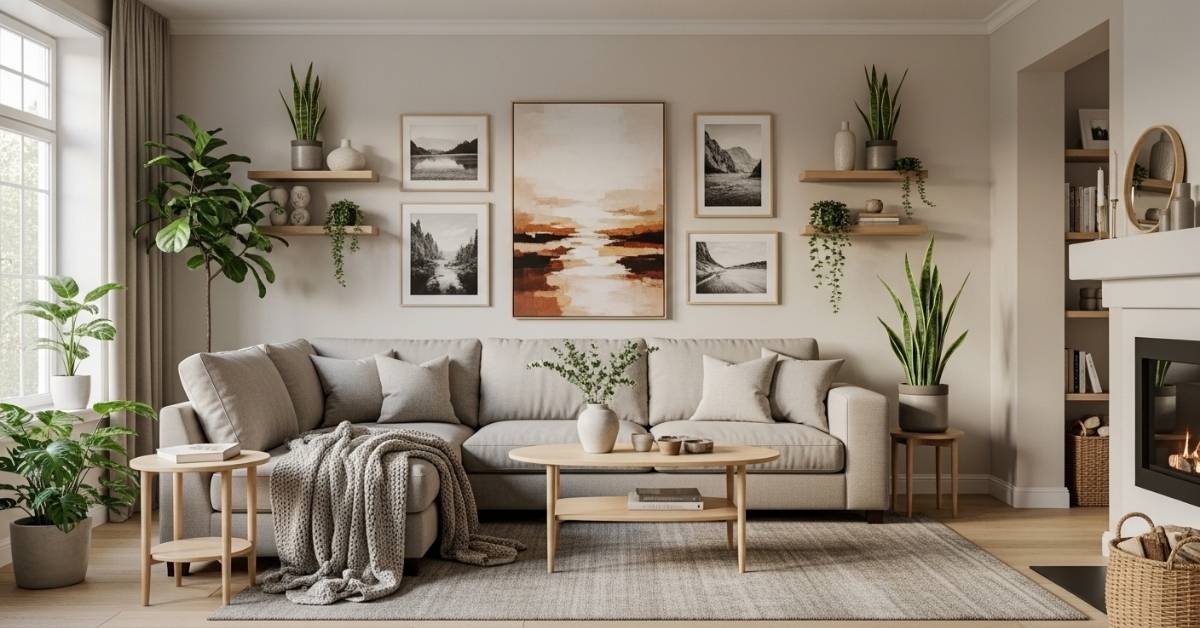
The wall above your couch is probably the most looked-at surface in your entire living room and yet it’s often the last thing people figure out. Too empty and the room feels unfinished.27 Living Room Wall Decor Above Couch Ideas Too crowded and it feels chaotic. Getting it right is less about following trends and more about understanding scale, weight, and how your eye moves through space.
If you’re working with a standard sofa against a flat wall and no architectural features to lean on, this list is built for you. These ideas cover everything from gallery walls to single-statement pieces, with real notes on sizing, placement, and what actually holds up in everyday living, not just in styled photoshoots.
Oversized Single Art Print Centered Above the Sofa

The most common mistake above a couch is hanging art that’s too small. A single large-format print 40 to 60 inches wide anchors the entire seating area and gives the wall a finished, deliberate look. Position it so the bottom edge sits roughly 6 to 8 inches above the sofa back. This works especially well in rooms where the rest of the decor is minimal, because one strong piece does the heavy lifting without competing with anything else. Go for this if you want low-maintenance visual impact and don’t want to fuss with arrangement.
Horizontal Gallery Wall With Three Matching Frames
Three frames in a clean horizontal line is one of the most reliable above-couch setups not because it’s trendy, but because it respects the geometry of the sofa below it. Keep the frames the same size and style, vary only the artwork inside. Space them evenly (about 3 to 4 inches apart) and treat the trio as one wide unit rather than three individual pieces. This layout works particularly well in narrow living rooms where a vertical arrangement would feel top-heavy. It creates width without adding visual noise.
Asymmetric Gallery Wall With Mixed Frame Sizes

This one requires a bit more planning upfront, but the result is a wall that looks genuinely curated rather than decorated. Lay the arrangement out on the floor first, find a visual center, then work outward. Mix one or two larger frames with smaller ones to create a hierarchy your eye needs somewhere to land first. The key is keeping consistent frame finish (all black, all natural wood, all brass) so the variation in size doesn’t tip into chaos. In my experience, this setup works best when you limit the total frame count to seven or fewer; beyond that, it starts feeling busy rather than layered.
Single Large Mirror to Expand a Compact Room
Mirrors above couches serve a practical purpose that art doesn’t: they reflect light and make the room read as larger than it is. A round or arched mirror in the 36-to-48-inch range is the sweet spot for most standard sofas. Avoid hanging it so high that it only reflects the ceiling position to catch natural light from a nearby window. This is one I’d actually recommend trying first if your living room feels closed-in or dark, because the payoff is immediate and doesn’t require any additional lighting investment.
Read More About : 27 Luxury Living Room Ideas on a Budget That Actually Look High-End
Floating Shelf With Curated Objects Above the Sofa

A single floating shelf turns the wall above your couch into a functional display surface rather than just a blank backdrop. Keep it at least 10 to 12 inches above the sofa back so it doesn’t feel like it’s hovering over seated guests. Style it with a deliberate mix of heights, a taller plant, a shorter ceramic, a leaning print and leave breathing room between objects. This setup works well for renters who want to avoid too many wall holes, and it’s easy to restyle seasonally without any hardware changes.
Two Matching Panels or Diptych Artwork
A diptych of two panels that form one image or complement each other feels more intentional than two random prints hung side by side. The visual logic is simple: they read as a unit while still having a natural break at the center. This format suits longer sofas (over 84 inches) well, since two panels can span the width more proportionally than a single piece would. It’s also a practical option if you’re ordering custom prints and want to control the exact dimensions relative to your wall space.
Woven Wall Hanging for Texture and Warmth

Textile wall art does something flat prints can’t; it adds physical depth and acoustic softness to the wall. A woven hanging in natural fiber tones (cream, tan, warm gray) works above sofas in rooms that already have a lot of hard surfaces: tile floors, bare walls, glass tables. The texture reads as warmth, which is useful in spaces that feel sterile or too modern. Scale matters here: the hanging should be roughly two-thirds the width of the sofa, not wider, or it’ll visually overpower the furniture below it.
Vertical Stacked Frames for High-Ceiling Rooms
Most above-couch arrangements think horizontally which works for standard 8-foot ceilings. But if your ceiling runs 10 feet or higher, a vertical stack of two or three frames draws the eye upward and fills the proportional gap between sofa and ceiling. Use a large frame at center and slightly smaller ones above and below it. This setup specifically solves the problem of a couch looking like it’s floating at the bottom of a too-tall wall, a common issue in older apartments and open-plan homes with vaulted ceilings.
Neon or LED Sign as a Statement Piece

Done well, a neon or LED sign above a sofa adds ambient light and personality without requiring any additional lighting layer. The key is keeping the rest of the wall and room relatively neutral so the sign doesn’t compete. Short phrases or single-word signs work better than long text, which becomes hard to read at room distance. This works especially well in apartments where the living room doubles as an entertainment or social space; it creates a mood that overhead lighting can’t replicate.
Black and White Photography Collection
A collection of black-and-white photographs creates visual cohesion automatically; the limited color palette does the unifying work for you, so the images themselves can vary widely in subject. Frame them consistently (all thin black frames work well) and arrange them in a loose grid or organic cluster. This setup works in rooms with a more neutral or monochrome palette and solves the common problem of not being able to find art that “goes with” the existing colors because these don’t need to match anything.
Large Botanical or Nature Print

Botanical prints have staying power precisely because they reference something real and organic. A single oversized leaf or floral illustration in a simple frame grounds the space without demanding a lot of attention. This works particularly well when your living room already has natural elements: wood furniture, linen upholstery, indoor plants because the print extends the material logic rather than introducing something new. For smaller rooms, a light background print (cream or white base) keeps the wall from feeling heavy.
Architectural Molding or Wall Panel Detail
If you want something above the sofa that reads as built-in rather than hung, wall paneling or applied molding is the answer. You’re not adding art you’re adding architecture. Simple rectangular panel frames painted the same color as the wall create depth through shadow rather than color contrast. This works in rooms that lean traditional or transitional and solves the problem of art feeling temporary or mismatched. It’s not the fastest weekend project, but the permanence of it gives the room a finished quality that decor alone rarely achieves.
Oversized Circular or Sunburst Mirror

A starburst or sunburst mirror is one of the few decorative objects that functions as sculpture, mirror, and wall art simultaneously. The radiating arms create movement and visual interest even when the room is still. Position it centered above the sofa with the lowest point of the arms at least 7 inches above the sofa back. This works well in rooms with otherwise minimal decor where you want one piece to carry the visual character of the whole wall without committing to a specific color or artwork style.
Canvas Triptych Across the Full Sofa Width
A triptych that spans the full width of the sofa creates a built-in, intentional look that feels more architectural than decorative. The trick is sizing: the three panels together should match 80 to 90 percent of the sofa’s width, and each panel should hang at the same height with equal gaps between them. Abstract or landscape images work best for this format since the break between panels doesn’t interrupt recognizable subjects. Honestly, this is one of the stronger options for large living rooms that have a long sofa and feel like they need the wall to “keep up.”
Mix of Frames and Wall-Mounted Shelves

Combining framed art with a small shelf in the same wall zone blends two-dimensional and three-dimensional elements which is what makes a wall feel genuinely layered rather than just covered. A short shelf holding a plant or candle in the upper section of the arrangement, with two or three frames below or around it, creates depth without overcrowding. This setup works well in living rooms that double as a workspace or casual entertaining area where the wall needs to feel lived-in rather than gallery-pristine.
Tapestry or Fabric Wall Art
A tapestry is one of the most practical above-couch options for renters most can be mounted with a curtain rod or minimal hardware. The scale is easy to control, and the soft material absorbs sound in rooms that tend to echo. Look for designs with a clear focal point and limited color variation so the tapestry reads as art rather than fabric. This works especially well in bedroom-adjacent living areas or studio apartments where the room needs warmth and softness more than hard graphic impact.
Ledge Shelves for Layered, Easily Changed Displays

Picture ledges and narrow rail-style shelves designed for leaning frames are one of the most flexible above-couch solutions available. You can swap artwork without putting new holes in the wall, which makes them ideal if your taste or color scheme changes seasonally. Layer two ledges at different heights rather than one (upper and lower with 12 to 14 inches between them) for more visual dimension. This works particularly well in 2026’s design climate, where personal, evolving displays are replacing static gallery walls as the preferred approach in casual, lived-in spaces.
Map or Geographic Print as a Conversation Piece
A large-format map print, especially a vintage or hand-drawn style works above the couch in rooms that lack a clear decor story. It introduces a conversation piece that’s also visually substantive. The detail in a good map print rewards close-up viewing in a way that abstract art sometimes doesn’t. Frame it simply (clean black or dark wood) and let the print itself carry the visual weight. This works best in rooms with neutral, warm palettes where the aged tones of a classic map feel grounded rather than random.
Read More About : 25 Apartment Living Room Ideas That Are Totally Renter-Friendly (and Actually Work)
Abstract Painting in a Complementary Color

Abstract art above the sofa works best when it’s chosen to complement, not match, the sofa color. The goal is contrast with connection if the sofa is dark, go lighter and warmer in the painting; if the sofa is neutral, the painting can introduce a stronger accent tone. Abstract pieces also allow more flexibility in sizing since there’s no compositional center that needs to align with anything below. I’ve noticed this style tends to work best in rooms with some warm material tones already present in wood, brass, and terracotta because the abstract colors land more naturally in that context.
Vintage-Style Poster Prints in Thin Frames
Vintage travel, food, or graphic posters have gone through a significant revival in 2026 interiors partly because they’re affordable and widely available, and partly because they add color and personality without requiring a design background to style. Keep the frames thin and consistent, and hang two to three prints in a horizontal row. The subject matter can be personal (a city you’ve lived in, a theme you love) and it will still work visually as long as the color palettes of the prints don’t clash. This is a strong option for first apartments or rooms in transition.
Floating Shelf With Art Leaning Against the Wall

Leaning art on a shelf rather than hanging it directly on the wall creates a casual, unfixed quality that works well in more relaxed or Scandinavian-leaning interiors. A single long shelf (at least 36 inches wide) with one larger leaning print and one or two smaller objects is all you need. It’s also one of the easiest setups to adjust the art to be swapped or repositioned without touching the wall. For renters with strict no-nail policies, this is practically the ideal solution.
Macramé Wall Art in a Neutral or Warm Tone
Macramé has evolved past its purely bohemian associations: clean, geometric knotted pieces now read as contemporary in rooms with warm, earthy palettes. A large-scale circular macramé piece above the sofa functions similarly to a textile mirror: it draws the eye, adds texture, and fills vertical space without introducing hard lines. Choose natural or undyed rope for versatility, and hang it at a height where the bottom fringe ends roughly 8 to 10 inches above the sofa. This works especially well in rooms with soft, ambient lighting that catches the texture of the material.
Dark Moody Canvas for a Dramatic Living Room Wall

Deep-toned artwork above the couch is increasingly common in 2026 as more homes move toward richer, more saturated color schemes. A large canvas in navy, forest green, or dark charcoal above a similarly toned sofa creates a monochromatic depth that reads as intentionally designed. The trick is ensuring adequate light in the rest of the room so the wall doesn’t visually collapse a floor lamp to the side of the sofa or recessed overhead lighting helps. This setup is especially effective in rooms where you want a more atmospheric, evening-oriented feel.
Family Photos in a Curated Mix of Frame Styles
Family photos above the sofa work when they’re treated with the same compositional care as gallery art which means intentional framing, good printing quality, and a deliberate layout. Mix black-and-white and color prints but keep the frame finishes consistent. Print them at larger sizes than you think you need (8×10 minimum for most) because small personal photos at a distance just read as texture rather than meaningful imagery. This is one of the few above-couch setups that makes a room feel genuinely personal rather than styled.
Built-In Bookcase as a Backdrop Above the Sofa

If the sofa sits in front of a bookcase or built-in shelving, the case itself becomes the above-couch decor you don’t need to add anything. The key is styling the shelves with intention: books organized by color or height, a few objects with visual weight (a sculpture, a lamp, a plant), and enough space between groupings to let the eye rest. This works best in rooms designed for reading, working, or quiet living and it solves the problem of the wall feeling blank without adding any additional hardware.
Oversized Clock as Functional Wall Art
A clock in the 24-to-36-inch range above the sofa works in spaces where the room needs something practical as well as decorative. Simple round clocks in matte black or natural wood read as contemporary; aged iron or distressed finishes lean farmhouse or industrial. Because a clock has a defined shape and visual presence, it doesn’t require additional decor around it; it works as a solo piece without the room feeling underfurnished. This is a strong option for smaller living rooms where a gallery wall would feel too busy.
Layered Textiles and Wall Baskets in a Boho Setup

Woven wall baskets arranged in a loose cluster above the sofa create a wall treatment that’s tactile, organic, and genuinely three-dimensional. Mix circular baskets in two to three different sizes, hang them at slightly different heights, and fill in the gaps with one small textile piece or framed print. The result is less “decorated wall” and more “collected over time” which is exactly the direction maximalist and global-inspired interiors are moving in 2026. This works especially well on plaster or textured walls where traditional frames might feel out of place.
What Actually Makes These Above-Couch Setups Work
Scale is the most common problem in above-couch decorating not color, not style. Most people hang things too small, too high, or too few. The wall above your sofa should feel visually weighted in proportion to the furniture below it. A good rule: whatever you’re hanging should span roughly 60 to 80 percent of the sofa’s width.
The second factor is hanging height. Six to eight inches above the sofa back is the standard close enough to feel connected to the furniture below it, far enough that someone sitting down doesn’t risk hitting their head. If you’re hanging multiple pieces, that 6-to-8-inch measurement applies to the lowest point of the arrangement.
Lighting matters more than most people account for. Wall art in a dim corner will always underperform. If your above-couch wall doesn’t get natural light or isn’t near a lamp, consider adding a picture light or directional overhead fixture. It doesn’t need to be elaborate; even a single warm bulb nearby changes how the wall reads in the evening.
Living Room Wall Decor Above Couch: Setup Guide by Space Type
| Setup Type | Best Room Size | Space Problem It Solves | Complexity | Budget Range |
| Single Large Print | Any | Empty, unanchored wall | Low | $50–$300 |
| Horizontal 3-Frame Row | Small–Medium | Narrow wall, needs width | Low | $80–$250 |
| Asymmetric Gallery Wall | Medium–Large | Blank wall, no focal point | Medium | $100–$400 |
| Mirror (Round/Arched) | Small | Dark or closed-in room | Low | $60–$350 |
| Floating Shelf + Objects | Any | Needs function + display | Low–Medium | $40–$150 |
| Woven/Textile Hanging | Small–Medium | Hard surfaces, no warmth | Low | $50–$200 |
| Vertical Stacked Frames | High-Ceiling Rooms | Proportionally tall wall | Medium | $80–$300 |
| Wall Baskets Cluster | Medium–Large | Needs texture, boho lean | Medium | $60–$250 |
| Picture Ledges | Any | Frequently changing decor | Low | $30–$100 |
| Built-In/Bookcase Backdrop | Large | Multi-purpose storage + decor | High | $500+ |
Common Mistakes That Make Your Above-Couch Wall Feel Off
Hanging art too high.
This is the most frequent issue. When artwork is centered on the wall rather than in relation to the sofa, it disconnects visually from the furniture and makes the room feel like two separate spaces stacked on top of each other. Always measure from the top of the sofa, not the floor.
Using too many small pieces.
Three or four small frames above a large sofa look accidental. Either commit to a proper gallery arrangement (seven or more pieces with deliberate spacing) or go bigger with fewer pieces. The in-between creates visual noise without a clear focal point.
Ignoring the sofa’s color and finish.
The wall above the sofa doesn’t need to “match” the sofa, but it needs to visually relate to it. A very light sofa with very light artwork on a white wall creates a flat, washed-out look. Introduce contrast somewhere in the frame color, the artwork tone, or a textural element.
Underestimating depth.
Flat prints on a flat wall is the minimum. Layering in a shelf, a 3D object, or a textile piece adds physical depth that makes the wall feel more designed and less like a Pinterest screenshot recreated at home.
Skipping a plan and hanging as you go.
Measure the wall, sketch a rough layout, and use paper templates taped to the wall before putting in a single nail. Ten minutes of planning prevents fifteen extra holes.
FAQ’s
What size art should I hang above a couch?
The general rule is 60 to 80 percent of the sofa’s width. For a standard 84-inch sofa, that means artwork or an arrangement spanning roughly 50 to 67 inches. A single piece should be at minimum 40 inches wide; smaller than that and it tends to look undersized against the furniture.
How high should wall decor be above a couch?
Hang the bottom edge of your art or the lowest point of your arrangement 6 to 8 inches above the top of the sofa back. This keeps the decor visually connected to the furniture rather than floating in the middle of the wall.
Is a gallery wall above a couch hard to put together?
Not if you plan it first. Lay all the frames on the floor, arrange until you’re happy, then photograph it and use the arrangement as your guide. Use paper templates taped to the wall before drilling this eliminates guesswork significantly.
What works best for small living rooms above the couch?
A single large mirror or one oversized print is usually more effective than a gallery wall in small spaces. Mirrors reflect light and create the perception of depth; a single large piece looks deliberate rather than cluttered. Horizontal picture ledges are another good option since they’re easy to adjust.
Can I put a heavy mirror above a couch safely?
Yes, as long as it’s anchored into wall studs or using appropriate wall anchors rated for the mirror’s weight. Avoid hanging very heavy mirrors with adhesive strips alone. Check the wall mount hardware that comes with the mirror and verify the stud location before installing.
Should the art above the couch match the sofa color?
It doesn’t need to match, it needs to contrast enough to be readable while staying within the room’s overall palette. If your sofa is a mid-tone neutral, you have a lot of flexibility. If it’s a bold color, keep the artwork more restrained in tone so the two elements don’t compete for attention.
What’s trending for above-couch decor in 2026?
Layered, evolving displays are replacing static gallery walls, picture ledges with leaning art, floating shelves with rotating objects, and textile wall art are all gaining traction. There’s also a clear shift toward richer, darker artwork and moody, saturated color choices over the all-white or pastel palettes that dominated the previous few years.
Conclusion
The wall above your couch has more visual influence on how your living room feels than almost any other surface in the space because it’s directly in the sightline of anyone sitting, walking through, or entering the room. Getting it right doesn’t require an expensive renovation or a design degree. It requires understanding scale, hanging height, and how the decor relates to what’s below it.
Start with one or two ideas from this list that match your current setup, your sofa size, ceiling height, and how much wall surface you’re working with. Even a single well-sized, well-hung print will make the room feel more complete than a dozen small pieces arranged without intention. Adjust as you go, and don’t be afraid to move things around until the scale feels right for your specific space.
