

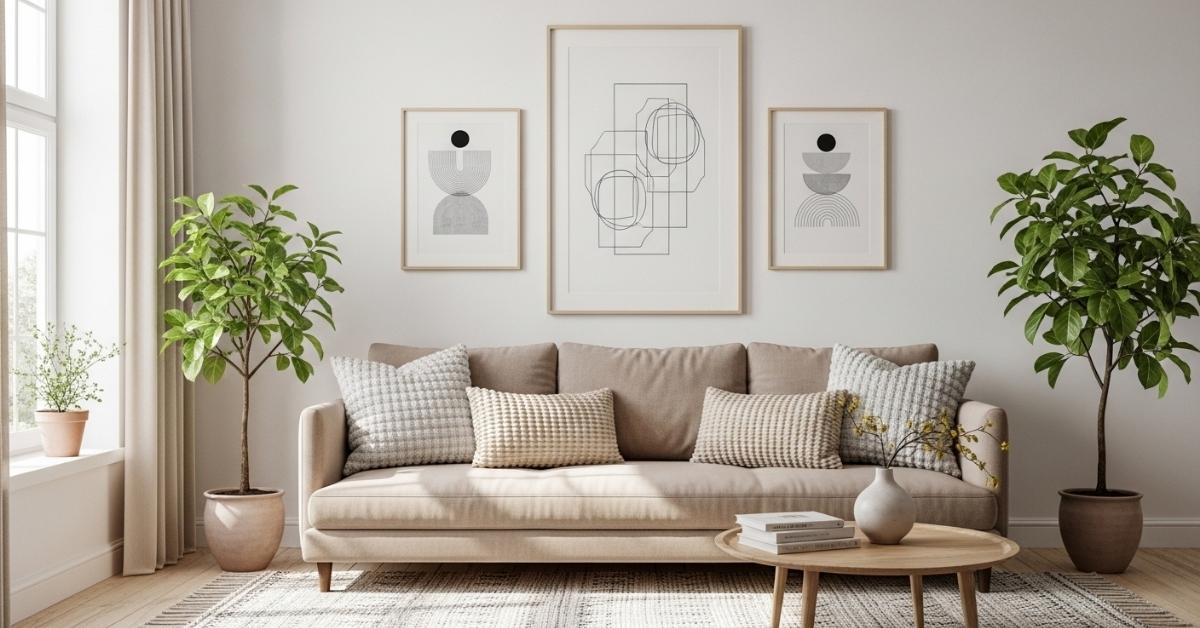
The wall above your couch is one of the most visible surfaces in your living room and somehow, one of the easiest to get wrong. Too small, and the art floats awkwardly. Living Room Wall Decor Above Couch Ideas Too cluttered, and the whole room feels restless. Too empty, and the space reads unfinished no matter how good the furniture is.
If your living room feels like it’s almost there but something’s still off, the wall above the sofa is usually where the answer lives. In 2026, the shift is away from matching sets and generic canvas prints toward intentional arrangements that feel personal, balanced, and proportionate to the room. Whether you’re working with a small apartment wall or a wide open expanse in a larger living room, the goal is the same: make that space feel complete without overdoing it.
For anyone trying to make their space feel more cohesive and considered without a full renovation or a designer budget this list is built around setups that work in actual homes, not just staged ones.
Oversized Single Art Print Centered Above the Sofa

When a room already has a lot going on patterned cushions, varied textures, layered lighting one large, confident piece of wall art does more work than a gallery wall ever could. The key is scale: the print should span roughly two-thirds the width of your sofa, not the full length, and hang 6–8 inches above the back cushions. This gap keeps it connected to the furniture rather than floating mid-wall. It works especially well in smaller living rooms where a gallery wall would make the space feel busy. The single-piece approach solves the visual noise problem without sacrificing personality.
Horizontal Gallery Wall With Consistent Frame Finish

A gallery wall doesn’t have to mean mismatched frames at random heights. A horizontal arrangement three to five frames in a straight line, all the same finish creates structure that a sofa wall genuinely needs. Sticking to one frame color (matte black, warm brass, or natural wood) lets the artwork vary without the wall looking chaotic. This setup works best in longer living rooms where the sofa stretches across most of the wall. The clean horizontal line echoes the low profile of most modern sofas and keeps the eye moving across the room rather than upward into empty ceiling space.
Asymmetric Gallery Wall With Varied Frame Sizes
This is one I’d actually recommend trying first if you have a collection of art, photos, or prints that don’t quite match because the asymmetric approach is more forgiving than it looks. The trick is anchoring with one large piece slightly off-center, then building outward with smaller frames at varying heights. Keep the outer edges roughly aligned so the arrangement has a boundary, even if the interior is varied. It’s particularly useful in rentals where you want the wall to feel intentional without over-committing to nail holes. Solves the “I have art but no idea how to hang it” problem better than most systems.
Floating Shelves With Curated Objects and Art

Floating shelves above the sofa give you something a fixed gallery wall doesn’t: flexibility. You can swap out objects seasonally, add a plant, lean a small print without nailing it in which makes this setup especially practical in rented spaces or rooms that are still evolving. Two shelves, staggered at different heights and lengths, works better than a single wide shelf because it breaks up the vertical space without overwhelming it. Use one shelf for art, one for objects, a small ceramic, a trailing plant, a candle. The layering creates visual depth that a flat wall of frames can’t replicate.
Woven Wall Hanging as a Soft Textile Focal Point
Textile wall hangings solve a specific problem that art prints don’t: they add warmth and acoustic softness to rooms that feel hard or echoey. In living rooms with tile floors, concrete walls, or large windows, a woven piece above the sofa introduces texture that visually anchors the whole seating area. Go for a piece that’s at least 24 inches wide; anything smaller reads as decorative afterthought rather than intentional focal point. This works especially well in open-plan spaces where the sofa needs to define its own zone without physical walls helping it along.
Vertical Stacked Frames for Rooms With Low Ceilings

Most wall decor advice defaults to horizontal layouts, which can actually make low ceilings feel even lower by drawing the eye sideways instead of up. Stacking two portrait-format frames vertically one above the other with a few inches of gap pulls the eye upward and creates the illusion of more ceiling height. This works best with simple, clean imagery rather than busy prints, since the vertical emphasis is the feature here, not the content. Small apartments and older homes with standard 8-foot ceilings benefit most from this approach.
Leaning Oversized Mirror Against the Wall Above the Sofa
Mirrors above sofas are often done wrong: too small, too ornate, hung too high. The leaning approach sidesteps the sizing guesswork entirely: a floor-leaning mirror propped behind the sofa (against the wall, not actually sitting on the couch) reflects natural light across the room and makes the space feel significantly wider. This works best when there’s a window opposite the sofa; the mirror doubles the light source without any additional fixtures. For rooms that feel dark or narrow, this is one of the most effective single changes you can make.
Read More About : 27 Living Room Wall Decor Above Couch Ideas That Actually Work in Real Homes
Framed Botanical Prints in an Earthy, Layered Arrangement

Botanical prints have moved past trend territory into something that holds up long-term mainly because they bring organic form into rooms that can otherwise feel too geometric or rigid. A grouping of three to five prints in coordinated but not identical frames creates an arrangement that feels collected rather than bought as a set. Warm wood frames work better here than stark black or white, especially on walls with warm-toned paint. This setup is particularly effective in rooms that lack natural greenery; the prints fill a similar visual role without the maintenance.
Single Large Mirror With Architectural Frame Detail
An architecturally detailed mirror with a wide frame, beveled edge, or geometric shape functions differently than a plain reflective surface. It reads as a design element in its own right while still doing the work of opening up the room. Hanging it centered above the sofa, with sconces or picture lights on either side, creates a symmetrical arrangement that works especially well in more formal living rooms or spaces with taller ceilings. This is a strong option for rooms where you want presence on the wall without committing to art you might change your mind about.
Black and White Photo Wall With Personal or Editorial Prints

Monochrome photo arrangements work because they remove the color-matching equation entirely. Whether you’re hanging family photos, architectural shots, or editorial-style black and white prints, the uniform palette makes a varied arrangement feel cohesive. The key is frame consistency: same finish, ideally same or coordinated frame widths. In living rooms with bold furniture colors deep blue, terracotta, forest green a black and white wall provides visual rest without being bland. This setup also scales easily: start with three pieces and add more over time without disrupting what’s already there.
Oversized Typography or Word Art in a Minimal Room
Typography art works when the room around it is quiet enough to let it read. In a minimal living room, neutral walls, clean-lined furniture, and limited decorative objects a single large typographic piece above the sofa gives the wall personality without visual busyness. Choose phrasing that’s short and direct; single words or short phrases in oversized scale read better than quotes that require standing close to decipher. The font choice matters more than most people expect: a serif feels warmer, a bold sans-serif feels more graphic and modern. Both can work, depending on whether your room leans soft or structured.
Maximalist Gallery Wall With Color-Coordinated Frames

The maximalist approach only works if there’s a unifying principle and color is the most effective one. Coordinating all frames in one warm metallic (antique brass, gold, or bronzed finishes) allows the art inside them to vary wildly in subject, style, and scale without the wall collapsing into chaos. This setup takes planning: lay everything out on the floor before committing to wall placement. It works best in larger living rooms where the sofa wall has breathing room and the arrangement can extend well beyond the sofa’s width. The payoff is a wall that genuinely feels curated rather than accumulated.
Minimalist Line Art Triptych in Matching Thin Frames
A triptych of three prints of equal size, equally spaced is one of the most structurally balanced arrangements you can hang above a sofa, and line art is the format that does it best. The simplicity of the artwork lets the arrangement itself become the design element. Thin metal or wood frames in a consistent finish keep the whole setup feeling light rather than heavy on the wall. I’ve noticed this style tends to work particularly well in rental apartments where the walls are white and you need something that adds personality without making the space feel cluttered or over-decorated.
Macramé Panel Flanked by Small Potted Shelf Plants

Combining a textile panel with live plants on either side creates a wall setup that feels genuinely layered with different materials, different levels, and different forms working together. The macramé provides a warm central anchor while the plants (on small floating brackets or narrow shelves) bring asymmetric life to each side. This works especially well in rooms that lean natural or organic in material choice: rattan furniture, linen upholstery, wood tones. It solves the “the wall needs something but I don’t want more frames” problem while also bringing in a bit of actual nature.
Painted Arch or Mural Behind the Sofa as a Statement
A painted arch on the wall behind the sofa is having a significant moment in 2026, and the reason it works is spatial: the arch shape frames the seating area and gives the sofa a visual backdrop without any hanging required. For renters, temporary arch decals or removable paint in a defined section can achieve a similar effect. The key is keeping everything else on that wall minimal; the arch is the feature, not the base layer. Rooms with neutral or monochromatic palettes benefit most, since the arch introduces a shape where everything else is flat.
Vintage Poster Prints in Mismatched Antique Frames

Mismatched antique frames work when the prints inside them have a consistent visual language vintage travel posters, retro typography, old botanical illustrations. The frames vary in finish and shape but the art ties them together. This is one of the more approachable setups budget-wise: vintage frames from secondhand stores and printed-at-home or low-cost poster prints can create an arrangement that looks like it took years to assemble. Honest answer? It often takes one afternoon. Works best in rooms that already have some vintage or eclectic character sofas in velvet, jewel tones, or warm earth colors.
Neon Sign or Backlit Word Art for an Edgy or Modern Space
LED neon signs have replaced the novelty-only reputation they once had in the right room, they function as both art and lighting layers. Above a sofa in an industrial or modern space with dark walls, a warm-white or amber neon sign adds a light source at exactly the right height (eye level when seated) while giving the wall a focal point that doesn’t require framing or hanging hardware beyond one or two anchor points. Keep the surrounding wall bare; the sign needs space to be the thing you look at, not one element among many.
Framed Fabric or Wallpaper Panels as Textured Wall Art

Framing fabric or a section of wallpaper inside a standard picture frame is a low-cost way to get visual texture on a wall that art prints can’t quite deliver. A piece of linen in a neutral, a patterned paper in a botanical or geometric print, or a section of embroidered fabric all of these inside a large frame read as deliberate wall art. This setup is particularly useful when you want warmth and texture but your room already has a lot of flat, graphic art. It also gives you a way to bring in patterns without committing to an actual wallpapered wall.
Floating Ledge With Layered Leaning Art
A picture ledge that slim shelf designed for leaning art rather than nailing it solves the commitment problem entirely. You can rearrange, swap out, add, and remove pieces without touching a wall. The layering effect (prints at different heights, objects between frames) creates depth that a flat wall arrangement can’t. This is the format I’d go to first for anyone who changes their mind often, collects art gradually, or rents their space. The ledge itself should be at least two-thirds the width of your sofa; shorter than that and it reads as a shelf rather than an intentional art display.
Abstract Canvas Diptych in Coordinating Tones

A diptych of two canvases meant to be displayed together creates a sense of continuation that a single piece or separate unrelated prints don’t. When the two pieces share a color palette or compositional flow, the effect is cohesive without being rigid. Hang them with a small gap (two to three inches) so they read as related but distinct. In a room with a longer sofa, this format fills the horizontal space more naturally than a single piece without requiring the complexity of a gallery wall. Muted, earthy abstract palettes hold up across changing room styles better than trend-specific colors.
Read More About : 27 Luxury Living Room Ideas on a Budget That Actually Look High-End
Reclaimed Wood Panel or Shiplap Section as a Backdrop
A section of wood paneling, whether reclaimed planks, shiplap, or board-and-batten creates texture and depth on the sofa wall that no framed art can replicate. It doesn’t have to cover the full wall: a panel section roughly the width of the sofa and extending from the baseboard to ceiling height (or a partial height treatment) is enough to define the space. This works especially well in rooms where the furniture is minimal and the room needs visual interest that doesn’t depend on accessories. It’s more permanent than art, but the longevity of the look makes it worthwhile in owned homes.
Clock as Statement Wall Piece Above the Sofa

An oversized wall clock at least 24 to 30 inches in diameter functions as both functional object and visual anchor. In mid-century modern or industrial rooms, a large round clock above the sofa fills the wall space with intention while maintaining the minimal aesthetic. The key is scale: undersized clocks look like accessories rather than design decisions. A single large clock works best on walls without other competing elements, keeping the surrounding space clear and letting the form of the clock carry the wall on its own.
Mixed-Media Wall With Frames, Objects, and Architectural Details
The mixed-media approach frames alongside mounted decorative objects like ceramic plates, sculptural pieces, or architectural fragments is the most complex to execute but also the most visually distinctive when it works. The principle is the same as any gallery wall: establish a rough outer boundary for the arrangement, then vary what goes inside it. Mixing flat frames with three-dimensional objects creates shadow and depth that a flat arrangement can’t. This works best in rooms with high ceilings where there’s vertical space to fill, and in spaces that already lean eclectic or maximalist in their overall character.
What Actually Makes These Ideas Work
The setup matters, but so does the logic behind it. Here’s what separates a wall that looks intentional from one that just looks decorated:
Scale relative to sofa width
is the most commonly missed factor. The general rule: your arrangement (whether a single piece or a full gallery wall) should span 60–75% of your sofa’s width. Going wider than the sofa creates imbalance; going significantly narrower makes the art look like it belongs in another room.
Hanging height
changes everything. Most people hang art too high. The center of the piece should sit roughly 8–10 inches above the sofa back, not at standard eye level for a standing person. When you’re seated, the art should feel like it’s in conversation with you, not above you.
Wall color context
affects which approaches work. Dark walls favor single-statement pieces or warm metallic frames that hold their own. Light or white walls give gallery walls room to breathe and can handle more complexity. Textured or wallpapered walls generally call for minimal hanging and let the wall surface do the work.
Light direction
is underrated in wall decor decisions. If your sofa wall receives direct natural light during the day, matte frames and non-glossy prints will prevent glare. If the wall is darker or north-facing, warm picture lights or sconces beside the arrangement can correct the balance.
Living Room Wall Decor Above Couch: Setup Guide
| Setup | Best For | Space Type | Problem It Solves | Difficulty |
| Single oversized print | Minimal, modern rooms | Small to medium | Empty, unanchored wall | Easy |
| Horizontal gallery wall | Long sofas, bold personalities | Medium to large | Scale + visual interest | Moderate |
| Floating shelves | Renters, evolving spaces | Any | Commitment + flexibility | Easy |
| Leaning art ledge | Collectors, frequent rearrangers | Small to medium | Nail holes, indecision | Easy |
| Woven textile hanging | Rooms needing warmth/texture | Small to open plan | Hard surfaces, acoustic softness | Easy |
| Mixed-media wall | Eclectic, maximalist rooms | Large, high ceilings | Empty vertical space | High |
| Painted arch/mural | Minimal rooms, renters (decals) | Any | Backdrop without frames | Moderate |
| Mirror (leaning or hung) | Dark or narrow rooms | Small to medium | Light, space, proportion | Easy–Moderate |
Common Mistakes That Make the Wall Above Your Sofa Look Off
Hanging art too high
is the most frequent issue and it’s an easy fix. If you have to look up to see the center of your art while seated, it’s too high. Lower it until it feels like it’s part of the seating area, not floating above it.
Choosing pieces that are too small
is the second most common problem. A single 16×20 print above a 90-inch sofa will always look like an afterthought. If you can’t afford a large-scale piece, a grouping of smaller ones that collectively fills the appropriate width will always look better than one undersized piece centered on the wall.
Ignoring the sofa color in art selection
creates rooms that feel disconnected. The wall decor doesn’t have to match the sofa but it should respond to it. A neutral sofa gives you freedom. A bold-colored sofa limits the palette of what works above it without competing.
Over-accessorizing the sofa and under-accessorizing the wall
or vice versa creates visual imbalance. If your sofa has many throw pillows in varied patterns and colors, the wall above it needs to be relatively calm. If the sofa is minimal and solid, the wall can carry more complexity.
Using frames that are too thin for the scale of the room
is a finishing detail that matters more than expected. In a large room, thin gallery frames read as delicate to the point of disappearing. Scale the frame weight to the room size.
FAQ’s
What size art should go above a sofa?
The arrangement whether a single piece or a group should span roughly 60–75% of the sofa’s width. For a standard 84-inch sofa, that means art or an arrangement between 50–63 inches wide. Single pieces typically work best at 36–48 inches wide in average-sized rooms.
How high should wall decor be hung above a couch?
Hang the bottom edge of the art or arrangement 8–10 inches above the sofa back. The center of the piece should sit at roughly seated eye level around 57–60 inches from the floor, not at the standard standing eye-level height that most people default to.
Is a gallery wall or single piece better above a sofa?
It depends on the room. Single pieces work best in minimal or smaller spaces where visual simplicity is the goal. Gallery walls suit larger rooms, longer sofas, or spaces that benefit from more visual layering. The sofa’s length and wall width are better guides than personal preference alone.
Can you put a mirror above a sofa?
Yes and it’s one of the most functional choices for dark or narrow rooms. The mirror should be proportionate to the sofa (at least 36 inches wide for most couches) and hung or leaned so the center sits at roughly the same height as other art. Avoid mirrors that angle downward, as they reflect the floor rather than the room.
What’s the easiest low-commitment wall decor option above a couch?
A picture ledge with leaning art is the most flexible. It requires minimal wall hardware, allows you to rearrange or swap pieces without new holes, and can be built up gradually. It’s also one of the more budget-friendly setups since you can add pieces over time.
Does the wall decor have to match the sofa color?
It doesn’t need to match, but it should work with the sofa’s tone and visual weight. A neutral sofa is compatible with almost any wall treatment. A bold or patterned sofa generally needs a calmer wall one strong statement at a time keeps the room from feeling competing rather than layered.
How do I make a small living room wall above the sofa look good?
Keep it simple and proportionate. One well-sized print, a horizontal line of two to three frames, or a single mirror will always read better than a dense gallery wall in a small space. Vertical arrangements (stacked frames) can also help draw the eye upward in rooms with lower ceilings.
Conclusion
The wall above your sofa is one of the few spots in a living room where a single decision: the right scale, the right format, the right height can shift how the entire room feels. It doesn’t require a full redesign or a large budget. It requires proportion, intention, and a setup that responds to the space you actually have.
Start with one or two ideas from this list that match your room’s scale, your sofa’s proportions, and what you’re realistically going to execute. Adjusting the hanging height before deciding anything isn’t working it fixes more problems than most people expect. From there, build and refine at your own pace.
