

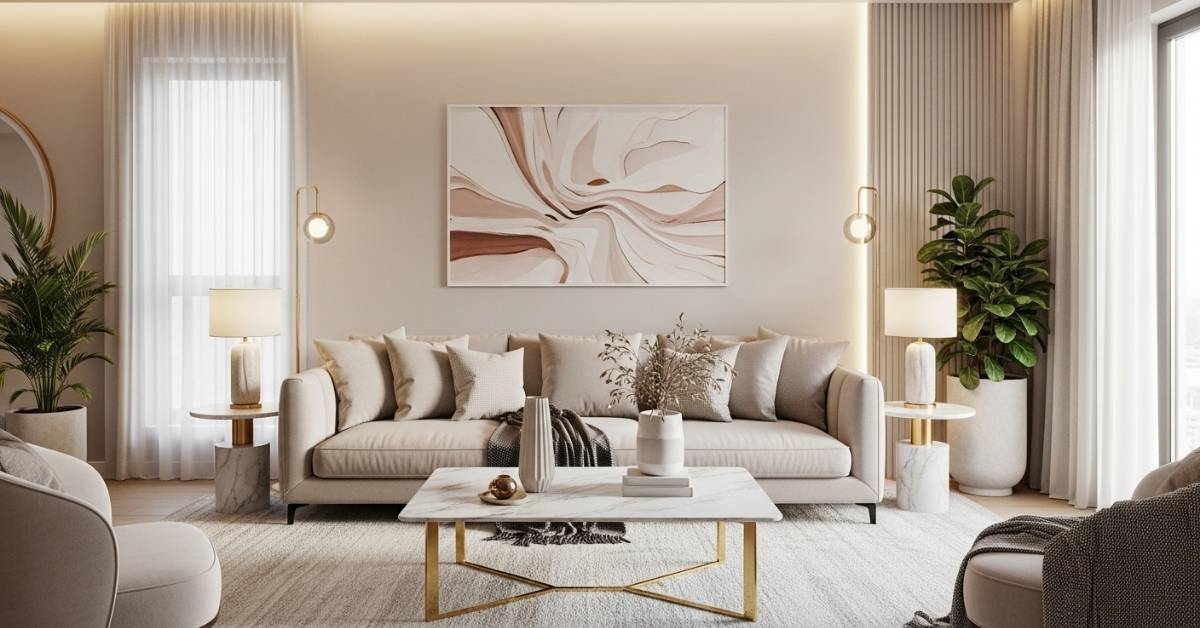
If your living room feels more “fine” than finished, you’re not alone. Most people assume a polished, high-end space requires a designer budget but the gap between expensive-looking and actually expensive is mostly about proportion, layering, and material contrast. Get those right, and the room does the rest.
This is especially useful if you’re working with a rental, a smaller space, or a layout that just hasn’t clicked yet. Being budget-conscious doesn’t mean settling.Luxury Living Room Ideas on a Budget It means being strategic about where visual impact actually comes from and spoiler: it’s rarely the sofa.
In 2026, the shift in living room design is moving away from matching furniture sets and toward curated, layered spaces that feel collected over time. That look? Much easier (and cheaper) to pull off than a full room refresh.
Use a Large Neutral Area Rug to Anchor the Entire Seating Area

A rug that’s too small is one of the most common reasons a living room feels unfinished and it’s fixable without touching a single piece of furniture. Go for a size where all front legs of the sofa and chairs sit on it. This creates a visual boundary that makes the whole seating zone feel intentional and cohesive. In smaller rooms, a large rug in a warm neutral cream, sand, soft grey visually expands the floor plane rather than chopping it up. The problem it solves is spatial: furniture that floats without a rug looks disconnected. The rug is the foundation everything reads against.
Layer Two Different Throw Pillows in Complementary Textures
Texture contrast is what separates a styled sofa from a basic one. Pair something smooth like a velvet or sateen pillow with something woven or nubby, like a boucle or chunky knit. Keep the color palette tight (two or three tones max), and vary the sizes slightly. This works in any living room size, but it’s especially effective in smaller spaces where you can’t rely on furniture variety for visual interest. The practical point: you’re not buying new furniture you’re changing how the existing piece reads. A $15 textured pillow cover does more visual work than most people expect.
Add a Floor Lamp with a Warm Bulb to Replace Overhead Lighting

Overhead lighting is the enemy of ambiance. It flattens a room and makes even nice furniture look flat and clinical. A single arc floor lamp positioned behind or beside the sofa shifts the light source down to eye level, which creates warmth and dimension without rewiring anything. Use a bulb in the 2700K range that amber warmth is what makes spaces feel like they cost more than they do. This is one of the easiest wins for renters since it requires zero installation. In my experience, this one change does more for the “feel” of a living room than almost any decor purchase under $100.
Mount Curtains High and Wide to Make Windows Look Larger
Hang curtain rods 4–6 inches above the window frame or better, just below the ceiling and extend the rod 8–12 inches past each side of the window. This tricks the eye into reading the window as much larger than it is, which makes the entire wall feel taller and the room feel more open. Linen or linen-look panels in an off-white or warm ivory work best because they filter light softly without darkening the room. For budget execution, IKEA and Amazon both carry convincing linen-look options. This setup works especially well in rooms where the windows are average-sized but the ceilings are a reasonable height.
Use a Console Table Behind the Sofa to Add Depth and Function

If your sofa is floating in the middle of the room, not against a wall, a console table placed directly behind it solves two problems at once. It gives the sofa a visual “backbone” so it doesn’t look lost, and it adds a surface for a lamp, a few books, or small objects that add height variation to the room. The table should be close in height to the sofa back. This layout reads as intentional rather than improvised, which is part of what gives a room that curated feel. Honestly, this is one of the most underused tricks in open-plan or medium-sized living rooms.
Read More About : 25 Apartment Living Room Ideas That Are Totally Renter-Friendly (and Actually Work)
Create a Gallery Wall Using Thrifted Frames in a Consistent Finish
The key to a gallery wall that looks designed rather than chaotic is consistency in one element, usually the frame finish. Pick a single metal tone (matte black, brushed brass, warm gold) and use it across mismatched thrifted or budget frames. The art itself can vary: abstract prints, architectural photography, simple line drawings. Print-at-home art from sites like Etsy or Canva brings the cost down significantly. This works on any wall size and is renter-friendly since small nail holes are easy to patch. The visual effect is one of personality and curation; the room feels lived-in rather than staged.
Place a Tray on the Coffee Table to Organize and Elevate Decor

A tray is essentially a frame for your coffee table. Without it, decor items just sit there. With it, they become a deliberate arrangement. Use a rectangular or round tray that covers roughly a third of the coffee table surface, then group 3–4 objects inside: a candle, a small plant or bud vase, a couple of stacked books. The height variation within the tray is what gives it visual interest. This setup works in small and large rooms equally, and it keeps the surface from looking cluttered while still feeling styled. It also makes cleaning easier to pick up the whole tray.
Introduce One Piece of Furniture in a Rich Material Velvet, Rattan, or Marble-Look
You don’t need an entirely new furniture set. One piece in a material with visual weight: a velvet accent chair, a rattan side table, a marble-look side surface shifts the whole room’s perceived quality. The contrast against more basic pieces is part of what makes it work. A green or navy velvet chair in a neutral room reads as a deliberate design choice. A marble-look tray or coaster set on a plain coffee table adds texture without demanding attention. This is especially effective in rooms that are otherwise budget-built, where one elevated material does the heavy lifting.
Add Greenery Using Low-Maintenance Plants Placed at Varying Heights

Plants add life and scale to a living room in a way no decor item quite replicates. The key is varying the height: a tall floor plant in a corner (fiddle leaf, snake plant, or olive tree), a medium plant on a side table, and something trailing on a shelf or bookcase. This vertical variation draws the eye up and makes the room feel taller. Ceramic or textured pots do more work visually than plastic nursery pots, a simple upgrade that makes the plants feel like decor rather than an afterthought. For low-light rooms, pothos, ZZ plants, and snake plants are reliable without fuss.
Paint or Wallpaper One Accent Wall in a Deep, Saturated Color
A single saturated wall terracotta, forest green, dusty navy, warm charcoal adds the kind of depth that makes a room feel designed rather than default. It doesn’t require painting the whole room, which keeps cost and commitment low. Place the sofa against or facing this wall so it becomes a deliberate backdrop. Deep tones work particularly well in rooms with natural light, where the color shifts subtly throughout the day. For renters, peel-and-stick wallpaper has improved significantly and is now a realistic option for this effect without the permanence.
Use Bookshelves as Decor With a Mix of Books, Objects, and Empty Space

Shelves that are purely functional packed edge to edge with books read as storage. Shelves that are styled read as decor. The shift is simpler than it looks: pull some books forward, turn a few horizontally to create platforms, and intersperse objects (a small vase, a candle, a framed photo) at irregular intervals. Leave some shelf space completely empty. That negative space is what gives the eye a place to rest and makes the arrangement feel curated. This works especially well in rooms without much art; a full bookshelf becomes the focal point.
Layer Lighting With Three Sources: Overhead, Lamp, and Candle or LED Strip
Lighting layers are what give a room its atmosphere. A single overhead light source creates a flat, even wash that removes shadow and depth. Three sources overhead (dimmed if possible), a floor or table lamp, and something low like candles or a subtle LED strip behind furniture creates dimension. The eye reads layered light as more complex and intimate. This setup costs almost nothing if you already have a floor lamp, and candles are among the cheapest decor upgrades available. For rooms that feel cold or sterile, this is often the fix before anything else.
Add a Decorative Mirror to Reflect Light and Add Visual Depth

A well-placed mirror doubles the apparent light in a room and adds a layer of visual complexity without taking up floor space. Lean a large mirror against the wall rather than hanging it leaning reads as more casual and current, and it avoids commitment for renters. Position it where it reflects a window or a lamp, not a blank wall. Arched and oval frames are having a long moment right now and work well in rooms that lean minimal or organic. In small living rooms, a floor-length mirror on the shorter wall can make the entire room feel wider.
Declutter Surfaces and Use the Rule of Three for Styling
There’s a reason professionally styled rooms never look chaotic; it’s almost always a restraint issue, not a budget issue. The rule of three is simple: group decor objects in sets of three, varying height, size, and texture within each grouping. One tall, one medium, one low. This applies to coffee tables, side tables, shelves, and mantels. The effect is a room that feels edited rather than accumulated. In my experience, most people improve their living room more by removing things than by adding them. This framing helps make those decisions easier.
Drape a Textured Throw Blanket Over the Sofa Arm or Back

A throw blanket is functional but also one of the easiest texture additions in the room. The key is in the draping: don’t fold it neatly or lay it flat. Drape it loosely over one arm or the corner of the sofa back so it looks like it naturally ended up there. Chunky knits, waffle weaves, and soft boule all photograph well and add tactile interest in person. Warm neutrals (oatmeal, camel, cream) layer easily with most sofas. This works in every living room size and is one of the lowest-cost, highest-visual-return items on this list.
Read More About : 26 Open Shelf Kitchen Decor Ideas That Actually Work in Real Homes
Swap Out Hardware on Existing Media Units or Sideboards
Cabinet hardware is the jewelry of furniture small, but noticeable. If you have a media unit, sideboard, or storage cabinet with basic or dated pulls, swapping them out for brushed brass, matte black, or ceramic hardware takes the piece from generic to considered. Most pulls require only a screwdriver. The cost is usually under $30 for an entire unit. This works especially well on dark wood furniture where warm metal pops, or on painted units where a contrasting finish adds definition. It’s a detail that guests often notice without being able to name what changed.
Use Stacked Books as a Coffee Table Surface or Riser

Coffee table books, especially oversized ones with simple, graphic covers function as both decor and functional risers. Stack two or three flat and place a small object on top: a candle, a small sculpture, a bud vase. The stack adds height variation to what is typically the lowest surface in the room. Choose covers in neutral tones or black-and-white for the most visual versatility. Thrift stores frequently have large-format art and photography books for under $5. It’s a low-cost way to add both color-neutral pattern and intellectual texture to the space.
Float Furniture Away From Walls to Create a More Intentional Layout
Pushing all furniture against the walls is a common instinct and almost always makes a room feel smaller, not larger. Pulling the sofa even 8–12 inches away from the wall creates a breathing space at the back and makes the seating arrangement look considered rather than defaulted. It also allows for that console-table-behind-the-sofa setup mentioned earlier. This layout shift costs nothing and works best in rooms that are at least 10 feet wide. The visual effect is a room that feels like it was designed, not just arranged.
Add a Second Light Source at the Sofa Level Using a Table Lamp

A table lamp beside the sofa does two things: it adds a warm light pool at sitting height, and it gives the side table a vertical anchor that makes the arrangement feel complete. Choose a lamp with a linen, ceramic, or textured base these read as more considered than basic plastic alternatives. The shade matters too: a drum shade in off-white or warm linen diffuses light softly rather than directing it harshly. For budget options, thrift stores often have great lamp bases that only need a new shade to look current. This setup works in any size living room and is especially useful for rooms with only overhead lighting.
Use Woven Baskets for Storage That Also Functions as Texture
Storage that looks like decor is one of the more practical upgrades in a living room. A large woven seagrass or rattan basket beside the sofa holds blankets, kids’ toys, or random clutter and reads as a deliberate material choice. The natural fiber texture adds warmth and contrast against smoother surfaces like a painted wall or upholstered sofa. These baskets are widely available at budget price points and are especially useful in rooms that need storage but can’t accommodate extra furniture. It solves a real function problem (clutter) while contributing to the room’s visual texture palette.
Hang One Oversized Piece of Art Instead of Multiple Small Prints

Scale matters more than quantity when it comes to wall art. One large-format print hung centered above the sofa with proper spacing anchors the room and reads as confident and deliberate. Multiple small prints scattered on the same wall often look indecisive and create visual noise. For budget-friendly oversized art, print shops like Canva, Posterlounge, or local print labs can output a 24×36 or larger print for under $30. Frame it in a simple matte black or natural wood frame and let it stand alone. This works especially well in rooms with high ceilings where the sofa wall needs vertical presence.
Use Monochromatic Tones Across Soft Furnishings to Create Cohesion
A monochromatic palette varying tones of one color rather than multiple colors is one of the easiest ways to make a room feel curated without much effort or expense. In practice: a cream sofa, a sand-toned rug, warm white curtains, and oatmeal throw pillows. Each piece is a different shade and texture, but the family of tones reads as cohesive. This is forgiving if you’re buying pieces at different times or from different stores, since exact matching isn’t the goal. The visual effect is calm, layered, and without relying on a cliché feels intentional in a way that mixed colors rarely do on a budget.
Add a Coffee Table Book Stack and Decorative Tray to Define the Center

The center of a living room, the coffee table is often the most neglected decor surface. Defining it with a tray as a visual frame, two or three stacked books for height, and a single candle or vase keeps the surface from looking bare without overcrowding it. Round coffee tables benefit especially from a round tray that mirrors the shape. This layout works for everyday use too since the items are easy to move when the table needs to be functional. It also photographs well for anyone who uses their space on social media, which is a secondary benefit worth mentioning.
Use Vertical Shelving to Draw the Eye Upward and Use Wall Height
In rooms with standard or higher ceilings, vertical shelving pulls the eye upward and makes the room feel taller. A narrow, floor-to-ceiling bookshelf in a corner takes very little floor footprint while delivering significant visual height. Style it with a mix of books, objects, and empty space as described earlier the vertical rhythm is part of the effect. For renters or those avoiding permanent installation, freestanding tall shelves from IKEA (Billy, in particular) offer a cost-effective version of this look. This setup is especially useful in small rooms where every square foot of floor space matters.
Choose a Coffee Table With Storage or a Lower Shelf for Hidden Function

A coffee table that includes a lower shelf or drawer doubles as storage without adding another piece of furniture. Lower shelves can hold books, baskets with remotes, or a small plant keeping the main surface clear while giving clutter somewhere logical to live. Visually, the lower shelf adds visual weight and grounding to the piece, which is useful in rooms where furniture feels too light or sparse. This is especially practical in smaller living rooms or homes where the living room is also a workspace or multifunctional area. Budget versions are available across most home stores and don’t require compromising on the look.
Mix Metals Intentionally Pick Two and Repeat Them Across the Room
Mixing metals used to be considered a design mistake. Now it’s one of the markers of a thoughtfully designed space as long as you’re deliberate about it. Pick two metal tones (say, brushed brass and matte black) and repeat both across multiple surfaces: lamp base, picture frame, candle holder, hardware pull. The repetition is what makes it look intentional rather than inconsistent. IMO, this is one of those details that separates a room that “just happened” from one that was thought through. The cost is low since you’re working with existing items and making selective swaps.
Position Seating to Face a Focal Point Rather Than a Blank Wall

Layout is the most impactful and least expensive design tool in the room. Arranging seating so it faces a clear focal point, a fireplace, a TV, a gallery wall, and a large window gives the room directional logic. When furniture faces a blank wall or points in random directions, the room feels unresolved regardless of the individual pieces. This is one of those structural decisions that costs nothing and affects how the whole room reads. In rooms without an obvious focal point, create one: a large mirror, an oversized piece of art, or a well-styled bookshelf all work as anchors. Start here before buying anything new.
What Actually Makes These Budget Ideas Look High-End
The difference between a budget room and an expensive-looking one is rarely about the price of individual items, it’s about the relationships between them. Proportion, scale, and repetition do the work that expensive furniture is often given credit for.
Proportion means your rug is large enough to anchor the seating, your art is scaled to the wall, and your lamp isn’t dwarfed by the sofa beside it. Scale mismatches are what make rooms feel “off” even when the pieces themselves are fine.
Repetition means a color, material, or finish appears at least twice in the room which is what creates cohesion. A single brass lamp in a room full of chrome and black reads as accidental. Two brass elements read as a choice.
Restraint is the third factor. Rooms that look expensive tend to have less on every surface, not more. Editing is a skill, and it costs nothing to practice.
Budget Luxury Living Room Ideas: Setup Comparison
| Idea | Best Space Type | Problem It Solves | Difficulty | Approx. Budget |
| Oversized area rug | Any size | Disconnected furniture | Easy | $50–$200 |
| Layered lighting (3 sources) | Small/dark rooms | Flat, clinical atmosphere | Easy | $20–$80 |
| High-hung curtains | Any size | Low ceilings, small windows | Easy | $30–$100 |
| Gallery wall with consistent frames | Medium/large | Empty or bland walls | Moderate | $20–$60 |
| Floating furniture layout | Medium+ rooms | Pushed-against-wall look | Free | $0 |
| Accent chair in rich material | Any size | Lacking visual interest | Moderate | $80–$250 |
| Monochromatic soft furnishings | Any size | Color inconsistency | Easy | $30–$120 |
| Vertical shelving in corner | Small rooms | Low ceilings, no storage | Moderate | $60–$150 |
Common Living Room Mistakes That Make a Budget Space Look Cheap
Furniture too small for the room.
A sofa that doesn’t fill the visual space of the seating area makes the room feel empty, not minimal. Scale up before you style.
One single light source.
If the only light is the ceiling fixture, the room will always feel flat. Floor and table lamps are cheap fixes.
Rug too small.
A rug where only the coffee table legs sit on it or nothing sits on it is one of the most common and most visually disruptive mistakes in living rooms.
Matching everything too closely.
Matchy-matchy furniture sets (sofa + loveseat + accent chair from the same collection) tend to look more budget than mixing deliberate pieces. Cohesion comes from palette and proportion, not matching tags.
Too many small decorative objects.
A collection of small mismatched objects creates visual noise. Group them, edit them, or replace them with one or two larger pieces.
Ignoring the ceiling height.
Not using vertical space with tall shelves, high-hung curtains, or art scaled to the wall height makes rooms feel shorter and smaller than they are.
FAQ’s
What makes a living room look expensive on a budget?
Proportion, lighting, and material contrast do the most visual work. A large rug, layered lighting (not just overhead), and at least one piece with textural richness velvet, rattan, linen make a room read as considered rather than assembled. It’s less about price and more about how pieces relate to each other.
How do I make a small living room look luxurious?
Use a rug that extends under all front furniture legs, hang curtains from ceiling height, and keep surfaces edited rather than crowded. Mirrors placed to reflect light sources visually expand the room. Avoid furniture that’s too small for the space; undersized pieces make rooms feel more cramped, not less.
Is it better to have a few quality pieces or many budget pieces?
For budget decorating, one or two elevated materials, a velvet chair, a ceramic lamp, a real wood side table surrounded by more basic pieces reads better than a room full of uniform budget items. The contrast is part of the effect.
What colors make a living room feel high-end without spending much?
Warm neutrals (cream, sand, warm white, taupe) and deep saturated accents (terracotta, forest green, dusty navy) both read as elevated. Avoid cold greys and pure whites without warm undertones; they tend to look clinical in natural light.
How do I arrange living room furniture on a budget to maximize space?
Float the sofa away from the wall (even slightly), arrange seating toward a focal point, and anchor the whole setup with a large enough rug. These layout changes are completely free and often have more impact than any decor purchase.
What’s the biggest mistake people make when decorating a living room on a budget?
Buying too many small items instead of one or two larger, better pieces. Small decor accumulates into clutter quickly. A larger mirror, one quality lamp, or a well-chosen accent chair tends to do more visual work than a shelf of small decorative objects ever will.
Can renters pull off these luxury living room ideas?
Most of these ideas require no permanent changes: rugs, curtains on tension or command rods, freestanding shelves, floor mirrors, lamps, and textiles are all renter-friendly. Peel-and-stick wallpaper on one accent wall is now also a realistic renter option and widely available.
Conclusion
A living room that feels pulled-together isn’t the result of expensive furniture, it’s the result of decisions about scale, light, and restraint made consistently across the space. The ideas here are about working with what exists and adding strategically rather than overhauling everything at once.
Start with one or two changes that address your room’s specific friction point. If the layout feels off, float the furniture. If the room feels cold, add a floor lamp and a textured throw. If the walls feel bare, one oversized print does more than a gallery of small ones. Small, deliberate shifts build a room that feels like it was thought through because it was.
