

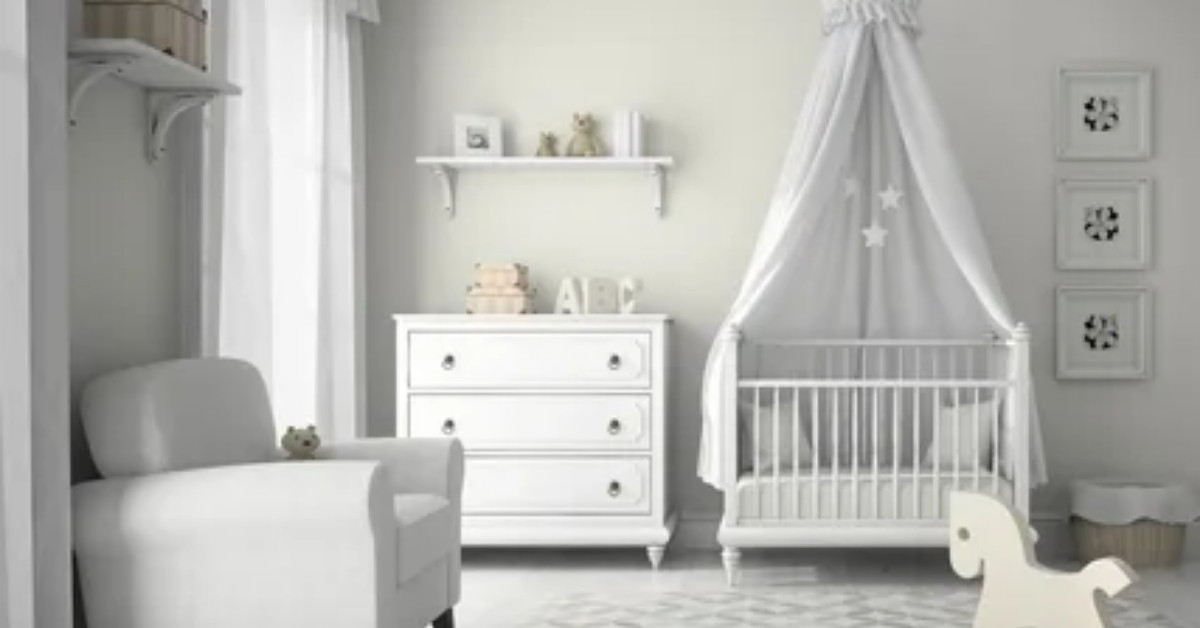
Soft lighting, an uncluttered crib corner, and just enough warmth to make the room feel like a gentle place to come home to; that’s the feeling a well-designed minimalist nursery creates. Minimalist Nursery Decor Ideas It’s not about stripping the room bare. It’s about making every piece earn its place.
If you’ve been staring at a small spare bedroom wondering how to make it feel safe, functional, and beautiful without overcrowding it, minimalist nursery decor gives you a clear path. The approach works especially well in apartments or compact rooms where every square foot has to do double duty.
In 2026, the shift toward calm, intentional nursery design is only growing stronger. Parents are moving away from theme-heavy setups and toward spaces that feel serene for both baby and caregiver. This list covers the ideas that actually hold up in real rooms.
Neutral Crib Against a White or Off-White Wall With One Textile Layer

The crib is the anchor of the room, so placing it against the cleanest wall ideally opposite a window lets it breathe without competing with other elements. Pair it with a single textured item: a linen crib skirt, a hand-knit throw folded over the rail, or a simple cotton canopy. One textile layer adds warmth without visual noise. This setup works best in rooms where natural light enters from the side, since front-facing light can create glare over the crib. It solves the common problem of rooms that feel cluttered before you’ve even added storage, by treating the sleep zone as a visual anchor rather than a display shelf.
Floor-Level Reading Nook With a Low Cushion and Wall-Mounted Book Display
A floor-level reading corner makes a nursery feel like a space for connection, not just sleep. Use a flat floor cushion or a low-profile pouf (rather than a rocker that dominates the room), and mount two or three shallow book ledges at arm-height above it. This keeps books accessible and displayed without needing a full bookcase. The low sight-line also makes the room feel larger because you’re not stacking visual weight upward. Works particularly well in square rooms where a full-sized glider would block natural circulation paths. It’s one I’d recommend trying first if you’re working with under 100 sq ft the space saving is significant.
Warm Wood Dresser as a Changing Station With No Overhead Clutter

Adding a changing topper directly to a mid-height dresser eliminates the need for a separate changing table which in a small nursery is a major layout win. The key to keeping this minimalist is resisting the urge to load the wall above it. One or two items on the dresser surface (a small plant, a single tray for essentials) is enough. Warm wood tones like oak or walnut also prevent the room from feeling sterile while keeping the neutral palette intact. This setup functions best in rooms where the dresser can sit along the longer wall, leaving the narrower ends open for movement.
Read More About : 28 Small Nursery Setup Ideas That Actually Work in Tight Spaces
Single Accent Wall in Warm Greige, Clay, or Sage No Wallpaper Pattern
A single matte accent wall in a muted, earthy tone does the emotional heavy lifting that patterned wallpaper tries to do with ten times less visual cost. Colors like warm greige, terracotta, sage, or dusty rose read as cozy without competing with furniture or textiles. This works especially well when the accent wall sits directly behind the crib, creating a visual backdrop that frames the sleep space. The remaining three walls stay white, which keeps the room bright even in north-facing rooms with limited daylight. Honestly, this is one of the highest-impact, lowest-cost changes you can make in a nursery that still feels bare.
Sheer Curtains Layered Over Blackout Lining for Both Light and Function

Curtains solve two problems at once in a nursery: sleep-quality (light blocking) and aesthetics (softening a bare window). The minimalist approach is to use a sheer white or linen outer panel over a hidden blackout lining, so the visual effect stays light and airy even when the blackout layer is doing its job. Mount the rod close to the ceiling to draw the eye upward and make low-ceilinged rooms feel taller. Skip patterned panels a solid, slightly textured fabric keeps the textile palette cohesive without adding busyness. This works in virtually any nursery size.
Mobile With Neutral Shapes and Natural Materials Over the Crib
A well-chosen mobile is one of the few items in a nursery that serves visual, developmental, and sensory purposes simultaneously. For a minimalist nursery, choose mobiles made from natural materials, unfinished wood arcs, felt in cream and taupe, or dried botanical elements. Avoid licensed character mobiles, which tend to introduce bright colors that conflict with a neutral palette. The height matters: hang it 8–12 inches above the crib mattress so the baby can focus on it without straining. This is a simple addition that adds movement and texture without adding floor-level clutter.
Floating Shelves in a Tight Cluster, Not Scattered Singles

The mistake most nurseries make with shelves is placing three or four of them scattered randomly across the wall, which creates visual fragmentation. Grouping two or three shelves closely together within 6–8 inches of each other creates a cohesive display zone that reads as intentional, not random. Keep what’s on them ruthlessly edited: two or three items per shelf at most. This cluster approach also leaves large portions of the wall completely clear, which actually makes the room feel more considered and spacious. Works best on the wall adjacent to (not behind) the crib.
Rattan or Woven Baskets as the Only Storage You See
Open storage can look chaotic or calm depending entirely on the containers. Matching woven baskets rattan, seagrass, or cotton rope bring texture and warmth while containing visual mess. Use them at floor level or on low shelves where they’re easily accessible during nighttime changes. The key is consistency: two or three of the same basket creates a rhythm. Mixing sizes, materials, and colors defeats the purpose. In my experience, this works best when you commit to using the baskets exclusively (no stray plastic bins or uncovered stacks) the uniformity is where the calm comes from.
A Single Framed Art Print Oversized, Not a Gallery Wall

Gallery walls are often suggested for nurseries, but in a small room they fragment the wall and draw the eye in multiple directions at once. One oversized print hung at proper gallery height (center at 57 inches from floor) creates a clear focal point without overwhelming the space. Choose abstract, botanical, or text-free art in tones that echo the room’s palette of warm browns, soft greens, dusty pinks. The empty wall space around it is doing as much design work as the print itself. This is also significantly easier to swap out as the child grows.
Low-Profile Glider or Nursing Chair Without Ottomans
A nursing chair is non-negotiable for most parents, but the glider-plus-ottoman combination takes up a surprising amount of floor space. A low-profile glider with a built-in footrest mechanism (or no footrest at all) frees up 12–18 inches in front of the chair, which meaningfully improves circulation in small rooms. Position it near the window so nighttime feeds get natural light during the day this small placement decision makes early mornings feel less disorienting. Boucle, linen, or textured cotton keep the fabric choice feeling warm without fighting the rest of the palette.
Soft Rug With Low Pile in a Muted Tone, Sized to Ground the Space

A rug in a nursery is one of the few items that improves acoustics, visual warmth, and baby’s floor play simultaneously. The minimalist rule: choose a muted, solid or very subtly textured rug in a tone that’s slightly warmer than the floor. Avoid geometric patterns or high-contrast designs, which add visual noise. Size matters a 5×7 or 6×9 grounds the crib zone without covering the entire floor, leaving the wood or tile perimeter visible and making the room feel larger. Low pile also makes cleaning spills and rolling tummy time toys significantly easier.
Read More About : 27 Best Neutral Nursery Decor Ideas That Feel Calm, Cozy, and Completely Timeless
White or Natural Wood Crib With Clean Lines Only
The crib style sets the visual tone for everything else in the room. In a minimalist nursery, choose a crib with straight slats, no decorative moulding, and hardware that sits flush or hidden. Convertible cribs (crib-to-toddler-bed-to-full-size) serve the additional practical function of extending the furniture’s usefulness, which reduces the need to redecorate as the child grows a real consideration when you’ve invested in a clean, neutral setup. White or natural wood works with any accent color you add later.
One Hanging Pendant Light or Arc Floor Lamp for Soft Ambient Glow

The lighting in a nursery is underrated as a design decision. Overhead fluorescent or cold-white LED fixtures make even beautiful nurseries feel clinical. A single pendant over the nursing corner, or a slim arc floor lamp positioned behind the glider, creates a warm pocket of light that makes nighttime feeds feel calmer. Aim for a 2700K bulb warm enough to not stimulate wakefulness, bright enough to see clearly. This solves both the aesthetic problem (harsh overhead shadows) and the practical one (bright light waking a drowsy baby mid-feed).
Wall-Mounted Name Letters in Natural Wood, Not Painted Colors
Name lettering on the nursery wall is nearly universal, but the execution matters. Natural wood or white letters in a clean sans-serif or simple script mounted flush against the wall keep the look grounded rather than childish. Avoid painted primary-color letters, foam letters, or oversized letter combinations that span the entire wall. Positioning matters too, centered above the dresser at eye-height (when standing) feels more composed than above the crib where they can visually crowd the sleep zone.
Drawer Organizers Inside the Dresser, Not on Top of It

Most nursery clutter accumulates on top of the dresser diaper cream, wipes, spare onesies, cotton pads. Moving this organization inside the dresser using drawer dividers and small fabric organizers resolves the visual chaos without adding any new furniture. The dresser top stays clear (or has just one small tray and a plant), which makes the room feel dramatically more composed. I’ve noticed this one change has more impact on how a nursery feels day-to-day than almost any decorative decision.
Linen Crib Bedding in One Tone No Prints, No Bumpers
Crib bedding has an outsized visual effect because the crib is usually the room’s focal point. A single fitted sheet in natural linen, with one folded blanket in a complementary neutral, keeps the crib area clean and visually coherent. Bumper pads add bulk and are no longer recommended for safety, skipping them also keeps the crib looking more open and airy. Stick to one textile material family (linen, waffle cotton, or jersey) rather than mixing finishes for the most put-together result.
Diaper Caddy on the Dresser-Changing Combo Nothing Else

A woven diaper caddy on the changing surface consolidates the three or four items you reach for most (wipes, diapers, rash cream) into one contained unit. This replaces the common approach of laying everything out individually, which looks chaotic even when it’s organized. A natural rope or cotton caddy also fits the neutral material palette rather than fighting it. Keep the rule strict: if it doesn’t go into the caddy or into a drawer, it doesn’t live on the changing surface.
Simple Wall-Mounted Peg Rail for Hanging Essentials
A Shaker-style peg rail at 48 inches height does the work of hooks, a rack, and sometimes a small shelf all in one minimal installation. Hang one or two essentials: a small bag for outings, a favourite muslin and resist loading it with more. The items hanging become part of the room’s visual texture rather than clutter. This works especially well in rooms without a dedicated closet, where a peg rail near the door makes grab-and-go routines significantly smoother.
Botanical or Dried Floral Arrangement in a Simple Bud Vase

A small botanical element dried eucalyptus, a few pampas stems, or a simple air plant adds organic texture without introducing fragrance or allergens. The key is scale: a single bud vase rather than a large arrangement. Dried botanicals also last indefinitely, which is a practical consideration in a room you’re entering multiple times a night. Positioned on a shelf where natural light hits it during the day, it reads as a considered styling choice, not an afterthought.
Mirror on the Back of the Door or Low on the Wall
A round mirror with a simple wood frame hung low on one wall (or on the back of the door) serves two purposes: it bounces natural light deeper into the room, and it gives older babies a source of engagement during floor time without adding toys. In north-facing or narrow rooms, a mirror opposite the window can noticeably improve how bright the space feels throughout the day. This is a renter-friendly option since it requires only one anchor point.
Baby Monitor Mounted on the Wall Cord Hidden

This is one of the more practical minimalist ideas that rarely appears in styled nursery photos. A wall-mounted monitor (most models include a wall bracket) removes the camera and its cord from any surface, eliminates the concern about cord safety near the crib, and gives a cleaner sight-line across the room. Running the cord along the baseboard and painting it to match takes about 20 minutes and removes the last piece of visual clutter that styled nurseries tend to hide with strategic photography.
Two-Tone Paint Lower Third in a Muted Tone, Upper in White
A two-tone paint treatment lower third in a muted clay, warm greige, or soft dusty green, upper two-thirds in white creates architectural interest without any additional decor. It makes ceilings feel higher by keeping the upper portion of the room light, while adding warmth at furniture level. This is especially effective in square rooms that feel undifferentiated, as it creates an implied horizontal line that adds structure. No chair rail requiring a clean painted line at 32 inches does the same work.
Low Bookshelf as a Room Divider in an Open-Plan Nursery

In studio apartments or open-plan rooms where the nursery exists within a larger space, a low bookshelf (knee height or below) creates a gentle zone boundary without blocking light or sight lines. This avoids the problem of a tall shelf or curtain making the sleeping zone feel cut off. The bookshelf can face outward toward the living area for double-sided use board books on the nursery side, small plants or objects on the other. It solves a real layout problem without adding a wall.
Hang Artwork at Baby’s Eye Level, Not Standard Adult Height
Standard gallery height (57 inches to center) is designed for standing adults, which means it’s completely out of a baby’s visual field during floor time. Hanging one or two simple prints at 18–24 inches visible from a play mat or the crib creates genuine developmental value and a reason for the decor choice beyond aesthetics. This also lowers the visual weight of the wall, which makes rooms feel more spacious. Use simple, high-contrast or softly colored imagery rather than text-heavy or overly detailed prints.
One Colour Repeated in Three Different Materials

The rule of three applied to color is one of the most reliable ways to make a minimalist nursery feel intentional rather than unfinished. Choose one accent color sage, terracotta, dusty blue, or warm beige and repeat it in three different materials: a textile, a ceramic, and a natural element (plant, wood stain, dried botanical). The repetition creates visual cohesion without needing to fill the room with objects. It’s the difference between a room that feels styled and one that feels like it’s still missing something.
Clear Acrylic or Rattan Side Table Instead of a Bulky Nightstand
The surface beside the nursing chair needs to hold a lamp, a glass of water, and occasionally a phone, nothing more. A small round side table (17–19 inches diameter) in rattan or acrylic keeps the footprint minimal while providing exactly that function. Acrylic tables are especially useful in tight corners because their transparency reduces visual mass. Rattan adds warmth if the room is skewing too cool-toned. Avoid square tables here, which are harder to maneuver around in a compact space at 3 a.m.
Convertible Furniture Only Skip Single-Use Pieces

The most quietly powerful decision in a minimalist nursery is choosing furniture that evolves with the child. A convertible crib (crib → toddler → full bed), a dresser with a removable changing topper, and a glider that works in a living room later eliminate the need for a complete overhaul at 18 months. This isn’t just budget-conscious, it’s spatially smart. Keeping the furniture count low by choosing multi-use pieces means the room never feels crowded, even as storage needs grow in the first year.
What Actually Makes Minimalist Nursery Decor Work
The ideas above are only effective when the underlying approach is right. Minimalist nursery design isn’t about removing everything, it’s about removing the things that compete with each other without serving a function.
Limit materials to three families.
In practice, this means choosing wood, linen, and one ceramic or woven material, then using those exclusively. Introducing metal, plastic, and glossy finishes alongside them creates visual noise even when the room is tidy.
Treat lighting as a design element, not an afterthought.
Most nurseries rely entirely on an overhead fixture. Adding one warm secondary light source (a table lamp, a plug-in sconce, or a floor lamp) changes how the room feels in the evening and during nighttime feeds more than almost any decorative change.
Leave floor space intentionally clear.
The circulation path through the nursery from door to crib, from crib to changing station, from glider to dresser should require zero navigation. Rooms that feel cramped usually have furniture or storage blocking one of these routes, not too many objects on shelves.
Use identical or near-identical storage containers.
Mixing basket styles, bin materials, and container sizes creates clutter even when everything is technically “put away.” Standardizing to one basket type at floor level and one box type on shelves resolves most of the visual complexity.
Minimalist Nursery Setup Quick Reference
| Setup | Best For | Space Type | Main Problem Solved | Difficulty |
| Crib + single accent wall | Small, neutral starter room | Compact apartment | Bare, unfinished feel | Easy |
| Dresser-changing combo | Limited floor space | Under 120 sq ft | Eliminates need for 2 pieces of furniture | Easy |
| Floor cushion reading nook | Rooms without closet space | Square rooms | Dead corner + bulk rocker | Easy |
| Two-tone paint treatment | Rooms with low ceilings | Rectangular rooms | Flat, undifferentiated walls | Moderate |
| Low bookshelf divider | Open-plan or studio living | Studio / combined space | No defined nursery zone | Moderate |
| Convertible furniture only | Long-term budget planning | Any size | Furniture churn at 18 months | Easy |
| Cluster floating shelves | Renters, non-permanent setups | Any size | Scattered, disorganized wall | Easy |
Common Minimalist Nursery Mistakes That Make the Room Feel Off
Buying too much furniture before the baby arrives.
The actual daily footprint of a newborn is smaller than most first-time parents anticipate. A crib, a dresser-changing combo, and a nursing chair cover 90% of what you need. Adding a bookcase, a toy chest, and decorative side tables fills the room before the baby even moves in.
Treating minimalism as beige-only.
Neutral doesn’t mean monochrome. A room in all the same tone actually reads as flat and unfinished because there’s no visual contrast. The goal is limited but considered use of color: a sage accent wall, a terracotta basket, a warm wood tone not the absence of any color at all.
Ignoring scale.
A nursery-sized art print (8×10) hung on a large blank wall looks tentative and lost. Going one size up (18×24 or 24×30) makes the choice feel deliberate and the room feels more resolved. The same applies to rugs; undersized rugs in otherwise minimal rooms are among the most common design problems.
Over-styling the shelf and under-organizing the drawers.
Visible shelves get all the minimalist attention, but it’s the drawers that tend to hold the real chaos. An overstuffed dresser with things spilling over the sides undermines even a beautifully styled shelf above it. Organization below the surface is what makes the whole room feel calm.
FAQ’s
What is minimalist nursery decor?
Minimalist nursery decor means designing a baby’s room with intentionally chosen, functional pieces limiting clutter, sticking to a neutral or limited color palette, and prioritizing furniture that solves more than one problem. The goal is a calm, organized space that works for both baby and caregiver without feeling empty or cold.
How do I make a small nursery feel bigger?
Keep the floor clear of unnecessary furniture, use a mirror to bounce natural light, and choose low-profile furniture (floor cushions, low bookshelves) over tall pieces that stack visual weight upward. A two-tone paint treatment with white on the upper walls and ceiling also helps rooms feel taller.
What colors work best for a minimalist nursery in 2026?
Warm neutrals are the strongest choice right now warm greige, soft clay, sage green, and dusty terracotta are all popular without feeling trend-dependent. These tones feel calming, work well with natural wood and linen, and don’t need to be repainted as the child grows out of a “baby room” aesthetic.
Do I need a separate changing table and dresser in a minimalist nursery?
No. A dresser with a removable changing topper eliminates one piece of furniture entirely. This is one of the single most effective space-saving decisions in a small nursery; it removes the footprint of a full changing table while keeping all the storage.
Minimalist vs. Scandinavian nursery: what’s the difference?
Minimalist nursery design focuses primarily on reducing objects and keeping function central, regardless of material or aesthetic family. Scandinavian nursery design is a subset that layers in specific materials (birch wood, wool, cotton) and a cool-to-neutral palette. In practice, they overlap significantly; most Scandinavian nurseries are also minimalist, but a minimalist nursery can use warmer tones or rattan elements that sit outside the Scandi palette.
What should I avoid putting in a minimalist nursery?
The biggest culprits: too many throw pillows on the glider, mixed basket materials for storage, gallery walls in small rooms, patterned bedding in the crib, and single-use furniture that won’t grow with the child. Also avoid buying storage furniture before you know what you actually need to store most nursery clutter comes from buying organization solutions before knowing what needs organizing.
Is a minimalist nursery practical with a newborn?
Yes and arguably more practical than a heavily decorated one. Fewer surfaces means faster cleaning. Fewer objects means faster visual scanning when you’re half-asleep. The key is that “minimal” applies to decor, not function. You still need easy access to diapers, wipes, a nursing spot, and a place to sit. The minimalist setup just removes everything that doesn’t serve those needs directly.
Conclusion
A nursery doesn’t need to be fully styled to feel calm and functional, it needs to be intentional. The ideas here aren’t about achieving a photoshoot aesthetic. They’re about creating a room where the practical and the peaceful work together, where you can find what you need at 2 a.m. without thinking, and where the space grows with your child rather than needing a complete reset at 18 months.
Start with one or two changes that fit your actual room whether that’s swapping scattered wall hooks for a peg rail, consolidating the changing surface, or simply choosing a single oversized print over a gallery wall. Small decisions compound, and a room that feels settled in its layout and materials tends to stay that way even as its contents evolve.
