

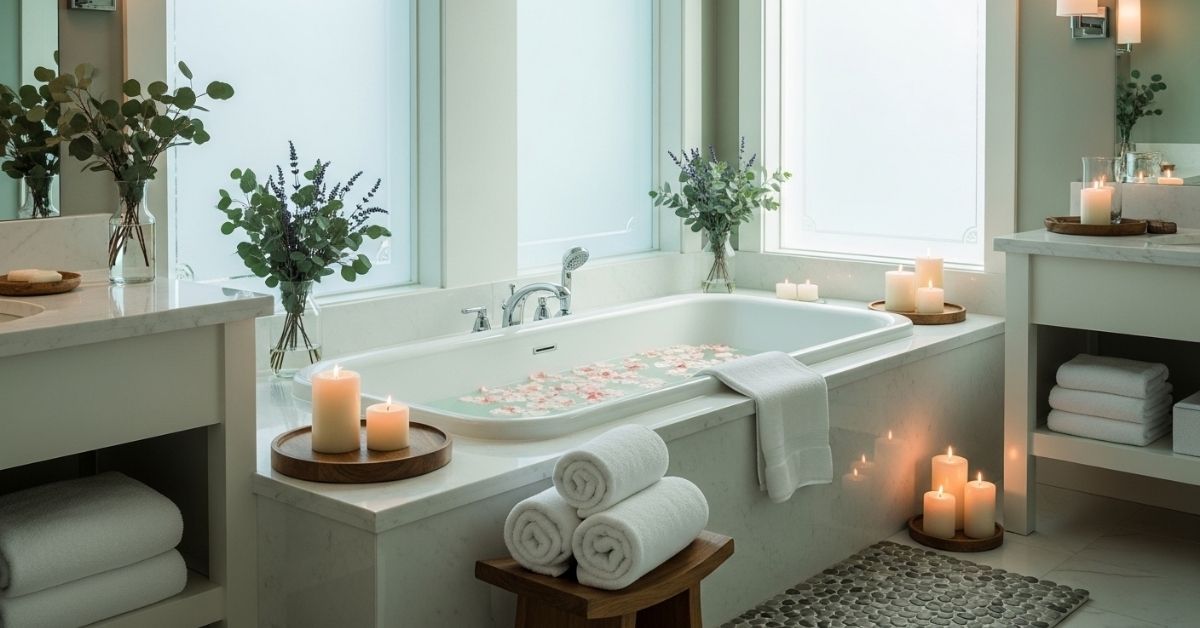
There’s a specific kind of tiredness that comes at the end of a long day, the kind where you just want to close a door and decompress. Most bathrooms aren’t built for that. They’re functional, sure, but that clinical white-tile-and-overhead-light setup does nothing for your nervous system. Bathroom spa decor is less about Bathroom Spa Decor Ideas copying a luxury hotel and more about removing what’s stressing you out and replacing it with what actually calms you down. Even small adjustments to lighting, texture, scent, layout shift the whole atmosphere.
If you’re working with a standard rental bathroom or a compact space that hasn’t been renovated since 2003, this isn’t about a full gut renovation. These ideas work with what you have, and most of them cost less than you’d spend on a single dinner out.
Replace Your Overhead Light with Layered Warm Lighting

The single fastest way to make a bathroom feel spa-like is to kill the overhead fluorescent light. Overhead lighting hits you from above; it flattens everything and makes the room look like a hospital. Instead, use two wall sconces positioned at eye level on either side of the mirror, paired with a small dimmable plug-in on the counter. The light comes from three directions at a low angle, which creates depth, softens shadows, and makes the whole room feel warmer without any renovation. This setup works especially well in narrow bathrooms where a single overhead bulb leaves the corners in harsh shadow. The sconces don’t need to be hardwired plug-in versions with a cord that tucks behind the mirror and works perfectly fine.
Add a Wooden Bath Tray Across the Tub
A tub tray is one of those things that immediately shifts how a bathtub reads; it goes from utilitarian to intentional. A teak or bamboo tray spanning the width of the tub creates a little surface for a candle, a book, or a small carafe of water. The natural wood grain against porcelain or acrylic creates a material contrast that feels genuinely elevated. It also solves a real functional problem: where do you put things when you’re actually in the bath? This works in any tub, freestanding or built-in, and because it’s not permanent, it’s a great option for renters. In a small bathroom, it doubles as a display shelf when the tub isn’t in use.
Swap Out the Bath Mat for a Natural Fiber or Stone Option

Standard synthetic bath mats have a way of making even a nice bathroom feel cheap. A thick waffle-weave cotton mat, a woven jute-style option, or even a teak wood mat completely changes the floor-level reading of the room. In smaller bathrooms, this matters more than people expect because you spend a lot of time looking down. A natural-material mat also photographs better if you’re the type to keep things tidy, and it tends to dry faster than a thick pile mat, which reduces that musty smell that builds up in enclosed spaces. Stick to whites, oatmeal, or dark charcoal; they read cleaner and age better than pastel or printed versions.
Mount a Small Floating Shelf at Eye Level for Curated Essentials
Counter clutter is the number one thing that kills spa energy in a bathroom. A single floating shelf, not a massive built-in unit, just one slim board at mirror height gives you a surface for the three to five things you actually want to look at. The rule here is restraint: one candle, one plant, one ceramic object. When everything is at the same eye level and curated, the space reads as intentional rather than packed. This is especially useful in bathrooms without a window ledge, where there’s no natural “display” surface. A 12-inch shelf in matte white or raw wood can be wall-mounted without a contractor in most apartments, and the impact relative to effort is genuinely high.
Install a Handheld Shower Head Alongside Your Fixed One

This one is more practical than decorative, but it’s one of the things that most strongly distinguishes a spa shower from a regular one. A handheld shower head on a slide bar gives you flexibility for rinsing, filling buckets, or just directing water where you need it which changes how relaxed you feel in there. The good news: most handheld units connect directly to the existing shower arm without tools. The visual upgrade matters too; replacing a cheap white plastic fixture with a brushed nickel or matte black set changes the hardware reading of the whole shower. This is a sub-$80 change that’s also fully renter-reversible.
Read More About : 25 Bathroom Storage Ideas for Small Spaces That Actually Make a Difference
Create a Scent Layer with a Reed Diffuser or Lava Stone Set
Scent is the most underutilized tool in bathroom decor. It’s not visual, but it determines how you feel in the space before you’ve registered anything else. A reed diffuser in eucalyptus, cedar, or bergamot positioned near the door or on a shelf keeps the room smelling intentionally without requiring constant maintenance. The alternative and the one I’d actually recommend trying first if you’re new to this is a lava stone set with a few drops of essential oil, which lets you swap scents easily and doesn’t have the synthetic edge some diffusers carry. The visual element is minimal but grounding: small objects on a tray feel considered rather than cluttered.
Use Rolled White Towels in an Open Basket or Ladder Rack

This is one of those spa hotel details that works just as well at home. Rolling towels and placing them in a basket or on a visible ladder rack does two things at once: it solves the storage problem for extra towels without a cabinet, and it reads as a spa-style display rather than a functional pile. The towels themselves matter thick, cotton-waffle weave or Turkish cotton in white or ivory holds up visually. A rattan or seagrass basket at floor level near the tub keeps things accessible without adding furniture. In smaller bathrooms, a slim ladder leaned against the wall takes up almost no floor space while adding a significant amount of visual warmth through the natural wood.
Add Live Plants That Thrive in High Humidity
Plants in a bathroom aren’t just for aesthetics they work with the humidity the space already produces. Snake plants, pothos, and peace lilies all thrive in low-light, high-humidity environments without much effort. The placement matters: a taller snake plant on the floor anchors the room and fills vertical space without taking up counter area. A hanging pothos near the ceiling draws the eye upward, which makes a small bathroom feel taller. The eucalyptus-bundle-on-the-showerhead trick is worth trying at least once: the steam activates the oils and the scent fills the room within a few minutes. It lasts about two weeks before drying out, and dried eucalyptus still looks good in a small vase.
Replace Standard Fixtures with Matte Black or Brushed Brass Hardware

Fixtures are the jewelry of a bathroom. The stock chrome hardware most bathrooms come with isn’t bad, it’s just visually neutral to the point of forgettable. Switching to matte black or brushed brass (not polished gold that reads dated) immediately gives the room a defined aesthetic. You don’t need to replace everything at once: start with the towel ring and toilet paper holder. If those feel right, swap the faucet. In my experience, this works best when you commit to a single finish across all hardware rather than mixing consistency is what makes it read as intentional rather than piecemeal.
Hang a Single Large Mirror Instead of Multiple Smaller Ones
Mirror scale makes an outsized difference in bathrooms, especially small ones. A single large mirror ideally with a simple frame in wood, black, or unlacquered brass reflects more light, makes the room read as physically larger, and gives the wall a finished, intentional look. Arched mirrors in particular have been everywhere in 2026 and for good reason: the curved top softens the boxiness of a small bathroom and adds an organic line to what is usually a very rectilinear space. The practical benefit in a tight bathroom is real: you can see more of yourself without moving around, which is a small but genuine quality-of-life improvement.
Create a Steam Shower Feel with a Teak Corner Stool

A small stool in the shower is one of those spa features that sounds luxurious but is actually just practical. Teak is the standard material because it’s naturally water-resistant and doesn’t rot. It also develops a beautiful silver patina over time if you let it. A corner stool at a low height holds shower products off the floor (which means better floor drainage and less mold), gives you a surface for shaving, and just changes how the shower feels to use. It also photographs beautifully, which matters if you’re trying to build a calm, curated space. This works in both large walk-in showers and standard tub-shower combos look for a slim version if space is tight.
Use a Neutral Color Palette with One Organic Texture
Spas don’t use patterns. They use tone, texture, and material. If your bathroom currently has a mix of colors, finishes, or busy tile, the fastest visual simplification is to add a single organic texture as the focal point a stone-look peel-and-stick tile panel behind the tub, a jute rug, a rough linen shower curtain and then neutralize everything else. White, greige, soft stone, and warm taupe are the palette. The goal isn’t to look expensive; it’s to reduce visual noise so the room stops competing with itself. This approach works especially well in rental bathrooms where you can’t paint or retile; you’re adding texture to an otherwise neutral space rather than changing the base materials.
Add a Shower Bench Built Into the Design (or a Freestanding Version)
A bench in a shower transforms it from a quick rinse station into something you might actually linger in. Built-in tiled benches are the ideal if you’re renovating, but for most people a teak or aluminum freestanding bench is more realistic. The placement matters: position it at the far end of the shower from the door, which creates a sense of depth and destination in the space. The functional benefits are real a place to sit while shaving, to hold a face wash, to rest a towel within reach. It also signals that the shower is designed for a slower, more intentional experience rather than just a two-minute routine.
Line the Windowsill or Counter with Apothecary Bottles

Decanting everyday items into glass jars is one of those tiny decisions that has a surprisingly large visual return. Cotton balls in a plastic bag, Q-tips in the store packaging, bath salts in a plastic container all of these create visual clutter even when the items are organized. Moving them into matching amber or clear glass apothecary jars with clean labels (or no labels) immediately makes them look like something from a high-end skincare counter. The material itself glass, especially amber or smoked glass reads as premium in a way that plastic simply doesn’t. This is also one of the most budget-accessible ideas on the list.
Install a Rainfall Showerhead for an Immediate Upgrade
A rainfall showerhead is the single fixture change with the highest experiential return. The sensation of water coming from directly above changes how a shower feels to use; it’s more immersive, slower, and more relaxing than a standard angled showerhead. Installation is simpler than most people expect: if your ceiling isn’t unusually low, an overhead mount can replace a standard wall-mount arm with a simple extension. In terms of aesthetics, a large square or round rainfall head in matte black or chrome reads as architectural rather than decorative; it becomes part of the room’s structure rather than an afterthought. The main consideration is water pressure: these work best in homes with good pressure.
Read More About : 27 Minimalist Bathroom Decor Ideas That Make Small Spaces Feel Intentional and Calm
Use a Linen Shower Curtain Instead of Vinyl or Plastic

The shower curtain is the largest textile in most bathrooms, which means it has an enormous effect on the room’s overall tone. A standard vinyl or plastic curtain has an inherent utilitarian quality that’s hard to design around. A linen or heavyweight cotton curtain even if you still use a plastic liner behind it reads as textured, organic, and intentional. Stick to white, off-white, or a warm natural linen color for the most versatile option. The slight drape and texture of natural fiber adds softness to a space that’s otherwise full of hard surfaces: tile, glass, porcelain. For a small bathroom, a ceiling-mounted rod (especially a round one over a freestanding tub) makes the space feel dramatically larger by drawing the eye upward.
Add Ambient Light with a Battery-Powered Candle or Salt Lamp
Candles in a bathroom work, but they require active management. You have to light them, watch them, and remember to extinguish them. Battery-powered candles with a flickering function solve the ambiance problem without the fire risk, which matters in a room with towels and curtains nearby. Himalayan salt lamps are the other option: they plug in, emit a warm orange-pink glow, and create a strong visual anchor in the corner of a bathroom where a plant or basket might otherwise go. The light from a salt lamp is dim. It doesn’t function as task lighting but positioned correctly, it creates a secondary light source that makes the whole room feel softer in the evening. This setup is especially effective in bathrooms that don’t have a dimmable main light.
Install Heated Towel Rails for a Subtle Luxury Feel

Heated towel rails read as luxury but function primarily as heating elements; they keep towels dry between uses (which significantly reduces that damp smell in smaller bathrooms), and they make getting out of a shower in winter actually pleasant. Electric plug-in versions don’t require plumbing work, which makes them realistic for most setups. The visual contribution is also real: a slim towel rail in brushed nickel or matte black mounted between the shower and the vanity gives the wall something architectural to do without taking up floor space. This works especially well in bathrooms where wall space is limited; it serves dual function in a footprint that’s essentially zero.
Frame Your Vanity Mirror or Replace It with a Decorative One
Builder-grade frameless mirrors are everywhere and they’re not bad, but they read as unfinished rather than intentional. Adding a frame (there are stick-on frame kits that go directly over existing bathroom mirrors) immediately makes the mirror look like a design choice rather than a default. The alternative is replacing it entirely with something with a stronger visual statement: an arched mirror, an unlacquered brass oval, or a simple dark wood rectangle. The frame becomes the room’s primary decorative element, which means you don’t need much else on the walls. This is one of the changes that reads most immediately as a “before and after” when you step back and look at the full vanity setup.
Use a Tray System on the Counter to Organize and Contain

Countertop chaos is one of the most persistent problems in any bathroom that gets regular use. A tray system, ideally two small trays in matching materials, one for everyday use and one for display items, contains the visual noise without hiding anything in a drawer. The tray acts as a frame: everything inside it looks deliberate, even if it’s just your cleanser and toner. Marble, travertine, white ceramic, and dark slate all read as premium and age well. In a very small bathroom where counter space is minimal, one slim tray in the corner is enough. The principle is containment: items loose on a counter look like clutter; the same items on a tray look curated.
Layer Texture Through Organic Materials Stone, Wood, Cotton, Linen
The reason spa bathrooms feel so restful is rarely about color, it’s about texture. Hard surfaces (tile, porcelain, glass) are unavoidable in a bathroom, but they benefit from contrast with soft and organic materials. A stone soap dish, a wooden toothbrush holder, a linen hand towel hanging beside a cotton bath mat each of these adds a material layer that makes the space feel warmer and more grounded. The rule is that the materials should be natural or nature-adjacent. Avoid mixing too many finishes. Two or three is enough. The goal is tactile richness rather than visual busyness, and the difference between those two things is restraint.
What Actually Makes Bathroom Spa Decor Work

The through-line in all of these ideas is sensory simplification. A spa doesn’t feel relaxing because it’s opulent, it feels relaxing because it’s stripped of the things that create low-grade stress: harsh light, clutter, synthetic materials, and visual noise. The bathroom is one of the few places in a home where you’re completely alone, usually at the beginning or end of a high-demand day. That makes it one of the most high-leverage rooms to get right.
The things that have the most consistent impact: lighting first, clutter reduction second, natural materials third. This order matters. You can have the most beautiful decor in the world but if the lighting is fluorescent and overhead, the room will still feel clinical. Get the light right before anything else.
For renters or anyone on a budget, the good news is that almost none of the highest-impact changes require permanent installation. Plug-in sconces, adjustable shelving, tray systems, organic textiles all of these move with you and cost less than a single permanent renovation fixture.
Bathroom Spa Decor Quick Reference Guide
| Idea | Space Type | Primary Benefit | Difficulty | Budget Level |
| Layered warm lighting | Any size | Atmosphere shift | Low | $ |
| Teak bath tray | Tub bathrooms | Function + display | Very low | $ |
| Natural fiber mat | Any | Floor texture upgrade | Very low | $ |
| Floating shelf | Small bathrooms | Storage + display | Low | $ |
| Handheld showerhead | Any shower | Usability upgrade | Low | $ |
| Reed diffuser / lava stone | Any size | Scent layer | Very low | $ |
| Rolled towel basket | Any | Storage + visual warmth | Very low | $ |
| Live plants | Humid bathrooms | Visual life + air | Low | $ |
| Matte black / brass hardware | Any | Aesthetic definition | Medium | $$ |
| Large single mirror | Small bathrooms | Light + space perception | Medium | $$ |
| Teak corner stool | Shower spaces | Function + spa feel | Very low | $$ |
| Neutral palette + one texture | Any | Visual calm | Low-medium | –– –$$ |
| Linen shower curtain | Tub/shower | Textile warmth | Very low | $ |
| Apothecary bottles | Counter/windowsill | Declutter + elevate | Very low | $ |
| Rainfall showerhead | Any shower | Experience upgrade | Medium | $$ |
| Heated towel rail | Any | Comfort + dryness | Medium | $$ |
| Framed or decorative mirror | Any vanity | Focal point | Low-medium | –– –$ |
| Counter tray system | Any | Organization | Very low | $ |
| Layered organic materials | Any | Texture + warmth | Low | –– –$ |
| Salt lamp / LED candle | Any | Evening ambiance | Very low | $ |
| Battery candle or ambient light | Small bathrooms | Mood lighting | Very low | $ |
How to Make a Small Bathroom Feel More Open Without Adding More Furniture
The mistake most people make in small bathrooms is trying to solve every problem with an object: a shelf for this, a basket for that, a caddy for the other thing. At some point, you’ve added so many organizational items that the room feels denser, not more organized. Here’s a different approach.
Start by subtracting. Clear everything off every surface for one day and only return what you used. What’s left is what actually belongs in the bathroom. Everything else creates visual weight without being used regularly.
Then address the vertical plane. In a small bathroom, the walls are your primary real estate. A single floating shelf at shoulder height, one piece of wall-mounted hardware (a fold-down towel bar, a wall-mounted soap dispenser), and a large mirror all use wall space without consuming floor area. The floor should stay as clear as possible. Furniture on the floor makes a room read smaller, regardless of how compact the furniture is.
The third move is light direction. A lamp on the counter or a sconce at eye level creates the illusion of more space by moving the light source from above (which flattens) to the side (which creates depth). In a bathroom where you can’t add fixtures, a tall LED candle on the counter or a salt lamp in the corner shifts the light source enough to feel different.
Finally, commit to a maximum of three decorative items visible at once. Not three shelves of items, three individual objects. A plant, a candle, and a ceramic dish. When you can see all three from the doorway without anything competing for attention, the room reads as intentional and calm rather than busy.
FAQ’s
What’s the easiest bathroom spa decor change for renters?
Swap your lighting and add a natural-material bath mat. Both are non-permanent and together they change the sensory experience of the room more than almost any other single change. Plug-in sconces flanking the mirror replace overhead light without any wiring, and a waffle-weave cotton or teak mat changes the floor-level experience immediately.
Do plants really work in a bathroom with no natural light?
Yes, but you need to be selective. Snake plants and pothos are the most forgiving; they tolerate very low light and high humidity without issue. ZZ plants are another strong option. Avoid succulents and most flowering plants in a windowless bathroom; they’ll decline quickly without UV light.
How do I make a small bathroom feel like a spa without renovating?
The three highest-impact non-renovation changes are: layered warm lighting instead of a single overhead source, one large mirror instead of a small one, and clear counters with only a tray of curated essentials visible. Combined, these address light, space perception, and clutter the three things that most make a small bathroom feel stressed rather than restful.
What’s the difference between spa bathroom decor and just “minimalist bathroom decor”?
Minimalist decor prioritizes reduction. Spa decor prioritizes sensory comfort which includes texture, scent, and warmth. A spa bathroom can have a lot of texture (stone, linen, wood, cotton) while still feeling calm. A minimalist bathroom might strip those layers out entirely and feel cold. The goal for spa decor is sensory richness without visual clutter which is different from just having fewer things.
Which hardware finish reads most like a luxury spa?
Brushed nickel and matte black are the most versatile and wear the best over time. Brushed brass has been trending strongly through 2026 and reads as warm and elevated without the dated association of high-gloss gold. Avoid mixing finishes pick one and use it for every fixture in the bathroom, including towel rings, the faucet, the toilet paper holder, and any cabinet pulls.
How many plants should I put in the bathroom?
Two to three is the practical maximum in most bathrooms. One larger floor plant (snake plant, fiddle leaf, peace lily), one medium plant on a shelf, and optionally a hanging plant near the ceiling. Beyond three, plants start to feel like a collection rather than a considered design element, and the maintenance load increases significantly.
Is a rainfall showerhead worth it?
For most people, yes if your home has adequate water pressure. The experiential difference is meaningful: water coming from directly overhead feels immersive in a way a standard angled showerhead doesn’t. If you’re renting, look for a ceiling-mount extension arm that connects to the existing wall pipe without tools. The installation is usually under 30 minutes and it’s reversible when you move out.
Conclusion
Making your bathroom feel like a spa isn’t about spending a lot or doing a full renovation; it’s about identifying which sensory elements are working against the space and replacing them with ones that work for it. Lighting, texture, scent, and material choice do more than any single decorative object.
Start with the two or three ideas that solve the most obvious friction in your current bathroom. If the light is harsh, fix the light first. If the counter is cluttered, start with a tray system. If the room feels cold and clinical, add one warm organic material. Small, deliberate changes build on each other and the cumulative effect is a space that actually makes you feel better to be in.
