

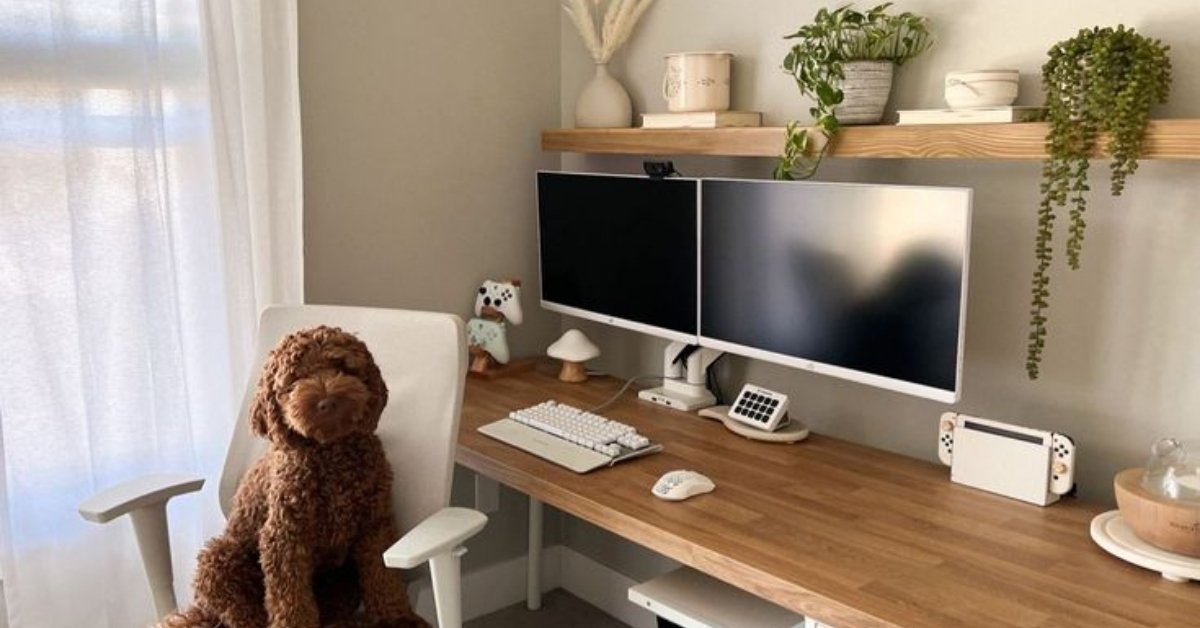
Your home office shouldn’t feel like an afterthought. Whether you’re dealing with a spare corner,Aesthetic Home Office Ideas a converted closet, or a full room that still somehow feels off the right layout, lighting, and materials can make a space feel intentional and calm rather than chaotic and temporary. These ideas are built for real homes: small apartments, rented spaces, and multi-use rooms where the desk has to share real estate with the rest of your life.
If your space needs to function for both work and relaxation without looking like either a sterile office or a cluttered bedroom, this list is for you.
The Floating Desk + Open Shelf Stack

Wall-mounting a slim desk frees the floor entirely, which is the single biggest visual trick for making a small office corner feel open. Pair it with two or three open shelves above staggered, not identical to create vertical storage without enclosing the space. The key is restraint: one tray, a couple of books, a small plant. More than that and the shelves start to look like storage, not styling. This setup works best in rooms under 120 square feet where you genuinely cannot afford a full desk footprint. It also reads well on video calls because the shelves create a structured background without being busy.
The Warm Neutral Corner Setup
Most home offices default to cool grays and whites, which read as clinical rather than calm. Warm neutrals, oak, cream, sand, and terracotta accents create a space that’s professional enough for work but comfortable enough to actually sit in for six hours. The trick is to layer: a warm wood desk, a linen or boucle chair, a woven lamp shade, maybe a travertine tray. The materials do the work, not the color palette. In my experience, this works best when the room gets natural light from the side rather than directly behind or in front of the monitor. Side light hits the warm tones in a way that makes the whole room feel cohesive without doing much at all.
Alcove Office With Built-In Feel

An alcove is one of the most underused spaces in any home. Paint it a contrasting color from the surrounding wall, deep sage, warm clay, or dark charcoal and it instantly reads as its own zone rather than just a corner with a desk shoved in it. Add a desktop that fits wall-to-wall, a small picture light mounted above, and drawer storage below. The visual effect is that of a built-in setup even if you’ve done nothing permanent. This is especially relevant in 2026, where “zoning” a room through paint and lighting has largely replaced the old approach of buying room dividers. Renters can pull this off entirely with removable wallpaper on the back wall of the alcove and a freestanding desk that happens to fill the space.
The Standing Desk With a Styling Layer
Standing desks often look industrial and out of place in residential spaces. The fix isn’t to hide the desk, it’s to build a visual layer around it. A wood-toned or white standing desk with a cable management box, a pegboard or slim wall panel behind it, and a few considered accessories on the surface moves the piece from “gym equipment” to actual office design. What doesn’t work: too many items on the surface. A standing desk is a working surface, so the styling should be at the edges: a small plant on one end, a tray on the other with the center staying clear. This layout is particularly useful in narrow rooms where you need to stand and move but can’t add a separate sitting area.
Library Ladder Shelving as Office Storage

Floor-to-ceiling shelving with a rolling ladder reads as intentional design rather than just storage, and it has a practical function too you can actually access high shelves. In an office context, keep the upper sections for books and decorative objects, the mid-section for accessible reference material, and the lower section for boxes or files. The desk should sit in front of the shelving unit rather than adjacent to it so the whole wall acts as a backdrop. Honestly, this is one of the few setups where more stuff on the shelves can look better than less; it’s the abundance and organization together that give it weight and character.
The Japandi Minimal Desk Corner
Japandi, the blend of Japanese and Scandinavian minimalism, is one of the most enduringly practical aesthetics for a home office because it prioritizes function over decoration. A low desk (or a standard desk with clean lines), a single floor lamp, a cushioned stool or low chair, and one or two natural materials like bamboo or rattan. The constraint here is the floor. If the room has carpet, this setup loses some of its effect; it reads best on hardwood or light tile. What makes it work isn’t the furniture, it’s what you leave out. No extra decor, no mixed materials, no layered textiles.
The Dual-Monitor Desk With Visual Balance

Dual monitors tend to make a desk look like mission control. The visual fix is asymmetry in the accessories: a plant on one end, a lamp on the other, a tray tucked to one side with a few small objects. This offsets the symmetry of the monitors and makes the setup feel less institutional. Cable management is non-negotiable here not for aesthetics alone, but because two monitors with exposed cables are genuinely distracting during work. A simple cable raceway or a fabric cable box under the desk handles most of it. This works best on desks that are at least 55 inches wide, where the monitors can sit 24–28 inches apart and still leave visible surfaces on both ends.
Painted Accent Wall Behind the Desk
A single painted wall directly behind your desk acts as a frame for the workspace and an instant video call background. The color does a lot of work: dark sage or forest green makes the space feel grounded and focused; warm terracotta creates contrast against white or light wood furniture; a dusty blue reads as calm without feeling cold. The wall doesn’t need anything on it besides one or two pieces of art or a small wall-mounted shelf. What to avoid is a gallery wall with too many frames behind you in a call that reads as cluttered. One large-format print or a pair of smaller frames in the same tone does the job cleanly.
The Cloffice (Closet Office) Setup

A cloffice, a closet converted into an office, is still one of the most space-efficient solutions for home workers who don’t have a dedicated room. Strip out the hanging rod, add a desktop at desk height, open shelves above, and a small task light. The bi-fold doors, when open, frame the workspace; when closed, the office disappears entirely. This is especially functional for parents or apartment dwellers who need to mentally “leave” work at the end of the day. The main constraint is lighting; most closets have only one overhead bulb. A desk lamp and LED strip lighting along the shelf underside fix this entirely.
Read More About : 25 Minimalist Desk Setup Ideas That Are Simple, Clean, and Actually Work
Mid-Century Modern Desk With Angled Legs
The silhouette of a mid-century desk does most of the aesthetic work: tapered, angled legs lift the furniture visually and prevent the floor from feeling heavy. Walnut is the classic pairing, but white or sage lacquer with brass hardware reads just as well in modern spaces. A single vintage-style brass or black task lamp, a small tray for pens, and a plant in a terracotta pot are enough accessories. The rug placement matters: it should extend at least 18 inches beyond the desk on both sides, and the front edge of the chair should stay on the rug when you’re seated. When the rug is too small, the whole setup loses the groundedness that makes mid-century work.
The Gallery Wall Office Backdrop

A gallery wall behind a home office desk creates character without requiring any furniture investment. The key is treating the wall as a whole, varying frame sizes but keeping to two or three finishes (black, natural wood, and gold is a reliable combo), and leaving space between the frames. The frames don’t need to be perfectly aligned; a loose grid reads more residential than a rigid one. This works best in spaces where the walls are otherwise bare and the furniture is relatively simple, let the wall be the feature, not a second layer on top of an already busy desk area.
Natural Wood Desk + Concrete or Stone Accessories
The material pairing of warm wood and cool stone or concrete creates a natural visual tension that makes a desk feel considered rather than assembled. A solid oak or walnut desk (or a butcher block top on trestle legs) with a concrete vase, a stone tray, and a minimal number of objects. No fabric accessories on the desk surface, no mouse pads with busy prints, no decorative clothes. The contrast between the warm grain and the cool, matte surface of concrete does the visual work. I’ve noticed this style tends to read especially well in south-facing rooms where the afternoon light hits the wood grain and brings out the warmth without any additional styling effort.
Task Lighting as a Design Feature

Most home offices are over-lit or under-lit either with a harsh overhead light that makes the space feel like a hospital or no overhead light at all, which strains your eyes after 3 PM. The solution is layered lighting: an overhead source for general ambient light, a desk lamp positioned to the left of the monitor (or right, if you’re left-handed) for task work, and potentially a floor lamp in the corner if the room is large. The lamp itself can be a design statement: a Burro lamp, a classic Anglepoise, a marble-base statement piece. What matters functionally is that the light falls on your work surface without creating glare on the monitor position the lamp so it’s at shoulder height or just below.
Pegboard Wall System Behind the Desk
A pegboard is one of the most adaptable storage systems for a home office because it can be reconfigured without tools and expanded incrementally. Paint it the same color as the wall and it reads as a textured feature rather than a utilitarian board. Paint it a contrasting color black on a white wall, sage on a cream wall and it becomes the room’s focal point. Hooks for headphones and cables, small shelves for books or plants, a rail for folders. The functional benefit is keeping the desk surface clear while having everything in reach. This setup works especially well in rented spaces where permanent shelving isn’t an option.
The Jewel-Tone Office

Jewel tones emerald, sapphire, deep plum hit differently in a home office than they do in a living room. Instead of feeling loud, they create a focused, immersive atmosphere that actually aids concentration. The key is keeping the surrounding elements simple: a dark wood desk, a velvet or linen chair in a complementary tone (burnt orange with emerald, cream with sapphire), brass or gold hardware throughout. The color is doing all the work, so the furniture doesn’t need to. This is the setup for people who find white-and-wood offices too bland to spend eight hours in go for if you want your office to feel like a place you actually want to be.
The Minimalist Black-and-White Office
A fully monochromatic office matte black furniture against white walls, or a white desk in a white room with black accessories works because it removes every visual decision from the space. There’s nothing competing for attention, which makes it easier to focus. The desk surface matters more here than in any other setup: it needs to be clear, and the objects on it need to be intentional. One lamp, one pen holder, one small plant. The risk with this approach is that it tips into cold rather than calm. Avoid it by bringing in one textural element (a woven rug, a linen curtain) that isn’t black or white but sits in that same neutral family.
The Window-Facing Desk for Natural Light

Positioning a desk directly facing a window is the most effective way to maximize natural light on a workspace without creating monitor glare. The light hits you from the front, which is the most flattering for video calls and the least tiring for extended screen use. Sheer curtains or a light-filtering blind give you control over intensity. The window itself becomes the view even if it faces a building or a street, the outdoor visual reference helps reduce eye fatigue over long working sessions. This layout doesn’t work if the window gets direct afternoon sun; in that case, a perpendicular desk position (desk side-on to the window) is the better call.
Arched Mirror Above the Desk
A large arched mirror mounted above a desk does two things: it reflects natural light back into the room, making the space feel bigger and brighter, and it creates a focal point that functions as decor without requiring any shelf styling. Positioning it centered above the desk or slightly off-center off-center works better if you have a plant or lamp on one side of the desk to balance the composition. The arch shape in particular is having a significant design moment in 2026, appearing in furniture, doorways, and decor because it softens the right angles that dominate most rooms. For small offices specifically, a mirror on the wall opposite a window almost doubles the perceived depth of the room.
Linen Curtains as Office Room Divider

In a studio or open-plan apartment, defining the office zone is often more important than styling it. A linen curtain panel hung from a ceiling-mounted track creates a soft boundary between the desk and the living area without walls, doors, or permanent fixtures. The curtain doesn’t need to fully close, even partially drawn, it signals a separation of zones. Natural linen in cream or warm white diffuses light rather than blocking it, so the office side stays bright. This is particularly useful if the desk faces away from the living area but still feels visually open and distracting. Renters can mount curtain tracks with adhesive ceiling hooks and a tension rod system.
Industrial Pipe Shelving Above the Desk
Black pipe and reclaimed wood shelving is one of the more durable design trends in home offices because it’s genuinely functional and highly customizable. The pipes can be spaced to fit your wall exactly, and the wood planks can be cut to width. Above a desk, two or three horizontal shelves give you accessible storage for books, binders, and small decor without eating into the workspace. The industrial aesthetic reads well against both raw exposed brick and white-painted walls; the contrast is part of the effect. Keep the shelf height at least 18 inches above the desk surface so you’re not ducking when you stand up.
The Low-Profile Desk With Floor Cushion

A low desk 12 to 16 inches from the floor combined with a firm floor cushion or zaisu (a legless floor chair) creates an office setup that takes up almost no visual space in a room. Seated at floor level, everything above the desk surface reads as an open wall and ceiling, which makes even a small room feel expansive. The functional requirement is flexibility: you need to be comfortable working at that height for extended periods, which means a firm, supportive cushion and a monitor or laptop stand that brings the screen to eye level. This setup is best in rooms with good flooring, hard wood, tatami, or clean tile where sitting at floor level doesn’t feel damp or uncomfortable.
Dark Wood Desk With Warm Lighting Underneath
LED strip lighting mounted to the underside of a desk creates a warm floating effect; the desk appears to hover slightly above the floor, and the warm glow softens the overall room lighting in the evening. This works best with a dark wood desk because the contrast between the dark surface and the warm light below is more dramatic. In terms of function, the under-desk lighting also reduces eye strain by balancing the brightness of the monitor against the room’s ambient light. Choose a warm color temperature (2700K–3000K) rather than cool white, which reads as harsh against warm wood tones.
The Tonal Office (One Color, Every Shade)

A tonal room where walls, furniture, textiles, and accessories all live within the same color family but in different shades is one of the most sophisticated looks in interior design right now. In an office context, it works because the visual continuity is restful rather than stimulating: you’re not fighting competing colors while you’re trying to think. Warm sand tones are the most forgiving for a home office because they work with most wood finishes and don’t require precise color matching. The variation comes from texture: a matte wall, a glossy desk surface, a woven rug, a linen curtain. Different materials in the same tone create depth without contrast.
Built-In Window Seat With Desk Beside It
A window seat doubles as a reading nook and a secondary work surface useful in spaces where the main desk gets occupied but you need to review documents or take a call somewhere other than the desk chair. The desk should sit directly adjacent to the window seat rather than across the room, keeping the natural light consistent between the two zones. Underneath-seat storage (built-in drawers or accessible box storage) handles the office supplies that don’t need to live on the desk. This is one of the setups I’d actually recommend trying first if you have a bay window or an alcove that currently holds nothing; it converts dead space into the most useful corner in the house.
Read More About : 29 Home Office Ideas That Actually Work in Real Spaces (Not Just Pretty Ones)
The Terracotta + Warm Wood Office

Terracotta is one of the most liveable wall colors for a home office because it’s warm enough to feel residential but muted enough not to be distracting. Paired with an oak desk and brass hardware, it creates a Southwestern or Mediterranean warmth that’s particularly well-suited to rooms that get afternoon sun; the wall color amplifies the golden-hour light rather than fighting it. Keep the desk accessories simple: a brass lamp, one or two small plants, a stone tray. The wall is doing the decorative heavy lifting, so the desk surface doesn’t need to compete.
The Command Center (Organized Chaos, Done Right)
Some offices are genuinely busy work environments: printers, multiple screens, reference materials, files. The aesthetic goal in a command center setup isn’t minimalism, it’s organized intentionality: everything has a place and looks like it belongs there. A fabric or corkboard panel behind the desk corrals notes and papers without looking random. Drawer inserts and desktop organizers keep the surface functional rather than cluttered. The difference between a command center and a messy desk is vertical organization: get things off the flat surface and onto walls or in containers, and the whole setup reads as purposeful rather than overwhelmed.
The Plant-Heavy Office

Plants at different heights, a trailing pothos above a shelf, a larger structural plant in the corner, a small succulent on the desk create a layered, living environment that makes an office feel more like a retreat than a workstation. The functional benefit is real: multiple studies over the last decade have connected having plants in a work environment to reduced stress and improved focus. For a home office specifically, the scale matters: one small plant on a large desk disappears visually. Go for at least one plant that reaches 18–24 inches in height to anchor the space, and trail or hang smaller varieties above desk height to use vertical space.
What Actually Makes These Ideas Work
The ideas above share a few underlying principles worth knowing before you start.
Scale relative to the room.
A desk that’s too small for the room looks like it was moved in temporarily. A desk that’s too large closes off the walking path and makes the room feel tight even when it’s not. As a general guide: in a room under 10×10 feet, your desk surface should be between 40 and 55 inches wide. In a larger room, 60 inches or more gives you the visual weight you need.
Lighting is a layering problem, not a single-source problem.
The most common mistake in home offices is relying on one overhead fixture. You need ambient light (overhead), task light (desk lamp), and ideally a third source, a floor lamp or wall sconce to balance the room’s brightness at different times of day. Without layering, you’ll hit a point around 4 PM where the room feels too bright, too dim, or too harsh no matter what you do.
Cable management is foundational, not finishing.
No aesthetic setup survives visible cable chaos. Before you style anything, run cables through a raceway, bundle them with velcro ties, or get a desktop cable management box. It takes 20 minutes and changes the entire quality of the space.
Leave movement space.
Your chair needs at least 24 inches of clearance behind it when pushed back. If the chair hits a wall, the bed, or another piece of furniture when you stand up, the room will always feel cramped no matter how well-styled the desk is.
Home Office Setup Comparison Guide
| Setup | Best For | Space Type | Primary Problem Solved | Difficulty |
| Floating Wall Desk | Small rooms, renters | Under 100 sq ft | Floor space, layout flow | Low |
| Alcove Office | Multi-use rooms | Any size | Zone definition | Low |
| Cloffice | Apartment dwellers | Any size | Work/life separation | Medium |
| Built-In Window Seat + Desk | Natural light seekers | Corner rooms | Dead space use | Medium-High |
| Standing Desk + Pegboard | Active workers | Medium rooms | Clutter, ergonomics | Low |
| Library Ladder Shelving | Storage-heavy setups | Large rooms | Vertical storage | High |
| Dual Monitor Setup | Power users | Medium-large rooms | Visual balance | Low |
| Japandi Minimal | Distraction-prone workers | Any size | Focus, clutter | Low |
| Tonal (one-color) Office | Design-focused users | Any size | Visual noise | Medium |
| Plant-Heavy Office | Wellbeing-focused users | Rooms with natural light | Warmth, atmosphere | Low |
Common Home Office Mistakes That Make Your Space Feel Smaller or Less Functional
Putting the desk against a wall when the room is large enough not to.
In a room above 12×12 feet, a desk against the wall can actually shrink the perceived space because all the furniture is pushed to the perimeter, leaving a dead floor in the center. Try floating the desk two to three feet from the wall, facing toward the room; it creates a sense of depth and makes the space feel more intentional.
Choosing a chair for looks over ergonomics.
A beautiful chair you can’t sit in for more than an hour will quietly undermine every other thing you’ve done well in the space. Ergonomic doesn’t have to mean ugly the Aeron, the Mirra, and the Series 2 from Branch all have relatively clean aesthetics but it’s the one place in the office where function absolutely has to lead.
Over-lighting the desk surface while ignoring the rest of the room.
A very bright desk lamp in an otherwise dark room creates high contrast that strains your eyes over time. The ambient room lighting should be at roughly half the brightness of the task lighting bright enough to eliminate harsh shadows but not so bright it competes.
Not accounting for the background.
If you take video calls, your background is part of your office design whether you like it or not. A wall covered in random items, a closed door, or a pile of boxes communicates something. It doesn’t need to be styled like a set, just intentional. A single bookshelf, a plant, or a clean painted wall is enough.
Buying storage last.
Most home office setups are styled first and practical second. The result is beautiful for about two weeks, then papers accumulate, cables reappear, and the “aesthetic” collapses under actual use. Plan your storage first how many books, what kind of files, where cables run then build the aesthetic around that infrastructure.
FAQ’s
What makes a home office look aesthetic without spending a lot?
Paint is the highest-return investment in any home office; a single accent wall costs under $40 and changes the entire atmosphere of the space. Beyond that, cable management, a consistent material palette (pick two: wood + metal, or wood + linen, not all three), and intentional lighting make more difference than new furniture.
How do I make a small home office feel bigger?
Keep the desk surface clear, use a wall-mounted or floating desk to open up the floor, and place a mirror on the wall opposite a window to reflect natural light. Avoid dark rugs or heavy curtains, which absorb light and compress the ceiling visually. Vertical shelving going up rather than out stores more without expanding the footprint.
Minimalist vs. eclectic home office: which is better?
It depends on how you work. Minimalist setups reduce visual noise, which benefits people who find a busy environment distracting. Eclectic setups, more objects, more visual variety work better for creative work or people who find blank environments uninspiring. The common mistake is an eclectic setup with no organizational logic; the objects need to be curated, not just accumulated.
What type of lighting is best for a home office?
Layer three sources: ambient (a ceiling fixture or floor lamp for general light), task (a desk lamp positioned to the non-dominant side to avoid glare), and accent (a second lamp or wall sconce for evening balance). Aim for 2700K–3000K color temperature warm white rather than cool white which is easier on the eyes during long work sessions.
Is it worth investing in a good desk chair for a home office?
Yes, and it’s the one place in the office where the investment pays off in physical wellbeing, not just aesthetics. Poor seating affects posture, energy levels, and back health over months of daily use. You don’t need the most expensive option; mid-range ergonomic chairs in the $300–$500 range are significantly better than anything under $150, even if they’re not as photogenic.
How do I separate a home office in a studio apartment?
Three approaches: a ceiling-hung curtain panel on a track, a low bookshelf acting as a room divider, or simply painting the office zone a different color from the rest of the room. The goal is visual separation, not physical. Even a rug that defines the desk area creates enough psychological distance to help with work/life boundaries.
What are the best plants for a home office?
Pothos, snake plants, and ZZ plants are the most reliable for low-to-medium light conditions and irregular watering, all common in home offices. If the room gets good natural light, a fiddle leaf fig or monstera adds structural presence. Avoid plants that drop leaves or need daily attention near a desk you work at regularly.
Conclusion
The best home office setups aren’t about replicating a Pinterest board, they’re about solving the specific problems your space has. Poor lighting, awkward layout, no storage, no visual separation from the rest of the home. Each of those has a practical solution, and most of them cost less and take less effort than a full room overhaul.
Start with one or two ideas that fit your actual constraints: your square footage, your rental situation, your budget. Adjust the lighting first (it’s free if you already own lamps), then tackle storage, then style. Build from function outward, and the aesthetic takes care of itself.
