

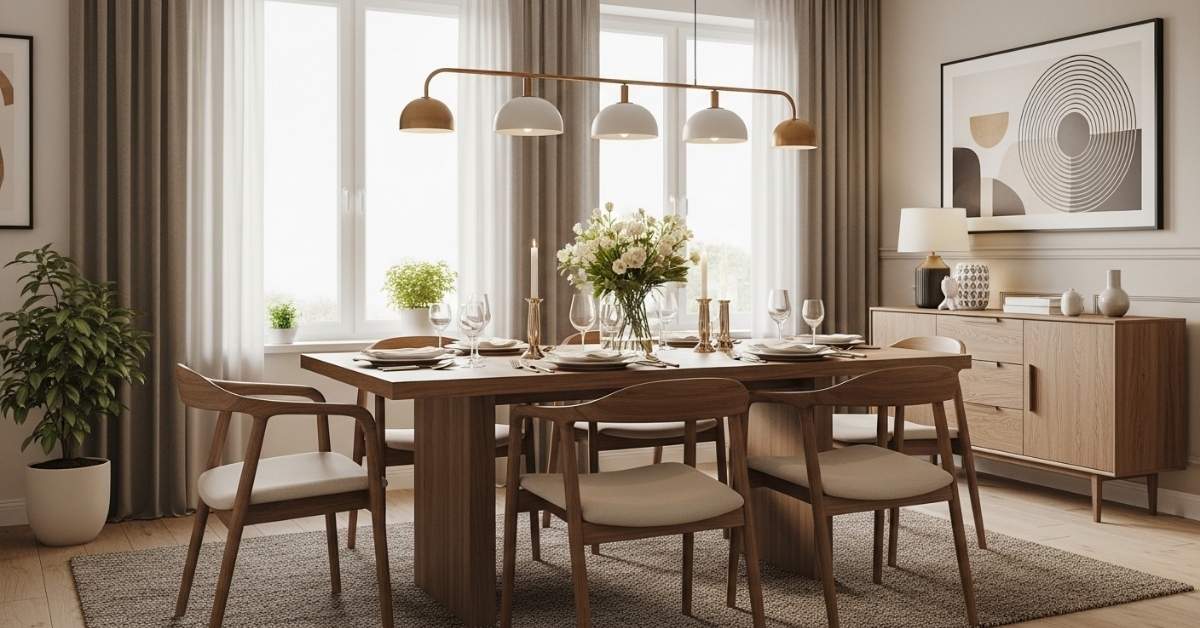
There’s a particular kind of frustration that comes with a dining room that just doesn’t click. The table is fine, the chairs work, but the space feels either too formal to actually use or too bare to feel intentional. If that sounds familiar, you’re not alone; dining rooms are one of the most under-designed spaces in most homes, mostly because people aren’t sure how to balance function with atmosphere.
The good news? You don’t need a full renovation. Most dining rooms respond quickly Dining Room Ideas to layout shifts, lighting changes, and a few well-placed materials. Whether you’re working with a narrow apartment dining area, an open-plan layout where the dining zone floats without definition, or a dedicated room that just feels cold these ideas are built around real spatial constraints, not showroom budgets.
If your dining space needs to work harder (or just feel better), this list covers the setups that actually deliver.
Anchor the Space With a Statement Pendant Light

Lighting is the single fastest way to define a dining area especially in open-plan homes where the space has no walls to frame it. A large pendant hung 28–32 inches above the tabletop pulls the eye down and creates an intimate zone without any furniture rearrangement. Go for something with visual weight: rattan, black metal, or smoked glass read as intentional rather than decorative. The pendant should be roughly half to two-thirds the width of your table for proper visual balance. In my experience, this works best when the rest of the lighting in the room is kept low and warm it lets the pendant do its job.
Use a Round Table to Fix an Awkward Layout
Square rooms and oddly proportioned spaces tend to fight rectangular tables. A round table eliminates the corner tension and allows traffic to flow more naturally around it, especially useful when the dining area is close to a kitchen doorway or hallway. Seats four comfortably without the table feeling oversized, and conversations feel more connected without one person stuck at the “end.” Round tables with a pedestal base open up the floor visually and make the room feel larger than it is. This is honestly one of the most underused fixes for awkward dining rooms.
Build a Banquette Along a Dead Wall

A wall that serves no purpose in a dining room is a missed opportunity. A built-in banquette or even a freestanding bench turns dead wall space into seating, storage (with lift-top cushions), and visual structure all at once. This setup works especially well in narrow dining rooms where pulling chairs in and out creates a traffic problem. The bench can seat more people per linear foot than individual chairs, which matters when you’re hosting. Pair it with a few loose chairs on the opposite side for flexibility. It’s one of those setups that looks purposeful and works harder than most furniture arrangements.
Read More About : 21 Bathroom Decor Ideas That Make Even the Smallest Spaces Feel Intentional
Layer Rugs to Define the Dining Zone in an Open-Plan Space
Open-plan layouts need visual anchors, and a dining rug is one of the most effective. The rule is simple: the rug should extend at least 24 inches beyond each side of the table so chairs stay on it when pulled out. A natural fiber like jute or sisal works well because it’s durable, grounded in tone, and doesn’t compete with furniture. This trick creates a “room within a room” effect without adding walls, dividers, or any permanent changes making it ideal for renters. The rug also absorbs sound, which helps in spaces where hard floors make everything echo.
Mix Chair Styles for a Less Staged Look

Matching chair sets can make a dining room feel like a furniture showroom technically correct but not particularly lived-in. Mixing two chair styles (typically a bench or one accent chair at the head with coordinating side chairs) gives the space a collected, less rigid feel that’s very much in line with how dining rooms are being designed in 2026. The key is keeping something consistent: finish color, material weight, or seat height. A wood chair and an upholstered chair in the same warm tone read as intentional. Two completely different scales in clashing finishes just read as unfinished.
Use Vertical Storage Dining Room Ideas Problem
Most dining rooms are short on storage but have vertical space that goes completely unused. A tall open shelving unit or a floor-to-ceiling cabinet along one wall solves the buffet problem: where do you put serving dishes, table linens, and the items you want accessible but not on the table? without eating into floor space. Style the upper shelves with objects you’d actually use (good dishware, a plant, a few books) and keep lower shelves practical. This also gives the room a focal point that isn’t just the table, which helps in dining rooms that feel visually flat.
Go Dark on One Wall to Add Visual Depth

A single dark wall in a dining room does something interesting; it makes the space feel more contained and intimate without feeling heavy, especially when the furniture is kept light. Deep green, charcoal, navy, or warm terracotta on the wall behind the head of the table creates a backdrop that grounds the room. This setup works even in small dining rooms because the contrast actually pulls the eye to the wall and away from the room’s size. Paint is low-commitment for renters using removable wallpaper panels, and the visual payoff is disproportionate to the cost.
Choose an Extendable Table for Multi-Use Dining Rooms
If your dining room doubles as a homework zone, WFH overflow, or occasional extra gathering space, a fixed large table wastes space most days and isn’t big enough when it counts. An extendable table solves both problems compactly when it’s just everyday meals, expandable when you’re hosting. Oval extensions tend to feel more elegant than rectangular ones when open, and the rounded ends prevent the “banquet table” effect that makes small rooms feel cramped. This is the practical backbone of any multi-use dining space.
Add a Mirror to Expand a Narrow Dining Room

Narrow dining rooms have one persistent problem: they feel like a corridor with a table in it. A large mirror on the short end wall creates the illusion of depth; the reflection reads as another room beyond, which tricks the eye into perceiving more space. An arched or oversized rectangular mirror works best here because the scale matches the room rather than looking decorative. Position it so it reflects either natural light or the pendant to double the warmth of the lighting. This is one I’d actually recommend trying before any furniture changes; it costs less and often solves the problem immediately.
Read More About : 25 Kitchen Decor Ideas That Actually Work in Real Homes (Not Just Pinterest Boards)
Use Linen or Boucle Chairs to Add Texture Without Pattern
Texture is what separates a dining room that feels finished from one that feels like it’s still being decided. Linen, boucle, or velvet upholstered chairs introduce warmth without adding color or pattern which keeps the space flexible and easy to update around. These materials also photograph well and read as elevated without being formal. The practical consideration: linen marks easily, so if you have kids or frequent guests, look for a performance fabric that mimics the texture. Boulle in a warm oat or ivory tone is one of the most versatile choices in dining rooms right now.
Create a Gallery Wall That Stays Behind the Table

Gallery walls work best in dining rooms when they’re contained one wall, behind or beside the table, not scattered across the room. The key is treating it as a single composition: start with your largest piece centered, then build outward, keeping consistent spacing (3–4 inches between frames). Mixing frame finishes in the same metal family (brass and gold, or black and dark brown) looks more intentional than all-matching. This setup fills dead wall space, adds personality, and gives guests something to look at which matters more in a dining room than people realize.
Incorporate Natural Materials for a Grounded, Organic Feel
Dining rooms that lean heavily on synthetic or overly processed materials (glossy finishes, chrome, lacquered surfaces) tend to feel cold and formal in a way that doesn’t encourage lingering. Introducing natural materials solid wood, rattan, stone, linen brings an organic quality that makes the space feel more comfortable and less staged. A solid oak or walnut table is a long-term investment, but even switching to rattan or cane chairs makes a significant difference in warmth. In my experience, rooms that combine at least two different natural materials always feel more cohesive than rooms with one dominant finish.
Light the Room in Layers, Not Just Overhead

A single overhead fixture is the most common lighting mistake in dining rooms. It lights the ceiling more than the table, creates flat even brightness that kills atmosphere, and leaves walls in shadow. Layered lighting, pendant overhead, wall sconces or a sideboard lamp for ambient fill, and candles on the table creates depth and warmth that adjusts with the mood. Dimmers are essential: the same room should feel functional at lunch and intimate at dinner without swapping bulbs. This approach is especially impactful in dining rooms that are used throughout the day for different activities.
Float the Table Away from the Wall
Pushing a dining table against the wall is a natural instinct in smaller rooms, but it often creates more problems than it solves. You lose seating on one side, the room feels lopsided, and traffic flow gets awkward. A table floated in the center with at least 36 inches of clearance on all sides actually makes the room function better and feel more balanced. If the room is genuinely too small for center placement, a round table pushed slightly toward one side works better than a rectangular one flush against the wall.
Add a Sideboard to Create a Proper Dining Hub

A sideboard is one of those pieces that solves multiple dining room problems simultaneously: it provides storage for serving dishes and linens, creates a surface for food when hosting, and gives you a spot to style with a lamp and a few objects which makes the room feel more complete. The height matters: aim for something around 32–36 inches, which reads as furniture-scale rather than desk-scale. A sideboard with closed lower cabinets and open upper shelves or drawers handles practical storage while keeping the top visually light. This is a setup that works in rooms of almost any size.
Use Curtains That Pool at the Floor
Curtains that hit at the windowsill or float above the floor make a room feel unfinished in a way that’s hard to pinpoint but immediately noticeable. Floor-length curtains hung as high as possible, ideally at ceiling height, draw the eye upward, make ceilings feel taller, and add a layer of softness that hard surfaces (wood table, tile floor, painted walls) don’t provide. In a dining room, this translates to warmth and a more complete feeling space. Linen or cotton in a neutral tone works in almost every setup and softens morning light without blocking it.
Let Plants Do the Heavy Lifting in Empty Corners

An empty corner in a dining room isn’t just unused space, it’s visual weight that’s missing from the room’s composition. A large floor plant (fiddle leaf fig, olive tree, or a tall snake plant) fills vertical space, adds organic texture, and softens the angular quality of furniture-heavy rooms. The scale matters: a small plant on a side table gets lost in a dining room, while a floor plant that reaches above chair height actually changes the room’s proportions. If light is an issue, a realistic faux plant at this scale does the same spatial work without the maintenance.
Choose Warm White Over Bright White for Walls
Standard bright white walls have a way of making dining rooms feel clinical especially under artificial evening lighting when the blue undertones become more obvious. Warm whites (with yellow, beige, or pink undertones) read as clean and fresh in daylight but shift to soft and flattering in the evening, which is when dining rooms are most in use. This is a low-effort change with a noticeable impact on how the room feels after dark. Test your paint in the room at night before committing it reads completely differently than the daytime swatch.
Use a Bench on One Side for a Relaxed, Casual Setup

A dining bench on one side of the table is one of those setups that looks effortless but solves real problems: it seats more people than the same footprint in individual chairs, it works for kids who need to scoot in and out freely, and it gives the room a relaxed, unfussy quality that works well in informal dining rooms or kitchen-adjacent spaces. Upholstered benches add comfort; wooden ones are easier to clean. Pair it with chairs on the opposite side and a mix of throw cushions if the bench is backless this keeps it comfortable for longer meals.
Frame the Table With a Ceiling-Mounted Canopy
This is a more architectural approach that’s gaining traction in 2026: using a ceiling-mounted frame or fabric panel above the table to create a sense of enclosure that feels intentional rather than heavy. It’s particularly useful in rooms with very high ceilings that make the dining area feel small. By comparison the canopy brings the ceiling down visually and makes the space beneath feel deliberately designed. A simple wooden frame with string lights or a linen panel draped across achieves the same effect at a fraction of the cost of a structural solution.
Style the Table as a Still Life When Not in Use

A dining table that sits bare when not in use makes the whole room feel like it’s waiting for something. A simple, low centrepiece, a tray with a candle, a small plant, and one or two objects makes the table feel occupied and the room feel complete. The styling should be minimal enough that it doesn’t need to be fully cleared before a meal. IMO, this small habit does more for a dining room’s daily feel than most furniture changes because the table is the visual center of the room whether it’s being used or not.
Use a Console Table as a Makeshift Buffet
Not every dining room has room for a full sideboard, but most can accommodate a slim console table typically 12–14 inches deep against one wall. This provides a surface for hosting (food, drinks, a lamp) without eating significantly into floor space. Style the top like you would a sideboard: a lamp or candle on one end, a plant or ceramics in the middle, something practical (a carafe, a bowl) on the other. This approach works especially well in smaller dining rooms where every inch of floor clearance matters.
Introduce Brass or Warm Metal Accents

Metal accents in dining rooms tend to default to chrome or brushed nickel clean finishes, but cold ones. Brass, unlacquered brass, and warm gold tones bring a material richness that reads as elevated without being formal. Introduce it through the pendant light, cabinet hardware, candleholders, or chair legs rather than in large doses the goal is warmth as an accent, not a theme. These metals also interact with warm lighting in a way that cooler finishes don’t, picking up the glow and reflecting it back into the space.
Design Around a View, Not Against It
If your dining room has a window with a view, even a modest one positioning the table to face it rather than treating the window as a wall backdrop changes the entire experience of being in the room. This is especially relevant in ground-floor apartments or homes with outdoor greenery. It gives the space a sense of openness and something to look at beyond the room itself. Natural light comes from the front rather than the side, which is more flattering at the table and makes the room feel lighter overall.
Use a Drum Shade or Cluster Pendant for Lower Ceilings

Low-ceiling dining rooms have a tricky lighting challenge: a large pendant hangs too close to the table and feels oppressive, but a flush mount provides none of the intimacy or definition that pendant lighting creates. A cluster pendant multiple bulbs or globes on individual cords at slightly varying heights solves this because the visual interest is spread across a wider area without a single shade dominating. It also creates a more contemporary look than a traditional drum shade, which can feel dated in smaller spaces.
Create a Reading Nook in an Oversized Dining Room
Large dining rooms with excess space often feel more uncomfortable than small ones. All that empty floor makes the table feel adrift. Adding a secondary seating area (a single armchair, a floor lamp, and a small table) in one corner creates two distinct purposes for the room and makes it feel fully inhabited. This works particularly well for rooms that get used throughout the day; the nook provides somewhere to sit with coffee in the morning or read in the afternoon without occupying the whole dining setup. It also gives the room a more lived-in quality that large, single-purpose spaces often lack.
Invest in One Quality Piece and Build Around It

The most consistently successful dining rooms have one thing in common: a single anchor piece that’s clearly worth the investment, surrounded by more restrained choices. Usually this is the table, a solid wood, stone-top, or well-made extendable piece that will outlast every trend around it. From there, the chairs, lighting, and decor can be more budget-conscious because the room already has a visual center of gravity. This approach works in every budget bracket: decide what your “one piece” is, spend where it counts, and keep everything else simple and neutral.
What Actually Makes These Dining Room Ideas Work
Most dining room ideas focus on what to add. What’s less discussed is the logic behind why certain setups work and others don’t and it usually comes down to three things: scale, light, and circulation.
Scale
Is where most dining rooms go wrong. A table that’s too small for the room makes it feel unfinished; one that’s too large kills all movement. The standard guide is 36 inches of clearance on all sides of the table, enough to pull a chair out and walk behind a seated person without sideways shuffling. Get this right before worrying about anything else.
Light
A dining room needs to be layered, not just functional. The overhead pendant should define the table; ambient light from walls or a sideboard lamp fills the rest of the room. Without that secondary layer, the room feels like a spotlight in a dark box. Add dimmers to at least the overhead fixture this alone changes what the room can do.
Circulation
Is often overlooked in dining room planning. The path from kitchen to table needs to work during a meal, not just when the room is empty. Think about where you carry plates from, where guests move when they arrive, and whether the chairs block any natural routes when pulled out. Layouts that work well on paper sometimes fail because the table position disrupts the room’s natural movement patterns.
Dining Room Setup Comparison Guide
| Setup | Best For | Space Type | Key Problem Solved | Difficulty |
| Round table + pedestal base | Awkward proportions, small rooms | Compact or square rooms | Poor traffic flow, cramped corners | Easy |
| Banquette + loose chairs | Families, small dining rooms | Narrow or wall-adjacent spaces | Limited seating, tight clearance | Medium |
| Dark accent wall | Cold or flat dining rooms | Any size | Lack of atmosphere, visual interest | Easy |
| Extendable oval table | Multi-use or hosting-heavy spaces | Small to medium rooms | Fixed table too small or too large | Easy |
| Layered lighting setup | All dining rooms | Any size | Flat lighting, lack of intimacy | Medium |
| Console as sideboard | Rooms without buffet storage | Small dining rooms | No surface for hosting | Easy |
| Floor plant in corner | Empty or large dining rooms | Any size | Dead corners, missing visual weight | Easy |
| Ceiling canopy above table | High-ceiling rooms | Large or open-plan | Space feels too vast or undefined | Medium-Hard |
Common Dining Room Mistakes That Make Your Space Feel Off
Pushing the table against the wall.
It feels like it saves space, but it removes one full side of seating, creates an unbalanced room, and usually doesn’t free up as much floor space as expected. A centered table with proper clearance on all sides is almost always the better layout.
Choosing a chandelier that’s too small.
The pendant or chandelier over the dining table should be roughly half to two-thirds the width of the table. Most people undersize it, which means the light fixture gets visually lost and doesn’t do the job of anchoring the space.
Using only overhead lighting.
One light source from above creates flat brightness that doesn’t work at dinner. It’s one of the primary reasons dining rooms feel functional but not particularly pleasant to be in. A sideboard lamp, wall sconces, or candles on the table changes this completely.
Buying a rug that’s too small.
The dining rug should be large enough that all chair legs stay on it when pulled out at minimum. A rug that’s too small sits awkwardly under the table center and actually makes the room feel smaller, not larger.
Over-staging the centrepiece.
A centrepiece that’s too tall blocks eye contact across the table and has to be moved for every meal. Keep it low (under 12 inches) or use a tray with a collection of smaller objects that can be slid aside easily.
Ignoring the walls entirely.
A dining room with bare walls feels temporary, regardless of how good the furniture is. One strong focal wall, a gallery arrangement, a mirror, a dark paint color gives the room a sense of permanence that furniture alone can’t achieve.
Frequently Asked Questions
What size rug should I use in a dining room?
The rug should extend at least 24 inches beyond each side of the table so chair legs remain on it when pulled out. For a standard 6-seat rectangular table, that typically means a rug of at least 8×10 feet. Going smaller than this makes the rug look like it belongs in a different room.
How high should a pendant light hang above a dining table?
The general rule is 28–32 inches between the bottom of the pendant and the tabletop. In rooms with ceilings higher than 8 feet, add 3 inches for each additional foot of ceiling height. The goal is intimate without obstructing sight lines across the table.
Round vs rectangular dining table: which is better for a small room?
Round tables handle small and awkward rooms better in most cases. They allow traffic to flow around them more naturally, seat the same number of people as a comparable rectangular table without the dead corner space, and make conversation easier. A rectangular table works better in narrow, elongated rooms where a round table would crowd the sides.
Can I use a dining bench instead of chairs?
Yes and it’s one of the most practical setups for everyday dining rooms. A bench seats more people per linear foot than chairs, works well for kids, and gives the space a casual quality that fully upholstered chair sets can lack. Pair it with chairs on the opposite side for flexibility and add cushions if the bench is backless.
How do I make an open-plan dining area feel like a defined space?
Use three anchors: a rug under the table (large enough for chairs to stay on it), a pendant light centered overhead, and a piece of furniture—sideboard, shelving unit, or console that signals the edge of the dining zone. These three elements define the area without walls or dividers.
What’s the best lighting setup for a dining room?
Start with a dimmable pendant centered over the table at the right height. Add one secondary light source at wall level a sideboard lamp, wall sconces, or even a floor lamp in a corner for ambient fill. Candles on the table handle the final layer for evening meals. This three-level approach works in virtually every dining room size and layout.
Is wallpaper worth it in a dining room?
For one wall—usually behind the head of the table, yes. Dining rooms are one of the best spaces for wallpaper because the room is used intermittently (so you’re less likely to tire of a bold pattern), the wall coverage is typically limited to one statement area, and the visual impact is high relative to cost. Removable wallpaper panels are a practical option for renters.
Conclusion
A dining room that works well isn’t about having the right furniture, it’s about getting the layout, light, and scale to function together. Most of the ideas in this list address real spatial problems: rooms that feel too large or too small, lighting that doesn’t do enough, layouts that make movement awkward, and walls that look unfinished. Small adjustments to these things tend to produce noticeable results quickly.
Start with one or two ideas that address the specific thing that bothers you most about your current setup. If the room feels dark, focus on layered lighting. If it feels unbalanced, revisit the table placement and rug size. If it feels empty, add one floor plant and a sideboard. You don’t need to apply every idea at once, just begin with what your space actually needs.
