

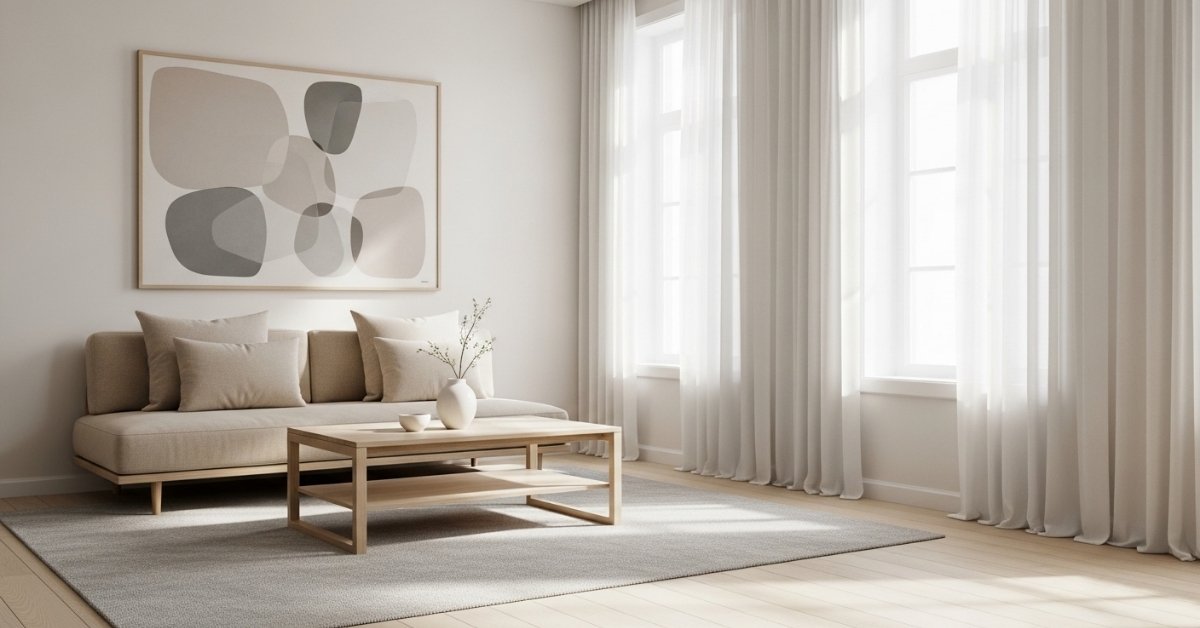
A cluttered living room doesn’t just look messy, it affects how you feel in your own home. If your space constantly feels like it’s working against you, too much furniture, no clear focal point, Minimalist Living Room Setup Ideas surfaces that collect everything, a minimalist living room setup might be exactly what you need. Not the cold, magazine-version minimalism, but the kind that’s calm, functional, and actually livable.
In 2026, the minimalist aesthetic has shifted away from stark emptiness toward what designers are calling “warm minimalism” spaces that feel intentional and breathable, with just enough texture and warmth to make them feel like home. Think natural wood, neutral linen, and carefully edited furniture rather than bare white rooms with nothing on the walls.
If you’re working with a small apartment, a multi-use living space, or just a room that never quite comes together no matter how much you rearrange, these ideas are built for real constraints, real budgets, and real life.
Float Your Sofa Away From the Wall

Most people push their sofa flush against the wall thinking it’ll create more space. It actually does the opposite; the room ends up feeling like a waiting area. Floating your sofa 12–18 inches from the wall immediately creates a sense of depth and gives the room a more intentional layout. Place a slim console table behind it if you need that extra surface. This setup works especially well in square or near-square rooms where the furniture layout tends to feel directionless otherwise.
Use a Single Large Rug Instead of Layering
Layered rugs have had their moment, but in a truly minimalist setup, one large rug properly sized does far more for the room. The front legs of every major seating piece should sit on the rug. This unifies the seating zone into one cohesive area and prevents that chopped-up feeling small rugs create. A 8×10 or 9×12 in a muted tone (oatmeal, warm grey, soft terracotta) grounds the space without demanding attention. This is one I’d actually recommend trying first because the difference in how “finished” the room feels is immediate.
Choose One Statement Piece and Edit Everything Else Around It

A minimalist room doesn’t mean every piece is forgettable. It means one piece gets to speak and everything else listens. Pick your statement an arched floor lamp, a textured armchair, a low sideboard in warm walnut and then strip back the surrounding pieces to simple, low-profile options. This creates visual hierarchy without clutter. It also makes decorating decisions much easier because you’re always working toward one anchor rather than trying to balance five competing focal points.
Go Low With Your Furniture Profile
Lowering the visual center of gravity in a room is one of the most effective ways to make it feel larger and more open. Low-slung sofas, floor-level coffee tables, and shelving that doesn’t climb too high on the wall all contribute to this effect. The ceiling reads as higher, and there’s a natural sense of calm that comes with it. This layout is especially useful in rooms with lower ceilings where standard furniture makes the space feel even more compressed.
Limit Your Color Palette to Three Tones

Visual noise isn’t just about objects, it’s about color. A room with six different tones across walls, furniture, rugs, and decor feels chaotic even when it’s technically “tidy.” In a minimalist living room setup, three tones is a workable rule: one dominant (walls, large sofa), one secondary (rug, curtains), one accent (a throw, a plant, one decor object). Staying within a warm or cool palette not mixing both is what keeps it from feeling accidental.
Replace a Media Console With Built-In or Recessed Storage
A hulking TV unit is often the single biggest visual disruptor in a living room. If you’re renting or can’t do built-ins, a slim floating shelf at the right height does the job with far less visual weight. Mount the TV directly on the wall, run cables through a cable channel or behind a slim cover, and use the shelf for only the essentials. The wall reads as cleaner, the floor space opens up, and the room stops feeling like it’s organized around a piece of furniture.
Use Curtains That Run Floor to Ceiling

Hanging curtains at window height is one of the most common layout mistakes in otherwise clean spaces. Mount the rod as close to the ceiling as possible even if the window is mid-wall and let the curtains drop to the floor. This draws the eye upward, makes the ceiling feel higher, and gives the window a more architectural presence. In a minimalist setup, linen or cotton in an off-white or warm sand works well because it filters light softly rather than blocking it.
Read More About : 23 Living Room Wall Decor Above Couch Ideas That Actually Work in Real Homes
Embrace Negative Space as a Design Element
Honestly, the hardest part of minimalist decorating isn’t adding it’s resisting the urge to fill. Empty wall sections, open floor space beside the sofa, a coffee table with nothing on half of it these aren’t mistakes. They’re what makes the rest of the room feel considered. Negative space gives the eye somewhere to rest. If a corner feels “empty,” ask whether it needs something or whether the room is just giving you breathing room you’ve been missing.
Layer Lighting Instead of Relying on One Overhead Source

Overhead lighting is functional, but it flattens a room and removes any sense of atmosphere. A minimalist living room actually benefits enormously from layered lighting: one ambient source (a ceiling fixture or recessed lights), one task light (a floor lamp near the reading chair), and one accent (a table lamp on a side table or console). In my experience, this is what separates a room that photographs beautifully from one that actually feels good to be in at 7pm.
Choose a Sofa in a Fabric That Works Without Styling
Most sofas look like they need throw pillows and blankets to look finished. A well-chosen fabric in the right neutral doesn’t. Textured boucle, warm linen, or matte velvet in a stone or sand tone reads as complete on its own. This matters in a minimalist setup because you’re not relying on accessories to do the heavy lifting. Go for this if you want your sofa to anchor the room quietly rather than becoming a styling project every time guests come over.
Use a Single Oversized Plant Instead of Multiple Small Ones

Three small plants scattered around a room adds visual clutter. One large plant in a considered spot, a corner that gets indirect light, beside a reading chair, or framing a window adds life without fragmenting attention. A fiddle leaf fig, monstera, or olive tree in a simple woven or ceramic planter works well because the scale reads as intentional. The room gets warmth and organic texture without the space feeling busy.
Keep the Coffee Table Surface to a Maximum of Three Objects
Coffee table styling is where minimalism most often breaks down. A tray, one candle, and a small stack of books that’s a complete surface. Anything beyond three items starts to compete. The tray matters here because it groups objects and defines the “styled” zone, making the rest of the table look deliberately empty rather than unfinished. This applies even to larger coffee tables: more surface area is not permission to fill it.
Use a Bench or Ottoman Instead of a Second Sofa

A second sofa creates symmetry but also doubles the visual bulk in the room. In smaller living rooms especially, swapping it for a low upholstered bench or a large ottoman keeps seating flexible without the weight. The room stays open, movement through the space is easier, and the layout feels less fixed. A bench also works double-duty as a surface when needed. This is one of those decisions that only makes sense after you’ve tried it the room tends to feel noticeably more spacious.
Mount Shelving Asymmetrically for a Less Expected Look
Symmetrical shelving on either side of a TV or fireplace is a classic look, but it can feel formulaic and heavy if scaled wrong. Asymmetric wall shelving a few floating shelves arranged in an offset pattern breaks up the wall without overwhelming it. The key is restraint in what you place on them: one or two objects per shelf maximum, with visible wood (or whatever material the shelf is) doing as much visual work as the objects themselves.
Define Zones in an Open Floor Plan With Furniture Placement Alone

In open-plan spaces, the temptation is to add a room divider or bookcase to separate zones. In a minimalist setup, the layout itself does that work. A rug anchors the living area. The direction the sofa faces signals where the seating zone begins and ends. A slight angle in the armchair turns it inward toward the conversation area rather than outward toward the dining space. Furniture placement not partitions is what creates zone definition without visual fragmentation.
Choose One Type of Wood Tone and Stay Consistent
Mixing three different wood tones: light pine shelving, dark espresso coffee table, mid-tone oak floors creates a restless, unfocused quality that’s hard to pinpoint but easy to feel. Staying within one wood tone family (all warm walnut, all light oak, all whitewashed) gives the room a cohesive, deliberate character. It doesn’t need to be a perfect match; slight variation is fine but the overall temperature of the wood should read as consistent.
Let the Walls Be Mostly Empty

Gallery walls are everywhere, but in a minimalist living room setup, a single well-chosen piece of art does more than twelve framed prints. One artwork hung above the sofa properly centered, at the right height gives the wall a focal point and leaves the rest of the space to breathe. The size matters: too small and it looks like an afterthought, too large and it competes with everything else. Aim for something that’s roughly two-thirds the width of the sofa.
Use a Side Table Instead of a Full End Table

Full-size end tables beside a sofa take up more visual and floor space than most rooms need. A slim side table of the kind with a single round top and one slender leg does the same job (holds a drink, a lamp, a book) with a fraction of the footprint. In tighter rooms, this is especially worth it. The floor around the sofa stays more open, and the furniture arrangement reads as lighter overall.
Read More About : 27 Living Room Wall Decor Above Couch Ideas That Actually Work in Real Homes
Use Window Light as Your Primary Design Feature
A lot of living rooms are arranged with the TV as the anchor and natural light as an afterthought. In a minimalist setup, flipping that logic arranging seating to face or sit adjacent to the main window changes the character of the room entirely. Morning or afternoon light becomes the atmosphere. Sheer curtains or simple linen panels diffuse it softly without blocking it. The room stops feeling like it needs accessories to have character because the light itself provides it.
Keep the Entryway Into the Living Room Clear

The first three feet past your living room doorway shape how the entire room feels when you walk in. A chair pushed into that zone, a plant that blocks the sightline, a side table right at the entry all of these make the room feel smaller before you’ve even entered it. Keeping that entry clear creates an immediate sense of openness. It’s a spatial effect, not a stylistic one: the eye travels further in and the room reads as more spacious because the view into it isn’t interrupted.
Choose Storage That Doubles as Decor
Exposed storage open shelves stacked with objects, baskets with visible contents adds visual texture that quickly tips into clutter in a minimalist room. Closed storage with clean lines (a sideboard with doors, a lidded ottoman, woven baskets for throws) keeps things contained without making the room feel institutional. The storage should look like it was chosen for the room, not just placed in it. This approach is especially practical for families or anyone who actually uses their living room daily rather than keeping it as a display space.
Use a Mirror Strategically to Add Depth

A mirror in a living room isn’t just a styling choice, it’s a spatial tool. Placed on a wall that faces or sits adjacent to a window, it reflects natural light further into the room and creates a sense of depth that makes the space feel larger. In a minimalist setup, one large mirror leaned against the wall or mounted works better than several small ones. Round or arch shapes tend to soften rooms that have a lot of rectangular furniture, adding visual contrast without adding more objects.
Remove the TV Entirely If You Can
This won’t work for everyone but if you primarily watch on a laptop or projector, removing the TV from the living room removes the single object that most dictates how a room is arranged. Without it, the seating can face a window, a fireplace, or simply each other. The wall becomes available for a single artwork or nothing at all. The room stops being organized around entertainment and starts working as an actual living space. It’s a bigger shift than it sounds.
Use Texture to Add Warmth Without Adding Color

One of the most common issues with minimalist rooms is that they end up feeling cold or clinical with too much flat, smooth surface and not enough tactile variety. Adding texture, a chunky knit throw, a jute rug, a boucle cushion, a rough ceramic vase brings warmth without introducing new colors or patterns. The tonal consistency stays intact, but the room gains depth and a more human quality. In my experience, this is the step that makes a minimalist room feel livable rather than staged.
Use an Area Rug to Correct an Awkward Room Shape
Long, narrow rooms are one of the trickier layouts in minimalist design furniture that tends to line up along the walls and the room ends up feeling like a corridor. An area rug placed in the central seating zone, with furniture pulled inward around it, corrects this by creating a visual width that the room doesn’t actually have. The rug anchors the cluster and signals that the space is meant to gather in, not pass through. This works particularly well in older apartments where the room proportions weren’t designed for modern furniture arrangements.
Try a Monochromatic Setup for Maximum Calm

Monochromatic doesn’t mean boring. A living room where everything sits within the same tonal range, warm white walls, off-white sofa, sand-toned rug, cream linen curtains has a quality of calm that’s hard to achieve when you’re mixing even subtle contrasting tones. The texture becomes the variable rather than the color, and the room reads as deeply intentional. This approach is especially well-suited to spaces that don’t get a lot of natural light, because a single warm tonal palette reflects light more evenly than a mixed one.
Reassess the Layout Every Few Months
A minimalist room isn’t static, it’s edited. Furniture arrangement that works in winter (angled toward warmth, toward each other) might not be the best layout in summer when you want airflow and connection to an outdoor space. Reassessing the layout two or three times a year costs nothing and often solves problems (a corner that feels unused, a sight line that’s always bothered you) that you assumed were permanent features of the room. The furniture you already have often has more flexibility than you realize it just takes rearranging to find it.
What Actually Makes a Minimalist Living Room Setup Work
The visual part of minimalism, neutral colors, clean lines, empty surfaces is straightforward enough. What’s harder is the spatial logic underneath it.
Furniture scale is the most overlooked factor.
A sofa that’s too large for the room forces everything else to the walls. A coffee table that’s too small floats awkwardly in the middle of the seating zone. Before adding or removing anything, look at whether the existing pieces are actually proportional to the space. A room where the furniture fits the space correctly reads as calm even before you’ve decluttered a single surface.
Traffic flow matters as much as aesthetics.
There should be at least 18–24 inches of clearance between the sofa and coffee table, and a clear path from the room entry to the main seating area. Rooms that feel uncomfortable to be in often have layout issues, furniture placed for appearance rather than for how people actually move through the space.
Lighting is a room design decision, not an afterthought.
The position of your floor lamp, the height of a table lamp, whether you have any warm light sources at all these change the character of a room as significantly as the furniture arrangement does. A minimalist room with only overhead lighting looks flat and clinical regardless of how well-edited the decor is.
Minimalist Living Room Setup: Style and Space Comparison
| Setup Type | Best For | Room Size | Key Benefit | Budget Level |
| Floating sofa + rug anchor | Open layouts, square rooms | Medium–Large | Improves depth and zoning | Low (no new purchases) |
| Low-profile furniture | Low ceilings, small rooms | Small–Medium | Makes ceiling feel higher | Medium |
| Monochromatic palette | Low-light rooms, renters | Any | Unified calm, easier to execute | Low |
| Single statement piece | Rooms with no focal point | Any | Creates visual hierarchy | Medium |
| No TV setup | Multi-use or conversation rooms | Small–Medium | Frees layout from one anchor | Low |
| Layered lighting | Rooms that feel flat or cold | Any | Adds atmosphere and warmth | Low–Medium |
| Mirror as spatial tool | Narrow or dark rooms | Small | Adds perceived depth and light | Low–Medium |
Common Minimalist Living Room Mistakes That Make Spaces Feel Cold or Cluttered
Going too sparse without adding texture.
A room with only flat, smooth surfaces, matte walls, a plain sofa, no rug reads as empty, not minimal. Texture is what bridges the gap between cold and calm. If your room feels stark, add a jute rug or a boucle cushion before changing anything else.
Undersized furniture in a large room.
Minimalism doesn’t mean small. A tiny sofa in a large room doesn’t create openness; it creates an awkward island with too much dead space around it. Scale the main pieces to the room first, then edit from there.
Mixing too many design influences.
A Japandi coffee table, a mid-century sofa, Scandinavian shelving, and a bohemian rug can each be beautiful individually, but together they create visual tension that no amount of neutral color will resolve. Pick one design direction and let that guide the edit.
Treating every surface as available space.
Windowsills, console table tops, coffee tables, shelves in a minimalist setup, the default state of a surface should be empty. Objects earn their place by being useful or genuinely considered, not just because there’s room for them.
Overhead-only lighting.
A single ceiling fixture, even a nice one, flattens the room and removes the possibility of atmosphere. One floor lamp changes this entirely; it’s one of the highest-impact, lowest-cost adjustments you can make to a living room that isn’t quite working.
FAQ’s
What is a minimalist living room setup?
A minimalist living room setup is a space designed with only essential furniture and decor, prioritizing open floor space, a limited color palette, and intentional object placement. The goal is a room that feels calm and functional, not empty where each piece serves a clear purpose.
How do I make a minimalist living room feel warm and not cold?
Texture is the key. Add a jute or wool rug, a linen throw, boucle cushions, or a raw wood coffee table. Layered warm lighting a floor lamp plus a table lamp also makes a significant difference. Minimalism and warmth aren’t opposites; the warmth just comes from material and light rather than from quantity of objects.
How much furniture should a minimalist living room have?
Most minimalist living rooms function well with a sofa, one or two accent chairs or a bench, a coffee table, one side table, and one lighting element beyond overhead. Storage is added as needed, ideally with closed fronts. The count matters less than the scale pieces should be proportional to the room.
Is a minimalist living room practical for families or everyday use?
Yes, but it requires intentional storage. Closed storage (sideboards, lidded ottomans, woven baskets) keeps daily-use items contained without adding visual clutter. The layout principles clear traffic flow, properly scaled furniture, and limited surface objects actually make a room easier to keep tidy in daily use.
What’s the difference between minimalist and Scandinavian living room style?
Scandinavian style is one expression of minimalism, characterized by light woods, white or grey palettes, and hygge-influenced coziness. Minimalism as a broader approach can include warmer tones (warm minimalism), Japanese-influenced layouts (Japandi), or more architectural setups. Scandinavian tends to feel warmer and more casual; minimalism at its strictest is more pared-back and structured.
How do I add personality to a minimalist living room without cluttering it?
One statement piece, an unusual armchair, a sculptural lamp, and a single oversized artwork does more for personality than multiple small objects. Material choice also carries personality: a curved sofa in cognac leather, a live-edge coffee table, a handmade ceramic vase. Personality in a minimalist space comes from considered choices, not quantity.
Should a minimalist living room have no art on the walls?
No bare walls can read as unfinished rather than minimal. One properly sized artwork above the sofa or a single mirror on a side wall gives the room a focal point without visual noise. The difference between minimal and empty is usually one considered wall piece.
Conclusion
A minimalist living room setup doesn’t require starting from scratch or spending a lot, it requires editing. Most rooms already have everything they need; the work is in removing what’s interrupting the space and adjusting what remains. Better furniture placement, a consistent color palette, and a couple of layered light sources will do more than any new purchase.
Start with one or two ideas that address your room’s actual problem whether that’s a layout that doesn’t flow, surfaces that always feel cluttered, or a space that just never feels settled. Reassess from there. The goal is a room that works the way you live in it, not one that looks good in photos but feels uncomfortable to actually be in.
