

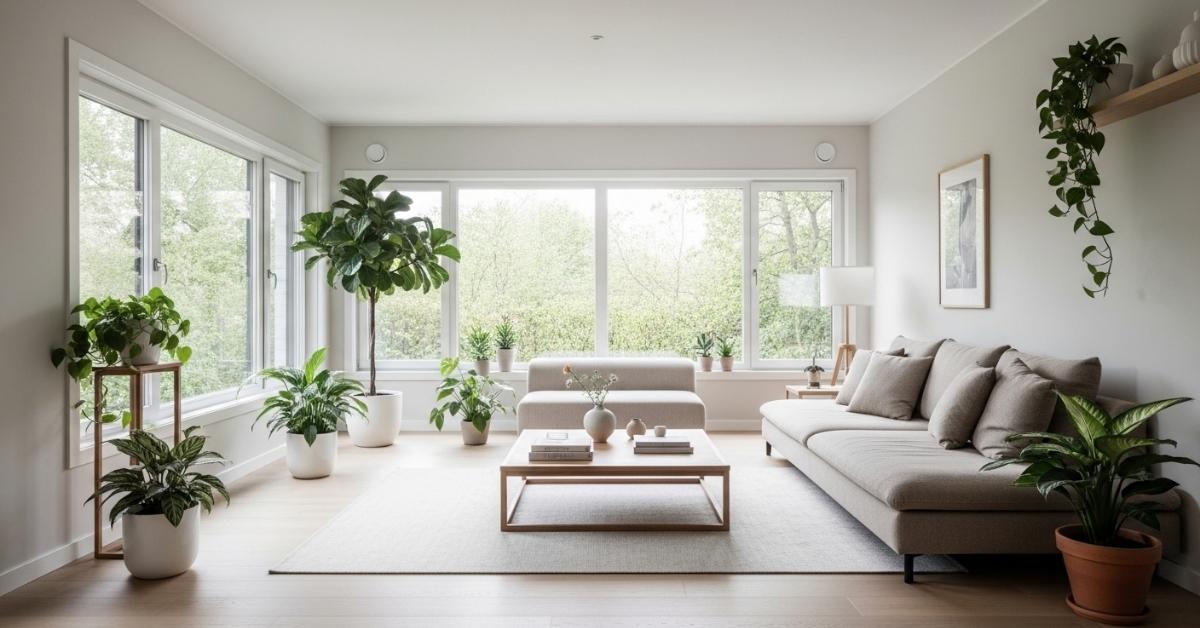
You know that moment when your living room looks fine on the surface furniture in place, nothing technically wrong but the whole room just feels off? Like it’s not quite pulling together the way you imagined? That’s usually not a furniture problem. It’s a layout, lighting, or proportion problem. And it’s incredibly common.
Living rooms in 2026 are doing more than ever: they’re home offices, relaxation zones, and social spaces often all in the same 200 square feet. That pressure makes it even more important to get the fundamentals right before reaching for new furniture or accessories.
If you’re working with a compact space, a rented apartment, or a layout that’s never felt quite right, these ideas are built for you not for sprawling homes with perfect natural light and unlimited budgets.
Anchor the Room With a Rug Before Buying Any New Furniture

The most overlooked fix in any living room is the rug specifically, its size. Most people go too small. A rug that’s properly scaled to the seating area (front legs of all sofas and chairs resting on it) immediately creates the visual impression of a defined, intentional zone. Without it, even a beautiful sofa can look like it’s floating in space. In small rooms, a large rug actually makes the space feel bigger because it eliminates that “furniture island” effect. Go for a natural fiber like jute or a low-pile wool in a neutral tone they photograph well, hold up to traffic, and don’t compete with other patterns in the room.
Float Your Sofa Away From the Wall

Pushing every piece of furniture against the wall is the single most common layout mistake in small living rooms and ironically, it often makes rooms feel smaller, not bigger. When you float the sofa just 6–12 inches away from the wall, it creates visual breathing room behind it and draws the eye inward, making the space feel more layered and deliberate. This works especially well in rooms that are longer than they are wide, where pulling the seating arrangement inward creates a more balanced conversation area. The gap doesn’t need to be large even a few inches makes a meaningful difference in how the room reads.
Use a Console Table Behind the Sofa to Create a Room Divider in Open Plans

Open-plan spaces are notoriously hard to arrange because there’s no natural boundary between the living area and the dining or kitchen zone. A low console table placed directly behind the sofa solves this without adding visual weight or blocking sightlines. It defines the back edge of the living zone, gives you a surface for a lamp or decorative objects, and adds a second layer of depth to the room. In studio apartments, this is one of the most functional setups available it separates spaces without walls and adds storage or display opportunity in the process.
Layer Three Light Sources Instead of Relying on One Overhead

Single overhead lighting is the fastest way to make a living room feel flat and cold. The fix isn’t buying expensive fixtures it’s adding variety: a floor lamp in one corner, a table lamp on a side table, and possibly a low-wattage bulb in a wall sconce or clip light. This creates depth and warmth that overhead lighting simply can’t replicate on its own. In my experience, rooms with layered lighting feel noticeably more relaxing not because the style changed, but because the eye has multiple focal points of warm light rather than one harsh wash from above. For renters who can’t install fixtures, plug-in sconces and battery-operated picture lights are genuinely effective alternatives.
Add a Curved or Round Coffee Table to Improve Traffic Flow

Square and rectangular coffee tables are the default, but in smaller living rooms they create hard corners that disrupt the natural movement through the space. A round or oval table removes those obstacles, making the room feel more open even when the overall footprint hasn’t changed. Rounded furniture in general curved sofas, arched mirrors, oval tables has become a dominant trend in 2026 interiors because it softens the geometry of boxy rooms. Beyond aesthetics, a round table is genuinely easier to navigate around, especially in rooms where the sofa and table are close together.
Hang Curtains High and Wide to Make Windows Feel Larger

Most curtain rods are installed right above the window frame, which caps the visual height of the room. Installing the rod 4–6 inches below the ceiling and extending the curtain panel well beyond the window frame on both sides does two things: it makes the ceiling feel higher, and it makes the window look much larger than it is. This is especially useful in rooms with small or awkwardly placed windows that don’t provide much natural light. The curtain, when open, covers mostly wall not window which keeps natural light unobstructed while maximizing the sense of scale.
Create a Reading Nook With a Single Armchair, Lamp, and Side Table

One of the most functional setups in a living room and one of the most overlooked is a dedicated reading or single-person relaxation spot. An armchair positioned at a slight angle in a corner, with a floor lamp directly beside it and a small side table within arm’s reach, creates a self-contained zone that doesn’t disrupt the main seating area. This works particularly well in rooms where the sofa is the primary seating piece and there’s one corner that always feels empty. The angled placement matters: facing straight into the room feels rigid; at 15–20 degrees toward the corner, it feels intentional and tucked in.
Use a Bookshelf as a Room Divider to Add Structure to Long Rooms

Long, narrow living rooms are notoriously difficult to arrange because there’s rarely a natural center. A tall bookshelf placed perpendicular to the long wall not flush against it breaks the room into two functional zones without closing off the sightline entirely. Open-back shelving works best for this because light passes through and the room doesn’t feel divided. This is a practical storage solution that also adds visual structure to a layout that would otherwise feel like a hallway.
Paint One Wall a Deeper Tone to Add Depth Without Darkening the Room

The instinct in small rooms is to go all-white to maximize brightness. But a single deeper-toned wall a warm terracotta, a dusty sage, a muted charcoal adds depth and makes the room feel more three-dimensional without actually reducing light significantly. The key is choosing a color in the warm or mid-range spectrum rather than a cold dark shade. This works best on the wall behind the sofa or the one that gets the least direct light, where the depth reads as intentional rather than shadowy.
Place a Mirror Opposite or Adjacent to a Window to Maximize Natural Light

Mirrors don’t just make spaces feel larger they actively redirect light. A large mirror placed directly opposite a window bounces daylight back into the room, which is particularly valuable in north-facing rooms or spaces with limited windows. The effect is most noticeable in the morning and early afternoon when direct light hits the glass. For rooms where natural light is genuinely limited, a full-length mirror or an oversized round mirror becomes a functional design tool, not just a decorative one.
Use a Low Media Console Instead of a TV Unit With Doors to Keep the Room Open

A bulky TV cabinet with doors pulls visual weight to the lower half of the room and makes the space feel heavier than it is. A low, open media console ideally in a warm wood tone keeps the eye moving and lets the wall above the TV breathe. Keeping the console low also means the TV sits at a more ergonomically appropriate height for viewing from a sofa. The visual weight stays low and horizontal, which helps the room feel calm and open rather than cluttered.
Style Your Shelves in Groups of Three With Varied Heights

Shelf styling is where most rooms fall apart. The fix is simple: group objects in odd numbers (threes work best) and vary the height within each group one tall item, one mid, one low. This creates a natural visual rhythm without looking curated to the point of stiffness. Mixing materials helps too: a ceramic vase, a stack of books, and a small plant read more naturally than three decorative objects of the same material. This approach also makes it easier to refresh a shelf seasonally without redesigning the whole thing.
Add a Textured Throw Blanket and Two Pillows to Introduce Material Contrast

A sofa with nothing on it is the quickest route to a room that feels unfinished. But this isn’t about buying expensive accent pillows it’s about introducing material contrast: something woven against something smooth, something warm-toned against something neutral. A chunky knit throw draped asymmetrically over one arm of the sofa, plus two pillows in a linen or boucle fabric, adds tactile depth that reads well visually even in photos. Honestly, this is one of the first things I’d suggest to anyone whose room feels complete but cold.
Keep the Coffee Table Surface at 70% Capacity for Visual Balance

A completely clear coffee table looks cold; a completely full one looks cluttered. The 70% rule means leaving about a third of the surface visible at all times. This works because the eye reads negative space as intentional it signals that the arrangement was considered rather than thrown together. In practice: a tray with a candle and a small object, a stack of two books, and one plant or sculptural element. That’s enough. Everything beyond that starts to compete rather than contribute.
Use a Pouffe or Ottoman as a Flexible Second Seat

In small living rooms where a second armchair doesn’t fit, a pouffe or ottoman does double duty: it’s extra seating when needed and a footrest the rest of the time. Unlike a fixed chair, it can be pulled to wherever it’s needed, stored under a console table, or used as a surface with a tray on top. Leather or boucle pouffe options hold their shape well and don’t look informal even in more structured room styles. This is one of the most space-efficient additions available in compact living rooms.
Create Visual Height With a Tall Plant in an Empty Corner

Corners are the hardest part of any living room to design they’re often awkward and overlooked. A tall floor plant (a fiddle leaf fig, olive tree, or similar) placed in a corner draws the eye upward and fills vertical space that would otherwise feel unresolved. The visual effect is that the ceiling feels higher and the room feels more complete. This works best in corners with some natural light, but many low-maintenance plants such as a cast iron plant or snake plant manage well in lower light conditions.
Install a Picture Rail or Gallery Wall to Resolve Empty Wall Space Above the Sofa

A large expanse of blank wall above a sofa is one of the most common sources of that “unfinished room” feeling. A gallery wall doesn’t have to mean dozens of frames three to five pieces in a considered arrangement, all sharing one element (same frame tone, same color palette, or same subject), creates visual interest without clutter. The lowest frame should sit no more than 8–10 inches above the sofa back, which ties the wall display to the furniture below and makes the arrangement feel intentional rather than floating.
Choose a Sofa in a Neutral Tone That Works With Multiple Accent Colors

A sofa is the single largest investment in a living room and the hardest thing to change. Choosing it in a neutral warm white, oatmeal, camel, warm gray means it can work with multiple color directions over time without requiring replacement. In 2026, warm neutrals and earthy beige tones are holding strong as the base for both minimalist and maximalist room directions, paired with terracotta, sage, or deep forest accents. A sofa in a bold color can be beautiful but limits future flexibility significantly.
Use a Slim Sideboard Instead of a Bulky Storage Cabinet

Deep storage cabinets in a living room solve the storage problem but create a weight problem they take up significant floor space and push visual mass to the walls. A slim sideboard (30–40cm deep) holds a surprising amount in drawers and cupboards while taking up far less footprint. It can double as a display surface on top and keeps the room feeling lighter. This setup works especially well in rooms where the living space has to absorb things that don’t belong there cables, remote controls, games, or paperwork.
Define Zones in an Open Plan With a Consistent Color Palette Across Both Areas

In open-plan living and dining spaces, the instinct to treat each zone as a separate design project creates a jarring effect walking through the space feels like switching channels. Pulling one consistent element across both areas the same wood tone, the same rug color, the same metal finish on hardware and light fixtures creates visual continuity that makes the whole floor feel intentional and cohesive. The furniture and function can differ; the palette should connect.
Mount Your TV at Eye Level From a Seated Position, Not at Standing Height

Most TVs are hung too high. The correct mounting height positions the center of the screen at roughly seated eye level typically 100–110cm from the floor for a standard sofa. When the TV is too high, viewers tilt their heads back, which is uncomfortable over time, and the screen dominates the upper half of the wall. At the right height, the TV sits more naturally in the room and the wall above it becomes available for art, a mirror, or simply negative space.
Add a Second Rug in a Reading Area to Define Multiple Zones in One Room

In larger living rooms or open plans where the main seating area and a reading nook coexist, a second smaller rug in the secondary zone reinforces that it’s a distinct area with its own purpose. The rugs don’t need to match exactly they should share a tone or texture so the room reads cohesively but having two defined rug zones makes it clear that the room is working on multiple levels. This is especially effective in rooms over 400 square feet where a single seating area can look underpopulated.
Use Warm White Bulbs (2700–3000K) Throughout for Consistent Lighting Tone

Lighting temperature is one of the most overlooked factors in room atmosphere. Cool white bulbs (4000K and above) read as harsh and clinical in residential spaces; warm white bulbs in the 2700–3000K range create the kind of ambient glow that makes a room feel genuinely comfortable. The problem in most homes is a mix a warm lamp beside a cool overhead creates an unpleasant color conflict that most people notice subconsciously. Matching all bulbs to the same temperature is a free fix that makes an immediate, noticeable difference to how settled the room feels.
Replace a Standard Coffee Table With a Nesting Table Set for Flexibility

For rooms that need to rearrange frequently or where the main table often needs to be moved for floor seating, yoga, or children a set of nesting tables offers the same surface area as a standard coffee table with far more flexibility. Two or three tables of varying heights can be pulled apart and used independently or stacked when space is needed. This is particularly practical in compact rooms where the furniture needs to serve multiple configurations across the week.
Balance a Large Sofa With a Scaled-Up Light Fixture

When a sofa is the dominant piece in a room particularly a large L-shaped or sectional the other elements need to match its scale or the room feels unbalanced. A small table lamp beside a large sectional looks like a mistake. A larger arc floor lamp, or a pendant with a meaningful diameter (45cm+), creates the visual counterbalance the room needs. Scale in lighting is consistently underestimated it’s the difference between a room that feels finished and one that feels like the furniture hasn’t arrived yet.
Use Floating Shelves in Alcoves to Gain Storage Without Taking Floor Space

Alcoves those recessed wall spaces beside a chimney breast or in any structural niche are often left empty or filled with awkward furniture that doesn’t quite fit. Installing floating shelves across the full width of an alcove creates significant storage and display space without consuming any floor area. This setup works in any style: painted the same color as the wall, they read as seamless; in wood, they add warmth and material contrast. For renters, tension shelving systems are an excellent non-permanent alternative.
Add a Scented Candle or Diffuser to Complete the Sensory Experience of the Room

A living room that looks composed but smells like nothing or worse, like whatever was last cooked misses an important part of the experience. A single scented candle (cedar, sandalwood, or eucalyptus tend to read as “clean and considered” without being overpowering) or a reed diffuser in a spot with some air movement completes the atmosphere in a way no amount of furniture arrangement can. This is the kind of detail that makes a room feel lived-in and intentional rather than staged. I’ve noticed that guests comment on a room smelling good almost as quickly as they comment on how it looks.
What Actually Makes These Ideas Work
The ideas above cover a range of approaches, but the underlying logic behind all of them is the same: proportion, flow, and light. Most living rooms that feel “off” aren’t missing furniture they’re missing proportion (things are the wrong scale for the space), flow (the layout interrupts movement or creates awkward sightlines), or light (too flat, too cold, or too limited).
Before adding anything new, it’s worth walking through the room and asking: does anything interrupt the natural path through the space? Does every piece of furniture feel like it belongs at its current scale? And does the lighting create warmth at all hours, or only when the sun is in the right position?
Fixing those three things without spending a cent on new furniture will do more for the room than almost any single decor addition.
Living Room Setup Guide Idea vs Space Type
| Idea | Best Space Type | Primary Benefit | Difficulty |
| Float sofa from wall | Small to medium rooms | Improves layout depth | Easy |
| Layer three light sources | Any size | Adds warmth and atmosphere | Easy |
| Console table room divider | Open plans, studios | Defines zones without walls | Easy |
| Floating alcove shelves | Rooms with alcoves | Storage without floor use | Moderate |
| Round coffee table | Small rooms, high-traffic | Better movement flow | Easy |
| High-hung curtains | Rooms with low or small windows | Adds visual height | Easy |
| Gallery wall above sofa | Any room with empty wall space | Resolves unfinished feel | Moderate |
| Bookshelf as divider | Long, narrow rooms | Creates two zones | Moderate |
| Nesting tables | Multipurpose rooms | Flexibility of layout | Easy |
| One deep-tone wall | Small or boxy rooms | Adds depth and dimension | Easy |
Common Living Room Mistakes That Make Your Space Feel Smaller or Cluttered
Buying a rug that’s too small.
This is the most frequent issue and the most fixable. A rug that only sits under the coffee table with sofa legs floating on bare floor breaks the visual unity of the seating area and makes the whole arrangement look provisional.
Treating the corners as storage or afterthoughts.
Corners are often where rooms fall apart. A pile of unused items, a chair wedged awkwardly, or simply nothing all of these leave the room feeling incomplete at its edges. A tall plant, a floor lamp, or a well-positioned armchair gives the corner a purpose and completes the room’s geometry.
Choosing furniture that’s too small for the space.
In an effort to keep things light, many people choose furniture that ends up looking undersized for the room. A small sofa in a large room looks like it’s waiting for the rest of the furniture to arrive. Scale up especially with the sofa and the rug and the room will anchor properly.
Hanging art too high.
A common reflex is to hang things at eye level while standing. But in a seating-focused room, the relevant eye level is seated. Art that’s too high disconnects from the furniture below and makes the arrangement feel unresolved.
Using only overhead lighting.
Single-source overhead light is fine for functional tasks, but it creates an even, flat wash that strips warmth from the room. The shift from one light source to three makes one of the most immediate differences possible in how a room feels in the evening.
FAQ’s
What is the most important element to get right in a living room?
Layout specifically the placement of the sofa relative to the rest of the room. Before anything else, the sofa placement determines traffic flow, conversation distance, and the visual center of the space. Get the layout right first, then layer in lighting, textiles, and decor.
How do I make a small living room feel bigger without knocking down walls?
Three adjustments make the biggest difference: use a rug that’s large enough to anchor all the furniture (even partially), add layered lighting instead of relying on one overhead source, and hang curtains high and wide to maximize the perceived window and ceiling height.
Should the sofa always face the TV?
Not necessarily. In rooms where the TV isn’t the primary focus, angling the sofa slightly toward both the TV and a window or toward the center of the room creates a more flexible arrangement that works for conversation and viewing. The sofa should face the room’s primary focal point, which isn’t always a screen.
What’s the right height to hang a TV?
The center of the TV screen should sit at approximately seated eye level around 100–110cm from the floor for a standard sofa height. Higher than that causes neck strain over time and pulls the TV out of proportion with the furniture below it.
Is an open-plan living room harder to decorate than a traditional one?
It presents different challenges rather than harder ones. The main difficulty is defining zones without walls this is solved through rug placement, furniture grouping, consistent color palette, and using pieces like console tables or bookshelves to create soft boundaries.
How many throw pillows is too many?
For a standard three-seat sofa, two to four pillows is usually the right range. Beyond that, they start to encroach on actual seating space. The goal is material contrast and proportion; a mix of two sizes in complementary fabrics tends to read better than a uniform set of identically sized pillows.
Do I need to match all my wood tones in a living room?
No and matching them too precisely can make a room feel staged. A mix of two wood tones (one warm, one slightly lighter or cooler) reads more naturally. What matters is that the tones don’t actively clash a very red mahogany beside a very gray ash will look unintentional, but oak beside walnut typically works well together.
Conclusion
A living room that works well isn’t the result of having the right furniture it’s the result of getting the fundamentals in the right order: layout first, lighting second, and then the details that add warmth and character. Even a modest space with budget pieces can feel genuinely good to be in when those foundations are solid.
Start with one or two ideas from this list that apply directly to your current pain point whether that’s a layout that doesn’t flow, lighting that feels flat, or walls that look unfinished. Small, deliberate changes compound quickly in a space you spend time in every day. Adjust, observe how the room responds, and build from there.
