

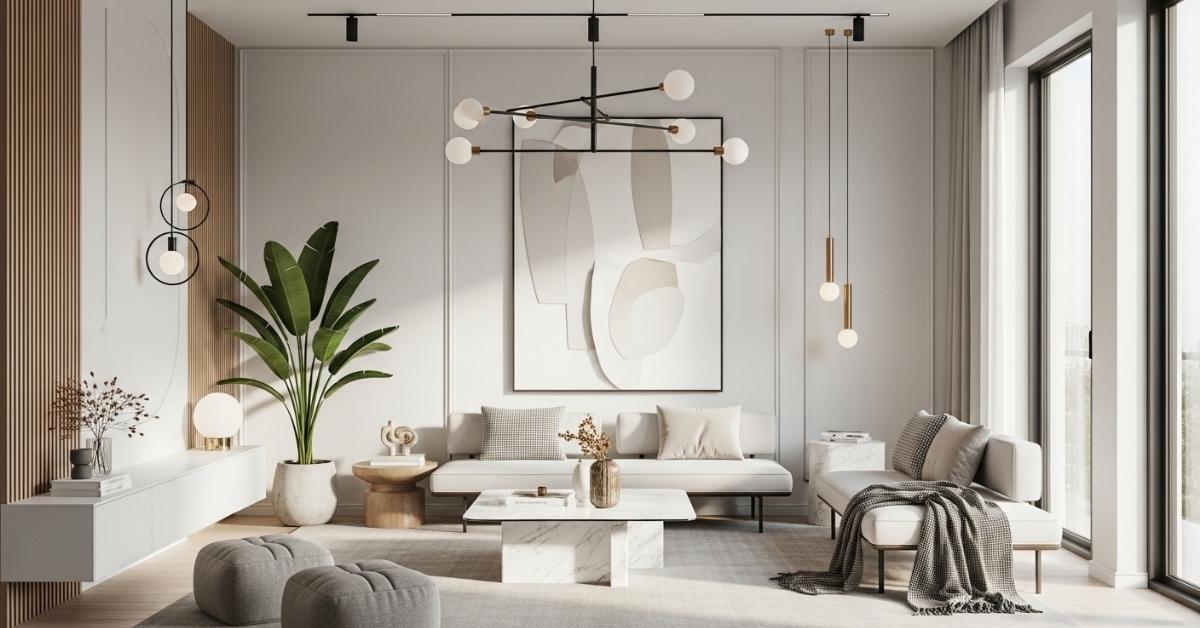
Soft neutrals, intentional furniture placement, and just enough texture to make a room feel finished without feeling fussy. That’s the current direction modern decor is moving in 2026. It’s less about following a rigid aesthetic and more about making a space feel calm, functional, and genuinely yours.
If your home looks fine on paper but still feels like something’s missing, that usually comes down to a few key decisions: scale, light, and how furniture relates to the room’s proportions. This list is for anyone Modern Decor Ideas who wants a cleaner, more cohesive living environment without starting over from scratch.
For studio apartments, smaller homes, or spaces that need to do double duty as both a workspace and a living area these ideas are especially practical. You don’t need a big budget or a blank-canvas space to make them work.
A Low-Profile Sofa That Opens Up the Room Vertically

Most sofas sit around 34–36 inches tall, which works in some rooms but can feel like a wall of furniture in smaller spaces. Dropping to a sofa with a seat height of 14–16 inches think Japanese-style or mid-century low profiles frees up visual space from the midpoint up. The room reads taller, even if the ceiling height hasn’t changed. This setup works best in rooms where the ceiling is standard height (8–9 feet) and the space feels a bit compressed. It doesn’t work as well for older individuals or anyone with mobility considerations.
A Neutral Wall Paired With One High-Contrast Architectural Element
Rather than painting an entire accent wall, consider going high-contrast on just one architectural feature: a door frame, a fireplace surround, or a window casing. In matte black or deep charcoal against a bright white or warm greige wall, this draws the eye to the structure of the room rather than the decor sitting in it. It’s a subtle shift that makes the space feel more considered and intentional. This works especially well in older apartments with interesting trim work that tends to get lost under builder-grade paint.
Layered Lighting Instead of One Overhead Fixture

Relying on a single overhead light is one of the most common reasons rooms feel flat or clinical. A layered approach ceiling-mounted ambient light dimmed low, a table lamp for task lighting, and a floor lamp in a corner for fill gives you more control over mood and functionality at different times of day. In my experience, this works best when the sources are all the same color temperature (around 2700K for warm, 3000K for neutral-warm). Mixing warm and cool sources in the same room creates a visual tension that’s hard to identify but easy to feel.
Open Shelving With a Strict Edit
Open shelving works in modern decor only when the edit is ruthless. Two or three ceramic pieces, one small plant, and a couple of consistently sized vessels read as intentional. The moment you add more than seven to eight items, the shelves start reading as clutter rather than display. This approach is most useful in kitchens or living rooms where storage is functional but also visible; the key is treating each shelf like a small, styled vignette rather than a catch-all surface.
A Round Dining Table in a Square Room

Square rooms create a tension between the walls and standard rectangular tables. There’s often awkward leftover space in two corners and too-tight circulation near the others. A round table resolves this immediately. It centers the room naturally, allows for easier movement around all sides, and requires fewer chairs to feel full. Honestly, it’s one of the most underrated layout changes for compact dining areas. Aim for a diameter that leaves at least 36 inches between the table edge and the nearest wall for comfortable pull-out space.
Read More About : 25 Studio Apartment Ideas That Actually Make Small Spaces Feel Like Real Homes
Texture Contrast on a Neutral Palette
When you’re working with a strictly neutral palette, the whites, beiges, greiges texture does the work that color usually does. A linen sofa, a smooth stone side table, a chunky woven throw, and a matte ceramic lamp base create visual interest through material contrast rather than color contrast. The room stays calm but doesn’t feel flat. This is one approach I’d recommend trying first if you’re nervous about color. It lets you build a rich, layered look without the commitment.
Furniture Pulled Away From Walls

Pushing all furniture against the walls is intuitive. It seems like it would make the room feel larger but it actually makes spaces feel more like waiting rooms than living rooms. Pulling the sofa even 6–8 inches away from the wall and floating a rug underneath creates a defined conversation zone that feels intentional and comfortable. The open space behind the sofa reads as breathing room rather than wasted space.
A Statement Light Fixture Over a Simple Setup
If everything else in the room is restrained, a sculptural pendant or chandelier becomes the focal point without competing with anything. Exposed bulb clusters, geometric metal frames, or woven rattan shades work particularly well in rooms where the furniture and finishes are deliberately plain. The fixture carries the visual weight, so the rest of the room can stay edited.
A Workspace Integrated Into the Living Room Without Looking Like a Workspace

Multi-use rooms are a practical reality for a lot of people, especially in apartments. The key to integrating a desk into a living space without it feeling like an office intrusion is matching the desk and shelving materials to the rest of the room, same wood tone, same finish level. A small alcove or dedicated wall section with a floating shelf above keeps the footprint minimal. Keep the desk surface clear of anything that reads as work-specific (no stacks of paper, no visible tech beyond a laptop) and it blends into the room’s residential feel.
Warm Metals Instead of Cool Chrome
Brushed brass, unlacquered bronze, and warm-toned gold fixtures are largely responsible for the shift away from the cooler chrome-and-nickel aesthetic that dominated the 2010s. In 2026, warm metals pair better with the natural material trend raw wood, stone, linen because they share the same underlying warmth. Swapping just the faucet and cabinet hardware in a bathroom or kitchen is a relatively low-cost update with a disproportionate effect on the room’s overall tone.
A Gallery Wall With Consistent Frames, Varied Art

Gallery walls get cluttered when the frames themselves are varied, mismatched metals, wood tones, and colors create visual noise before you even look at the art. Choosing one frame style (matte black is the most versatile) and varying only the art photography, illustration, abstract, typographic creates cohesion while keeping the display interesting. A good rule: plan the layout on the floor first, align either the top edges or the center line, and leave equal spacing between all frames.
A Monochromatic Bedroom With Tonal Variation
All-white or all-neutral bedrooms work when there’s enough tonal variation between surfaces and textiles. A matte white wall behind a slightly warm linen bedspread, a sheer cotton curtain, and a waffle-weave throw creates a room that reads as serene rather than sterile. The variance is subtle but the eye detects it; it’s what separates a well-executed neutral bedroom from one that just looks unfinished.
Concrete or Stone Accents as Grounding Elements

In rooms that trend toward softness, light walls, upholstered furniture, linen textiles, a concrete table or stone accessory adds physical weight that anchors the space. It’s a practical contrast: smooth stone against soft fabric registers as intentional and considered. These materials work especially well in rooms where everything else is pale or neutral, because the density of the material creates visual anchoring without adding color or pattern.
Window Treatments That Start at the Ceiling
Mounting curtains at ceiling height rather than just above the window frame is one of the most reliable space-expanding techniques in modern decor. The vertical line draws the eye up, and the full-length drape makes the window and the room feel proportionally larger. This works in any room with windows but has the most dramatic effect in rooms where ceilings are standard height and windows are mid-sized or smaller.
A Bedroom With Minimal Furniture and One Oversized Piece

One large-scale piece, an oversized headboard, a wide platform bed frame, a full-height wardrobe reads as intentional in a minimal room rather than out of place. The temptation in smaller bedrooms is to choose small-scale furniture throughout, but this often makes the room feel like it’s trying too hard to be functional rather than comfortable. One generous piece communicates confidence in the layout.
Visible Wood Grain as the Primary Texture
Heavily processed wood painted, lacquered, or with heavily filled grain has given way to more natural finishes that let the grain show through. A matte or lightly oiled oak, walnut, or even pine piece where the grain is clearly visible adds an organic quality to modern decor without veering into rustic territory. It works best when paired with cleaner materials, smooth plaster walls, matte metal, or stone so the wood’s natural texture registers rather than getting lost.
Intentional Empty Space as a Design Decision

Empty space in modern decor isn’t the absence of something; it’s a considered choice to let one or two elements breathe. A room with one well-chosen armchair, a side table, a single plant, and a clean floor reads as calm and purposeful. The same room filled to capacity reads as chaotic. This approach works best when the pieces you do include are genuinely good quality or interesting; the edit only works when what’s left is worth looking at.
Read More About : 21 Small Space Living Ideas That Actually Make Cramped Rooms Feel Bigger and Better
Floating Shelves at Eye Level, Not Above Doors
Shelves mounted near the ceiling are common but create a problem: they make you crane your neck upward and are difficult to interact with daily. Shelves installed at 55–65 inches from the floor (roughly eye level when standing) become part of the room’s visual field rather than something hovering above it. This is especially true in rooms where the shelf doubles as display and functional storage, since you can actually reach it.
A Bathroom That Uses Only Two Materials

Modern bathroom design is increasingly about material restraint, choosing two materials and using them well rather than mixing five or six. A plaster-finish wall and a natural stone tile floor, or large-format ceramic and raw wood vanity, create a sense of calm that more layered approaches often undercut. The key is letting the materials have enough surface area to register small samples of many materials that feel busy, while large expanses of two create clarity.
A Dining Area Defined by Lighting Rather Than Walls
In open-plan layouts, a pendant light positioned directly above the table defines the dining zone without needing physical separation. The cone of light creates a psychological boundary that makes the area feel distinct from the living or kitchen space adjacent to it. The height matters: hang it 28–34 inches above the table surface for optimal light distribution and proportion.
An Entryway That Sets the Tone for the Rest of the Home

Entryways are often treated as afterthoughts: a surface for keys and a place to drop bags. In modern decor, the entry is treated as the first editorial statement: a narrow bench, a simple hook rail, one framed piece of art, and a consistent finish level that carries through to the rest of the home. Even in apartments with minimal entry space, a small console and a deliberately chosen mirror create enough structure to make it feel designed rather than improvised.
Using Plants as Structural Elements, Not Accessories
A single large plant, a fiddle leaf fig, olive tree, or monster in a room corner functions structurally the way a floor lamp or sculpture might, filling vertical space and giving the eye a clear resting point. Small plants scattered across surfaces read as accessory-level decor. One oversized plant treats the living element as an architectural feature, and it genuinely changes the spatial feel of a room. IMO, this is one of the more forgiving updates: plants are relatively portable if the placement doesn’t work.
Built-In Shelving That Looks Custom Without Custom Costs

Wall-color-matched shelving units create the illusion of built-in joinery when installed floor to ceiling. Painting the shelf unit the same color as the wall (including the interior back panels) makes the seams disappear; the unit reads as an architectural feature rather than freestanding furniture. This works especially well in rental spaces where you can’t do actual built-ins: a modular unit, properly anchored and color-matched, is nearly indistinguishable in photographs and daily experience.
A Kitchen With Hardware as the Only Decorative Element
Flat-front or minimally-detailed cabinets are the dominant kitchen style in current modern decor, and for good reason they create a neutral canvas where the hardware does the styling work. Consistently specified hardware (same finish, same shape, same size throughout) gives the kitchen a sharp, cohesive look without additional decoration on the surfaces. It also ages better than trend-specific decorative choices.
A TV Wall That Doesn’t Look Like a TV Wall

Mounting the TV on a wall painted the same dark color charcoal, deep navy, or black makes it recede visually. A dark screen against a dark wall is far less visually dominant than a black rectangle on a white surface. Pair it with a thin floating shelf below (instead of a bulky media console) and the whole setup takes up significantly less visual weight in the room. This setup works in both small and large rooms and dramatically changes how the television reads when it’s off.
Rugs That Are Larger Than You Think You Need
The most common rug mistake in modern rooms is undersizing. A rug that only sits under the coffee table with all sofa legs off it creates a floating island effect that disconnects the furniture grouping. At minimum, the front two legs of the sofa and all legs of the coffee table should sit on the rug. In living rooms, this typically means a 9×12 or larger. It’s counterintuitive in smaller spaces, but a larger rug makes the room feel bigger, not smaller.
A Bedroom Nightstand That’s Not a Nightstand

Using a side table, small stool, wall-mounted shelf, or even a simple crate as a nightstand opens up a lot of proportional flexibility especially in smaller bedrooms where standard nightstands often feel too wide or too tall relative to the bed height. The constraint is that the surface height should land within a few inches of the mattress top. Within that, almost anything works, and the unconventional choice often reads as more considered than a matched bedroom set.
What Actually Makes These Modern Decor Ideas Work
The ideas above share a common logic: restraint in quantity paired with intentionality in quality and placement. Modern decor in its current form isn’t about a specific look, it’s about making deliberate choices at each layer of a room. Here are a few underlying principles that apply across setups.
Scale first, style second.
Most modern decor mistakes are scale mistakes, furniture that’s too small for the room, art hung too low, rugs that don’t reach the furniture. Before deciding on an aesthetic, map out the room’s proportions and match each element to them.
Lighting is more functional than decorative.
The trend toward layered, warm, dimmable lighting isn’t just aesthetic, it’s a functional upgrade. Rooms with layered light sources are more adaptable throughout the day and feel more comfortable for longer periods of time.
Negative space is a design choice, not a lack of decor.
A wall that’s deliberately left bare, a surface that’s deliberately kept clear these read as confident decisions when the rest of the room is well-considered. The mistake is leaving things empty because you haven’t decided what to do with them yet. Empty space works when it’s a deliberate part of the layout.
Consistency in finish level matters more than brand.
A room with consistently matte finishes, or consistently warm metals, reads as cohesive even if the individual pieces came from very different price points. Mixing finish levels matte and glossy, warm and cool metal tends to create visual noise regardless of the quality of individual pieces.
Modern Decor Setup Quick Reference
| Setup | Best For | Space Type | Primary Problem It Solves | Difficulty |
| Low-profile sofa | Visual height, compressed ceilings | Small to medium rooms | Room feels short or boxy | Easy |
| Ceiling-height curtains | Visual expansion | Any room with windows | Windows feel small or low | Easy |
| Layered lighting | Atmosphere + functionality | All room types | Flat, clinical feel | Moderate |
| Oversized rug | Furniture cohesion | Living rooms | Disconnected furniture arrangement | Easy |
| Furniture floated from walls | Conversation flow | Medium to large rooms | Room feels like a waiting area | Easy |
| Monochromatic bedroom | Visual calm | Bedrooms of any size | Room feels busy or unrestful | Moderate |
| Wall-matched shelving | Built-in look on a budget | Rentals, smaller rooms | Freestanding furniture looks temporary | Moderate |
| Dark TV wall | Visual subtraction | Living rooms | TV dominates the room visually | Easy |
| Single large plant | Vertical fill | Any room with natural light | Empty corner or dead space | Easy |
| Two-material bathroom | Visual calm + cohesion | Bathrooms of any size | Surfaces feel cluttered or mismatched | Moderate |
Common Modern Decor Mistakes That Undercut the Look
Even well-intentioned modern setups can miss the mark. These are the issues that come up most often and they’re rarely about the individual pieces.
Hanging art at the wrong height.
The standard recommendation is eye level at 57–60 inches to the center of the piece. Most people hang art too high, which disconnects it from the furniture below and makes it feel like it’s floating. When in doubt, go lower than feels intuitive.
Mixing too many wood tones.
Modern decor tolerates two wood tones in a room three starts to feel unresolved. If you have light oak floors, keep wood furniture in the same family or go in a clearly contrasting direction (very dark walnut). Mid-tones that are close but not the same create visual noise.
Undersized furniture in larger rooms.
Choosing a small sofa for a large living room leaves space that looks leftover rather than open. The furniture needs to be scaled to the room, not to the smallest version of what you think you need.
Accessories at only one height.
Styling a shelf or surface with objects that are all the same height creates a flat, undifferentiated look. Varying heights tall, medium, and low creates visual rhythm without requiring more objects.
No defined zones in open-plan spaces.
Open-plan rooms need something to define each functional area: a rug, a light fixture, or furniture arrangement. Without it, the space reads as a single undifferentiated room and tends to feel unanchored.
Frequently Asked Questions
What is modern decor exactly, and how does it differ from minimalism?
Modern decor prioritizes clean lines, functional furniture, and intentional material choices, but it allows for more warmth and texture than strict minimalism. Minimalism reduces to essentials; modern decor curates toward a specific aesthetic that can include layered textures, warm metals, and organic materials like wood and stone just without clutter or excess ornamentation.
How do I make a small room feel larger with modern decor?
The three most reliable techniques are: ceiling-height curtains to extend the vertical line of the room, an oversized rug to define and anchor the furniture grouping, and layered warm lighting instead of a single overhead source. Furniture scaled appropriately for the room not too small, not too large also has a significant impact.
Is modern decor expensive to achieve?
Not necessarily. Many of the most effective modern decor changes are about placement and restraint, not purchases. Pulling furniture away from walls, editing down surfaces, and mounting curtains higher are free or very low-cost changes. Strategic investment in one or two quality pieces, a well-proportioned sofa, and a good rug tends to have more impact than many smaller purchases.
Modern vs. contemporary decor: what’s the difference?
Modern decor refers to a specific design movement (mid-20th century modernism) characterized by clean lines, function-first design, and natural materials. Contemporary decor refers to whatever is current right now it shifts over time. In practice, the terms are often used interchangeably, but modern has more defined principles while contemporary is more fluid.
How many decorative accessories are too many?
A useful rule: every surface should have at least one-third of its area clear. If you can’t see the surface under the objects, the grouping is too dense. For shelving, aim for three to five objects per shelf, leaving visible negative space between groupings.
What’s the best way to start updating a room to feel more modern without buying new furniture?
Start with lighting and layout. Rearrange furniture to float it away from walls and create a defined zone with your existing rug or area rug. Replace overhead-only lighting with a floor lamp. Edit surfaces down to the items you genuinely want displayed. These three changes alone tend to shift how a room reads significantly.
Which colors work best for a modern decor palette?
Warm neutrals off-whites, warm whites, greige, soft terracotta, and warm taupes currently dominate modern decor palettes. The shift from cool grays and stark whites toward warmer, earthier tones has been consistent over the past few years. Accent colors tend to be nature-derived: sage, muted olive, clay, or deep navy rather than bright primaries.
Conclusion
Modern decor at its best isn’t about matching a look you found on Pinterest, it’s about understanding how scale, light, material, and negative space interact in your specific room. The ideas here range from free (furniture placement, editing surfaces) to investment-level (lighting fixtures, statement furniture), which means there’s an entry point regardless of budget.
Start with one or two ideas that address the most obvious issue in your space: a room that feels too dark, furniture that feels disconnected, surfaces that look cluttered. Small, deliberate changes tend to have a more lasting effect than full room overhauls, and they give you time to see how each choice lands before adding more.
