

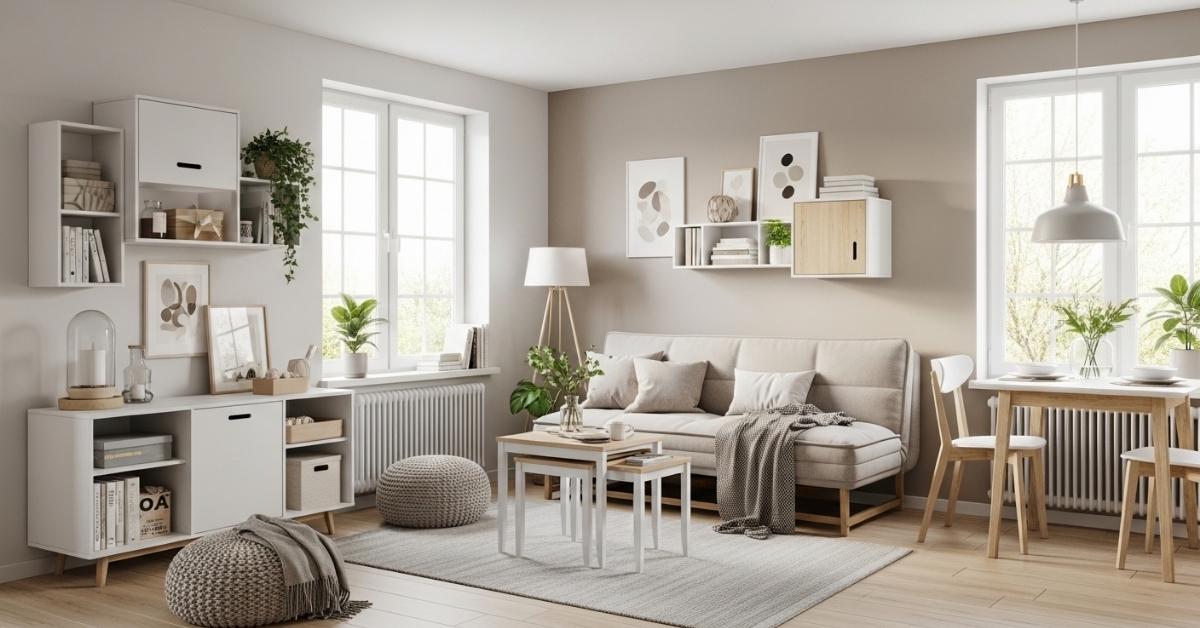
There’s a particular kind of frustration that comes with a small home, not just the lack of square footage, but the feeling that no matter what you do, the space never quite works. The sofa is too big, the storage is never enough, and the room always looks somehow off even after you’ve rearranged everything twice.
The good news is that small space living has genuinely evolved. In 2026, Small Space Living Ideas the approach has shifted away from “cram in what you can” toward intentional, multi-functional design that prioritizes how a room feels to live in, not just how it looks in photos. These aren’t tricks, they’re layouts and choices that change how you use your home day to day.
If you’re working with a studio apartment, a compact urban flat, or just a room that never quite feels right, this list was made for your exact situation.
Float Your Sofa Away From the Wall

Most people push furniture against walls hoping to create more open space. The opposite is almost always true. Pulling your sofa 6–10 inches from the wall creates a visual breathing room that makes the room feel intentionally designed rather than squeezed. The gap also allows light to travel through the space more freely, especially if there’s a window behind or beside the seating area. This setup works best in rooms that are at least 10 feet wide in anything smaller, a shallow loveseat placed the same way achieves the same effect. The problem it solves is that flat, wall-to-wall furniture arrangement that makes rooms look like a furniture showroom waiting room.
Use a Daybed as Your Primary Seating in a Studio
In a studio under 400 square feet, the sofa-plus-bed combination is a constant compromise. A daybed solves both. Styled with firm back cushions during the day, it reads as a proper seating piece and converts to a sleeping surface at night without the awkward “futon energy.” Linen or a structured cotton fabric keeps it feeling intentional rather than improvised. Place it along the longest wall with a low console or floating shelf above for storage and display. This is one I’d actually recommend trying first for studio dwellers because it reclaims square footage without sacrificing function.
Layer Lighting Instead of Relying on One Overhead Fixture

A single ceiling light is one of the biggest culprits for making small rooms feel flat and institutional. Layered lighting, a combination of overhead, task, and ambient sources breaks the room into zones, which makes it feel larger by giving the eye multiple places to rest. In a small living room, a floor lamp in one corner, a table lamp on a console, and a dimmed overhead creates depth that one bright bulb simply can’t achieve. This approach also means the room shifts naturally from functional daytime use to a warmer evening feel without any furniture rearrangement. Works in virtually any space, but especially impactful in rooms with no natural light.
Install Open Shelving Above the Door Frame
The wall space above door frames is almost universally ignored and surprisingly generous. A single run of floating shelves at that height roughly 80 inches up adds storage or display space without eating into the room’s walking area at all. In a small kitchen, this is ideal for cookbooks and rarely-used items. In a living room, it creates a continuous visual band around the room that draws the eye up and makes ceilings feel higher. Use consistent materials (a warm wood or painted MDF) to keep it cohesive. This works especially well in rentals where floor-level modifications are restricted.
Choose a Round Dining Table Over a Rectangular One

Rectangular dining tables have a fixed footprint that stays fixed regardless of how many people are eating. A round table with the same surface area is easier to move around, seats one extra person in a pinch, and eliminates the awkward “dead corner” situation you get in small dining rooms. The curved edge also means no sharp corners blocking a walkway, which matters enormously in rooms where the dining area transitions directly into the kitchen or living space. For rooms under 120 square feet, a 36-inch round table is the most functional choice; it seats four comfortably and leaves enough clearance for chairs to push back without hitting a wall.
Use a Console Table Behind the Sofa as a Room Divider
In open-plan apartments where the living area bleeds directly into the sleeping zone, visual separation matters. A narrow console table (ideally 10–14 inches deep) placed directly behind the sofa creates a defined boundary between the two areas without adding any physical barrier. It also creates a surface useful for a lamp, a plant, or charging cables that the back of a sofa otherwise wastes. This layout works best when the console matches the sofa’s height or sits slightly below it, so the visual line reads as continuous rather than choppy.
Swap Curtains for Roman Shades to Free Up Floor Space

Floor-length curtains are beautiful in large rooms. In small ones, they consume visual real estate that the room can’t spare. Roman shades fit the window frame exactly, leaving the floor and surrounding wall clear which reads as more open, especially around low furniture. In rooms with small windows, this also avoids the mistake of visually shrinking the window with fabric that bunches at the sides. Linen or a woven cotton in a warm neutral keeps the window feeling open even when the shade is lowered. For renters, tension-mounted roman shades are a no-hardware solution that works just as well.
Mount Your TV on the Wall and Skip the Media Console
A media console is one of the largest pieces of furniture in a living room and often the least necessary. Wall-mounting the TV and replacing the console with a single floating shelf for devices, a streaming box, a soundbar clears significant floor space and makes the room feel less visually heavy. The wall below the TV becomes usable space again: a low bench, a row of storage baskets, or simply an open floor. This layout works particularly well in rental apartments where the furniture plan is otherwise fixed, because it changes the room’s feel without moving anything else.
Read More About : 27 Nursery Decor Ideas That Make Small Spaces Feel Calm, Cozy, and Completely Thought-Through
Use Mirrors Strategically, Not Decoratively

Mirrors in small rooms only work if they’re placed to reflect something worth reflecting. A mirror on the wall opposite a window bounces natural light deep into the room and creates a sense of depth that genuinely changes how the space reads. A mirror on a side wall that reflects another wall does almost nothing. The most effective setup in a small living room is a large vertical mirror (at least 24 inches wide) positioned to catch the window. It doesn’t need to be decorative; a plain, frameless mirror or one with a thin metal frame does this better than an ornate one that draws attention to itself.
Replace a Solid Room Divider With an Open Bookshelf
In studios or open layouts where some separation is needed, a solid wall or curtain blocks light entirely. An open-backed bookshelf used as a divider maintains airflow and light while still creating a visual and physical boundary. Style both visible sides of the books and objects on one face, a curated arrangement on the other so the divider reads as intentional from any angle. This setup works especially well between a sleeping area and a workspace, where visual separation improves focus without completely closing off the room.
Opt for a Bed With Built-In Storage Rather Than a Frame and Separate Dresser

In a small bedroom, the dresser is usually the first thing that makes the room feel crowded. A platform bed with built-in drawers eliminates the need for a standalone dresser entirely and often provides equal or greater storage volume, because the drawers run the full width of the bed. The room gains back the floor space the dresser occupied, which in a 10×10 bedroom is significant. This is most useful in rooms without a walk-in closet. Paired with a wall-mounted nightstand or floating shelf, it’s possible to furnish a small bedroom with just two pieces of furniture total.
Go Vertical With Kitchen Storage
Kitchen counters are precious in small homes, and keeping them clear is entirely a function of where you store things. Vertical storage shelves from counter height to ceiling, wall-mounted magnetic knife strips, hanging pot racks move everything off the counter without reducing what you can store. In a galley kitchen especially, one wall of floor-to-ceiling shelving changes the character of the entire space. Honestly, most small kitchen problems aren’t about space, they’re about storage being placed at the wrong height. Moving items above the standard cabinet line frees up both physical and visual space at eye level.
Use a Bench at the End of the Bed Instead of a Chest

A chest at the foot of the bed adds storage but also adds significant visual weight; it’s essentially another dresser in a room that probably already has one. A slim bench (10–14 inches deep) covers the same footprint, provides a seat for getting dressed, and reads as much lighter. Some benches include lift-top storage for blankets or seasonal items, which means you’re not sacrificing function. In rooms under 12 feet long, this makes the space between the bed and the door feel usable rather than blocked.
Keep Your Color Palette to Two or Three Tones
Color doesn’t make rooms feel bigger on its own but visual noise makes them feel smaller. A small room with five different colors, even neutral ones, reads as cluttered because the eye has too many things to track. Committing to two or three tones a base, a secondary, and one accent creates continuity that lets the room breathe. In 2026, the dominant small-space palette is warm white or off-white with one warm earth tone (terracotta, clay, warm taupe) and a material accent like natural wood or woven rattan. This approach works across styles; it doesn’t require a minimalist aesthetic.
Use a Wall-Mounted Fold-Down Desk Instead of a Permanent One

A dedicated desk in a small apartment or bedroom is often a permanent fixture that takes up floor space every hour of the day, even when you’re not working. A wall-mounted fold-down desk addresses this directly; it folds flat against the wall when not in use, freeing the space for something else. Mounted at counter height with a stool rather than a chair, it also works for standing or perched work, which many people prefer for shorter sessions. This is most useful in bedrooms or living rooms that double as workspaces. The physical act of folding the desk signals the end of the workday, which matters for mental separation in small homes.
Choose Furniture With Legs Over Pieces That Sit on the Floor
Sofas, chairs, and storage units that sit directly on the floor create a visual weight that makes rooms feel low and heavy. The same furniture on exposed legs, even short ones lets light travel beneath the pieces, which reads as more open floor space even when the actual square footage is identical. In a small living room, replacing a solid-base sofa with one on 4-inch legs has more visual impact than repainting the walls. The floor visible beneath furniture gives the eye a sense of continuation; the room doesn’t feel like it stops at the furniture.
Hang Curtains From Ceiling to Floor, Even Over Small Windows

Curtains hung at window-frame height look proportionally short in rooms with standard 8-foot ceilings. The same curtains hung from a rod mounted at the ceiling and long enough to pool slightly or just graze the floor make the ceiling feel dramatically higher because the eye follows the fabric from top to bottom of the room. This works even when the window itself is modest. It’s one of the most cost-effective changes possible in a small room, and I’ve noticed this style tends to get more comments from visitors than almost any other single change. Use a sheer or lightweight linen to keep the room from feeling heavy.
Create a Reading Nook in an Underused Corner
Corners in small rooms often become catch-all zones for things with nowhere else to go. Converting one corner into a deliberate reading or quiet nook an armchair, a floor lamp, a small side table or shelf gives the room a second functional zone, which makes it feel larger by serving more than one purpose. The nook doesn’t need to be elaborate. A single armchair angled at 45 degrees into the corner with a lamp beside it creates a distinct area with very little furniture. Works best in living rooms where the main seating area is against one wall and a corner is currently unused.
Use Baskets Under Coffee Tables for Hidden Storage

The space beneath a coffee table is one of the most underused storage areas in any living room. Two or three woven baskets sized to fit under the table with enough clearance to slide in and out hold blankets, magazines, remote controls, and anything else that usually ends up on surfaces. The baskets themselves read as decor while solving a real clutter problem. This works best with low-profile coffee tables (16–18 inches in height) where the under-table space is actually accessible. In a small living room, this can eliminate the need for a separate storage ottoman or side cabinet.
Read More About : 27 Home Office Decor Ideas That Actually Make You Want to Work From Home
Paint Trim and Walls the Same Color to Make Rooms Feel Taller
Painting trim and walls in contrasting colors white trim, colored walls emphasizes the boundaries of a room, which makes small spaces feel boxed in. Painting everything the same tone (walls, trim, and even ceiling if the room is low) removes those visual edges and makes the room feel more like a continuous volume. This is especially effective in rooms with irregular ceilings, slanted walls, or awkward architectural details that would otherwise draw attention. Any warm white or off-white works well; the key is consistency across every surface.
Add a Large-Scale Plant to Create Height and Organic Volume

Small decorative accessories in a small room can make it feel more cluttered, not more styled. One large-scale plant, a fiddle leaf fig, a monstera, or a tall snake plant does the opposite. It adds vertical presence that draws the eye up while bringing organic texture that softens the room without adding furniture mass. A single plant in a clean, simple pot in a corner reads far more intentionally than a collection of smaller plants distributed around the room. In a small living room, this is often the single addition that makes the space feel genuinely designed rather than just decorated.
Use a Pegboard in the Kitchen or Workspace to Eliminate Counter Clutter
Pegboards have a reputation for looking makeshift, mostly because of how they’ve been executed in the past. A well-designed pegboard painted to match the wall, fitted with consistent metal or wooden hooks and shelves is actually a highly functional wall storage system that keeps items accessible without taking up counter or floor space. In a small kitchen, hanging frequently used tools, measuring spoons, and small containers from a pegboard above the counter keeps the worksurface clear. In a home office, the same approach works for cables, supplies, and headphones. The key is using matching hooks rather than the plastic assortment that comes in pegboard kits.
Keep Window Sills Clear to Maximize Natural Light

Window sills in small rooms frequently become storage surfaces for plants, candles, and decorative objects. Every item on a sill partially blocks the incoming light and creates visual clutter at exactly the point where light enters the room. Keeping sills entirely clear maximizes the light that reaches into the space and makes windows feel larger than they are. If plants are important to the space, a wall-mounted planter just beside rather than on the sill achieves the same aesthetic without blocking the light source. This is especially relevant in rooms with small or north-facing windows where every bit of light matters.
Use a Narrow Entryway Table With Hooks Above It
Small apartments rarely have a proper entryway, which means coats, bags, and keys end up wherever there’s space, usually the sofa or kitchen counter. A narrow entryway table (8–10 inches deep) against the wall just inside the door, with three or four wall-mounted hooks above it, creates a proper landing zone without using significant floor space. A small tray on the table for keys and a hook for bags makes the habit easy to maintain. This setup changes how the entire apartment feels because it means clutter stops at the door rather than migrating through the space.
Opt for Open-Plan Layouts by Removing Non-Structural Interior Doors

Interior doors between small rooms, especially between a kitchen and a living area, eat into usable space when open (the swing arc is typically 3 square feet) and create visual barriers when closed. In apartments or homes where the layout is already open-plan in practice, removing a non-structural door entirely gives that space back permanently. The opening itself can be framed with a contrasting trim color to make the transition feel deliberate. This is most impactful in apartments under 600 square feet where the door swing actively blocks movement between rooms.
Designate Zones With Area Rugs Rather Than Furniture Arrangement
In open-plan spaces, rugs do more organizational work than furniture does. A rug under the seating area and a separate, smaller rug under the dining table creates two distinct zones on the same floor without adding any physical dividers. The visual separation makes the space feel larger because it reads as two rooms rather than one multi-purpose room. Rugs work best for this when they’re significantly different in shape (a rectangular dining rug vs. a round or square living room rug) to reinforce the distinctness of each zone. The rugs don’t need to match, they just need to feel considered together.
Style Shelves With Fewer, Larger Objects Rather Than Many Small Ones

Shelves in small rooms almost always get over-styled. The instinct is to fill every inch with small plants, candles, books, trinkets but in a compact space, that density reads as clutter even when everything is technically “decor.” Fewer, larger objects with deliberate negative space between them look more intentional and make the wall feel more open. Two or three objects per shelf rather than six or seven, with at least a third of the shelf left clear, is the practical version of this principle. In my experience, this works best when objects vary in height from a taller piece next to a lower one rather than being evenly sized across the shelf.
What Actually Makes These Small Space Ideas Work
The ideas above cover a range of approaches, but they share a common logic: reduction of visual noise, increase of functional clarity, and better use of vertical and underused space. Here’s a brief breakdown of why certain principles consistently deliver results.
Scale matters more than color.
People often repaint their small rooms hoping it will make them feel bigger. Sometimes it does. But furniture that’s too large for the room, an oversized sofa, a bed frame that reaches both walls creates spatial pressure that no color can correct. Getting the scale right (even downsizing one piece of furniture) usually has more impact than any surface treatment.
Clutter isn’t just a storage problem, it’s a layout problem.
If things consistently end up on surfaces and floors, it’s often because the storage options aren’t located where the items actually get used. Keys near the door. Blankets near the sofa. Books near where you read. Matching storage placement to usage patterns prevents the daily pile-up that makes small rooms feel chaotic.
Lighting is underestimated.
A room lit only from overhead looks flat regardless of size. Small rooms especially benefit from light sources at different heights because it creates a visual dimension. The room looks like it has more in it even when nothing else has changed.
| Idea | Space Type | Core Benefit | Difficulty | Problem Solved |
| Float sofa from wall | Living rooms 10ft+ wide | Visual depth, better light flow | Easy | Flat, showroom-style layout |
| Daybed as seating | Studios under 400 sq ft | Eliminates sofa + bed redundancy | Easy | Multi-function limitation |
| Wall-mount TV | Any living room | Frees floor space, reduces weight | Moderate | Bulky media console clutter |
| Round dining table | Small dining areas | Better clearance, flexible seating | Easy | Blocked walkways |
| Open bookshelf divider | Studios, open plans | Separates zones without blocking light | Moderate | No room separation |
| Ceiling-height curtains | Any room with windows | Makes ceilings feel taller | Easy | Low, truncated visual height |
| Bed with built-in storage | Small bedrooms | Replaces dresser entirely | Easy | Dresser crowding bedroom |
| Fold-down wall desk | Bedroom/living office combo | Reclaims floor space when not working | Moderate | Permanent desk footprint |
| Baskets under coffee table | Living rooms | Hidden accessible storage | Easy | Surface and floor clutter |
| One large plant | Any corner | Vertical height without furniture mass | Easy | Flat, unfinished feel |
Common Small Space Mistakes That Make Rooms Feel More Cramped
Using too many small pieces instead of fewer, better ones
This is the most common mistake in small space living. A room with eight small side tables, three small rugs, and dozens of accessories feels busy even when the individual items are attractive. The edit is uncomfortable because it means removing things but the room almost always improves when the number of objects drops. One well-chosen coffee table outperforms three small ones in both function and spatial feel.
Over-lighting with bright overhead fixtures
A single bright overhead light reveals every corner of a small room simultaneously, which paradoxically makes it feel smaller. You can see all the edges at once. Switching to a combination of dimmer overhead light and warmer lamps distributed around the room creates pools of light with visual depth between them.
Choosing storage that doesn’t match usage habits
Buying a beautiful storage ottoman that lives in the bedroom for blankets that you use in the living room doesn’t solve the problem; the blankets will still end up on the sofa. Storage only works when it’s placed where items are actually used. Audit where things end up before buying storage solutions.
Blocking windows with furniture
Placing a sofa, desk, or shelving unit directly in front of or beside a window blocks the room’s primary light source. Natural light reaching the center of a room has the single biggest effect on how spacious it feels. Furniture placement should always protect the path between windows and the main living area.
Skipping vertical space
Most small room solutions focus on the floor plan, but walls above 60 inches are almost always underused. Shelving, artwork hung high, ceiling-mounted curtain rods, and wall-mounted fixtures all activate vertical space and draw the eye upward, making the room feel taller without changing any floor-level arrangement.
FAQ’s
What’s the most effective first change in a small room?
Lighting is usually the quickest win. Adding one floor lamp and one table lamp to a room lit only from overhead changes how the space feels almost immediately; it creates depth, warmth, and visual zones without rearranging anything. From there, decluttering surfaces (especially any horizontal surface visible from the entrance) has the second-largest impact.
How do I make a small bedroom feel less cramped?
Focus on the bed first; it’s the largest piece of furniture in the room and its placement dictates everything else. Pull it away from the side wall slightly if space allows, and replace bulky bedside tables with wall-mounted shelves or sconces. Removing the dresser and replacing it with under-bed storage drawers or wardrobe units frees significant floor space. Finally, avoid anything on the floor that doesn’t need to be there.
Should I use light or dark colors in a small room?
Light colors generally make walls recede visually, which can help. But a single dark accent wall especially behind the bed or sofa creates depth that a uniformly light room doesn’t have. The more important rule is consistency: using the same tone across walls, trim, and ceiling removes the visual boundaries that make rooms feel boxed in.
Is open shelving worth it in a small kitchen?
It depends on how disciplined you are with the organization. Open shelving makes a small kitchen feel larger because it eliminates the visual weight of upper cabinet doors but only when the shelves are relatively neat. If they become dumping grounds for mismatched items, they do the opposite. Open shelves work best when you’re storing things you use daily and can arrange with some intention.
Can a studio apartment actually function as both a living space and a bedroom?
Yes, but it requires the sleeping and living areas to feel visually distinct rather than identical. Area rugs are the most effective tool. A different rug under each zone creates two rooms psychologically without any physical division. A console table behind the sofa, or an open bookshelf positioned between the zones, reinforces the separation. The key is avoiding a layout where the bed is the first thing visible when you walk in.
How many pieces of furniture should a small living room have?
The minimum that covers the function: a sofa (or loveseat), a coffee table or equivalent surface, one lamp, and one storage piece. That’s typically four items and in rooms under 150 square feet, four well-chosen pieces look better than six moderate ones. Every additional piece should solve a specific problem, not fill empty space.
What furniture works best for small spaces in 2026?
Multi-functional pieces are dominating small-space design right now: daybeds, storage beds, extendable dining tables, fold-down desks, and ottomans with internal storage. The trend is toward pieces that serve two purposes without looking like they’re trying to, which is a significant improvement over the fold-out furniture of earlier decades. Natural materials (oak, rattan, linen) are also trending because they add warmth without visual weight.
Conclusion
Small space living isn’t about making do, it’s about making intentional decisions. The rooms that feel genuinely functional and calm aren’t necessarily bigger; they’re better arranged, better lit, and edited down to what actually serves the space. Even a handful of changes adjusting furniture placement, layering light sources, and clearing horizontal surfaces can shift how a room feels to live in day to day.
Start with one or two ideas that address your most pressing issue whether that’s clutter, a layout that doesn’t flow, or a room that feels smaller than it is. Try the lighting change first if you’re unsure; it’s low-cost and immediate. Build from there as you see what’s working. Small spaces respond quickly to thoughtful changes; you’ll notice the difference faster than you expect.
