

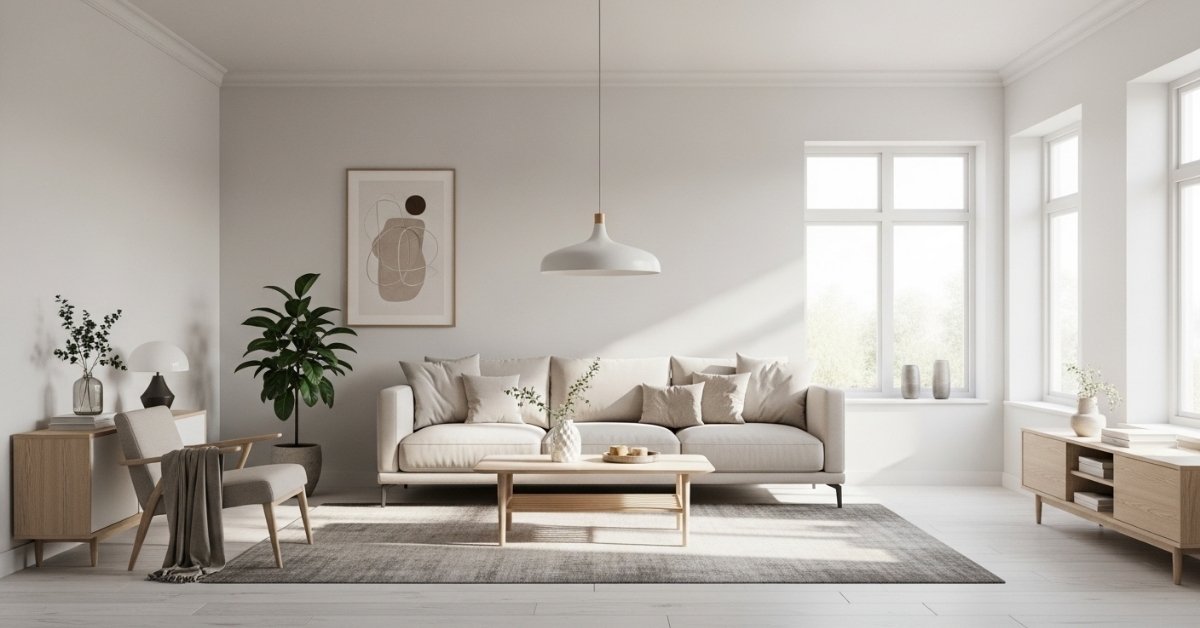
There’s a specific kind of frustration that comes with a room that has enough furniture, enough decor, enough stuff but still feels chaotic or somehow unfinished. If that sounds familiar, minimalist decor isn’t about stripping your home bare. It’s about editing down to what actually earns its place in the room.
In 2026, the minimalist approach has shifted away from cold, sterile interiors toward something warmer, think natural textures, soft neutrals, and intentional negative space that makes a room Minimalist Decor Ideas feel breathable rather than empty. The difference between a room that feels “minimal” and one that feels “incomplete” is mostly about layering materials and getting the layout right.
If you’re working with a small apartment, a rented space, or just a room that’s never quite clicked, these ideas are built around real constraints: limited square footage, natural light, budget, and the need for furniture that actually functions.
A Low-Profile Sofa With One Textured Throw

Low sofas do something visually interesting in a room: they pull the eye along the horizontal plane, which makes ceilings feel higher and walls feel further apart. Pair one with a single textured throw (chunky knit or waffle weave works well) rather than a pile of pillows, and the sofa reads as intentional rather than bare. This setup works especially well in living rooms under 200 sq ft where furniture scale tends to overwhelm the space. The one-throw rule also solves the common problem of sofas looking “staged” rather than lived-in.
A Single Oversized Art Piece Instead of a Gallery Wall
Gallery walls have had a long run, but a single large-scale piece positioned slightly lower than most people’s hang art creates a natural focal point without visual noise. The rule of thumb: the art should be roughly two-thirds the width of the furniture below it. This matters because undersized art on a large wall creates the opposite of the intended effect: it makes the wall feel more empty, not less. In my experience, this works best when the piece has some tonal warmth (earthy tones, soft abstracts) rather than high-contrast black and white, which can feel stark in smaller rooms.
Floating Shelves With Deliberate Gaps

Most shelf styling advice focuses on what to put on shelves. The more useful question is how much space to leave between objects. Deliberate gaps in actual breathing room between a plant, a stack of two or three books, and a single ceramic read as curated rather than cluttered. This approach works well for renters who want personality without permanent changes, and it scales easily: start with fewer objects than feels comfortable, then add one item at a time until it feels balanced.
A Neutral Rug Anchoring the Seating Zone
An undefined seating area furniture floating without visual grounding is one of the most common layout problems in minimalist rooms. A rug solves it without adding visual clutter, if the scale is right. The front legs of the sofa should sit on the rug at minimum; all legs are better. A low-pile jute, wool, or cotton rug in oatmeal or warm greige keeps the floor from competing with the furniture and reinforces the room’s horizontal flow. For renters, this is genuinely one of the higher-impact, lower-commitment changes available.
Warm Lighting in Layers Instead of One Overhead Light

Overhead lighting in most apartments is genuinely bad for the atmosphere; it flattens the room and highlights every imperfection. Replacing or supplementing it with three light sources at different heights (floor lamp, table lamp, and either a wall sconce or shelf lighting) creates depth and warmth that no amount of decor can replicate. This is one I’d recommend trying first before buying any new furniture, because the same room with better lighting reads as a completely different space. Budget option: a plug-in floor lamp plus a clip-on or table lamp covers most of it for under $80.
A Bed Frame With Negative Space Underneath
Beds that sit directly on the floor or have solid bases make a bedroom feel heavier and smaller than it is. A frame with visible clearance underneath even just 6–8 inches allows light to move under the furniture, which has a measurable effect on how open the room feels. It also creates practical storage space for flat bins. Linen bedding in a single neutral tone (no busy patterns) keeps the visual weight centered on the bed rather than scattered across the room.
A Console Table Behind the Sofa as a Room Divider

In open-plan layouts or studio apartments, a console table placed directly behind the sofa does two things: it defines the living zone without using walls, and it creates a surface for low-level lighting that fills the visual gap between the sofa back and the ceiling. Keep it narrow (12–14 inches deep) and limit the objects on top to two or three. This is especially useful when the sofa faces away from the entry, because it gives the back of the sofa a finished, intentional look rather than just the back of the couch being the first thing you see when you walk in.
Curtains Hung Close to the Ceiling
The single most common curtain mistake: hanging the rod at window height rather than ceiling height. Floor-to-ceiling curtains even in an apartment with standard 8-foot ceilings create a dramatic sense of height and make windows feel larger than they are. For minimalist rooms, go with unlined linen or cotton in off-white or warm stone. They filter light softly during the day and add texture without pattern. IKEA’s BLEKVIVA and similar budget options work well here; the fabric matters more than the price point.
Read More About : 29 Modern Decor Ideas That Actually Work in Real Homes (Not Just Pinterest Boards)
A Single Indoor Tree or Large-Leaf Plant

One large plant reads differently than a collection of small ones. A single fiddle leaf fig, monstera, or olive tree placed in a corner near natural light adds organic scale to a room in a way that a shelf of succulents simply doesn’t. The height fills vertical space that would otherwise feel empty, and the single-plant approach avoids the visual clutter of multiple pots at different levels. Terracotta or matte ceramic pots in warm neutrals sit better in minimalist rooms than bright or patterned planters.
A Decluttered Entryway With One Functional Hook Row
Entryways collect clutter faster than any other area because they’re functional first keys, coats, bags, shoes all land there. A wall-mounted hook rail (3–5 hooks, evenly spaced) combined with a low bench below creates a dedicated drop zone that contains the chaos rather than spreading it. Keep the wall above clear. This is a particularly practical setup for apartments where the entryway opens directly into the living space; the contained entry zone creates a visual pause between “outside” and “living area.”
Open Shelving in the Kitchen With Edited Displays

Open kitchen shelves work in minimalist homes only if the editing is consistent which means keeping what’s actually used daily and storing everything else. Stack plates in twos or threes rather than full towers, leave visible gaps between groupings, and add one small plant or ceramic piece. The goal is utility that looks intentional, not styled shelves that require you to move everything to cook. This works best in kitchens with good natural light, since open shelves in dim kitchens tend to look heavier.
A Workstation That Disappears When Not in Use
For anyone running a work-from-home setup in a studio or one-bedroom, a wall-mounted foldable desk is functionally and visually smarter than a freestanding desk that permanently occupies floor space. When folded, it reads as wall paneling. When open, it provides enough surface area for a laptop, monitor, and a notebook. Pair it with a slim chair that tucks completely under or a backless stool that slides beneath and the workspace visually dissolves into the room during off-hours.
Matching Storage Boxes on Open Shelves

Mixing storage containers is one of the fastest ways to make a clean shelf look chaotic. Switching to matching boxes of the same color, same size, lined up consistently immediately reads as organized without requiring you to change what you’re storing. Linen, canvas, or matte cardboard boxes in sand or warm white work best in minimalist rooms. Label them on the inside if needed. This is an under-$30 fix that makes a significant visual difference, especially on bookshelves where the contents vary wildly in size and color.
A Monochromatic Bedroom Color Scheme
A monochromatic room doesn’t mean one color exactly, it means staying within a tonal range (warm whites, greiges, soft taupes) across walls, bedding, and textiles. The effect is a room that feels cohesive and restful without feeling flat, because the texture variation between linen, cotton, and wood keeps it visually interesting. This approach works in bedrooms of any size, but it’s particularly effective in small rooms where color contrast tends to chop the space into smaller visual zones.
Furniture With Thin Legs and Visible Floor Space

Heavy, solid-base furniture makes rooms feel denser than they are. Pieces with slender tapered legs, dining chairs, side tables, sofas, bed frames allow light and sightlines to pass underneath, which keeps the room feeling open. Honestly, this one detail accounts for more of the “airy” quality in minimalist interiors than any paint color or decor choice. For small dining areas specifically, a round table with hairpin or tapered legs uses the same floor footprint as a bulkier table but reads as significantly lighter.
A Minimal Bathroom With Decanted Products
Bathroom counters tend to accumulate branded bottles in different shapes, colors, and sizes which is visual noise in a small, enclosed space. Decanting shampoo, conditioner, soap, and lotion into matching matte dispensers (white, black, or amber glass all work) takes five minutes and makes the entire counter feel intentional. Add one small plant that tolerates humidity, a pothos or small snake plant and a folded hand towel in white or warm linen. That’s the whole setup.
A Dining Area Defined by Lighting, Not Walls

In open-plan apartments where the dining area isn’t a separate room, a pendant light hung low over the table does the work of walls; it creates a defined zone through light rather than physical division. The pendant should hang roughly 30–32 inches above the tabletop. This works for renters because it requires only one ceiling hook and creates significant visual impact relative to cost. A warm-toned bulb (2700K) keeps the dining zone feeling separate from the brighter kitchen area without any additional partition.
Built-In or Recessed Storage Where Possible
Any storage that sits flush with or recessed into the wall removes visual bulk from the room. Even in non-custom setups, shallow IKEA built-ins painted to match the wall achieve a similar effect; the shelving system essentially disappears, leaving only the objects displayed. For minimalist rooms, this is more useful than freestanding shelving because it doesn’t consume floor space or create a “furniture-heavy” feeling in smaller rooms.
Read More About : 25 Studio Apartment Ideas That Actually Make Small Spaces Feel Like Real Homes
A Reading Nook Built Into an Unused Corner

Unused corners are one of the most overlooked opportunities in minimalist design. A low cushioned bench (or even a window seat cushion laid on a low platform) plus a single floor lamp creates a functional zone that also gives the room a sense of intentional layout. It solves the corner problem, the awkward empty space that doesn’t know what it’s doing without adding a large piece of furniture. This works in living rooms, bedrooms, and even wider hallways.
Textured Walls Instead of Wallpaper or Art
Limewash paint, plaster effect, or even Roman clay creates a surface texture that shifts with light throughout the day which means the wall itself becomes a visual element without hanging anything on it. This is a growing trend heading into 2026, partly because it works especially well in rooms where you want an atmosphere without pattern or color. It’s also more renter-friendly than it sounds: limewash paint is water-based and applies over existing paint, and some landlords approve it when asked.
A Clutter-Free Kitchen Counter Policy

Counter clutter is the fastest way to make a kitchen feel smaller and more chaotic than it actually is. A simple rule: only the items used daily stay on the counter (coffee maker, kettle, cutting board). Everything else toaster, stand mixer, utensils lives inside cabinets and comes out when needed. I’ve noticed this works best when you approach it as a system rather than a one-time declutter, because the tendency to set things “temporarily” on the counter is where it falls apart. A countertop that’s 80% clear reads as genuinely spacious even in a galley kitchen.
Bedside Tables Replaced by Wall-Mounted Alternatives
Standard bedside tables consume floor space and often end up as clutter collectors. A wall-mounted shelf at mattress height just wide enough for a lamp, a glass of water, and one book does the same job with no floor footprint. This is particularly useful in narrow bedrooms where there’s less than 24 inches of clearance on each side of the bed. It also forces a natural editing habit: the shelf can only hold three things, so only three things live there.
Mirrors Used for Light, Not Just Reflection

A mirror placed directly opposite or at 45 degrees to a window bounces natural light deeper into the room which matters more in north-facing or low-light rooms than any lamp you could add. The shape matters too: round mirrors sit better in minimalist rooms than rectangular ones, because they break the geometry of the walls and furniture without competing with them. Go for simple metal or wood frames in matte finishes rather than ornate styles. This is a layout-based decision more than a decor one.
An Edited Coffee Table Vignette
Coffee tables collect things. Remotes, cups, mail, random items within a week, a clean surface disappears. A tray-based system helps: a tray defines the “decor zone” and everything else gets cleared off or stored. Inside the tray: one candle, one object (stone, small ceramic), and optionally a single coffee table book. The tray also makes it easy to clear the whole surface in one move when the table is being used. This is the kind of system that works long-term rather than just for a photo.
Concealed TV Setup With a Simple Panel or Frame

A TV mounted flush to the wall with a simple surround panel or even a narrow floating shelf below for the media box looks significantly cleaner than a freestanding TV stand with cables visible. The panel doesn’t need to be built-in; slim IKEA units painted to match the wall achieve the same effect. The goal is to reduce the visual chaos around the TV rather than the TV itself, since cable clutter and asymmetric placement tend to be the actual problem.
A Dining Table That Doubles as a Work Surface
In studios and one-bedrooms, a dining table that functions as a work surface during the day is more spatially efficient than having both a desk and a dining table. This works best with a round or oval table (easier to use from multiple angles and positions), a surface that clears completely at mealtimes, and a dining chair that’s comfortable enough for extended sitting. The minimalist constraint here is intentional: the table has to stay clear enough to work, which means storage needs to be nearby and well-organized.
A Cohesive Material Palette Across the Room

Minimalist rooms that feel disjointed usually have too many competing materials: warm wood floors against cool metal furniture, linen textiles next to glossy surfaces, multiple wood tones that don’t quite match. Limiting the room to three materials (for example: warm oak, linen, and matte black metal) and repeating them across multiple pieces creates visual cohesion without requiring expensive furniture. The repetition is what makes it feel intentional. If you have a light oak dining table, a light oak floating shelf creates continuity. If you have a matte black pendant, a matte black curtain rod ties it together.
What Actually Makes Minimalist Decor Work in Real Homes
Minimalism in home design is less about removing things and more about making deliberate decisions about what stays. The ideas above share a few underlying principles worth understanding before you start rearranging:
Scale is everything.
Furniture that’s too small for a space reads as sparse and cold. Furniture that’s correctly scaled, a sofa that fills the seating zone, a rug large enough to anchor it, art wide enough for the wall reads as intentional. Most minimalist rooms that feel “off” are dealing with undersized pieces.
Texture prevents emptiness.
A room in all-white with smooth surfaces feels clinical, not calm. The warmth in minimalist interiors comes from material contrast: linen against plaster, wood against metal, matte against soft. You don’t need more objects, you need more material variation in the objects you keep.
Layout beats decor.
Rearranging furniture to improve traffic flow, natural light access, and sightlines has a bigger impact on how a room feels than adding or removing decor. If a room feels off, check the layout before buying anything new.
Minimalist Decor Setup Guide by Room and Constraint
| Room | Best Setup | Space Type | Primary Problem Solved |
| Small living room | Low sofa + ceiling-height curtains + layered lighting | Under 150 sq ft | Visual heaviness, low ceilings |
| Studio apartment | Console divider + wall-mounted desk + round dining table | Open-plan, under 400 sq ft | Zone definition, multi-use layout |
| Narrow bedroom | Wall-mounted bedside shelves + platform bed + monochromatic palette | Under 10 ft wide | Floor space, visual clutter |
| Open-plan kitchen-dining | Pendant over table + edited open shelves + clear counters | Combined spaces | Zone separation, clutter |
| Bathroom | Decanted products + single plant + matching towels | Small/shared | Counter clutter, visual noise |
| Home office corner | Foldable wall-mounted desk + tucked chair | Any size | Multi-use flexibility |
| Large living room | Oversized art + material palette + statement plant | Over 250 sq ft | Visual cohesion, scale |
How to Design a Minimalist Room Without It Feeling Empty
The biggest concern people have with minimalist decor is that the room will end up looking unfinished. Here’s how to avoid that while keeping the layout genuinely clean:
Anchor the room first.
Before adding any decor, get the foundational pieces right: a correctly scaled rug, furniture at the right size for the room, and lighting at multiple heights. These three elements do more for the room than any styling layer on top.
Work in material families.
Choose two primary materials (e.g., warm wood and linen) and one accent (e.g., matte black or stone). Use these consistently across furniture, textiles, and smaller objects. This creates cohesion that reads as intentional rather than sparse.
Add objects in odd numbers, sparingly.
On any surface shelves, coffee tables, consoles group objects in threes: one taller element (plant, lamp, vase), one mid-height element (book stack, candle), and one low flat element (tray, stone, small ceramic). Then stop. The impulse to add more is almost always wrong.
Let negative space do work.
Empty wall sections, clear floor areas, and bare countertop space are not problems to solve; they’re part of the design. A room with intentional empty space reads as calm. A room where every surface is filled reads as cluttered, regardless of how nice the individual objects are.
FAQ’s
What is minimalist home decor, exactly?
Minimalist decor is a design approach that focuses on keeping only what serves a function or adds clear visual value to a space. It’s defined by edited surfaces, a limited material palette, intentional furniture placement, and the use of negative space, not the absence of personality or warmth.
How do I make a minimalist room feel warm and not cold?
Warmth in minimalist rooms comes from material choice, not quantity of objects. Use linen, wool, natural wood, and matte finishes rather than glossy or synthetic surfaces. Layer lighting at multiple heights instead of relying on overhead light. A warm-toned neutral palette (greige, oat, warm white) will always feel cozier than a cool one.
Can minimalist decor work in a small apartment?
Yes in fact, minimalist principles tend to be more effective in smaller spaces. The key adjustments for small apartments are ceiling-height curtains to increase perceived height, furniture with visible leg clearance to open up floor space, and mirrors placed opposite windows to distribute natural light.
Minimalist vs. Scandinavian decor: what’s the difference?
Scandinavian decor is a style that often overlaps with minimalism but includes more hygge-inspired warmth: cozy textiles, candles, and a soft, lived-in quality. Minimalism is a broader design philosophy that can range from warm and natural to cool and architectural. Scandinavian design is one interpretation of minimalism not a synonym.
How do I declutter without making my home feel sterile?
Start with surfaces, not storage. Clear countertops, shelves, and tables down to only what’s used daily or genuinely enjoyed. Then focus on material warmth in what remains: one quality textile, one plant, one piece of art is enough to anchor a room. Sterile spaces usually lack texture, not objects.
What’s the biggest minimalist decor mistake people make?
Undersizing furniture is the most common one. A sofa that’s too small for the room, a rug that doesn’t extend under the furniture, or art that’s too narrow for the wall; these create the “sparse and off” feeling that gives minimalism a bad reputation. Scale up, then edit the decor down.
Is minimalist decor expensive to achieve?
Not necessarily. The most impactful minimalist changes, ceiling-height curtains, rearranging furniture for better flow, clearing surfaces, and matching storage containers cost little to nothing. Where budget matters more is in choosing fewer, better-quality foundational pieces (a good rug, a well-scaled sofa) rather than filling the room with lower-quality items.
Conclusion
A well-executed minimalist room isn’t about having less, it’s about having the right things in the right places. Whether you’re dealing with a cramped studio, an awkward open-plan layout, or just a space that never quite comes together, most of the improvements come from layout, scale, and material decisions rather than buying more decor.
The key is finding what works for your specific space and living habits. Not every idea here will fit your room, but even two or three of these setups: a correctly scaled rug, ceiling-height curtains, layered lighting will noticeably shift how the room feels. Start with the change that addresses your most persistent frustration, get it right, and build from there.
