

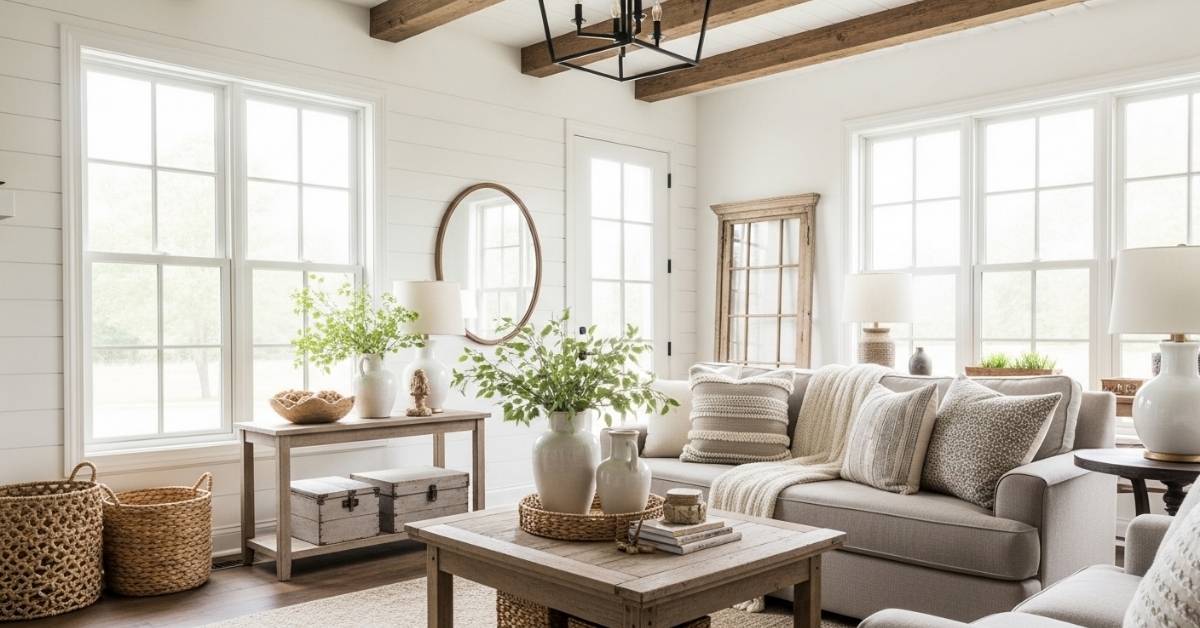
Farmhouse style has quietly shifted in the last couple of years. The all-shiplap, all-white, mason-jar-on-every-surface version has faded and what’s replaced it is something more livable. Think warm Farmhouse Style Ideas wood tones, aged textures, practical layouts, and just enough raw character to feel intentional without feeling like a set piece.
If your space feels either too sterile or too cluttered, farmhouse design done right sits in a sweet spot between those two. It solves the “nice but not cozy” problem that a lot of modern interiors run into. For anyone working with a small apartment, a rental, or a room that needs both personality and function, these ideas are worth paying attention to.
Shiplap Accent Wall With Warm White Paint and Sconce Lighting

Most shiplap walls fail because they go too bright or cover too much surface area; the room ends up feeling cold and flat. The better approach is one accent wall in a warm white (think Benjamin Moore White Dove rather than pure white), flanked by simple brass or black iron sconces. The horizontal lines extend the room visually, and the sconces add warmth without requiring overhead lighting changes. This works especially well in living rooms or entryways where you want character without repainting an entire room. It also works for renters who can install removable shiplap panels. The practical win: you get architectural interest without any structural change.
Reclaimed Wood Floating Shelves Over an Open Kitchen Wall
Open shelving can easily become visual clutter, but reclaimed wood solves the chaos problem through texture. The grain variation, knots, and natural patina create enough visual weight that you don’t need matching accessories, mismatched ceramics, a few plants, and everyday dishware all look intentional together. Place two to three shelves between 12–14 inches apart to stack standard plates and glasses without things feeling crammed. This setup works best in kitchens with some natural light and white or neutral tile; it needs contrast to read well. The functional upside is real: open shelving makes a small kitchen feel significantly larger than upper cabinets do.
Farmhouse Dining Table With Bench Seating on One Side

A bench along one wall of a dining table does two things: it handles more guests without adding chairs, and it softens the formality of a traditional dining setup. Pair it with two or three chairs on the opposite side, ideally not perfectly matching for that collected-over-time feeling that defines farmhouse style. The table itself should be natural or whitewashed wood, not stained dark. Dark wood dining tables absorb light in smaller rooms, which makes the whole space feel heavier. In my experience, this setup works best when the bench is pushed against a wall or banquette, leaving enough walking space (at least 36 inches) on the chair side. It’s especially practical for small dining rooms or eat-in kitchens where space is a real constraint.
Black Iron Hardware Swapped Into an All-White Kitchen
This is one I’d actually recommend trying first before any bigger kitchen update; it costs under $100 total and changes the entire read of a kitchen. Swapping standard silver or chrome hardware for matte black iron bin pulls or cup pulls on white Shaker cabinets immediately grounds the look. The iron gives the cabinets a heavier, more aged quality that feels farmhouse without any farmhouse signage or printed towels required. It also works in gray or navy kitchens. The only constraint: the cabinets should be Shaker style or flat-frontornate door profiles with black hardware clash rather than complement.
Apron-Front Farmhouse Sink as a Functional Focal Point

The apron-front sink is one of the few farmhouse pieces that earns its place purely through function. The deep basin handles large pots, sheet pans, and flower arranging. The exposed front apron draws the eye naturally, making it a design feature even in otherwise minimal kitchens. Pair it with a high-arc faucet in brushed brass or oil-rubbed bronze/not chrome to maintain the warmth the design calls for. Where this really pays off is in open-concept kitchens where the sink is visible from the living or dining area. The apron front reads like a piece of furniture from that angle rather than just a utility fixture.
Linen Curtains Hung High and Wide to Maximize Window Visual Weight
The single change that makes the biggest difference in how a room feels: hang curtains at ceiling height, not at the window frame. And extend the rod six to twelve inches past the window on each side. Natural linen in off-white or warm oatmeal does this particularly well in farmhouse interiors; the texture reads as intentional, and the material pools softly at the floor when slightly oversized. This setup makes a standard 8-foot ceiling feel closer to 10 feet and doubles the perceived window size. It solves the most common problem in newer homes and apartments: windows that feel small and rooms that feel boxy.
Whitewashed Brick Fireplace Surround in a Living Room

A whitewash not a solid paint on brick is what separates a dated farmhouse fireplace from one that feels current. The wash keeps the texture visible, so you still read the variation in the brick, but the color pulls the whole wall into a lighter, more cohesive palette. The mantle matters as much as the brick: reclaimed wood or a simple thick plank of natural wood in a non-matching tone creates the contrast that makes the whole setup look designed. This works best as a focal point in living rooms where the furniture arrangement naturally faces the fireplace. If the room doesn’t have a fireplace, a faux beam mantle shelf on a plain wall achieves a similar architectural effect at a fraction of the cost.
Vintage-Style Open Baker’s Rack in a Kitchen or Dining Nook
Baker’s racks solve a specific problem in small kitchens and dining nooks: vertical storage that doesn’t feel like storage. The open design keeps the piece from blocking light or creating a visual barrier, and the mix of materials, usually iron frame, wood or wire shelves lands naturally in a farmhouse palette without any effort. Style the top shelf loosely: trailing plant, candle, a small ceramic. Use the middle shelves for things you actually reach for. The bottom shelf can hold cookbooks or baskets. This is one of those pieces that works in apartments where built-ins aren’t an option and where a closed cabinet would feel too heavy.
Read More About : 26 Boho Decor Ideas That Make Any Room Feel Warm, Layered, and Lived-In
Cotton or Wool Layered Rugs on Hardwood Floors

Layering a smaller patterned rug over a larger jute or sisal base rug does something a single rug can’t: it adds depth to the floor without adding furniture. The jute gives warmth and texture; the patterned top layer adds visual interest. For farmhouse interiors, stick to muted tones, faded blues, terracotta, cream, soft black and avoid rugs with too much sheen or synthetic fiber. Wide plank hardwood floors benefit most from this setup because the base rug grounds the space without covering the floor grain entirely. Even on less interesting floors, the layered approach works better than a single large rug because the scale variation keeps the room from looking flat.
Galvanized Metal Pendant Lights in a Kitchen or Dining Area
Pendant lights over a kitchen island or dining table are expected what make them feel like a farmhouse rather than industrial. Galvanized metal (that slightly matte, silvery-gray surface) hits the right balance between utilitarian and character-filled. Three lights in a row over a rectangular table or island, spaced evenly, is the standard setup for good reason: the pattern creates structure in a room that might otherwise feel undefined overhead. Drop them low enough that the light pools onto the surface (around 28–34 inches above the table) rather than lighting the whole ceiling. For open-plan spaces, pendant placement also acts as a visual divider between kitchen and dining zones.
Beadboard Wainscoting in a Mudroom or Entry Hallway

Beadboard at chair-rail heightroughly 36 inches in an entryway or mudroom does more than add texture. It creates a natural dividing line between the lower traffic zone (where things get scuffed) and the upper wall (which can be any color or treatment). Paint the beadboard in a semi-gloss white and the upper wall in a warm greige or deep tone for maximum contrast. Add iron coat hooks directly into the beadboard studs, a simple wood bench underneath, and a washable runner. This setup works especially well in narrow hallways where square footage is limited but you still need functional storage. The wainscoting protects the wall and adds the vertical structure that empty hallways tend to lack.
Exposed Wood Ceiling Beams in a Living Room or Kitchen
Actual structural beams or convincing faux beams (hollow wood boxes that mount directly to the ceiling) both do the same thing in a room: they lower the visual ceiling height in a way that feels cozy rather than cramped. The key is proportion beams look right when they’re deep enough to read from eye level. For an 8-foot ceiling, 4-inch beams are the minimum; for a 10-foot ceiling, 6-inch beams are more appropriate. Pair with white or warm-white walls and light furniture to offset the visual weight the beams add. This is one of the few farmhouse elements that reads as high-end rather than rustic when done at the right scale, which is why it appears frequently in modern farmhouse interiors aimed at a more refined look.
Sliding Barn Door as a Room Divider or Closet Cover

The barn door’s practical advantage isn’t the lookit’s the space saving. A standard hinged door requires 14–16 square feet of swing clearance. A barn door takes zero floor space. For small bedrooms, bathrooms, or home offices where every inch matters, the hardware cost pays off quickly. Use solid plank wood for a classic farmhouse feel, or a board-and-batten style for something slightly more modern. The black iron hardware (the track and rollers) works with almost any interior palette; it reads the same way black-frame windows do: grounding without dominating. Where barn doors fail: on exterior-facing walls where sound and light bleed through the gap at the track. They’re interior dividers, not insulating doors.
Shaker-Style Cabinets in a Two-Tone Kitchen Layout
Two-tone kitchens, darker lower cabinets, lighter uppers are a modern farmhouse staple for a reason. The lower half anchors the room with depth; the upper half keeps it open and airy. Navy, forest green, and charcoal work best for the lower cabinets, paired with white or warm cream uppers. Shaker doors are essential to the look: the inset panel gives just enough dimension to avoid looking flat, but stays clean enough that it doesn’t compete with the two-tone color. This works in kitchens of any size. In smaller kitchens, the lighter uppers matter, especially as they prevent the room from closing in. Honestly, this is more of a long-term kitchen investment than a quick update, but the return in aesthetic value is significant.
Vintage or Antique Mirrors in a Farmhouse Bathroom

Mirrors in bathrooms tend to be builder-grade rectangles. Swapping in a vintage arched mirror or an ornate frame in an aged gold or iron finish immediately changes the bathroom from functional to finished. For farmhouse style specifically, rounded or arched mirror shapes work better than rectangular; they soften the linear quality of subway tile and flat cabinet faces. Keep the mirror proportional: in a single-sink vanity, a 24–30 inch mirror is plenty; trying to fill the full wall width makes the mirror compete with the architecture. I’ve noticed this swap alone changes how the bathroom reads more than almost any other single update; it’s one of the highest-impact, lowest-cost changes in a home.
Woven Baskets as Built-In-Style Storage in Any Room
Baskets are one of those solutions that look designed when they’re actually just practical. Large woven seagrass or water hyacinth baskets on the lower shelves of a bookcase or built-in unit create the appearance of custom cabinetry without the cost. They hide blankets, toys, paper, charging cables, anything that creates visual clutter. For farmhouse interiors, choose natural-fiber baskets in unbleached tones rather than painted or dyed versions. The texture reads as intentional alongside wood and linen. In bathrooms, tall woven hampers and smaller counter baskets do the same thingfunctional storage that also adds warmth.
Plank Board Ceiling as an Affordable Alternative to Beams

A tongue-and-groove plank ceilinginstalled horizontally or at a slight angleadds architectural character at a significantly lower cost than structural or faux beams. Painted in soft white or warm cream, it reads as both modern and farmhouse simultaneously. The planks break up a flat ceiling without the visual weight beams added, which makes this option better for smaller rooms or bedrooms where you want character without the room feeling heavier. The installation is DIY-friendly for anyone comfortable with a nail gun, and the material cost is low. In rooms with 8-foot ceilings, it’s one of the only ceiling treatments that actually adds interest without making the space feel lower.
Industrial Pipe Shelving in a Home Office or Living Room
Iron pipe shelving sits at the intersection of farmhouse and industrial, which makes it work in spaces that aren’t fully committing to one aesthetic. The pipe brackets are structural as well as decorative; they can hold real weight, so these shelves actually function as bookshelves, not just display surfaces. The combination of black iron pipes and reclaimed or natural wood boards is one of the more versatile treatments in modern farmhouse design because it reads well in both traditional and contemporary settings. This setup works best in home offices or study nooks where you need functional shelving but want something more interesting than standard brackets. The pipe-and-plank look also suits exposed brick and white walls equally well.
Farmhouse-Style Dining Bench Upholstered in Natural Linen

An upholstered bench at a farmhouse dining table is one of those updates that changes how the room feels to actually use, not just to look at. The linen adds softness to a setup that’s often all hardwood woodtable, chairs, floors and makes longer dinners more comfortable. Choose natural, unbleached linen or cotton canvas for the upholstery rather than velvet or synthetic blends; the texture matters as much as the color. Keep the legs of the bench in natural wood or matte black. This works especially well in dining rooms that are otherwise quite minimalthe bench adds warmth and visual interest without adding another furniture piece.
Black-Frame Windows or Interior Window Trim as an Accent
Adding black trim paint to existing window frames or choosing black-frame windows in a renovation is one of the defining moves in modern farmhouse design right now in 2026. The black lines create a grid effect that references both old factory windows and traditional farmhouse proportions. The practical effect: windows read as intentional design features rather than just openings in the wall. This works in any room but is particularly effective in rooms with multiple windows or large openings, where the repeated black frame creates a rhythm. It pairs especially well with white walls and natural wood floors, where the contrast ratio is high enough to make the frames pop without feeling heavy.
Ceramic or Stoneware Cookware Displayed on Open Shelves

One of the simplest ways to bring farmhouse character into a kitchen is displaying cookware that’s actually beautiful. Matte stoneware and ceramic pieces in white, cream, sage, or speckled clay look intentional on open shelves more so than matching sets in printed colors. A Dutch oven, a set of stackable bowls, handmade mugs, and a wooden utensil crock cover the aesthetic without requiring anything purely decorative. The practical benefit here is real: open shelving with cookware you use daily makes the kitchen more functional, not less. The key is editing rather than adding a few quality pieces that work better than a fully stocked shelf.
Read More About : 27 Minimalist Decor Ideas That Make Any Room Feel Calmer, Bigger, and Intentionally Designed
Wood Paneling Behind a Bed as a Farmhouse Headboard Alternative
Mounting the bed against a paneled wallshiplap, board-and-batten, or simple vertical planks removes the need for a traditional headboard while creating something architecturally more interesting. The panel doesn’t need to cover the entire wall; behind-bed width plus 12 inches on either side is enough to frame the bed without the project feeling overwhelming. Paint it a shade darker than the other wallswarm taupe, dusty sage, or aged white for definition. This works especially well in rented spaces where built-in headboards aren’t an option and where bare walls feel unfinished. The visual result is a bed that looks designed into the room rather than placed against it.
Vintage Wood Crates or Milk Crates as Modular Storage

Stacked wood crates whether vintage or new, sanded and aged function as side tables, plant stands, and storage units simultaneously. A single crate beside a sofa serves the same purpose as a side table at a fraction of the cost. Two stacks create a small bookcase. Three in an L-shape become a corner unit. The aging in the woodmarks, worn edges, varied grain is an asset in farmhouse interiors rather than a problem. This idea works for renters because it requires no mounting, no permanent installation, and nothing that can’t be undone. It’s also one of the better budget solutions for studio apartments where every piece needs to do double duty.
Subway Tile With Dark Grout in a Farmhouse Kitchen or Bath
Standard subway tile with white grout is so common it barely reads as a design choice. The same tile with charcoal or dark gray grout tells a completely different storymore aged, more graphic, more intentional. The grid becomes visible, which adds structure to what is usually a flat, undifferentiated expanse of white tile. Dark grout also has a practical advantage: it hides staining and wears significantly better than white grout, which means the backsplash or shower surround actually looks better years in. For farmhouse kitchens specifically, the dark grout grounds the tile and prevents the “all-white” feeling that can make a kitchen feel clinical rather than warm.
Neutral Linen or Cotton Slipcovers on a Sofa

Slipcovers solve a specific problem in lived-in homes: the sofa is the most used, most damaged piece of furniture in the room. A natural linen or cotton canvas slipcover in off-white, warm oatmeal, or soft gray extends the life of the sofa, adjusts seasonally, and washes easily. For farmhouse style, the slightly relaxed, loose-fitting quality of a slipcover actually works in the aesthetic’s favorit avoids the over-tightened, formal look that conflicts with the casual warmth farmhouse interiors aim for. This is also one of the better options for rental homes where replacing furniture isn’t practical but the existing sofa doesn’t fit the style direction.
Potted Herbs and Greenery as Practical Farmhouse Decor
Terracotta pots of herbs on a kitchen windowsill or open shelf do something purely decorative plants don’t: they justify their own presence functionally. In a farmhouse kitchen, the terracotta material, the visible soil, and the varied green tones add life without requiring any additional styling. Scale matterssmall 3-inch pots in a row read as intentional, while a single large pot in the wrong spot looks forgotten. Outside the kitchen, trailing plants like pothos or a simple fiddle-leaf fig in a woven basket bring the same organic quality to living rooms and bedrooms. The practical upside is obvious: fresh herbs available while cooking, and plants that actually improve a room’s air quality and texture.
Concrete or Stone Countertops Paired With Warm Wood Accents

Concrete countertops have a texture and surface variation that no engineered stone can replicate and that variation is what makes them work in a farmhouse kitchen. They’re not pretending to be marble; they have their own material character. The key pairing is warm: wood open shelves, wooden cutting boards, natural fiber textiles nearby. Cold-on-cold (concrete counters + stainless steel + white tile with no warmth) reads industrial rather than farmhouse. For those who want the look without the concrete cost or sealing requirements, honed limestone or a matte-finish quartzite achieves a similar result. These surfaces age gracefullysmall marks and patina over time only add to the character rather than detracting from it.
What Actually Makes Farmhouse Style Work in Modern Homes
The most common mistake is treating farmhouse style as a collection of items to purchase rather than a visual philosophy to apply. Buying shiplap panels, mason jars, and a “Gather” sign doesn’t create a farmhouse interior, it creates a collage of farmhouse signifiers that reads as costume rather than design.
What actually makes the style work is material honesty. Every material in a genuinely good farmhouse interior is doing something real: the wood shows its grain, the iron shows its forge marks, the linen shows its weave. When those textures are present in the right proportionsroughly 60% warm neutrals, 30% natural wood, 10% iron or darker accents the room has its own logic that holds together without effort.
Scale is equally important. Farmhouse interiors historically came from working buildings with generous proportions, high ceilings, large tables, wide hallways. Trying to import the full vocabulary into a 700-square-foot apartment without adjustment produces rooms that feel overloaded. The solution is selective: choose two or three farmhouse elements that solve real problems in the space (storage, texture, light, proportion) and let them be enough.
Farmhouse Style Setup Guide
| Idea | Best Room | Space Type | Problem Solved | Budget Level |
| Shiplap accent wall | Living room, entry | Any | Blank walls, lack of texture | Low–Mid |
| Apron-front sink | Kitchen | Any | Utility + visual focal point | Mid–High |
| Two-tone Shaker cabinets | Kitchen | Medium–Large | Dated or flat kitchen | High |
| Sliding barn door | Bedroom, bathroom | Small | Swing clearance, storage access | Mid |
| Linen curtains hung high | Any room | Small–Medium | Low ceilings, small windows | Low |
| Open reclaimed wood shelves | Kitchen, living room | Any | Upper cabinet weight, storage | Low–Mid |
| Black iron hardware swap | Kitchen | Any | Generic builder finishes | Very Low |
| Board-and-batten panel wall | Bedroom | Any | Blank walls, no headboard | Low–Mid |
| Woven basket built-ins | Living room, bath | Small–Medium | Visible clutter | Very Low |
| Layered rugs | Living room, bedroom | Any | Flat floors, acoustic softness | Low–Mid |
Common Farmhouse Design Mistakes That Flatten the Look
Overdoing the white.
All-white farmhouse rooms often end up feeling sterile rather than clean. White walls are fine, but white cabinets + white tile + white trim + white furniture creates a room with no contrast for the eye to settle on. Introduce warmth through wood tones, linen textiles, and one or two deeper accent colors.
Buying too many signs and words.
Printed wood signs, block-letter words, and stenciled quotes are the fastest way to make a farmhouse interior feel like a retail display. The real farmhouse aesthetic is object-driven, not word-driven. Let the materials do the communicating.
Using too many different wood tones.
Mixing three or four different stains and wood tones in one room creates visual noise rather than warmth. Limit wood tones to two: one for floors, one for furniture and shelving. If they don’t match exactly, that’s fineit’s the general warmth range that matters.
Pendant lights hung too high.
In farmhouse dining rooms especially, pendants are frequently hung at a height where they light the ceiling rather than the table. The bottom of the pendant should sit 30–34 inches above the dining surface. Hung correctly, they create intimacy. Hung too high, they disappear.
Going all rustic and no modern.
Pure rustic farmhouse, every piece aged, every material can feel heavy and dated. The “modern farmhouse” balance that actually works in contemporary homes is roughly 70% clean and minimal, 30% textured and aged. The rustic pieces need the clean backdrop to read as intentional.
FAQ’s
What is farmhouse style in home decor?
Farmhouse style is a design aesthetic that combines natural materialswood, iron, linen, stone with a practical, unfussy layout. It emphasizes texture, warmth, and lived-in character over polish, drawing from the working architecture of rural homes adapted for modern interiors.
How do I make my home look like a farmhouse without going overboard?
Pick two or three elements that address a real need in your space: better storage, more texture, improved lighting. Shiplap on one wall, iron hardware in the kitchen, and linen curtains give you the farmhouse palette without the look feeling themed.
What colors work best for a modern farmhouse interior?
Warm whites, creamy off-whites, soft greige, muted sage green, and dusty blues are the most consistent performers. The key is avoiding stark white it reads too clinical and avoiding overly saturated tones that compete with the natural material palette.
Is farmhouse style still popular in 2026?
The original all-white, all-shiplap farmhouse look has evolved. What’s current is a warmer, more material-focused version, sometimes called “organic farmhouse” or “modern rustic”that incorporates aged textures, earth tones, and practical layouts. The bones of the style remain widely used; the execution has just matured.
Can you do farmhouse style in an apartment or rental?
Yes. The most renter-friendly farmhouse updates include swappable hardware, removable shiplap panels, linen slipcovers, open shelving, barn doors in closet openings, and layered rugsnone of which require permanent modification.
Farmhouse vs. rustic: what’s the difference?
Rustic leans heavier into raw, unfinished materials, rough-hewn wood, stone, exposed structural elements and tends toward darker, more dramatic interiors. Farmhouse style is lighter, more functional, and more domestically scaled. Modern farmhouses in particular deliberately mixes clean-lined furniture with aged textures, which rustic design doesn’t typically do.
What furniture shapes work best in a farmhouse interior?
Simple, sturdy, and functional: plank-top tables, slab benches, ladder-back chairs, open case goods. Avoid overly ornate profiles, heavily carved furniture, or anything with too much visual decoration that competes with the material textures that farmhouse style depends on.
Conclusion
A well-done farmhouse interior doesn’t announce itself. It feels like a home where considered choices accumulated over timesome things kept for use, some for beauty, most for both. That’s what gives it a warmth that trend-driven decorating rarely achieves.
Start with one or two of these ideas that match what your space actually needs right now whether that’s better storage, more warmth, or simply a wall that doesn’t feel blank. Adjust from there. The key is finding what works for your space, your layout, and the way you actually live in itnot recreating a room you saw somewhere else.
