

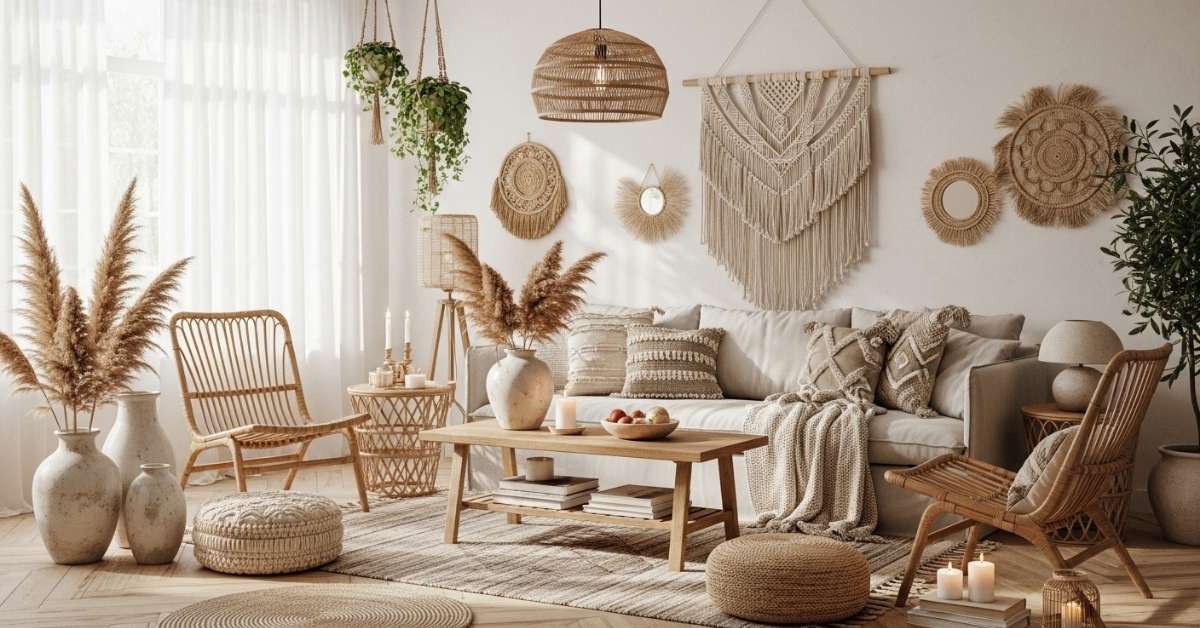
There’s something about a well-done boho living room that stops you at the doorway. Not because it’s Instagram-perfect, but because it actually feels like someone lives there warmly, intentionally, Boho Living Room Decor Ideas without trying too hard. That’s the appeal. And in 2026, boho isn’t fading it’s getting smarter. Less accumulation, more intention. Fewer trinkets, more texture. The spaces that feel best right now are the ones that layer natural materials and personal pieces without tipping into clutter.
If your living room feels a little flat, a little generic, or like it’s missing warmth boho decor has a practical answer for almost every version of that problem. Whether you’re working with a small apartment, a rented space with white walls you can’t touch, or a larger room that just won’t come together, these ideas are grounded in what actually works.
For anyone who wants their living room to feel more personal without starting over, this is a good place to start.
Layer a Vintage Kilim Rug Over Neutral Flooring

Rugs in boho spaces do double duty they anchor the layout and carry most of the visual interest in the room. Layering a vintage kilim (or a kilim-style flat-weave) over a neutral jute or cotton base rug is one of the more practical ways to get that effect without committing to a single bold piece. The base rug softens the floor acoustically and gives the printed rug something to sit against without overwhelming the room. This works especially well in smaller living rooms where one large patterned rug can feel like too much. The layered approach lets you control scale keep the top rug smaller and centered under the coffee table so it reads as decor, not floor covering.
Build a Low-Profile Seating Area with Floor Cushions and a Platform Sofa
There’s a reason low seating is showing up in more boho spaces right now it changes how the room breathes. A platform sofa or low sectional with floor cushions pulled alongside it creates a horizontal visual line that makes ceilings feel taller and the room feel less stuffed with furniture. It’s also genuinely more flexible; the cushions move, stack, or disappear when you need the space. This setup works best in open-plan apartments or compact living rooms where a traditional sofa-plus-armchair configuration crowds the walking path. The practical tradeoff: it’s easier on a room’s proportions than it is on someone who has trouble getting up from low seating.
Read More About : 26 Open Shelf Kitchen Decor Ideas That Actually Work in Real Homes
Use Macramé Wall Art to Add Texture Without Weight

Bare walls are one of the most common complaints in living rooms they feel unfinished but hard to solve without committing to art you’re not sure about. Macramé solves this well. It adds significant visual texture and warmth, works on rental walls (it hangs from a single hook), and brings an organic, handmade quality that framed prints don’t. The key is scale: a piece that’s too small for the wall reads as an afterthought. For a sofa wall, go for something at least two-thirds the width of the sofa. In my experience, this is one of the first changes that makes a room feel intentionally designed rather than just furnished.
Bring In Rattan and Cane Furniture for Lightweight Structure
Rattan and cane furniture do something wood can’t quite do they add structure and solidity without visual weight. In a smaller living room, that matters. A rattan chair reads as a full seat without making the room feel smaller, because you can see through and around it. The open weave lets light pass and keeps sight lines clear across the space. This is especially useful if you’re furnishing a rental where you can’t paint or knock out walls the furniture itself carries the boho warmth that might otherwise come from the room’s architecture. Pair with a simple cushion in a solid neutral or earthy tone. Skip anything too ornate in the cushion pattern if the chair already has visual complexity.
Install Floating Shelves Styled with Plants, Books, and Ceramics

Open shelves in a living room are either a mess or a statement the difference is almost entirely about what isn’t on them. For a boho shelf that actually looks intentional, the formula is simple: one-third plants, one-third ceramics or objects with texture (baskets, woven pieces, clay vessels), one-third books spine-out with occasional horizontal stack. Keep some breathing room between groupings. The visual effect is layered warmth without the shelf looking packed. This works in small apartments as a substitute for a media console mount the shelves at varying heights, keep electronics low or hidden, and let the decor carry the eye upward.
Use Warm-Toned Throw Blankets Draped Over Seating
A throw blanket sounds like a small detail, but in a boho living room it functions more like a material layer it brings softness, color, and dimension to a sofa that might otherwise look flat. The draped-rather-than-folded placement is what creates the lived-in quality that defines this aesthetic well. For it to work without looking sloppy, stick to one or two throws maximum, and choose natural fibers chunky cotton, waffle-weave linen, or loose-woven wool. Synthetic throws tend to look cheap regardless of color. This is a genuinely renter-friendly, budget-conscious idea that has a disproportionate effect on how warm and inhabitable a room feels.
Create an Indoor Plant Corner with Mixed Sizes and Vessels

Plants in a boho living room aren’t decoration they’re structure. A plant corner creates a defined visual zone in the room, giving an otherwise open space a sense of division without a wall or furniture piece. The mix of heights is what makes it work: a tall floor plant (fiddle-leaf, olive, monstera), a mid-height trailing plant on a stand, and a small arrangement at floor level creates a layered silhouette. The vessels matter too terracotta, hand-thrown ceramic, woven basket liners, and aged clay all read as intentional. Matching white plastic pots undercut the aesthetic no matter how good the plants are.
Layer Multiple Light Sources at Different Heights
Overhead lighting is the fastest way to make a living room feel institutional. Boho spaces almost always have layered lighting a pendant or chandelier at ceiling height, a floor lamp in the corner, a table lamp or two at seated eye level, and occasionally candles or LED puck lights for the lowest layer. The effect isn’t just aesthetic: it lets you adjust the room’s atmosphere based on how you’re using it. The pendant can stay off during evenings; the floor and table lamps create a warm, low-lit environment that overhead lights can’t replicate. Rattan or woven pendants are the most practical choice here they filter light softly and fit the material palette without effort.
Hang Woven Wall Baskets as Art

Woven baskets mounted on a wall read as art but cost a fraction of what framed pieces do, and they add a dimension actual physical texture that a flat print never can. Grouped in odd numbers (three or five) or arranged in a loose cluster without overthinking the spacing, they work particularly well on the wall adjacent to a sofa or across from windows where they catch natural light at an angle. This is one of the easier ideas to execute in a rental because everything hangs on standard picture hooks. IMO, this is underused most people reserve baskets for storage, but they’re genuinely strong wall decor.
Add a Vintage or Vintage-Style Coffee Table with Visible Grain
Coffee tables in boho spaces function as a display surface as much as a functional piece so the table itself needs visual interest. Reclaimed wood, mango wood, or dark-stained solid wood with visible grain and imperfection reads as honest and grounded rather than sleek and generic. The proportions matter: low tables (under 18″) suit low-profile sofas, while standard-height tables work with traditional seating. What goes on top: a woven tray to corral objects, a candle, one or two small ceramic pieces, and a trailing plant if the table is large enough. Avoid overcrowding the table surface should feel curated, not collected.
Use Earthy, Terracotta-Adjacent Paint or Wallpaper as an Accent Wall

An accent wall in earthy tones clay, warm terracotta, ochre, or muted rust anchors a boho living room in a way that neutral walls can’t quite replicate. It gives the room a backdrop that makes the natural materials (rattan, wood, linen) feel even more intentional. For renters, removable wallpaper with a textured or clay-toned print achieves a similar effect without the commitment. The wall behind the sofa is the most effective placement: it frames the seating area, creates a sense of depth, and makes the whole setup feel like it was designed rather than assembled. This layout is especially useful in rooms that lack architectural features like molding or built-ins.
Style a Boho Bookshelf with Art, Plants, and Personal Objects
A bookshelf in a boho living room shouldn’t look like a library and shouldn’t look like a set. The goal is organized but personal. Start with books (mixed spine-out and face-out), then add objects that have some visual weight a ceramic jug, a small sculpture, a folded textile. Plants on shelves add life and soften the rigid geometry of the unit. The practical rule: every shelf should have one empty-ish area. Density variation is what keeps a shelf from feeling like clutter. This works in small apartments as the primary storage and decor surface one well-styled bookshelf can anchor an entire wall without additional art.
Incorporate Patterned Throw Cushions in Earthy Tones

Throw cushions in a boho living room follow a specific logic that isn’t always obvious: the pattern variety is intentional, but the color family should stay tight. Three to five cushions, mixing a woven stripe, a block print, a textured solid, and possibly a subtle abstract all within an earthy palette of terracotta, cream, rust, warm brown, and sage. When the palette coheres, the mixed patterns feel curated. When the palette scatters, the sofa just looks messy. This is also one of the most budget-flexible ideas on this list: cushion covers from small makers or thrifted options often outperform mass-produced options because of the fabric quality and dye variation.
Hang Dried Pampas Grass or Dried Botanical Stems as Decor
Dried botanicals had a moment a few years ago that showed no sign of stopping and they remain one of the most low-maintenance, high-impact elements in a boho living room. Pampas grass is the most recognizable, but dried protea, cotton stems, eucalyptus, and grasses all work within the same material vocabulary. Height matters: stems in a tall floor vase read as a statement and fill a corner that would otherwise be dead space. No water, no maintenance, and they maintain texture and volume for years if kept out of direct harsh sunlight. This setup works especially well in a room that already has live plants the dried elements add contrast and a different textural note.
Add a Jute or Sisal Rug Under Furniture for Natural Ground Texture

Jute and sisal rugs are the most honest, low-cost way to add natural ground texture to a living room. They’re not the softest underfoot that’s worth knowing upfront but they add warmth and visual weight that hard flooring lacks. In a boho living room, they work as a neutral base that lets everything above them (colored cushions, a patterned throw, rattan furniture) pop without competition. Size correctly: the rug should sit under the front legs of the sofa at minimum, or fully under all furniture for a more anchored look. A rug that floats in the middle of the room without touching any furniture makes the space feel unresolved.
Read More About : 30 Kitchen Counter Styling Ideas That Actually Work in Real Homes
Use a Woven or Rattan Room Divider to Define Zones
Open-plan living spaces often suffer from being too open nothing defines where the living room ends and the rest of the space begins. A woven or rattan room divider solves this without walls. It creates visual separation, reduces the echo-y emptiness of a large open space, and adds a major textural element to the room. Because it’s not solid, it doesn’t block light or make the space feel cut off it suggests a boundary rather than imposing one. This is one of the few decor ideas that solves a genuine architectural problem (undefined zones in open plans) rather than just adding visual interest. Works especially well in studio apartments or combined living-dining spaces.
Style a Window Corner with a Hanging Chair and Plants

A hanging chair in a corner does something no other furniture does it creates a completely distinct seating experience within the room. It reads as a destination, not just another seat. The window placement is the most effective: natural light makes it feel like a retreat, and the corner minimizes how much floor space the chair and its shadow require. Practically, it needs secure ceiling installation a stud or a beam, not just drywall which makes it less renter-friendly unless you have landlord permission. For those who can install it, it’s one of the more memorable and usable boho living room features. Pair with a macramé plant hanger at a slightly different height to frame the corner without crowding it.
Display Ceramic Vessels and Hand-Thrown Pottery on Open Surfaces
Ceramics are quietly one of the most effective boho decor tools because they carry both color and tactile quality that machine-made objects can’t replicate. A grouping of three ceramic vessels varying in height, matte or slightly textured glaze, in tones of cream, warm brown, sage, or ochre on a sideboard or coffee table reads as genuinely considered. The imperfection in hand-thrown pottery is part of the point; it signals that the objects were chosen, not just bought in a matching set. You don’t need many: three pieces grouped with intention outperform ten scattered around the room. This is a good area to shop small makers or secondhand markets the pieces tend to be more interesting and better priced.
Use Linen or Cotton Curtains with a Relaxed, Pooling Drop

Curtains in a boho living room should look soft rather than structured and the way they hang matters more than the fabric itself. Hanging the rod above the window frame (as close to the ceiling as possible) and outside the window width makes the window look larger and the ceiling higher without any renovation. Linen and cotton are the right fabrics: they filter light warmly, drape with a natural slight irregularity, and age well. The pooling effect letting the fabric fall an extra inch or two on the floor adds a relaxed, lived-in quality. This is one of the changes I’d recommend trying first because the scale shift (a wall-to-ceiling curtain vs. a standard window curtain) is more dramatic than most people expect.
Create a Gallery Wall with Mixed Frames, Prints, and Woven Pieces
A gallery wall in a boho space works when it feels collected rather than coordinated. The frames don’t need to match in fact, mixing raw wood, thin black, and natural rattan frames adds to the layered quality. What should stay consistent: the color palette of the art (earthy, muted, botanical) and the spacing between pieces (keep it tight around 2 to 3 inches for a cohesive cluster rather than floating pieces). Include at least one non-flat element: a small woven piece, a pressed botanical, or a shallow shelf with an object. The mix of dimensions adds physical depth that makes the wall feel more like a personal collection than a store display.
Add an Ottoman with Texture as a Coffee Table Alternative

An upholstered or woven ottoman doubling as a coffee table is one of the more practically useful boho living room ideas especially in a small space. It functions as a table (with a tray on top), extra seating when needed, and a foot rest, which a hard coffee table can’t do. Round or square poufs in woven leather, macramé, or kilim fabric fit the boho material palette naturally. The tray on top is important it creates a stable surface for objects and prevents the ottoman from reading as only a footrest. This is a particularly good option for households with kids or pets where hard-cornered furniture is a real consideration.
Incorporate Sustainable Wood Side Tables at Varying Heights
Side tables in a boho living room are rarely the focal point, but they carry more practical weight than they’re given credit for. Two tables at slightly different heights one for a lamp, one for a plant or a book create an asymmetry that keeps the sofa arrangement from looking overly formal or matched. Solid wood with visible grain, Y-shaped or tapered legs, or a raw-edge quality works better than anything lacquered or glass-topped. The different heights also allow layered lighting: a lamp at table height plus a lower candle or LED creates the depth of illumination that makes boho spaces feel warm after dark.
Hang Trailing Plants from the Ceiling with Macramé Hangers

Hanging plants do something floor plants can’t: they draw the eye upward and use vertical space that’s almost always ignored in living rooms. In a small space, this is particularly valuable you’re adding life and dimension without using any floor area. Macramé hangers in natural cotton cord are the most common and easiest to source, and they work structurally with standard ceiling hooks (in a stud or joist). The plants that work best in hanging positions are trailing varieties pothos, tradescantia, string of pearls, heartleaf philodendron because they grow into the hanger over time and create a cascade effect that looks more established than it is.
Style a Boho Entryway-Adjacent Corner with Hooks, Baskets, and Plants
In open-plan spaces or apartments where the living room is also the entry, the corner nearest the door tends to become a dumping ground. Giving it intentional structure a few wall hooks for bags and jackets, a woven basket for shoes or general storage, a plant to soften it turns a problem spot into a considered zone. The key is keeping the storage visible but not chaotic: baskets with lids, or items that have visual texture themselves, read as decor rather than clutter. This works in tight apartments where there’s no dedicated entryway and it solves the practical problem of where things land when you walk in.
Use Candles and Candle Holders as Ambient Light and Decor
Candles in a living room aren’t just about scent they’re a light source with a quality no bulb replicates. Clustered on a coffee table or a low shelf in ceramic, terracotta, or raw clay holders, they add both material interest and atmospheric light. The grouping matters: three candles of varying height in different holders reads as intentional. One candle alone reads as an afterthought. For anyone who doesn’t like burning open flames, flameless LED candles in quality holders get close enough to the visual effect that the distinction is minor from across the room.
Bring In Woven Baskets for Visible Storage
[Image: living room corner with two stacked woven baskets beside sofa, one open with a blanket inside, matte wall, warm light]
Storage in a boho living room should be part of the decor, not hidden from it. Woven baskets in seagrass, water hyacinth, or rattan hold blankets, magazines, toys, or remote controls while simultaneously adding texture and warmth. Stacking two different-sized baskets creates more visual interest than a single large one. The open-top version works best when the contents are neat (a folded throw) or intentional (a trailing plant). Lidded versions are better for anything that needs to be genuinely out of sight. This is one of the easiest, most durable boho ideas on this list baskets age well, move between rooms, and hold their appearance over time.
Add a Handwoven Textile or Tapestry as a Sofa Backdrop
[Image: textured handwoven wall tapestry in warm neutrals and rust hanging above sofa, simple room with linen furnishings, soft morning light]
A handwoven tapestry has a different effect than macramé or framed art it’s flatter, more intimate in scale, and reads more like a textile than a wall feature. Above a sofa, it creates a soft, warm backdrop that grounds the seating area without the hard geometry of framed art. The most effective ones have irregular edges or visible warp threads evidence of the hand in the making. In terms of sourcing, this is one area where small textile makers and Etsy shops genuinely outperform mass retail: the quality, texture, and visual interest are in a different category. Choose something in the room’s existing palette and let it serve as the quiet center of the arrangement.
What Actually Makes Boho Living Room Decor Work
The ideas above span a range of budgets and room sizes, but they share a few underlying principles worth understanding separately because knowing them helps you apply the ideas to your actual space rather than just copying the setups.
Material consistency matters more than style matching.
A boho living room doesn’t need everything to match in fact, it shouldn’t. But the materials should cohere. Wood, rattan, linen, cotton, terracotta, clay, and jute all belong to the same material family. Introduce too much glass, lacquer, or synthetic fabric and the room starts to feel confused rather than layered. The “mix” in boho comes from patterns, colors, and forms not from material families.
Scale is the most underestimated variable.
Rugs that are too small, art that’s too small for the wall, or plants that are too modest for the space all make a room feel unresolved. Boho spaces that work tend to have at least one generous-scale element: a large rug, a significant wall piece, a substantial plant. That anchor makes everything around it feel more intentional.
Negative space is active, not empty.
One of the persistent mistakes in boho-styled spaces is filling every surface. The visual density of the style comes from layering textures and materials not from quantity of objects. A shelf with breathing room, a sofa with two well-chosen cushions instead of seven, a coffee table with three objects rather than twelve these are the rooms that feel curated. The objects have room to be noticed.
Lighting is what turns a room from furnished to felt.
Overhead lighting alone flattens every aesthetic. Boho living rooms look most like themselves at dusk with layered light sources active a pendant dimmed low, a floor lamp warm in the corner, candles or low table lamps adding the bottom layer. If you only change one functional element, it’s worth adding a floor lamp with a warm bulb (2700K or lower) to a corner you don’t currently light.
Boho Living Room Setup Guide by Space Type
| Setup | Best For | Space Type | Problem Solved | Budget Range |
| Layered rug + low sofa | Defining layout without renovation | Small apartments, rentals | Undefined floor space, low-ceiling feel | Low–Mid |
| Rattan chair + hanging plants | Adding warmth without furniture bulk | Compact rooms, studios | Empty corners, sparse feel | Low–Mid |
| Gallery wall with woven elements | Creating a focal point above sofa | Any wall space | Bare, unfinished walls | Low |
| Room divider + pendant per zone | Separating living and dining areas | Open-plan spaces | Undefined zones, acoustic emptiness | Mid |
| Ottoman + tray styling | Multi-use furniture in tight spaces | Small living rooms | Limited floor space, lack of surface area | Low–Mid |
| Earthy accent wall + neutral furniture | Adding warmth and depth | Any room size | Generic, flat aesthetic | Low (paint), Mid (wallpaper) |
| Layered lighting (pendant + floor + table) | Transforming atmosphere | All space types | Harsh overhead lighting | Mid |
| Plant corner (tall + trailing + low) | Filling dead vertical space | Corners, open areas | Unused space, lack of life | Low |
Common Boho Living Room Mistakes That Make the Space Feel Cluttered
Buying too many small objects.
The impulse in boho decor is accumulation more textures, more objects, more layers. But the rooms that look best are edited. Ten small ceramics scattered around a room look busy. Three grouped on one surface look intentional. If a surface is holding more than four objects, it’s worth editing before adding more.
Mismatching material families.
Rattan beside glass-and-chrome, or terracotta beside high-gloss lacquer, creates visual friction that no amount of styling can smooth over. Before adding a new piece, check whether its material fits the family already in the room.
Under-scaled rugs.
A rug that only fits under the coffee table while the sofa floats on bare floor makes the furniture look disconnected. In most living rooms, the rug should at least catch the front legs of the sofa. Sizing up even if it means spending more resolves layout issues that no styling trick can fix.
Every surface at the same height.
When all the furniture is at the same height, the room reads as one flat plane. Boho spaces work visually because they use vertical range: hanging plants near the ceiling, eye-level shelves, coffee tables low to the ground, baskets at floor level. That range is part of what creates the layered, inhabited quality.
Ignoring light quality.
You can have every material right and still have the room feel wrong if the lighting is cool or overhead-only. Warm bulbs (2700K) and multiple sources at different heights are part of the aesthetic not a finishing touch.
FAQ’s
What is boho living room decor?
Boho (or bohemian) living room decor is a style defined by natural materials, layered textures, earthy tones, and a mix of global-inspired patterns and handmade objects. It prioritizes warmth and a personal, lived-in feel over uniformity or precision. Key elements include rattan, linen, macramé, terracotta, woven textiles, and indoor plants.
How do I start decorating a boho living room on a budget?
Start with what has the most surface area impact: a jute or layered rug, a few well-chosen throw cushions in earthy tones, and a macramé or woven wall piece. These three changes alone shift the feel of a room significantly without major spending. Plants and woven baskets are also budget-friendly and carry strong visual weight.
What colors work best in a boho living room?
Earthy, warm neutrals form the base: cream, off-white, warm beige, and natural linen tones. Add depth with terracotta, rust, ochre, warm brown, and muted sage or olive. Avoid cool grays and stark whites they work against the warmth that defines the aesthetic.
Is boho decor suitable for small living rooms?
Yes and often it works particularly well in small spaces because the style relies more on texture and layering than on large furniture arrangements. Low-profile seating, hanging plants, woven wall art, and baskets for storage all maximize a small room’s potential without crowding the floor space.
Boho vs. wabi-sabi: what’s the difference for living room decor?
Both embrace imperfection and natural materials, but they approach it differently. Boho layers textures, patterns, and objects from multiple traditions it’s warm, full, and personal. Wabi-sabi is more restrained: fewer objects, quieter palette, an emphasis on aged and weathered materials over colorful mix. Boho tends toward abundance; wabi-sabi toward simplicity. Both work well in a living room, but they require different editing instincts.
Do I need plants for a boho living room?
Not strictly, but they help significantly. Plants bring the organic quality that ties the natural material palette together without them, rattan and linen can start to feel dry rather than warm. If you can’t maintain live plants, high-quality dried botanicals (pampas, dried grasses, cotton stems) achieve a similar visual effect with no maintenance.
How do I make a boho living room feel intentional rather than cluttered?
The key is grouping and editing. Display objects in clusters of three rather than scattering them individually. Keep surfaces partially empty rather than fully covered. Choose fewer, better pieces over many average ones. And make sure the materials in the room belong to the same family natural fibers, wood, clay, and woven textures cohere; adding too many synthetic or high-gloss pieces creates visual noise.
Conclusion
A boho living room works because it solves real problems bare walls, cold lighting, undefined layouts, and spaces that feel furnished but not inhabited with materials and approaches that have a genuine warmth to them. The ideas here aren’t stylistic trends for their own sake; most of them address something functional about how a room looks, feels, and operates day to day. The key is finding what fits your actual space rather than reproducing a Pinterest image wholesale.
Start with one or two ideas that address your room’s most obvious gap. If the walls feel bare, a macramé piece or gallery wall changes that immediately. If the room feels cold despite good furniture, layered lighting and throw textiles will do more than almost anything else. Build from there boho rooms are meant to evolve, and the best ones look like they were collected over time, not assembled at once.
