

You’ve probably felt it. Five different logins just to check one number. A report that takes three days when you need it in three minutes. That gap between “we have the data” and “we can actually use it” is exactly why Truzio keeps coming up in conversations about digital transformation right now.
This guide breaks down what Truzio is, how it works, and whether it fits your business. No jargon walls. No fluff. Just a clear, honest look at the Truzio platform and what it means for real companies in 2026.
Note: Truzio is used here as a model name for a modern unified business platform. Treat the specifics as illustrative of what this category of tool does, not as verified claims about one named vendor.
What Is Truzio Explained?
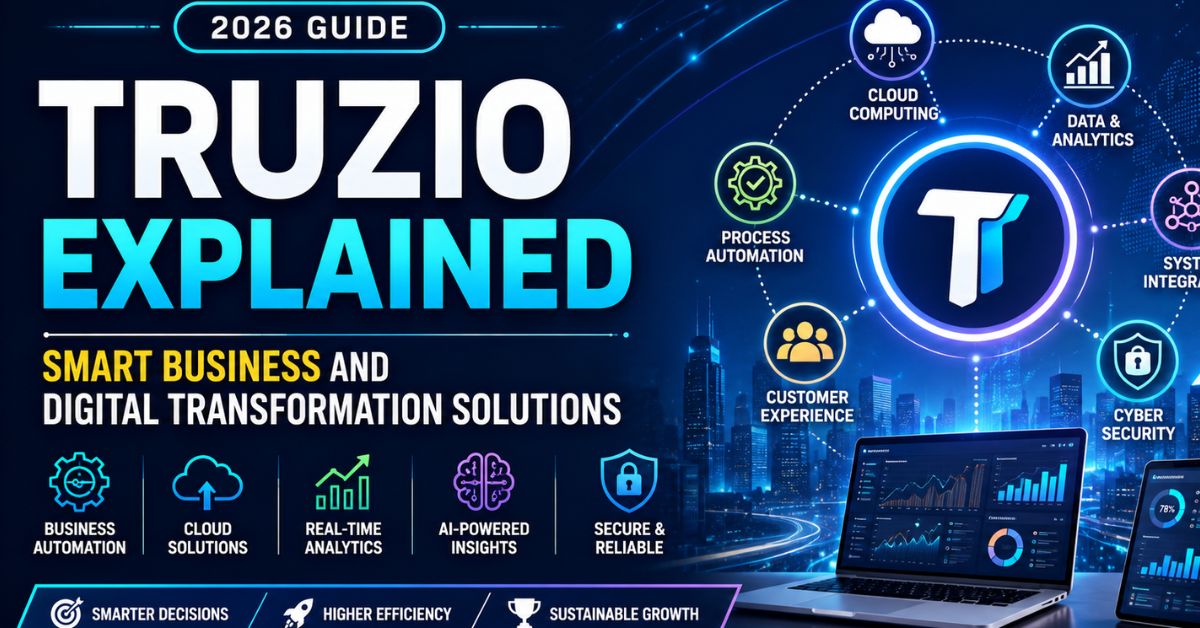
Truzio explained simply: it’s a digital transformation platform that pulls your data, your workflows, and your decision-making into one connected system. Instead of ten different tools that don’t talk to each other, you get one unified business platform that does.
Think of it as a control tower for your business. Every department feeds it information, and it feeds intelligence back out. That’s the whole point of an intelligent business platform less switching between tabs, more actual work getting done.
Understanding the Truzio Platform
At its core, Truzio is software that connects. It links your ERP systems, your CRM platforms, your spreadsheets, and your customer data into one place. You stop hunting for information. It comes to you.
Truzio as a Unified Digital Transformation Solution
Most companies don’t have one big tech problem. They have twenty small ones, scattered across different tools. A unified transformation platform like Truzio treats that scatter as the actual problem to solve, not the individual tools.
Core Purpose of Truzio Explained
The mission is short. Unify your business operations. Automate the boring, repetitive stuff. Turn raw numbers into decisions you can actually act on. That’s business process automation and business intelligence working side by side.
What Truzio Is Not
Let’s clear up confusion here. Truzio isn’t just a CRM. It isn’t just a dashboard. It isn’t just another analytics app bolted onto your stack. It’s a multi-layer enterprise software system that connects all of those things at once.
Why Truzio Matters for Digital Transformation in 2026

Here’s the honest truth: 2026 doesn’t reward slow companies. Customers expect answers now, not next Tuesday. That pressure is exactly why enterprise digital transformation has moved from “nice to have” to “table stakes” for almost every industry.
Markets move fast, data piles up faster, and manual processes simply can’t keep pace anymore. A solid digital transformation strategy isn’t optional anymore, it’s survival. Below are the four forces driving that shift.
Rising Customer Expectations
People expect fast replies and personal touches. A slow, generic experience pushes them straight to a competitor.
Competitive Pressure Across Industries
Products change in months now, not years. Standing still means falling behind, quietly and quickly.
Data as a Strategic Business Asset
Data used to sit in the background. Now it drives strategy. Truzio Explained Companies that treat it as an asset outperform those that treat it as clutter.
The Need for Real-Time Decision-Making
Monthly reports feel ancient now. Leaders want live numbers, not a summary from three weeks ago.
How Truzio Works: Architecture Explained
Under the hood, Truzio runs on a layered enterprise architecture. Each layer has one job, and together they form a connected enterprise rather than a pile of separate apps.
| Layer | Function | Business Impact |
| Data Layer | Collects and organizes information | A single source of truth |
| Process Layer | Runs workflow automation | Faster, cleaner operations |
| Intelligence Layer | Applies machine learning algorithms | Smarter, faster decisions |
| Integration Layer | Connects outside systems | A truly unified business platform |
This layered design is what separates a real cloud-native platform from a simple dashboard with a nice logo.
Layered Platform Architecture
Four layers, one flow. Data comes in, gets processed, gets analyzed, and connects back out to every tool you already use.
Data Layer: The Digital Foundation
This layer pulls from ERP systems, CRM platforms, IoT devices, and internal databases. It removes duplicates and builds that single source of truth everyone keeps talking about.
Process Layer: Intelligent Automation Truzio Explained Engine
Here’s where the automation engine lives. Say a customer places an order. The system updates inventory and triggers delivery, all on its own. That’s intelligent automation doing the heavy lifting.
Read More: Adswynk Com: Complete Guide to Features, Pricing, Benefits & How It Works (2026)
Intelligence Layer: AI-Powered Decision Support
This layer uses predictive analytics and artificial intelligence to spot risk, predict behavior, and suggest next steps. It’s less “here’s a chart” and more “here’s what to do about it.”
Integration Layer: Unified System Connectivity
API integration ties external systems together here. No data silos, no manual copy-pasting between platforms. Just connected systems working as one.
Core Features and Capabilities of Truzio
Every capability in Truzio exists to solve one problem: too many disconnected tools doing too little on their own. Business process automation, live dashboards, and enterprise integration all point back to that same goal.
The features below work together, not in isolation. That’s the difference between a smart business solutions platform and a folder full of separate apps.
Business Process Automation
Manual tasks shrink fast once process automation takes over. Invoicing, onboarding, and inventory updates run without someone clicking through five screens.
Real-Time Analytics and Reporting
Live dashboards track sales, efficiency, and engagement as it happens. Real-time analytics replace the old wait-for-Monday reporting cycle.
Cloud-Based Scalability
Cloud scalability means you grow without a forklift upgrade. Truzio Explained Traffic spikes, seasonal demand, new locations the infrastructure just stretches to meet it.
Customer Experience Optimization
Behavior tracking feeds smarter recommendations and support. That’s customer experience optimization and customer journey optimization working hand in hand.
Enterprise Software Integration
Old systems don’t need to be ripped out. Enterprise software integration lets legacy tools and modern platforms coexist without a costly full replacement.
Technologies Powering Truzio
None of this runs on magic. It runs on a specific stack of technology, each piece doing a distinct job inside the platform. Understanding that stack helps you judge whether a digital transformation platform is solid or just marketing.
Artificial intelligence, cloud computing, IoT solutions, and cybersecurity form the backbone. Strip out any one of them, and the whole system gets weaker fast.
Artificial Intelligence (AI) and Machine Learning
Machine learning forecasts demand, optimizes workflows, and trims inefficiency out of daily operations.
Cloud Computing
Cloud infrastructure brings flexibility, remote access, Truzio Explained and lower costs than running your own servers.
Advanced Analytics
Advanced analytics and data analytics turn raw numbers into patterns you can actually act on.
Internet of Things (IoT)
IoT devices track equipment and shipments in real time, especially useful in manufacturing and logistics.
Cybersecurity Frameworks
Encryption, identity management, and threat detection keep the whole system locked down as it scales.
Business Benefits of Using Truzio
Companies don’t adopt platforms like this for the technology itself. They adopt them for the results faster work, fewer errors, and a team that isn’t drowning in manual tasks. That’s the real appeal of operational efficiency done right.
The benefits below tend to show up together, not one at a time. Better decision intelligence naturally leads to lower costs and happier customers.
Read More: Droven.io Best Tech Tools for Developers: Complete Guide (2026)
Improved Operational Efficiency
Workflows run smoother. Fewer manual steps mean fewer places for mistakes to creep in.
Faster Decision-Making
Live dashboards cut the lag between “something happened” and “we responded.”
Reduced Operating Truzio Explained Costs
Automation trims labor-heavy tasks, which frees up budget for the work that actually needs a human touch.
Enhanced Customer Experience
Faster replies and personal touches keep customers coming back instead of shopping around.
Greater Business Agility
Business agility means pivoting fast when the market shifts, instead of scrambling for months.
Industries That Benefit Most from Truzio
Not every industry needs this kind of platform equally. But a handful of them lean on it hard, because their operations involve constant data, constant change, or both.
Here’s where smart enterprise solutions tend to make the biggest difference in day-to-day operations.
Healthcare
Patient record automation, smarter scheduling, and early-warning predictive analytics for care teams.
Financial Truzio Explained Services
Fraud detection, risk analysis, and automated compliance checks running around the clock.
Retail and E-Commerce
Personalized recommendations, inventory prediction, and sharper customer segmentation.
Manufacturing
Predictive maintenance catches equipment issues before they become costly shutdowns.
Logistics and Supply Chain
Route optimization, shipment tracking, and full supply chain visibility in one view.
Real-World Truzio Use Cases
Numbers mean more with a story attached. Here’s a simplified look at how a mid-size retail business might use a platform like this treat it as an illustrative scenario rather than a verified case study.
“We went from guessing what was on the shelf to knowing it in real time.” a hypothetical retail operations lead, illustrating the kind of shift companies report after adopting connected systems.
Read More: Bobbilou05 in the Digital World: Meaning, Digital Identity & Online Influence (2026 Guide)
Small Business Digital Transformation
Small teams typically start with one painful process inventory or invoicing and automate that first before expanding further.
Mid-Sized Business Success Truzio Explained Story
A mid-size retailer struggling with stock mismatches and slow reporting could see real-time inventory replace manual updates, along with faster reporting cycles.
Enterprise Transformation Example
Larger companies usually roll this out department by department, connecting legacy ERP systems to new automation layers over time.
Key Lessons Learned
Start small, prove the value, then expand. Trying to transform everything at once tends to backfire.
Common Challenges in Digital Transformation
No platform is a magic fix. Business transformation strategy always runs into friction somewhere, Truzio Explained and pretending otherwise sets teams up for disappointment.
Knowing these challenges ahead of time is half the battle. The other half is planning around them instead of hoping they don’t happen.
Legacy Systems
Old software slows integration down and quietly builds technical debt over time.
Data Silos
Departments hoarding their own data creates blind spots for everyone else.
Employee Resistance to Change
Fear of the unfamiliar, or just a lack of training, can stall adoption fast.
Cybersecurity Risks
More connected systems mean a bigger surface for attackers to target.
Budget Constraints
Upfront costs can scare off smaller teams before they see any return.
Integration with Existing Software
Older tools don’t always play nicely with modern platforms, and that friction takes real engineering time.
Best Practices for Successful Truzio Implementation
Rolling out a platform like this well comes down to discipline, Truzio Explained not luck. Operational transformation works best when it’s staged, measured, and communicated clearly to the whole team.
The steps below aren’t glamorous. But skipping any one of them is usually where projects go sideways.
Assess Current Business Processes
Map out what’s actually happening today before changing anything.
Set Clear Business Goals
Define what success looks like in numbers, not vague hopes.
Build a Digital Transformation Roadmap
Lay out a digital roadmap with phases, owners, and timelines.
Prioritize High-Impact Processes
Fix the biggest pain points first. Don’t try to transform everything on day one.
Train Employees Early
Training up front drives adoption rates far higher than training after launch.
Measure Success with KPIs
Track process speed, cost savings, and user adoption as your core KPIs.
Truzio vs Traditional Business Software
Traditional software solves one job well. A digital business ecosystem like Truzio solves the connections between jobs which is a different, and often harder, Truzio Explained problem.
That difference matters when you’re deciding what to actually invest in this year.
Key Differences
Traditional tools work in isolation. Connected systems share data automatically, without manual exports and imports.
Advantages of an Integrated Platform
Less duplicate data entry, fewer errors, and a much clearer picture of the whole business at once.
When Traditional Software Is Still Enough
If your operation is small and simple, a single well-run tool might genuinely be all you need. Bigger platforms aren’t automatically better for every business.
Security and Governance in Truzio
Security isn’t an add-on here. It’s baked into every layer, because a unified business platform is only as trustworthy as its weakest link.
Data governance and strict access controls keep information accurate and safe as the system scales.
Data Protection and Compliance
Encryption and compliance monitoring protect sensitive records against leaks and violations.
Zero-Trust Security Architecture
Zero trust architecture assumes no user or device is automatically safe, verifying everything, every time.
Identity and Access Management
Identity and access management controls exactly who can see and touch what data.
Business Continuity and Disaster Recovery
Backup systems and disaster recovery plans keep operations running even when something breaks.
Is Truzio Right for Your Organization?
Not every business needs this. That’s an honest, important point, not a sales pitch dodge.
Ask yourself a few plain questions before committing any budget to it.
Questions to Ask Before Adoption
Do disconnected systems slow you down? Do you rely heavily on manual work? Do you need faster insight than you’re getting now?
Essential Features to Compare
Look closely at enterprise integration, automation depth, and how well the analytics actually fit your industry.
Budget and Scalability Considerations
Smaller businesses should weigh cost against complexity carefully before jumping in.
Implementation and Long-Term Support
Ask about ongoing support, not just the initial setup. That’s often where the real cost lives.
Limitations of Truzio
Even strong platforms have limits. Being upfront about them builds more trust than pretending they don’t exist.
Implementation Complexity
Setup can take real time and real expertise, especially for larger organizations.
Organizational Readiness
A team that isn’t ready culturally will struggle regardless of how good the software is.
Ongoing Maintenance Requirements
These platforms need continuous tuning, not a one-time install and forget.
Vendor Dependency
Leaning on one vendor for your core operations carries its own risk, worth weighing honestly.
Digital Transformation Trends Shaping 2026
The landscape keeps shifting. These trends shape where platforms like Truzio are headed next, and they’re worth watching regardless of what you adopt.
Hyperautomation and generative AI are leading the charge, but they’re far from the only forces at play.
Generative AI in Business Truzio Explained
Generative AI now drafts content, summarizes data, and speeds up decisions across departments.
Hyperautomation
Combining AI, RPA, and analytics creates automation that spans entire workflows, not just single tasks.
Low-Code and No-Code Platforms
Low-code development and no-code platforms let teams build tools fast, without deep engineering skills.
Intelligent Process Mining
Intelligent process mining maps out exactly where bottlenecks hide inside daily operations.
AI-Powered Customer Support
Smart chat and support tools now handle far more without a human stepping in.
Edge Computing
Edge computing processes data closer to where it’s created, cutting delay for time-sensitive tasks.
Real-Time Data Ecosystems
A true real-time data ecosystem replaces the old monthly-report cycle entirely.
The Future of Truzio Beyond 2026
Where does this go next? The direction is fairly clear, even if the exact timeline isn’t.
Expect platforms to shift from “helpful tool” to genuine decision partner over the next few years.
AI-First Business Operations
AI moves from supporting decisions to actively running parts of the business.
Autonomous Decision Support
Autonomous decision support systems act on patterns without waiting for a human sign-off on every step.
Unified Digital Ecosystems
Every tool, in every department, connects into one seamless digital ecosystem.
Continuous Innovation Through Data
Data stops being a report and becomes a constant feedback loop driving improvement.
Frequently Asked Questions
What Is Truzio?
Truzio is a digital transformation platform that connects data, automation, and analytics into one system.
How Does Truzio Support Digital Transformation?
It automates workflows, unifies data, and delivers real-time business intelligence for faster decisions.
Is Truzio Suitable for Small Businesses?
It can be, though smaller teams should weigh cost against complexity before committing.
Which Industries Benefit Most from Truzio?
Healthcare, financial services, retail, manufacturing, and logistics tend to see the biggest gains.
How Secure Is Truzio?
Security relies on encryption, zero trust architecture, and strict identity and access management.
What Are the Main Benefits of Truzio?
Better efficiency, faster decisions, lower costs, stronger customer experience, and more business agility.
Conclusion
Truzio explained in one line: it’s what happens when scattered business tools finally start talking to each other. That shift, from fragmented systems to one connected platform, is the real story behind digital transformation in 2026.
If disconnected tools and slow decisions sound familiar, it’s worth exploring whether a platform like this fits your business. Start small, prove the value, and build from there.
