

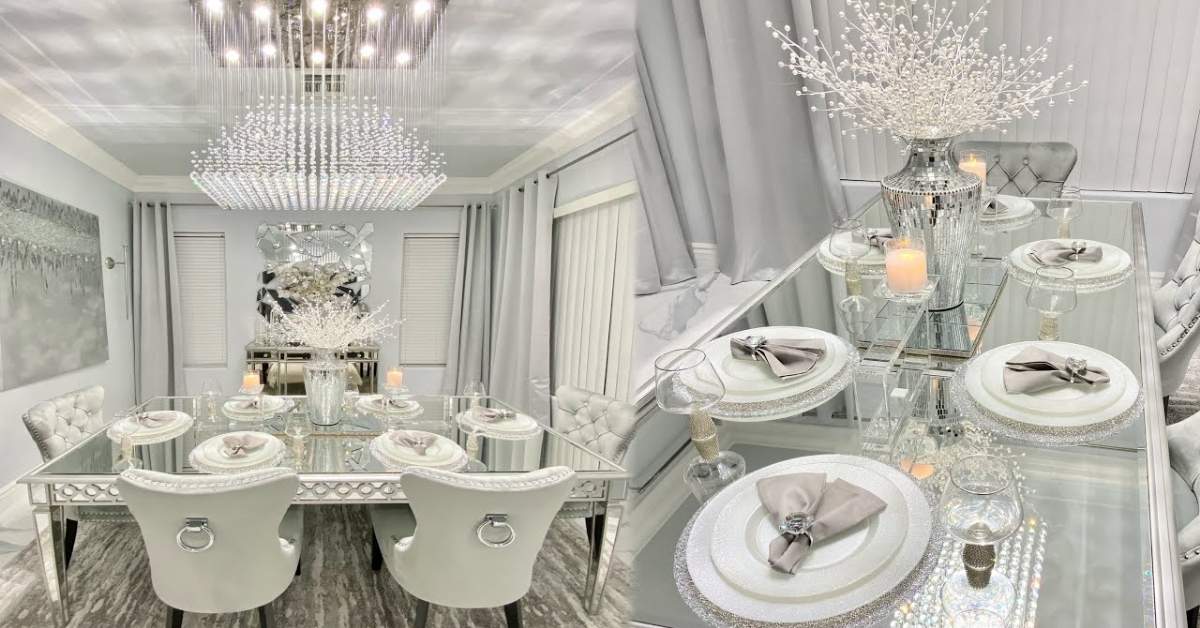
A dining room that feels pulled-together doesn’t require a renovation budget. In a lot of homes, this space ends up being the most overlooked. It gets functional furniture, a light fixture that came with the Dining Room Budget Makeover Ideas house, and nothing else. The result is a room that works fine but never really feels like anything.
The good news is that the dining room responds well to small, focused changes. Unlike a living room with its layered seating or a kitchen with its fixed layout, the dining room has one anchor point, the table and everything else can shift around it. That makes it one of the more forgiving rooms to work with on a tight budget.
If you’re working with a rented space, a hand-me-down table, or just a room that’s never quite clicked, these ideas are built around real constraints. No full furniture replacements, no contractor work, just setups that improve how the space looks, feels, and functions.
Reupholster Your Dining Chairs Instead of Replacing Them

The chair is usually what dates a dining room. The frame might be perfectly fine sturdy, the right scale but worn fabric or an outdated finish makes the whole setup feel tired. Reupholstering dining chair seats is one of the most cost-effective changes you can make, often under $15 per chair in fabric. Pull the seat pad off (usually four screws underneath), cut your fabric with a few extra inches on each side, and staple gun it taut. It takes about 20 minutes per chair once you’ve done the first one. Choosing a consistent fabric across mismatched chairs, a neutral boucle, a textured linen, or even a durable canvas visually unifies a set that wouldn’t otherwise belong together.
Swap the Light Fixture for a Statement Pendant
The original light fixture in most dining rooms is either a builder-grade flush mount or a brass chandelier from a previous decade. Neither does much for the room. Swapping it out for a pendant rattan, paper, fabric shade, or a simple cluster of bulbs immediately shifts the visual hierarchy of the space. A pendant centered low over the table (around 30–36 inches above the tabletop for standard ceiling heights) creates a defined zone and focuses the light where it actually matters. This is a one-hour DIY if you’re comfortable turning off the breaker and connecting three wires. Pendants in the $40–$90 range from most home stores can genuinely elevate the room in a way that’s hard to achieve with any other single change.
Paint an Accent Wall Behind the Table

An empty dining room wall, especially the one your chair backs face is one of the easiest canvases to work with. A single painted accent wall (even just one coat of a deeper tone) creates depth and gives the room an intentional focal point without touching the rest of the space. In my experience, this works best when the color has some warmth or saturation dusty terracotta, deep sage, charcoal, warm navy rather than a pale shade that reads too similar to the existing walls. The visual effect is contrast: the darker wall makes the table setting pop and makes the room feel more enclosed and intimate, which is actually what you want in a dining space.
Add a Low-Cost Gallery Wall Using Printable Art
Blank dining room walls are extremely common in rental spaces and recently moved-in homes. A gallery wall fills them without requiring holes in load-bearing surfaces or expensive originals. The most cohesive approach: choose a consistent frame finish (all black, all natural wood, all white), print artwork at home or through an online print shop, and stick to a connected theme botanicals, abstract line art, architectural drawings, food-related illustrations. Three to six frames in a horizontal arrangement above a sideboard or along a blank wall can take a flat room and give it real visual texture. Total cost, including frames sourced from thrift stores or discount home stores, often lands under $50.
Use a Runner Instead of a Full Tablecloth

A tablecloth can make a dining table feel formal in a way that doesn’t match how most people actually use the room. A runner hits differently; it adds texture and warmth while leaving most of the table surface visible. This works especially well if your table has a finish worth showing: a wood grain, a painted top, or even a well-worn patina that adds character. Layer the runner with a few low objects, a pair of candle holders, a small vase, a ceramic bowl and you have a styled centerpiece that takes five minutes to put together and costs almost nothing if you already have the pieces.
Hang Curtains High and Wide to Fake Bigger Windows
Most dining rooms have at least one window, and how you treat it changes the perceived size of the room significantly. Hanging curtains at ceiling height even if your window only goes to mid-wall draws the eye upward and makes the ceiling feel taller. Extending the rod six to twelve inches past the window frame on each side allows more light in when open and makes the window look wider when closed. Linen or cotton curtains in a light neutral (off-white, warm beige, soft gray) work in almost any dining room. This is one of the most reliable visual tricks in a budget makeover, and curtain panels from discount retailers often start under $20 each.
Replace Cheap Hardware on a Sideboard or Buffet

If you have a sideboard, buffet, or any storage piece in your dining room, look at its hardware. Drawer pulls and knobs are typically swapped in under ten minutes with a screwdriver, and the difference in the piece’s perceived quality is immediate. Matte black, brushed brass, and ceramic knobs are all widely available for $2–$8 per piece. Go for a finish that introduces a new material into the room if everything is warm wood, matte black pulls create a modern contrast. If the room feels cold or contemporary, brushed brass softens it slightly. It’s a small detail, but sideboards often sit in the eye line at seated height, so it’s more noticeable than you’d expect.
Use Thrifted Chairs With a Coat of Spray Paint
Spray paint is one of the most underused tools in a budget makeover. Wooden dining chairs from thrift stores or Facebook Marketplace often come in perfectly solid frames with outdated finishes: honey oak, mahogany stain, a chipped dark brown. A uniform coat of spray paint (flat, satin, or chalk paint are all good options) across four mismatched chairs creates a cohesive set that looks considered rather than assembled by accident. Two cans of spray paint cover four average chairs with one or two coats. Sand lightly between coats for a cleaner result. This is one I’d actually recommend trying first if you need more seating but aren’t ready to invest in a matched set.
Read More About : 29 Luxury Dining Room Decor Ideas That Make Every Meal Feel Like an Event
Set Up a Sideboard as a Mini Bar or Coffee Station

A sideboard without a purpose tends to become a landing zone for clutter. Giving it a specific function: a drinks station, a coffee corner, a designated serving area changes how the room feels and how you use it. Group a tray with a few bottles or a coffee maker, add a small plant or a candle, and stack a few books or linen napkins nearby. The visual result is intentional and editorial without requiring anything new. If you don’t already have a sideboard, a narrow console from a thrift store or a secondhand shop does the same job and usually costs under $60.
Introduce Texture Through a Woven Placemat Set
Texture is what separates a dining table that looks styled from one that just looks clean. Woven placemats seagrass, jute, bamboo, or cotton introduce a material contrast that ceramic plates and glass don’t provide on their own. They also serve a practical function: they protect the table surface and help define individual place settings, which makes even a casual dinner feel more deliberate. A set of four woven placemats typically runs $15–$30 and works across most table finishes. They also layer well with linen napkins, which are widely available secondhand and machine washable.
Create a Faux Built-In Look With Floating Shelves

Built-in shelving looks expensive because it implies permanence and intention. You can get a similar effect with floating shelves placed symmetrically on either side of a window, or a horizontal row along one wall at eye level. Style them with a mix of functional and decorative items: a plant, a ceramic bowl, a small framed print, a stack of cookbooks. The key is keeping negative spaces that don’t fill every inch. A shelf that’s 70% filled reads as curated. One that’s 100% filled reads as storage. For renters, damage-free mounting strips rated for the shelf weight are a practical option.
Lean a Large Mirror Against the Dining Room Wall
Mirrors in dining rooms do two things simultaneously: they bounce light and they expand the perceived footprint of the space. A large mirror leaned against the wall (rather than hung) is renter-friendly and visually softer; it looks intentional rather than like a functional necessity. Position it where it can reflect a light source, a window, a pendant, a candle arrangement and the effect compounds. Thrift stores and Facebook Marketplace regularly have oversized mirrors for under $40. The frame doesn’t need to be perfect; a coat of spray paint fixes most finishes.
Paint Your Dining Table

If your table has a bad finish, water rings, scratches, and outdated stain painting it is a legitimate option. Chalk paint adheres well to most surfaces with minimal prep and dries to a matte finish that reads as deliberately textured rather than DIY. Dark shades of forest green, deep navy, matte black, dark terracotta are especially forgiving because they hide imperfections and contrast well with lighter chairs. Seal with a water-resistant topcoat if the table sees heavy use. A painted table can shift the entire character of a dining room for the cost of one can of paint.
Hang a Single Large Piece of Art Above the Table or Sideboard
One large-scale piece of art reads differently than a gallery wall; it’s bold, quiet, and focused. The challenge is usually cost. Large prints are expensive framed, but printing a high-resolution image through an online service (many offer large poster prints for under $15) and framing it yourself closes that gap significantly. Abstract art, botanical illustrations, architectural line drawings, and black-and-white photography all work well in dining rooms because they’re visually interesting without competing with the food and table setting. Hang it centered above the sideboard at eye level, leaving 6–8 inches of space between the frame’s bottom edge and the surface below.
Use Candles to Build Layered Lighting

Most dining rooms rely on one light source, the overhead fixture and one light source creates flat, undifferentiated illumination. Candles on the table introduce a second, lower layer of warm light that changes the atmosphere entirely. The setup doesn’t need to be elaborate: two taper candles in simple holders, a pillar candle on a wooden disc, or a small cluster of tea lights in glass holders. Heights should vary slightly; it looks more natural and creates more visual interest. Honestly, this is one of the easiest changes on this list and one that makes the biggest perceptible difference when you sit down to eat.
Add a Rug Under the Dining Table
A rug grounds the dining table and signals that the space is designed rather than just furnished. The rule that matters most: the rug should be large enough that chair legs stay on it even when pulled out. For a four-person table, a 6×9 or 8×10 is typically the right range. Natural fiber rugs jute, sisal, seagrass are a practical choice for dining rooms because they’re durable, relatively easy to clean, and affordable. Flat-weave cotton rugs are another good option and often come in lower price points. Either way, the rug doesn’t need to be precious, it just needs to be large enough and consistent with the room’s tone.
Style the Table Between Meals With a Simple Centerpiece Tray

A dining table that isn’t set for a meal can look bare and purposeless. A centerpiece tray solves this without any ongoing maintenance; it creates a permanent styled zone in the center of the table that stays even when the table isn’t in use. Use a tray (wooden, rattan, or marble) to group three to five small objects: a plant, a candle, a small stack of books, a ceramic piece. The tray acts as a visual boundary and makes the grouping look intentional rather than randomly placed. When you need the table, the tray moves to the sideboard as a unit.
DIY a Limewash or Plaster Effect on One Wall
Limewash paint creates a textured, aged, organic finish that looks significantly more expensive than standard paint. The application technique brushing on with a large brush and wiping back in sections means the result is never perfectly flat, which is exactly what gives it its character. It works particularly well on the wall behind the dining table or sideboard, where you want visual texture without introducing patterns. Most limewash paints are available in the $35–$60 range for a quart that covers a standard accent wall. The technique is beginner-friendly because inconsistency is the point it’s difficult to get wrong.
Replace Your Dining Chairs With a Bench on One Side

Swapping two or more dining chairs for a bench on one side of the table does a few things at once. It opens up the floor visually on that side with no individual chair legs breaking up the space. It’s also more flexible for seating: a bench accommodates two adults or can fit two children and still leave room. Benches are often cheaper than matched chair sets and easier to find secondhand. A solid wood bench, even with a rough finish, can be sanded and stained to match or complement your table. This works especially well in narrower dining rooms where the visual simplicity of the bench helps the space breathe.
Introduce a Trailing Plant or a Cluster of Small Plants
Plants introduce organic texture in a way that decorative objects can’t replicate. They move, they grow, and they change with the light. In a dining room, they also filter air and reduce the clinical feel that can come with hard surfaces. A trailing pothos on a high shelf, a fiddle leaf in a corner, or a cluster of small succulents on the windowsill are all low-maintenance options. The visual effect depends on placement: a large floor plant in a corner adds height and softness; a trailing plant above a sideboard draws the eye upward. For rooms without strong natural light, ZZ plants and snake plants are reliable choices that don’t need much.
Frame and Display a Piece of Fabric or Textile Art

Textile art: a piece of woven fabric, a printed linen, an embroidered panel brings a warmth and dimensional texture that printed art doesn’t always achieve. Framing a piece of fabric is straightforward: stretch it over a canvas or cut it to fit a standard frame with a mat. Ethnic textiles, vintage fabric samples, and modern woven pieces are all widely available at low cost through thrift stores, fabric shops, and online marketplaces. In a dining room that’s heavy on hard surfaces (wood table, tile floor, painted walls), a textile piece on the wall introduces softness without requiring any soft furnishings.
Read More About : 21 Minimalist Dining Room Setup Ideas That Make Small Spaces Feel Intentional
Use Matching Storage Baskets Under a Sideboard or Bench
Visible storage clutter in a dining room loose placemats, extra napkins, random objects that accumulate doesn’t require a furniture solution. Two or three matching baskets tucked under a sideboard or bench keep those items accessible without putting them on display. The consistency of the basket material and color is what makes this look deliberate rather than makeshift. Natural woven baskets (seagrass, rattan, water hyacinth) work especially well in dining rooms because they complement the textures that tend to appear elsewhere: wood, linen, ceramic. A set of two matching baskets typically costs $20–$40.
Switch Out Your Dining Table Legs for a Different Base

This one’s for rooms where the tabletop is in good shape but the base is dated or damaged. Table legs are often interchangeable; most standard dining tables use a bolt pattern that can be replaced with hairpin legs, tapered wood legs, or a trestle base. Hairpin leg sets are available online starting around $60–$80 for a set of four, and the swap is a straightforward DIY. This effectively gives you a new table at a fraction of the cost. The visual shift is significant: hairpin legs open up the floor space underneath and give a traditional or boxy table a more modern, airy quality.
What Actually Makes a Budget Dining Room Makeover Work
Budget makeovers fail most often not because of cost but because of sequence. The instinct is to buy things: a new rug, a plant, some art without first fixing what’s wrong with the room’s foundation. Before anything else, identify the actual problem. Is the room dark? Start with lighting and curtains. Does it feel cluttered? Address storage and clear surfaces before adding decoration. Does it feel cold or sterile? Introduce texture through fabric and natural materials before introducing color. Spending $200 on the right two things will always outperform spending $400 across ten things that don’t address the core issue.
Scale also matters more than most budget guides acknowledge. A rug that’s too small, a mirror that’s too narrow, or art that’s too modest for the wall it’s on makes the room feel more unfinished than it would with nothing there at all. Before buying, measure. Know your wall dimensions, your table dimensions, and your ceiling height. Then buy the largest version of a given piece that your budget allows. A $30 oversized jute rug reads better than a $50 small one.
Dining Room Budget Makeover: Quick Comparison Guide
| Idea | Best For | Space Type | Problem It Solves | Approx. Cost |
| Reupholster chairs | Renters, DIYers | Any | Dated or worn seating | $10–$20/chair |
| Swap light fixture | Homeowners | Any | Poor ambiance, flat light | $40–$90 |
| Accent wall (paint) | Any | Small or mid-size | Blank, flat room | $20–$40 |
| Floating shelves | Any | Small rooms | Empty walls, no storage | $25–$60 |
| Add rug under table | Any | Open or bare rooms | Undefined space | $40–$120 |
| Large mirror (leaned) | Renters | Small or dark rooms | Low light, tight space | $30–$60 |
| Spray paint chairs | Mismatched sets | Any | Uncoordinated furniture | $10–$20 |
| Curtains hung high | Any | Rooms with small windows | Low ceilings, small windows | $20–$60 |
| Candle layering | Any | Any | Single-source harsh light | $10–$25 |
| DIY limewash wall | Homeowners | Any | Flat, boring walls | $35–$60 |
Common Dining Room Mistakes That Make the Space Feel Off
Centering a rug that’s too small.
A rug that fits only under the table and leaves chair legs hanging off the edge when pulled out visually fragments the space instead of grounding it. The chair legs need to stay on the rug even when in use.
Hanging art too high.
This is one of the most consistent errors in dining rooms. Art hung above eye level (when seated) creates disconnection between the wall and the table. For dining rooms, pieces should sit where they relate to the furniture below, not to the standing eye line.
Ignoring the sideboard surface.
An unstyled sideboard collects clutter by default. Without a defined arrangement even a simple tray, a plant, and one or two objects it reads as a dumping ground. A few minutes of intentional styling changes how the whole room reads.
Matching everything too precisely.
All-matching dining sets, table, chairs, sideboard, all in the same finish from the same collection tend to feel flat. A small contrast (different chair material, mixed metal tones in lighting and hardware) creates more visual interest than perfect coordination.
Under-lighting the space.
An overhead fixture alone doesn’t create an atmosphere. Dining rooms need at least two light sources: an overhead pendant and candles, sconces, or a floor lamp in a corner to feel warm and dimensional during evening use.
Frequently Asked Questions
What’s the most impactful budget change you can make in a dining room?
The light fixture. It’s visible from every seat and affects how the entire space feels during meals. A pendant in the $40–$90 range, centered over the table at the right drop height, makes a more noticeable difference than most furniture changes.
How can I make my dining room look more expensive without spending much?
Focus on consistency and scale. Matching frames across wall art, choosing one dominant material (wood, rattan, linen), and making sure your rug and any textiles are large enough for the room will do more than buying individual expensive pieces.
Can I do a dining room makeover in a rental without damaging walls?
Yes. The most renter-friendly changes include leaning a mirror, using damage-free mounting strips for shelves, swapping light fixtures (which can be swapped back), reupholstering existing chairs, adding a rug, and styling surfaces that don’t require permanent alterations.
What size rug works best under a dining table?
For a four-person table, a 6×9 is typically the minimum, though an 8×10 gives more visual weight. The rule: all chair legs should remain on the rug even when chairs are pulled out for seating.
Is it worth painting a secondhand dining table?
Generally, yes especially if the frame and structure are solid. Chalk paint in a matte finish works on most surfaces with light sanding and minimal prep. Sealed properly, a painted table is durable and can look genuinely current in a way that a worn original finish can’t.
How do I make a small dining room feel less cramped?
Hang curtains high and wide, use a bench on one side of the table instead of chairs, add a mirror to bounce light, and keep the centerpiece low so sightlines across the table stay open. Avoid overhead-only lighting and opt for a pendant that drops lower over the table instead.
What’s the best way to add warmth to a dining room on a budget?
Layered lighting and natural materials. Candles on the table, a woven rug, linen or cotton textiles, and a wooden or rattan element (pendant, tray, basket) collectively shift a cold or stark space into something that reads as warm without a single paint change.
Conclusion
A dining room makeover doesn’t need to happen all at once. The rooms that end up feeling most cohesive are usually built gradually, one considered change at a time, each one addressing a specific problem rather than adding for its own sake. Even fixing two or three things from this list can shift the whole character of the space.
Start with whatever bothers you most. If the lighting is flat, fix that first. If the chairs are dated, reupholster them before buying anything new. The key is working with what’s already there before layering anything on top and most of these ideas cost under $50 to try.
