

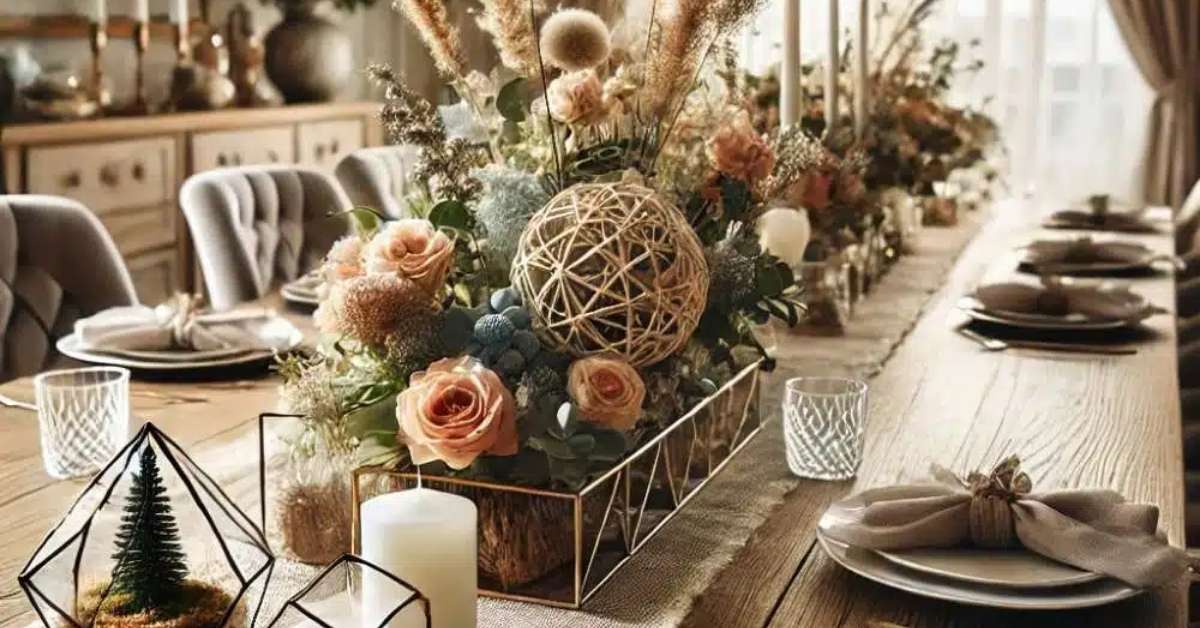
There’s a quiet tension in most dining rooms: the table is the largest piece of furniture in the space, the visual anchor, the place where everyone gathers, and yet it’s often the last thing people actually style with intention. A bare table feels unfinished. An overdone one feels stiff. And most centerpiece advice Dining Table Centerpiece Ideas online either assumes you have a farmhouse with 12 feet of table space or a design budget that doesn’t exist in real life.
If you’re working with a standard rectangular table in an apartment, a round table in a tight eat-in kitchen, or a dining space that doubles as a homework zone and weekend puzzle area this list was written for you. These are ideas that hold up in actual daily use, not just for staged photos.
The goal isn’t decoration for decoration’s sake. It’s finding arrangements that add visual weight to the table without making it feel cluttered, that survive a Tuesday night dinner without needing to be completely cleared, and that feel connected to the rest of the room’s aesthetic.
A Low Wooden Tray with Grouped Candles and a Single Trailing Plant

Start with a tray ideally wood or mango wood and treat it as the base layer of the whole arrangement. Set two or three pillar candles at slightly different heights, then tuck a small trailing pothos or ivy into a terracotta pot at one end. The tray does the heavy lifting here: it defines a boundary so the arrangement doesn’t look like random objects scattered across the table. This setup is especially practical for everyday tables because the entire centerpiece lifts off as one unit when you need full surface space. It works in natural wood-heavy spaces or earthy neutral interiors, and the plant adds organic texture without requiring constant refreshing.
A Single Large Ceramic Bowl Filled with Seasonal Fruit
One good bowl can carry a centerpiece entirely on its own; it just needs to be the right scale. A wide, shallow ceramic bowl in a matte glaze (sage, terracotta, off-white) filled with seasonal fruit does something most decorative arrangements can’t: it’s functional, it changes with the seasons, and it reads as intentional without being fussy. On a round table, this works especially well because the circular bowl mirrors the table’s geometry. In my experience, the key is overfilling it slightly. A loosely stacked mix of citrus and pears looks abundant without spilling, while a half-empty bowl looks like you forgot to go grocery shopping.
Grouped Bud Vases in Odd Numbers with Single Stem Flowers

Three vases almost always outperform five not because fewer is inherently better, but because three is the minimum number needed to create visual rhythm without tipping into clutter. Use different heights and slightly different materials (one ceramic, one glass, one earthy clay) but keep the color palette close. A single fresh stem in one vase, dried grass in another, and a dried eucalyptus branch in the third layer’s texture without requiring a full florist budget. This setup is great for renters or anyone who wants a centerpiece that can be edited quickly, pull one out, swap a stem, and the whole thing reads differently.
A Long Runner with Scattered Objects (Candles, Stones, Small Vessels)
A table runner on its own rarely makes a statement but when you use it as a foundation and layer objects along it, it anchors everything visually. Space taper candles at roughly equal intervals down the length of the runner, then set small ceramic vessels or smooth stones between them. The runner creates a line, the objects create rhythm along it, and the whole thing functions as one cohesive centerpiece rather than a collection of separate items. This setup works best on longer rectangular tables eight feet or more and in rooms where the lighting overhead is warm, since tapers interact with warm light in a way LEDs don’t replicate.
A Terrarium or Cloche with a Small Plant Arrangement

Glass cloches have a way of making any object underneath feel curated. A small air plant, a moss ball, or a few dried botanical stems under a glass dome instantly reads as considered, even if the whole thing took ten minutes to put together. The cloche also protects delicate arrangements from moving air and curious hands which makes it genuinely practical for families with young kids or pets. On a smaller round table, one medium cloche centered on a wooden slice or slate board is enough. For rectangular tables, a cloche at one end with a lower arrangement extending toward the center creates asymmetrical balance.
Sculptural Branches in a Tall, Narrow Vase
Height works differently on a dining table than in a corner of a room too tall and it blocks eye contact across the table, too short and it disappears visually. The sweet spot is around 18 to 22 inches when measured from the table surface. A single tall vase with three or four sculptural branches (twisted hazel, birch, or eucalyptus) fills vertical space without blocking sightlines if you keep the base narrow and the branches fanning outward rather than straight up. This is one I’d actually recommend trying first for people who find floral arrangements overwhelming branches are low-maintenance, long-lasting, and work in almost any aesthetic from minimal to organic modern.
Layered Candle Heights on a Mirrored or Stone Tray

This is specifically for dining rooms that lean into moody, evening-heavy aesthetics, deep wall colors, dark furniture, minimal daylight. A flat tray in black marble, smoked glass, or even a simple mirror tile creates a reflective base that amplifies candlelight across the entire table. Layer pillar candles at three distinct heights and you get a centerpiece that genuinely improves the room’s atmosphere at dinner without any other light source adjustment. The tray keeps wax drips contained, which is a real practical win. Avoid placing this one in rooms with a lot of natural daytime light; the reflective base will work against you and make it look unfinished in daylight.
A Potted Herb Garden as a Functional Centerpiece
In a kitchen dining table or a smaller eat-in space, a grouping of potted herbs is one of the more honest things you can do with a centerpiece. It looks considered, it’s functional, and it changes as the plants grow. Arrange three to five small terracotta pots on a wooden board or rectangular tray. The varying plant heights add natural variation, and the greenery keeps the space from feeling stark without requiring any floristry skill. The one constraint: the table needs to be near a window. Herbs that aren’t getting enough light drop quickly, and a dying herb arrangement is worse than no centerpiece at all.
A Stack of Art or Coffee Table Books with a Small Object on Top

Books on a dining table can veer into “trying too hard” territory if you overdo it, but one or two oversized art books stacked at one end of the table with a small ceramic object, smooth stone, or single blossom on top creates an editorial arrangement that feels deliberately casual. This works best as part of a longer centerpiece arrangement rather than as the sole element, and it’s particularly effective on elongated tables where you have visual space to play with scale. Choose books with matte or textured covers over glossy ones they photograph better and hold up to natural light without glaring.
Read More About : 24 Dining Room Decor Ideas That Make Every Meal Feel Like an Event
A Woven or Rattan Dining Table Centerpiece Ideas or Organic Objects
Texture carries more visual weight than color in most dining table arrangements and nothing adds texture faster than a woven surface. A rattan tray or flat woven basket as the base, with white or cream candles, a piece of driftwood, and a small bundle of dried seagrass creates an arrangement that reads as warm, relaxed, and intentional. This isn’t just a coastal room idea; it works in any space that leans into organic materials or earthy neutrals. The natural color palette means it doesn’t compete visually with food when the table is in use, which is an underrated quality in a centerpiece.
Floating Flowers in a Wide, Low Bowl

Floating florals are underused in dining table styling, probably because they feel temporary. But that’s actually the point: it’s a centerpiece that announces occasions without requiring a full table reset afterward. A wide, shallow bowl (ceramic or glass) filled with water and a handful of gardenias, camellias, or even large rose heads creates a soft, low-profile arrangement that doesn’t obstruct any sightlines and works on any table size. The one caveat: this is a setup for evenings or special occasions, not everyday use. Water and dining don’t mix well in high-traffic households.
An Asymmetric Arrangement Using One Main Element and Two Supporting Ones
Most centerpiece advice defaults to symmetry matching candlesticks, evenly spaced items, and a clear center point. But asymmetric arrangements often feel more alive and less staged. Place your main element (a tall vase, a statement bowl) off-center toward one end, then add two smaller supporting elements that step toward the table’s midpoint. The eye naturally moves along the arrangement rather than landing in one fixed spot. This setup is specifically useful on tables that also serve as workspaces or homework zones; the off-center arrangement clears one end of the table without making the whole thing feel empty.
Dried Botanical Bundles in Earthy Vessels

Dried botanicals have held steady as a 2026 trend specifically because they solve the problem of fresh flowers creating maintenance. Dried pampas, cotton stems, and bunny tail grass require nothing after initial arrangement and last for months without any attention. Group them in wide-mouthed vessels with a slightly rough or matte finish (clay, unglazed ceramic) rather than glass; the textures complement each other, while glass containers can make dried botanicals look sparse. In rooms with earthy tones, rattan, or warm wood, this is one of the most cohesive centerpiece options available without any ongoing effort.
A Single Sculptural Object on an Elevated Stand
Sometimes a centerpiece works best when it’s just one object, chosen carefully. A sculptural ceramic piece, an abstract form, a hand-thrown vessel, or even a large stone on a small wooden platform or riser creates a focal point that’s completely low maintenance and highly adaptable to different room styles. This works in Japandi-inspired spaces, minimal modern rooms, and contemporary interiors where the design language favors restraint. The riser matters: without it, a single object on a table can look forgotten. The elevation changes the read from “random object” to “considered display.”
A Grouping of Varying-Height Glass Candleholders

Glass candleholders work better as a group than individually, and the variety in height is what makes them interesting. Mix hurricane-style glass with simple cylinder votives and a taller tapered holder. Keep the candles themselves in a single color (all ivory, all white) so the variation comes from height and glass shape rather than color. In a dining room with warm wall tones or warm overhead lighting, the candlelight diffused through glass creates an ambient effect that no other centerpiece element replicates. This is also one of the more scalable options to add or remove holders based on table size without needing to redesign the whole arrangement.
A Seasonal Centerpiece That Changes Four Times a Year
Designing one centerpiece and accepting that it changes with the seasons is a smarter approach than constantly hunting for new ideas. Set up a base, a wooden tray, a ceramic bowl, or a stone platter and rotate the objects in it quarterly. Winter: pine cones, dried citrus slices, evergreen sprigs. Spring: small fresh branches, pastel ceramic eggs, light green stems. Summer: shells, sea glass, loose garden flowers. Fall: small gourds, dried corn husks, amber glass. The base stays the same; the objects shift. It’s efficient, it keeps the table feeling current, and it builds a cohesive identity for your dining room over time.
Brass or Gold Accents Mixed with Natural Textures

Brass works better as an accent in a centerpiece than as the dominant material: one brass candlestick, a small brass bowl, or a single gilded vessel among matte, natural textures creates warmth without pushing into maximalist territory. Pair it with linen, unglazed ceramics, or rough-cut stone to balance the reflective quality of the metal. This is particularly effective in dining rooms with warm wood furniture and pendant lighting in a brass or warm-gold finish, since it creates a cohesive material story across the whole room rather than a centerpiece that feels disconnected from its surroundings.
A Minimalist Single-Flower Arrangement by Type
When flowers are grouped by type all one variety, all one color the arrangement reads as intentional rather than improvised. This is one of the most effective strategies for people who don’t have florist experience: seven tulips, five ranunculus, or a tight bunch of anemones in a shallow bowl (stems cut short) creates a bold, graphic arrangement that looks like it took effort without requiring any. The key is cutting the stems quite short 3 to 4 inches above the bowl rim so the flowers sit low and cluster together rather than fanning out loosely.
A Lantern as an Architectural Centerpiece

A lantern is underrated as a centerpiece option because most people think of it as an outdoor or porch object. But a large lantern, especially in matte black or brushed iron, works as a strong architectural element on a dining table, especially in rooms where the design language is eclectic, bohemian, or global. Place a thick pillar candle inside and arrange a few dried branches or stones around the base. The lantern provides visual mass and height without being a floral arrangement, which makes it a good option for people who prefer decor that doesn’t require regular refreshing.
A Linear Arrangement Using Matching Vessels
Repetition is a design principle that doesn’t get applied to table centerpieces often enough. Four or five identical vessels (simple ceramic cylinders or bud vases) spaced in a straight line down the center of the table creates a cohesive, graphic arrangement that scales naturally to any table length, add vessels to extend, remove to shorten. Alternate fresh and dried stems across the vessels for variation without visual noise. This is especially useful on tables in open-plan spaces where the table can be seen from a distance and the repetition reads clearly even from across the room.
A Trailing Plant on a Riser or Plant Stand Section

Trailing plants on a riser brings something most centerpieces miss: movement. A string of pearls, creeping jenny, or trailing philodendron in a small pot elevated on a wooden block or short riser creates visual interest in two directions: the plant itself and its cascade below. This works best at the end of a longer table where the trailing effect doesn’t interfere with the dining zone. In rooms with a lot of natural light, this is one of the more living, dynamic centerpiece options available, and it improves over time as the plant grows rather than needing constant refreshing.
A Cluster of Mismatched Candlesticks
The rule here is: vary the candlestick, not the candle. Collect candlesticks in different heights, materials, and shapes (a brass column, a marble base, a ceramic taper holder), but use identical candles all ivory, all the same diameter across every single one. The unity of the candles holds the eclectic group together visually while the variety of the holders creates personality. This is a great option for thrift store styling or gradual collection building since the pieces don’t need to be a matching set. Seven or eight clustered together has more impact than two or three spaced out.
Read More About : 28 Small Space Dining Room Ideas That Actually Make the Most of What You Have
A Wooden Breadboard or Charcuterie Board as Stylized Base

A breadboard or large wooden board used as a base layer does something interesting: it blurs the line between decor and function, which is exactly what a working dining table should do. Style it with two small candleholders, a sprig of fresh rosemary or herbs, and a small pinch bowl. It reads as deliberately casual, which suits eat-in kitchens and farmhouse-adjacent dining rooms particularly well. When the board isn’t styled, it still serves a purpose which means this is one of the few centerpiece concepts that doesn’t need to be moved when the table is in full use.
A Low Moss or Fern Arrangement in a Shallow Tray
Sheet moss and small ferns arranged in a wide, flat tray (without lid) create a kind of miniature landscape that adds a strong organic, grounding element to any dining room. The arrangement sits low typically 4 to 6 inches at most which means it doesn’t interrupt sightlines across the table. In rooms with natural light within a few feet of the table, the moss stays lush. In darker rooms, opt for preserved moss (no water needed) for the same visual effect without the maintenance concern. This is particularly effective in rooms with a lot of natural wood, slate, or stone; the landscape quality of the arrangement feels intentional rather than decorative.
An Oversized Statement Bowl as a Sole Centerpiece

Sometimes the most impactful centerpiece is a single object with enough visual mass and presence to not require anything else. An oversized bowl 14 to 18 inches wide in a strong material (matte black ceramic, stone, or natural concrete) centered on a long rectangular table makes a statement through scale and restraint. The bowl can be left empty or used to hold a single large stem, a smooth stone, or a single apple. In minimal rooms and Japandi-style interiors, this is one of the cleaner solutions available, because it respects the table’s own visual weight rather than competing with it.
Candles and Florals in a Matching Color Palette
Color coordination between candles and florals is one of the more underused techniques for creating a polished, cohesive centerpiece. Choose a main tone, say, dusty mauve and use it across both elements: tapered candles in mauve ceramic holders, blush peonies, and a few dried lavender stems. The palette reads as intentional without being matchy-matchy, and it ties the centerpiece to the room’s accent color if you’ve used the same tone elsewhere (in a chair cushion, napkins, or art). This works especially well for dinner parties or gatherings where the table needs to feel dressed without going full formal.
A Sculptural Centerpiece Using Only Found or Natural Objects

Found objects: smooth river stones, pieces of bark, bleached antler, sea-worn glass, interesting branches arranged on a flat linen runner can create a centerpiece that feels completely specific to a home rather than assembled from a decor store. The rule is restraint: three to five objects maximum, chosen for variation in texture and height, arranged loosely rather than rigidly. Honestly, this is one of the setups I find most effective in texture-forward rooms because it draws from the same material language as the furniture and walls wood, stone, fiber rather than introducing something visually separate. In nature-inspired or organic modern interiors, this reads as intentional and highly personal.
What Actually Makes These Centerpiece Ideas Work
The visual success of any dining table centerpiece comes down to three variables that most styling guides don’t address directly: scale relative to the table, clearance height for conversation, and proportion of surface coverage.
Scale is the most commonly misjudged. A centerpiece that works beautifully on a 6-foot farm table will disappear on it if it’s sized for a 4-seat table, and the same piece on a 36-inch round will overwhelm the space entirely. As a working rule: the centerpiece arrangement should occupy roughly one-third of the table’s total length on rectangular tables, and no more than one-quarter of the diameter on round ones. This leaves enough visual breathing room that the table doesn’t look crowded, while still giving the centerpiece enough real estate to register.
Height matters more for dining tables than for any other furniture surface in the home, because conversation happens across it. Arrangements above 12 to 14 inches from the table surface start to interfere with sightlines between people seated across from each other. Taper candles are the exception because they’re narrow; a 20-inch taper in a slim holder doesn’t block anyone’s view. Anything with visual mass (a large floral arrangement, a wide ceramic vessel, a dense botanical grouping) should stay below that threshold. This is why the trend toward sculptural branches works better than full floral arrangements on dining tables: the branches take up vertical space while remaining visually open.
Surface coverage is the easiest calibration. The general sweet spot is 20 to 30% of the visible table surface. Enough to anchor the table visually, not so much that every meal feels like eating around an obstacle.
Dining Table Centerpiece Setup Guide
| Setup | Best Table Shape | Room Style | Maintenance Level | Problem It Solves |
| Low tray with candles + plant | Rectangular | Earthy, organic | Low | Cluttered-looking tables |
| Oversized ceramic bowl | Round | Minimal, Japandi | Very low | Empty or bare surface |
| Bud vase grouping | Any | Modern, eclectic | Low | Awkward single-object display |
| Lantern with base elements | Round, square | Boho, global | Very low | Lack of visual mass |
| Layered candles on tray | Rectangular | Moody, dark interiors | Low | Flat, unlit evening atmosphere |
| Floating florals | Square, round | Romantic, occasional use | High | Special occasions only |
| Dried botanical vessels | Rectangular | Earthy, boho, neutral | Very low | Fresh flower budget |
| Linear matching vessels | Long rectangular | Modern, minimal | Low | Empty stretch of long table |
| Seasonal rotation base | Any | Any | Seasonal only | Decor that feels dated |
| Sculptural found objects | Rectangular | Organic modern | Very low | Generic, store-bought feel |
Common Dining Table Centerpiece Mistakes That Make the Table Feel Off
Choosing height over function.
The most frequent issue in dining table styling is an arrangement that photographs beautifully but creates a wall across the table in real life. If you have to move the centerpiece to talk to the person across from you, it’s the wrong scale for daily use. Reserve tall arrangements for surfaces that aren’t used for seated dining console tables, sideboards, buffets.
Using too many competing materials.
A centerpiece with four different textures (glass, metal, linen, raw wood) and three different heights and two color families doesn’t have a visual center of gravity; it just looks like a collection of objects. Limit yourself to two primary materials and one accent, and let one element clearly lead while the others support.
Centering everything perfectly on smaller tables.
On a table under five feet long, a centered arrangement with equal visual weight on both sides can make the table feel like a showroom setup rather than a lived-in space. Slight asymmetry: one taller element to the left, two lower elements stepping to the right is more comfortable visually and in practical use.
Ignoring the overhead light.
The centerpiece and the light source above it work together. A ceiling fixture directly overhead with warm-toned bulbs will make candles, brass, and warm ceramics glow; it will flatten cool-toned glass and silver. If your overhead light is on the colder side, lean toward arrangements with reflective materials that can catch and distribute light rather than warmer matte elements that absorb it.
Refreshing without a system.
Buying seasonal flowers on impulse, getting tired of an arrangement, and replacing the whole thing without a plan leads to a revolving cycle of mismatched ideas that never quite feel connected. Designate a base element, a tray, a bowl, a runner that stays constant and only swap the objects on or around it. It makes every refresh faster and more cohesive.
FAQ’s
What is the ideal height for a dining table centerpiece?
The general guideline is to keep arrangements below 12 to 14 inches for seated dining so they don’t obstruct eye contact. Tall, narrow elements like taper candles are the exception; their slim profile doesn’t block sightlines even at 20+ inches.
How do I choose a centerpiece for a small dining table?
For small tables (4 seats or under), go with a single statement object rather than a grouped arrangement: a wide ceramic bowl, a lantern, or one tall vase. Multiple objects on a small table quickly tip into clutter. Scale matters more than concept.
Should a centerpiece match the dining room decor?
It should connect, not match exactly. Pull one material or color from the room’s existing palette if you have warm wood furniture, use a wooden tray as the base. If your walls are earthy neutrals, use ceramic in a similar tone. The centerpiece doesn’t need to coordinate perfectly, but it shouldn’t feel imported from a completely different aesthetic.
What’s the difference between everyday centerpieces and occasion centerpieces?
Everyday centerpieces are low-maintenance, easy to move aside, and functional (dried botanicals, a fruit bowl, a plant). Occasion centerpieces can be more elaborate and high-maintenance (fresh florals, floating flowers, multi-candle arrangements) but aren’t meant to live on the table permanently. Designing for both is worth the thought.
Are fresh flowers worth it for a dining table centerpiece?
Yes, but strategically. Rather than a full arranged bouquet, a single type of flower cut short and grouped in a simple bowl has more visual impact and lasts longer because the stems stay hydrated more evenly. Budget-wise, grocery store florals on Sunday and disposed of by Wednesday is a realistic cycle for most households.
How do I make a centerpiece work on a table that’s also used for work or homework?
Use a tray or board as the base. The entire arrangement lifts off as a unit, clearing the surface in under 10 seconds. This is the most practical structural decision you can make for a multi-purpose dining table.
What’s the best centerpiece for a rental apartment with a small dining table?
Bud vases in a small grouping, a single ceramic bowl with fruit, or a low tray with candles. All of these are non-permanent, require no hardware, and are easy to swap or remove without changing the room’s overall setup.
Conclusion
The dining table centerpiece doesn’t need to be complicated to be effective. What it does need is to feel like a considered decision, something that works with the table’s scale, the room’s materials, and the actual rhythm of your daily life. Even a ceramic bowl with three pieces of fruit and a single candle does that job when it’s the right bowl, the right scale, and the right placement.
Start with one idea that fits your table size and maintenance tolerance. If you’re unsure where to begin, a tray with two candles and one plant is the most flexible starting point. It works in nearly every room style, it’s easy to edit, and it gives you a base you can build on over time rather than redesigning from scratch every few months.
