

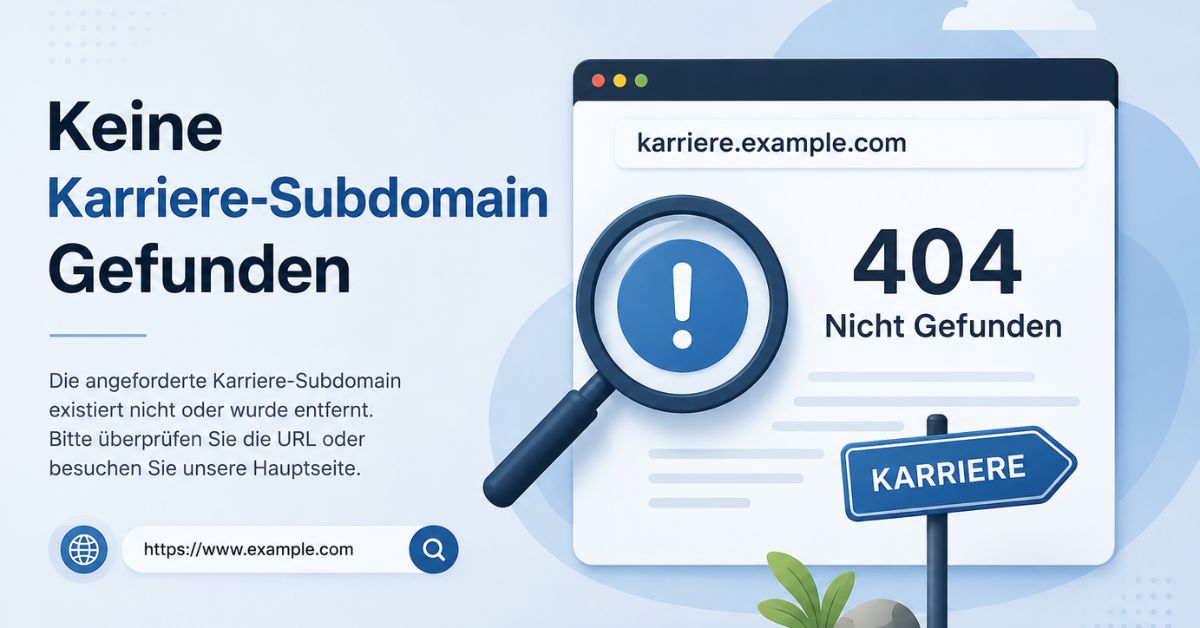
If you’ve run into the message Keine Karriere-Subdomain Gefunden, you’re not alone. This error trips up job seekers, IT teams, and HR departments every single day. The phrase looks intimidating at first glance, but it points to something fairly common: a broken or missing career subdomain. This guide walks you through everything you need to know, from what causes it to how you can fix it fast.
What Does “Keine Karriere-Subdomain Gefunden” Mean?
The German phrase Keine Karriere-Subdomain Gefunden translates directly to “no career subdomain found.” In plain English, it means a website tried to locate its dedicated careers or jobs section and came up empty. This isn’t a random glitch. It’s usually a sign that something behind the scenes, like DNS records or hosting settings, has broken down.
You’ll often see this message when clicking a job link from LinkedIn, Indeed, or a company’s main site. Instead of landing on open positions, you get an error page. It’s frustrating for applicants and costly for companies losing qualified candidates. Understanding this career subdomain error is the first step toward fixing it.
What Is a Career Subdomain?

A career subdomain is a separate section of a website built specifically for recruitment. Rather than tucking job listings under a folder like company.com/careers, many businesses create a standalone address such as careers.company.com or jobs.company.com. This setup gives HR teams more control and keeps hiring tools separate from the main site.
Think of it like a store with a dedicated entrance just for employees. The main storefront still exists, but staff use a different door entirely. This separation makes life easier for developers, recruiters, and anyone managing a high volume of applications.
How Career Subdomains Work
A career subdomain relies on DNS records that point visitors to the correct server. When you type careers.company.com into your browser, DNS translates that address into a specific server location. If those records go missing or point to the wrong place, you’ll hit the career subdomain not found error instead of the job listings you wanted.
Benefits of Using a Career Subdomain
Companies don’t create career subdomains just for fun. There’s real strategic value here. A dedicated subdomain lets HR teams manage content independently, without waiting on the marketing department for every update. It also plays nicely with Applicant Tracking System software, which often needs its own hosting environment to function properly.
| Benefit | Why It Matters |
| Independent management | HR updates job listings without touching the main site |
| ATS compatibility | Recruitment software integrates more smoothly |
| Better scalability | Handles thousands of job posts without slowing down |
| Improved security | Access controls stay separate from public pages |
| Cleaner analytics | Recruitment traffic gets tracked on its own |
These advantages explain why so many mid-size and large companies choose this career subdomain configuration over a simple folder structure.
Why Companies Use Separate Career Subdomains
Large employers often manage recruitment across multiple countries, languages, and departments. A single career subdomain can host regional hiring pages, multilingual content, and integrations with third-party job boards, all without disrupting the company’s primary website. That’s a big deal for businesses juggling hundreds of open roles at once.
There’s also a practical reason: uptime. If the main website goes down for maintenance, a separate subdomain can often stay live. This keeps job applications flowing even when other parts of the site are temporarily unavailable, which matters a lot during high-volume hiring seasons.
What Causes the “Keine Karriere-Subdomain Gefunden” Error?
Several technical issues can trigger this message, and pinpointing the exact cause makes fixing it much faster. Below, we’ll break down the most common culprits one by one.
Missing DNS Records
Every subdomain needs its own DNS entry telling browsers where to find it. When those records get deleted, either by accident or during a server migration, the subdomain effectively disappears from the internet’s map. This is one of the most frequent reasons behind a career subdomain not found error.
Incorrect Subdomain Configuration
Sometimes the subdomain exists, but it’s set up incorrectly. A single typo in a CNAME record or an outdated server pointer can send visitors nowhere. These mistakes often happen during routine updates when someone edits the wrong file.
Website Migration Issues
Migrating a website to a new host or platform is risky business for subdomains. Developers frequently forget to carry over subdomain settings, especially when they’re focused on the main domain. If nobody double-checks the careers section after migration, it can quietly break without anyone noticing right away.
Expired Hosting or Domain Problems
If the hosting plan tied to the career subdomain lapses, the whole section goes dark. This happens more often than you’d think, especially when subdomains run on separate hosting accounts that fall off someone’s renewal radar.
SSL Certificate Errors
Modern browsers demand secure, encrypted connections. If the SSL certificate covering the subdomain expires or doesn’t include that specific address, browsers will block access outright. Users see security warnings instead of job listings, which erodes trust fast.
Read More About : Best Pasticho Venezuelan Lasagna Near Me – Complete Guide (2026)
CDN or Cache Configuration Issues
Content Delivery Networks speed up websites by storing cached copies of pages. But sometimes that cache holds onto old DNS information long after it’s changed. Visitors get routed to a server that no longer exists, triggering the error even though the actual subdomain works fine.
Applicant Tracking System (ATS) Integration Failures
Many companies rely on third-party ATS platforms to power their career pages. When that integration breaks, whether from expired API credentials or a software update, the subdomain may fail to load properly. This is a common headache after switching recruitment software providers.
Who Is Affected by This Error?

This isn’t just an IT problem. It ripples out across several groups, each with different stakes in getting it fixed quickly.
Job Seekers
Applicants hit a dead end. They can’t browse openings, submit resumes, or even confirm a company is hiring. For someone job hunting under time pressure, this is more than an inconvenience.
Recruiters
Hiring campaigns stall when candidates can’t reach the application page. Recruiters lose valuable time troubleshooting instead of screening resumes and moving qualified people through the pipeline.
Human Resources Teams
HR departments often field a wave of confused emails and calls when the careers page goes down. It also delays hiring timelines, which can hurt a company during competitive hiring seasons.
Website Administrators
Developers and IT staff carry the technical burden of diagnosing and fixing the issue. Depending on the cause, this could involve DNS providers, hosting companies, and SSL vendors all at once.
SEO Professionals
Search engines don’t like broken pages. Repeated crawl failures on a career subdomain can quietly damage a site’s overall search visibility, something SEO teams need to monitor closely.
How to Diagnose the Exact Cause
Before jumping to fixes, you need to figure out exactly what’s broken. A methodical approach saves time and avoids unnecessary changes.
Check the Career Subdomain URL
Start with the basics. Look for typos, missing characters, or an incorrect protocol like http instead of https. It sounds obvious, but simple URL mistakes cause more errors than people expect.
Test the Website in Multiple Browsers
Open the subdomain in Chrome, Firefox, Safari, and Edge. If the error shows up everywhere, the problem sits on the server side rather than with your device or browser settings.
Verify DNS Records
Use a DNS lookup tool to confirm that A records and CNAME entries exist and point to the right server. This step usually reveals missing or misconfigured records within minutes.
Check SSL Certificate Status
Confirm the certificate hasn’t expired and that it actually covers the subdomain in question. Browsers are unforgiving here, blocking access the moment something looks off.
Inspect HTTP Response Codes
The specific status code your browser receives tells you a lot about what’s going wrong.
| HTTP Status | Meaning | Likely Cause |
| 200 | Working correctly | No issue |
| 301 | Redirect | Page moved to a new location |
| 403 | Forbidden | Access restriction in place |
| 404 | Not found | Page or subdomain deleted |
| 500 | Server error | Backend malfunction |
| 502 | Bad gateway | Proxy or routing failure |
| 503 | Service unavailable | Temporary outage or overload |
Review Server Logs
Server logs often contain the exact error message and timestamp, which can pinpoint precisely when things went wrong. This is especially useful after a recent migration or software update.
How to Fix “Keine Karriere-Subdomain Gefunden”
Once you’ve identified the cause, applying the right fix becomes much more straightforward. Here’s how to tackle each scenario.
Verify the Career Subdomain Exists
Double-check that the subdomain hasn’t been accidentally deleted or renamed somewhere along the way. This sounds basic, but it’s worth confirming before diving into deeper troubleshooting.
Restore Missing DNS Records
Recreate any deleted A records or CNAME entries, then give them time to propagate. Most DNS changes take effect within a few hours, though full global propagation can stretch up to 48 hours.
Reinstall or Renew SSL Certificates
Renew expired certificates and make sure they explicitly cover the career subdomain. A wildcard certificate can simplify this process for companies managing multiple subdomains at once.
Review Hosting Configuration
Confirm that virtual hosts are set up correctly and that firewall rules aren’t accidentally blocking traffic to the subdomain.
Check Reverse Proxy Settings
If your infrastructure uses a reverse proxy, verify the routing rules and host headers are configured properly. A single misconfigured rule can silently break subdomain access.
Verify ATS Connections
Reconnect any broken integrations and refresh API credentials if needed. This is especially important after switching recruitment software or renewing service contracts.
Clear CDN and Website Cache
Purge outdated cached content from your CDN so visitors stop getting routed to old, non-existent server locations.
Configure Proper Redirects
If the careers portal has permanently moved, set up a 301 redirect. This helps both users and search engines find the new destination without hitting dead ends.
Test the Website After Changes
Once you’ve made fixes, test thoroughly across browsers and devices before considering the issue resolved. Skipping this step often leads to repeat problems down the line.
How Website Redesigns Can Trigger This Error

Website redesigns are a common trigger for this exact problem. Developers focus heavily on the main site’s look and functionality, sometimes overlooking the career subdomain entirely during deployment. DNS records get dropped, redirects go missing, and nobody notices until candidates start reporting broken links.
The safest approach is to test every subdomain, not just the primary domain, before pushing a redesign live. A quick checklist run before launch can save weeks of lost applications and frustrated candidates afterward.
Why HTTPS and SSL Certificates Matter for Career Subdomains
Security isn’t optional anymore, especially for pages collecting personal information like resumes and contact details. Without a valid SSL certificate, browsers display warning messages that scare off applicants before they even reach the job listings.
Beyond user trust, search engines factor security into ranking decisions too. A properly secured career subdomain protects sensitive applicant data while also supporting better visibility in search results.
Does “Keine Karriere-Subdomain Gefunden” Affect SEO?
Yes, and the impact can extend well beyond the careers page itself. When search engines repeatedly encounter a broken subdomain, they start treating it as unreliable.
Crawlability Issues
Search engine bots need consistent access to crawl and index pages. Repeated errors make bots less likely to revisit the subdomain frequently, slowing down how quickly new job postings get indexed.
Indexing Problems
Extended downtime can cause search engines to drop previously indexed job listings altogether. This means even after you fix the error, some pages may need to be recrawled and reindexed from scratch.
Loss of Organic Traffic
Broken career pages mean lost clicks from search results. Candidates searching for open roles simply won’t find your listings if the subdomain isn’t functioning.
Impact on Employer Branding
A broken careers page sends a bad signal to job seekers about how well a company manages its digital presence. First impressions matter, and a technical error isn’t the one you want candidates walking away with.
How Long Does the Fix Usually Take?
Resolution time depends heavily on the underlying cause. Here’s a general breakdown to set expectations.
| Problem | Typical Resolution Time |
| DNS correction | Minutes to 48 hours |
| SSL renewal | Minutes to a few hours |
| Server configuration | 30 minutes to several hours |
| Migration-related fix | Several hours to a few days |
| ATS integration repair | Usually within one business day |
What Job Seekers Should Do If They See This Error
If you’re job hunting and hit this wall, don’t assume the company isn’t hiring. Try visiting the main company homepage directly and searching for a “Careers” link from there. You can also check third-party job platforms like LinkedIn or Indeed, since listings often appear there even when the company’s own subdomain is down.
If the issue persists for more than a day or two, reaching out to the company’s HR department directly is a reasonable next step. Many outages resolve within hours, so a little patience often pays off.
Best Practices to Prevent Career Subdomain Errors
Prevention beats troubleshooting every time. A few consistent habits can keep this error from happening in the first place.
Read More About : What Is Team Aelftech com? A Complete Guide to This Modern Digital Marketing Company
Monitor DNS Records Regularly
Set up periodic checks to confirm DNS records remain intact and correctly configured, especially after any infrastructure changes.
Renew SSL Certificates Before Expiration
Automate certificate renewals wherever possible. Manual renewal processes are where most expiration-related outages happen.
Test Career Pages After Website Updates
Make subdomain testing a standard part of your deployment checklist, not an afterthought.
Monitor Uptime with Website Monitoring Tools
Use automated monitoring services that alert your team the moment the career subdomain goes down, rather than waiting for candidate complaints.
Maintain ATS Integrations
Review API credentials and integration health periodically, particularly after software updates or vendor changes.
Is a Career Subdomain the Only Option?
Not at all. Some companies prefer keeping job listings under a folder on the main domain instead of a separate subdomain, and both approaches have their place depending on company size and technical resources.
Career Subdomain vs Career Folder (/careers)
| Structure | Advantages | Best For |
| careers.company.com | Independent hosting, scalable | Large enterprises with high hiring volume |
| company.com/careers | Simpler to maintain | Small to mid-size businesses |
| ATS-hosted page | Fast to deploy | Companies relying entirely on third-party software |
Real-World Example of Fixing the Error
Picture a mid-size tech company relaunching its website with a fresh design. The main domain migrates smoothly, but during the process, developers forget to carry over DNS records for careers.company.com. Within hours, candidates start reporting the Keine Karriere-Subdomain Gefunden message when clicking job links shared on social media.
The IT team investigates, traces the issue to missing DNS entries, and restores them along with a renewed SSL certificate. After clearing the CDN cache, the subdomain comes back online within a few hours. As one developer on the team put it afterward, “We tested everything except the one page candidates actually needed.” It’s a reminder that even small oversights during a redesign can carry real consequences for hiring.
Quick Troubleshooting Checklist
Before escalating to technical support, run through this quick list: confirm the URL is correct, check whether the subdomain still exists, verify DNS records, test the SSL certificate, review any redirects in place, check hosting account status, confirm ATS integration is active, clear browser cache, purge CDN cache, and test from a different device or network. Working through these steps in order often reveals the root cause without needing outside help.
Frequently Asked Questions
What does “Keine Karriere-Subdomain Gefunden” mean?
It means the website couldn’t locate its dedicated career subdomain, usually due to a DNS, hosting, or configuration issue rather than a permanent shutdown.
Is this the same as a 404 error?
Not exactly. A 404 error means a specific page is missing. This error typically means the entire subdomain is inaccessible before any individual page can even load.
Can DNS problems cause this error?
Yes, missing or incorrect DNS records are among the most common causes behind this exact message.
Does SSL affect career subdomains?
Absolutely. An expired or misconfigured SSL certificate can block browser access entirely, even if the underlying server is working fine.
Can website migrations trigger this issue?
Yes. Migrations are one of the leading causes, since subdomain settings often get overlooked during the transition to new hosting or platforms.
How long does DNS propagation take?
Most changes appear within a few hours, though full global propagation can take up to 48 hours depending on the DNS provider and cache settings involved.
Conclusion
Running into Keine Karriere-Subdomain Gefunden feels alarming at first, but it’s almost always a fixable technical hiccup rather than a permanent problem. Whether the cause is a missing DNS record, an expired SSL certificate, or a broken ATS integration, the fix usually comes down to careful diagnosis followed by targeted action. For companies, regular monitoring and thorough testing after any website changes go a long way toward preventing this error altogether. For job seekers, a little patience and a quick check of the company’s main site or third-party job boards can bridge the gap while technical teams sort things out. Either way, understanding what’s really going on behind this message turns a confusing error into a manageable, short-term hurdle.
