

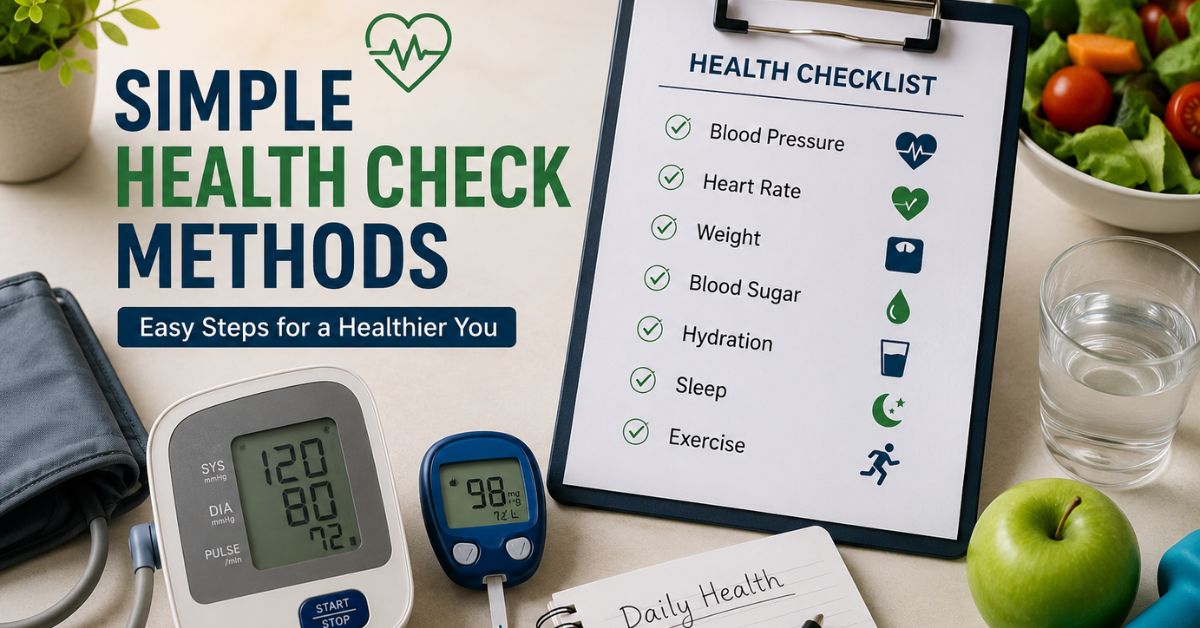
Your body talks to you every single day. It whispers before it shouts. A little more tired than usual. A headache that won’t quit. Sleep that feels lighter than it should. Simple Health Check Methods Most people miss these small signals until something bigger forces them to pay attention.
That’s where Simple Health Check Methods come in.Simple Health Check Methods You don’t need a medical degree or a home lab to catch these signals early. You just need a few reliable habits and a little consistency. This guide shows you exactly how to build home health monitoring into your daily life, using tools you can find in almost any US pharmacy or already have on your phone.
We’ll walk through vital signs monitoring, hydration, sleep, Simple Health Check Methods digestion, mood, and more. By the end, you’ll have a simple, repeatable daily health routine that takes less than ten minutes and tells you a lot about how your body is really doing.
What Are Simple Health Check Methods?
Simple Health Check Methods are easy, low-cost ways to track your own health signs at home. Simple Health Check Methods Think of them as a self health monitoring system built from everyday habits, not hospital equipment. You check your pulse. You notice your energy. You glance at your urine color. None of it takes long, and none of it requires special training.
This is different from a clinical health screening at home kit or a lab test. Simple Health Check Methods It’s more like a personal wellness check you run on yourself, the same way a car owner checks tire pressure before a long drive. You’re not diagnosing anything. You’re building health awareness, Simple Health Check Methods one small observation at a time. And once you get the habit going, these checks blend into your home wellness routine without feeling like extra work.
Why Simple Health Check Methods Matter for Your Daily Health

Most health problems don’t appear overnight. They build slowly, quietly, in the background. Your energy dips a little. Your sleep gets shallower. Your digestion feels off. These shifts often go unnoticed until they turn into something serious. That’s exactly why preventive health care starts at home, not at the doctor’s office.
Early awareness changes outcomes. Health organizations have long pointed out that catching problems early leads to better treatment results across many chronic conditions. A simple example: someone who tracks their hydration levels and notices consistently dark urine can fix the problem in a day, long before dehydration turns into headaches, dizziness, or worse. This is the heart of early health detection: small fixes now, instead of big problems later. Building this habit also supports chronic disease prevention, since many long-term conditions start with signals your body gives long before diagnosis.
Understanding Your Personal Health Baseline
Before you can spot what’s wrong, you need to know what’s normal for you. This is your health baseline, and it’s more personal than any chart online. Your baseline includes your usual resting heart rate, your typical energy levels, how well you usually sleep, your normal digestion pattern, and your usual weight range.
Track these for about seven to fourteen days without changing anything else in your routine. Write down your numbers each morning. If your energy usually sits around six out of ten, that becomes your normal. If it suddenly drops to three out of ten for several days straight, your body is sending a signal worth noticing. This kind of personal health tracking turns vague feelings like “something feels off” into something you can actually measure and compare over time.
How to Perform a Simple Health Check at Home
Now let’s get practical. Below are ten simple steps you can run through in your home wellness monitoring routine. Each one takes just a few minutes, and together they give you a surprisingly complete picture of your health.
Check Your Resting Heart Rate
Sit quietly for five minutes before you start. Place two fingers on your wrist or the side of your neck, and count the beats for thirty seconds. Multiply that number by two to get your resting heart rate. A healthy resting heart rate for most adults falls between 60 and 100 beats per minute, though athletes often sit below 60 due to stronger heart efficiency. If your number jumps well above your usual baseline for several days, it could point to stress, poor sleep, dehydration, or infection.
Measure Your Blood Pressure
Blood pressure monitoring at home is easier than ever with an affordable blood pressure monitor. Sit calmly for five minutes first. Keep your arm at heart level, and avoid caffeine right before you measure. A normal blood pressure reading sits around 120/80 mmHg for most healthy adults. Don’t panic over one high reading. Trends over days and weeks matter far more than a single number.
Monitor Your Breathing Rate
Sit still and count how many times your chest rises in sixty seconds. Simple Health Check Methods This gives you your breathing rate, also known as your respiratory rate. A healthy adult breathes about 12 to 20 times per minute at rest. Shallow or fast breathing often points to stress, anxiety, or poor posture rather than anything serious, but it’s still worth tracking over time.
Check Your Body Temperature
A digital thermometer makes this step quick and accurate. Simple Health Check Methods Check your body temperature around the same time each day for consistency, since body temperature naturally shifts throughout the day. Normal body temperature averages between 97°F and 99°F (36.1°C to 37.2°C). A slight rise can point to early infection, while a low-grade fever that won’t go away may signal inflammation somewhere in the body.
Measure Blood Oxygen Levels (If Available)
If you own a pulse oximeter, clip it onto your fingertip and wait a few seconds for a reading. This measures your oxygen saturation, which reflects how well oxygen is moving through your blood. A normal reading usually falls between 95% and 100%. Readings that drop noticeably below this range deserve a call to your doctor, especially if paired with shortness of breath.
Read More About : Why Does Ozdikenosis Kill You? The Complete Truth Behind the Viral Disease Search (2026 Guide)
Track Your Body Weight and Waist Measurement
Weigh yourself under the same conditions each time, ideally first thing in the morning. Daily body weight naturally bounces around due to water and food, so pay attention to your weekly average instead. Also measure your waist circumference at belly button level. This measurement, along with your body mass index (BMI), gives a fuller picture of metabolic health than weight alone.
Check Your Hydration Level Using Urine Color
This is one of the fastest home diagnostic tools you already own, since it needs no equipment at all. A quick glance tells you a lot about your hydration levels. We’ll cover the full urine color chart in the next section, but the short version: light yellow is good, dark yellow means drink more water.
Monitor Sleep Quality
Sleep quality isn’t just about hours in bed. Track how long it takes you to fall asleep, how often you wake during the night, and how alert you feel in the morning. If your sleep duration hits seven or eight hours but you still wake up exhausted, something deeper may be affecting your rest.
Observe Digestive Health
Pay attention to your bowel movement patterns, including frequency and consistency. The Bristol Stool Chart is a helpful reference tool used by doctors and patients alike. Types 3 and 4 on the chart are generally considered signs of healthy digestive health.
Evaluate Your Daily Energy and Mood
Each evening, rate your energy levels and mood on a scale from one to ten. This simple health tracking journal habit reveals patterns fast. A sudden dip that lasts several days is worth paying attention to, even if you can’t immediately explain why.
Monitoring Your Vital Signs at Home

Your vital signs work like dashboard lights on a car. They don’t tell you exactly what’s wrong, but they tell you something needs a closer look. Together, heart health, breathing, temperature, and oxygen levels form the foundation of any solid vital signs monitoring routine, and checking them regularly builds real physical well-being awareness over time.
The beauty of tracking these four numbers is how little they cost you.Simple Health Check Methods A thermometer, a blood pressure cuff, and your own two fingers on your wrist cover almost everything. Below is a quick reference table for the normal ranges most US adults should expect to see.
| Vital Sign | Normal Range | Tool Needed |
| Resting Heart Rate | 60–100 bpm | Fingers or heart rate monitor |
| Breathing Rate | 12–20 breaths/min | None |
| Body Temperature | 97°F–99°F | Digital thermometer |
| Blood Pressure | Around 120/80 mmHg | Blood pressure monitor |
| Oxygen Saturation | 95%–100% | Pulse oximeter |
Healthy Resting Heart Rate Ranges
Athletes often have lower resting rates thanks to stronger heart muscles, sometimes dipping into the 40s and 50s. Sedentary adults tend to sit closer to the higher end of the normal range. Either way, what matters most is your own baseline and whether it stays stable over time.
Hydration and Fluid Balance Checks
Water touches nearly every system in your body, from brain function to digestion to circulation. Most US adults need somewhere between 2 and 3 liters of water a day, depending on activity level, climate, and body size. Hydration monitoring doesn’t need to be complicated, and a few honest daily glances at your urine color will tell you almost everything you need to know.
Chronic mild dehydration is surprisingly common and often mistaken for tiredness or brain fog.Simple Health Check Methods If you notice frequent headaches in the afternoon, dry mouth, or dizziness when standing up quickly, dehydration is worth ruling out first before Simple Health Check Methods assuming something more serious is going on.
Urine Color Chart: What Each Color Means
| Urine Color | What It Means |
| Light yellow | Well hydrated |
| Pale straw | Good hydration |
| Dark yellow | Dehydrated, drink more water |
| Amber or honey | Significantly dehydrated |
| Clear | Possible overhydration |
Early Signs of Dehydration
Dark urine, headache, dry mouth, unusual fatigue, and dizziness are the classic early signs. Catching these early is a simple form of early warning signs awareness that costs nothing and takes seconds.
Body Weight and Body Measurement Tracking
Weight is one of the most obsessed-over health numbers, yet it’s also one of the most misunderstood. Your body weight shifts daily due to water retention, food volume, hormones, and even the time of day you weigh yourself. Instead of stressing over daily numbers, track your weekly average and watch that trend line over a month or two.
Waist measurement often tells a more useful story than weight alone, Simple Health Check Methods especially when it comes to metabolic and heart health risks.
Why Waist Circumference Matters
A waist circumference above 40 inches for men and 35 inches for women is linked with higher metabolic risk, according to widely used US health guidelines. This measurement, paired with your body mass index (BMI), gives doctors and individuals alike a fuller sense of health risk than the scale alone can offer.
How Often Should You Weigh Yourself?
Once a week, under the same conditions, works well for most people. Simple Health Check Methods Weighing yourself daily can create unnecessary stress over normal fluctuations that have nothing to do with real fat gain or loss.
Sleep Quality as a Daily Health Indicator
Sleep quality shapes almost everything else on this list, from your mood to your immune system to your digestion. Healthy adults generally need seven to nine hours a night, according to the American Academy of Sleep Medicine. But hours alone don’t tell the full story. Two people can both sleep eight hours, yet one wakes up refreshed while the other feels like they never slept at all.
Poor sleep duration or poor sleep depth can quietly undermine your immune health over weeks and months. This is why sleep health tracking deserves just as much attention as counting steps or checking your weight.
Signs of Healthy Sleep
Falling asleep within about twenty minutes, waking up only rarely during the night, and feeling alert within the first hour of waking are all signs your sleep is doing its job.
When Poor Sleep Signals a Health Problem
Constant exhaustion despite adequate hours, loud snoring paired with gasping, and ongoing irritability are signs worth mentioning to a doctor, since they can point toward issues like sleep apnea or other underlying conditions.
Digestive Health: What Your Body Is Telling You
Your gut reflects your internal health more than most people realize. Digestive wellness touches your energy, your mood, and even your skin. Regular, comfortable bowel movement patterns are one of the clearest daily signs that things inside are working as they should.
The Bristol Stool Chart remains one of the most useful, doctor-approved reference tools for this. It breaks stool consistency into seven types, with types 3 and 4 generally seen as the healthiest range.
Healthy Bowel Habits
Once daily or every other day is considered a normal range for most adults, alongside a stable appetite and no persistent bloating.
Warning Signs You Shouldn’t Ignore
Long-term constipation, ongoing diarrhea, visible blood, or unexplained weight loss paired with digestive changes are signs that call for a doctor’s visit, not just home tracking.
Skin, Hair, and Nails as Indicators of Overall Health
Your outside often reflects what’s happening inside. Skin health issues like ongoing dryness can point toward dehydration or nutrient gaps. Hair thinning sometimes connects to hormonal shifts or low iron. Brittle nails can hint at vitamin deficiencies. None of these signs confirm a disease on their own, but together with other symptoms, they add useful context to your overall body health indicators.
Simple Mental Health Self-Checks

Mental health shapes physical health more than most people give it credit for. A daily mental health check doesn’t need to be complicated. It can be as simple as pausing each evening to ask how your mood, focus, and motivation felt that day.
Stress Level Assessment
Constant worry, muscle tension, and trouble concentrating are common physical signs of stress. Simple stress management habits, like deep breathing or short walks, can noticeably shift these signals within days.
Mood and Emotional Well-Being
Mood tracking on a simple one-to-ten scale each evening reveals patterns fast. If low mood becomes a consistent pattern rather than an occasional dip, it’s worth talking to a professional, since ongoing mood changes deserve more support than home tracking alone can offer.
Recognizing Early Warning Signs of Illness
Your body often whispers before it shouts. Frequent headaches, unusual muscle tension, sudden appetite changes, and recurring dizziness are all classic early warning signs worth noting. Repeated afternoon headaches, for example, often point toward dehydration or screen fatigue rather than anything more serious, but they’re still worth tracking so you can catch real patterns.
Creating a Daily Home Health Monitoring Routine
Consistency beats complexity every time. A full daily health routine built around these checks takes less than ten minutes total, split naturally across your morning, afternoon, and evening.
Morning Health Check Routine
Check your pulse, drink a glass of water, and rate your energy level before starting your day.
Afternoon Health Check Routine
Notice your fatigue level, hydrate again, and take a moment to stretch if you’ve been sitting for a while.
Evening Health Check Routine
Reflect on your digestion, rate your mood, and prepare your body for a good night’s sleep.
Best Tools for Home Health Monitoring
You don’t need a full home lab. A handful of reliable home medical monitoring tools cover almost everything discussed in this guide.
| Tool | Purpose |
| Digital thermometer | Detect fever or temperature shifts |
| Blood pressure monitor | Track heart and circulatory health |
| Pulse oximeter | Measure oxygen saturation |
| Smart scale | Track weight and body composition trends |
| Health tracking apps | Log sleep, mood, and daily symptoms |
Digital Thermometer
Look for a quick-read digital option, since these give accurate readings in under a minute and work well for the whole household.
Blood Pressure Monitor
Upper-arm cuffs tend to give more accurate readings than wrist monitors, making them the better choice for consistent blood pressure monitoring.
Pulse Oximeter
A simple fingertip clip works well for most home users and gives fast, reliable oxygen saturation readings.
Smart Scale
Many modern smart scales track more than weight, including body fat percentage and muscle mass, adding depth to your personal wellness monitoring.
Health Tracking Apps
Apps built for sleep, mood, or symptom logging can turn your daily notes into visual trends, making it easier to spot patterns over weeks and months.
Read More About : Droven.io Cloud Computing Guide: Features, Benefits, Setup & Best Practices for 2026
Common Mistakes to Avoid During Home Health Checks
Panicking over a single unusual reading is one of the most common mistakes people make. Over-checking vitals throughout the day can create unnecessary anxiety rather than useful information. Ignoring long-term trends in favor of daily numbers misses the real value of tracking. And comparing your numbers to someone else’s baseline, rather than your own, often leads to false alarms. Good self-monitoring should lower your stress, not raise it.
When Home Monitoring Is Not Enough
Home health tracking is powerful, but it has real limits. It cannot diagnose disease, replace blood tests, or catch every hidden condition early. Think of it as a daily awareness system that works alongside your doctor, not instead of one.
Symptoms That Need Immediate Medical Care
Chest pain or pressure, severe shortness of breath, sudden confusion, fainting episodes, and a persistent high fever are signs that call for immediate medical attention. In the US, this means calling 911 or heading to the nearest emergency room without delay.
Benefits and Limitations of Home Health Monitoring
| Benefits | Limitations |
| Builds daily health awareness | Cannot replace lab-level accuracy |
| Saves money on unnecessary visits | May cause anxiety if overused |
| Empowers proactive health management | Cannot detect hidden internal conditions |
| Supports early health detection | No substitute for bloodwork or imaging |
Expert Tips for Making Home Health Checks More Accurate
Measure your vitals at the same time each day for consistency. Sit still for a few minutes before taking any reading. Keep a simple log instead of relying on memory. Replace or calibrate your devices regularly, since old batteries and worn-out cuffs throw off accuracy. And avoid caffeine or exercise right before checking your pulse or blood pressure, since both can temporarily skew your numbers.
Frequently Asked Questions
What are the easiest health checks to do at home?
Checking your resting heart rate, hydration through urine color, sleep quality, and daily energy levels are the simplest and most useful places to start.
Can home health checks replace regular doctor visits?
No. They support health awareness and early detection, but they cannot replace professional diagnosis or lab testing.
How often should I perform a home health check?
Daily for basic signals like pulse and hydration, and weekly for trends like weight and blood pressure.
What are the first warning signs of poor health?
Persistent fatigue, disrupted sleep, digestive changes, and sudden mood shifts are usually the earliest signs worth noticing.
Why is hydration important for overall health?
Water supports brain function, digestion, circulation, and nearly every major system in the body.
Can poor sleep affect physical health?
Yes. Poor sleep is closely tied to weakened immune health, weight regulation issues, and reduced mental focus.
Conclusion
Your health doesn’t need to be complicated to stay on track. Simple Health Check Methods give you a practical, low-cost way to build health awareness into your everyday life, one small habit at a time. With just a few minutes each day, you can track your vital signs, hydration, sleep, digestion, and mood well enough to catch problems early and respond before they grow.
The goal was never perfection. It’s a steady, quiet awareness that works in the background of your life, helping you stay in control of your healthy living guide without adding stress. Start small. Pick one or two habits from this guide today, and let the rest build naturally from there.
