

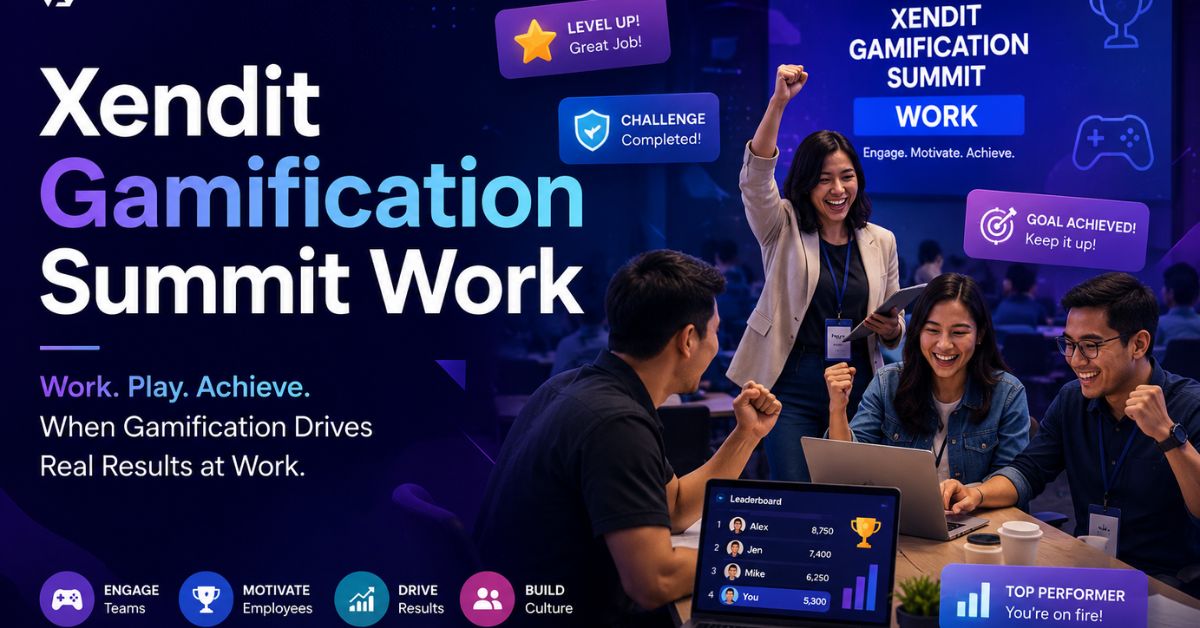
Work has changed. It changed fast. A few years ago, most people worked from the same office, at the same desk, every single day. Now teams sit scattered across cities, states, and time zones. Xendit Gamification Summit Work This shift brought freedom, yet it also brought a quiet problem: employee engagement started slipping through the cracks.
Companies noticed it first in small ways. Meetings still happened. Deadlines still got met. But something felt missing. People stopped feeling connected to their teams and their mission. Xendit Gamification Summit Work That gap pushed forward a new kind of solution, one built around workplace gamification instead of outdated reward systems. This is where Xendit Gamification Summit Work enters the picture.
Throughout this guide, you’ll learn exactly what this initiative is, how it works, Xendit Gamification Summit Work and why it’s becoming a model for employee experience design across the USA. Whether you run a five-person startup or manage a fintech giant, you’ll walk away with ideas you can actually use.
What Is Xendit Gamification Summit Work?
Xendit Gamification Summit Work is a structured engagement framework built to make daily work feel meaningful again. It isn’t about turning your job into a video game. Xendit Gamification Summit Work Instead, it blends an employee engagement platform, smart recognition tools, and real progress tracking into one connected system.
At its core, this framework runs on four things: workplace recognition, Xendit Gamification Summit Work employee participation, workforce engagement, and steady professional development. Employees don’t chase arbitrary points. They earn recognition for real contributions, teamwork, and growth. That’s what separates gamificationsummit work from the shallow “gamified” apps many companies tried and abandoned years ago.
Why Traditional Employee Engagement Programs Were Failing
For decades, businesses leaned on annual bonuses, yearly surveys, and the occasional pizza party. Those tactics worked fine when everyone shared the same building. But today’s hybrid workplace looks nothing like that. Teams talk through Slack messages and video calls instead of hallway chats, and something gets lost in translation.
That distance quietly eroded employee satisfaction. Managers saw stable output on paper, yet employee motivation kept dropping behind the scenes. Static programs simply couldn’t keep pace with a workforce spread across different homes, schedules, and screens.
| Traditional Approach | Modern Engagement Approach |
| Annual rewards | Continuous recognition |
| Employee surveys | Ongoing employee feedback |
| Individual recognition | Team-based milestone rewards |
| Static programs | Interactive engagement |
| Limited communication | Continuous workplace communication |
Business Goals Behind Xendit Gamification Summit Work
Xendit didn’t build this system just to look modern. Leadership wanted real business outcomes: stronger employee retention, better team productivity, and a healthier organizational culture. They understood that burned-out, disconnected employees rarely produce their best work, no matter how talented they are.
The goal went beyond output, too. Xendit wanted employees to feel genuine employee happiness and a sense of employee empowerment. When people feel trusted and seen, they contribute more willingly. That single insight shaped almost every design choice inside the framework, from daily activities to long-term career growth paths.
How Xendit Designed Its Workplace Gamification Framework

Building an effective workplace gamification strategy takes more than slapping badges onto a task list. Employees see through gimmicks almost instantly. So Xendit grounded its framework in engagement psychology and everyday relevance, making sure every feature tied back to real work instead of distracting from it.
The framework rewards measurable progress, not empty competition. It leans on behavioral psychology research to keep motivation steady without burning people out. Below are the five pillars that hold the entire system together.
Purpose-Driven Participation
Every activity inside the platform connects to a real business goal or personal growth milestone. Employees don’t complete tasks just to earn points. They see exactly how their effort supports the bigger picture, which builds a stronger people-first culture across the company.
Daily Missions and Smart Challenges
Small, achievable daily wins keep momentum alive. Instead of waiting months for a performance review, employees get smart challenges tailored to their role, pulled from AI-powered engagement recommendations that match their actual workload and interests.
Collaborative Team Quests
These collaborative quests push departments to solve problems together instead of competing against each other. Cross-team projects naturally build cross-functional collaboration, break down silos, and strengthen relationships that might never form otherwise.
Achievement Badges, XP, and Progress Levels
The progression system uses achievement badges and experience points to make growth visible. Employees can track their climb through recognition levels, which keeps transparent progress tracking front and center instead of hidden in a manager’s private notes.
Meaningful Rewards and Recognition
Rewards here focus on substance, not flash. The system prioritizes milestone rewards tied to teamwork, learning, and innovation, giving employees a genuine employee recognition system instead of generic gift cards nobody asked for.
| Framework Component | Primary Benefit |
| Purpose-Driven Participation | Meaningful work |
| Daily Missions and Smart Challenges | Continuous motivation |
| Collaborative Team Quests | Stronger teamwork |
| Achievement Badges, XP, Levels | Visible growth |
| Meaningful Rewards | Long-term recognition |
How Employees Participate Throughout the Gamification Summit
Participation isn’t a one-time event. It follows employees through their entire employee journey, Xendit Gamification Summit Work starting on day one and continuing well past their first year. This steady rhythm is exactly what keeps workforce engagement high over time instead of fading after a few weeks.
Xendit designed each stage to feel natural, never forced. Xendit Gamification Summit Work Employees move through onboarding, daily tasks, learning modules,Xendit Gamification Summit Work and team competitions without feeling like they’re juggling a separate “engagement app” on top of their real job.
Onboarding Experience
New hires get guided missions that introduce them to company values, tools, and teammates. This early continuous recognition builds confidence fast, helping new employees feel like contributors from their very first week instead of outsiders.
Daily Activities
Small, everyday tasks feed into the larger progression system. Xendit Gamification Summit Work Completing routine work still earns recognition, which reinforces good habits and keeps employee participation steady without requiring extra effort from anyone.
Learning Challenges
Employees unlock skill development opportunities tied directly to their career path. Xendit Gamification Summit Work These challenges support learning completion goals while quietly reinforcing a strong culture of continuous learning across every department.
Read More About : Exploring goralblue com A Growing Platform for Travel, Lifestyle & SEO Content
Team-Based Competitions
Departments occasionally compete in friendly, structured challenges. Xendit Gamification Summit Work These events strengthen workplace collaboration and give teams a shared story to rally around, something static reward programs almost never provide.
The Psychology Behind Workplace Gamification

None of this works without solid psychology behind it. Xendit built its framework on proven behavioral research instead of guesswork. Understanding why people stay motivated matters just as much as building flashy features.
The company studied how humans respond to goals, habits, and social validation. That research shaped every reward, notification, and milestone inside the platform, giving the system real staying power instead of a short-lived novelty effect.
Intrinsic vs. Extrinsic Motivation
The framework balances internal motivation, like pride and purpose, with external rewards, like badges and recognition. Relying only on external rewards burns out fast, so Xendit leans heavily toward meaningful work as the real driver.
Goal-Setting Theory
Clear, specific goals outperform vague ones every time. The platform breaks big objectives into smaller daily wins, which keeps employees focused without overwhelming them with distant, abstract targets.
Habit Formation
Consistency builds habits faster than intensity does. Short, frequent challenges train employees to check in regularly, turning employee participation into a natural routine instead of a chore.
Social Recognition and Peer Influence
People care what their coworkers think. Public recognition through seasonal leaderboards and shared achievements taps into that instinct, encouraging healthy participation without tipping into unhealthy rivalry.
Why Gamification Works Especially Well in Fintech Companies
Fintech moves fast, really fast. New regulations, security updates, and customer expectations shift constantly, and employees need to adapt quickly while still doing precise, high-stakes work. That pressure can crush employee motivation if companies don’t build in proper support.
Because fintech teams already live inside digital tools, a gamified digital employee experience fits naturally into their workflow. Xendit Gamification Summit Work doesn’t feel like another app to check. It blends into the systems employees already use every day.
| Fintech Challenge | How Gamification Helps |
| Fast-changing industry | Continuous learning support |
| Remote teams | Stronger workplace collaboration |
| Employee burnout | Better workplace wellbeing |
| Complex projects | Structured team engagement |
| High competition | Improved employee retention |
Technology Stack Behind Xendit Gamification Summit Work
Good ideas need solid technology behind them, or they fall apart fast. Xendit combined several systems into one connected experience, giving employees instant visibility into their progress instead of waiting for quarterly check-ins.
This tech stack doesn’t just track numbers. It actively shapes the experience, adjusting recommendations and recognition in real time. That’s what makes workplace technology feel genuinely useful instead of just decorative.
AI-Powered Personalization
Through AI personalization, employees receive adaptive learning paths built around their actual role and interests. No two employees see the exact same set of challenges, which keeps the experience relevant instead of generic.
Progress Tracking and Analytics
A real-time performance dashboard shows employees exactly where they stand. Engagement analytics and performance tracking give managers real data instead of guesswork when evaluating how the program performs.
Real-Time Leaderboards and Notifications
Instant updates keep momentum alive. Seasonal leaderboards and timely notifications remind employees of upcoming milestones, supporting predictive engagement before motivation has a chance to slip.
| Technology | Business Purpose |
| AI Personalization | Customized engagement |
| Real-Time Dashboard | Progress tracking |
| Engagement Analytics | Measure participation |
| Smart Recommendations | Personalized learning |
| Workplace Automation | Reduce manual work |
Step-by-Step Rollout Strategy
Launching a company-wide program overnight rarely works. Xendit understood this, so leadership avoided a rushed, all-at-once rollout. They chose a slower, deliberate path instead, Xendit Gamification Summit Work one built on testing and honest feedback.
This patient approach reduced resistance and built real trust. Xendit Gamification Summit Work Employees felt like their voices actually shaped the final product, which made the eventual company-wide launch feel earned instead of forced.
Planning the Program
Leadership mapped out clear goals before writing a single line of code. Xendit Gamification Summit Work This stage focused on aligning the program with broader leadership strategy and long-term business needs.
Designing the Experience
Designers built out challenges, rewards, and dashboards based on real employee input. Xendit Gamification Summit Work Employee feedback shaped almost every visual and functional decision during this phase.
Pilot Testing
Small test groups tried the system first, surfacing bugs and confusing features early. Xendit Gamification Summit Work This step prevented larger rollout problems down the road.
Organization-Wide Launch
Once refined, the framework expanded department by department. Xendit Gamification Summit Work Managers participated alongside their teams, reinforcing genuine leadership involvement rather than top-down mandates.
Continuous Improvement
The program never stopped evolving. Regular updates, driven by ongoing change management practices, kept the system fresh and relevant year after year.
How Xendit Gamification Summit Work Improved Employee Engagement

The results speak for themselves. Employees stopped waiting for annual recognition and started experiencing continuous recognition through everyday wins. That shift alone transformed how people felt about showing up to work each day.
Teams also grew closer. Shared goals encouraged knowledge sharing and workplace communication, which strengthened relationships across departments that rarely interacted before. The framework proved that organizational performance improves when people, not just processes, come first.
Higher Motivation
Employees reported feeling more energized about daily tasks. Visible progress created steady motivation at work instead of short bursts tied only to big projects.
Better Cross-Team Collaboration
Departments that once worked in silos started partnering more often. Cross-functional collaboration became a natural byproduct of shared quests and challenges.
Increased Learning and Skill Development
Participation in learning modules climbed noticeably. Employees pursued skill development opportunities they might have skipped under the old system.
Stronger Company Culture
Recognition became part of daily conversation, not just a yearly event. This consistency reinforced a healthier organizational culture across every level of the company.
Greater Employee Ownership
People started treating their goals as personal missions rather than assigned tasks. That mindset shift boosted employee empowerment across nearly every department.
How Workplace Gamification Helped Reduce Employee Burnout
Burnout rarely appears overnight. It creeps in slowly, usually when people feel invisible or constantly overwhelmed. Xendit tackled this head-on by prioritizing steady, achievable progress over relentless pressure.
Instead of rewarding long hours, the framework celebrated meaningful contributions. This approach supported real employee burnout prevention, strengthened workplace wellbeing, and gave people permission to pace themselves without falling behind on recognition.
Challenges Faced During Implementation
No rollout goes perfectly, and Xendit faced real pushback early on. Some employees worried that gamification felt unprofessional or unnecessary. Others questioned whether certain departments would earn more recognition simply because their work looked flashier on a dashboard.
Leadership addressed these concerns through honest conversation and steady continuous improvement. Fairness became a top priority, and the framework evolved to recognize collaboration and learning, not just raw output.
| Challenge | Solution |
| Employee skepticism | Transparent communication |
| Department fairness | Role-based recognition |
| Engagement fatigue | Personalized challenges |
| Over-competition | Collaboration-focused rewards |
Maintaining Long-Term Engagement
Novelty fades fast if a system never changes. Xendit refreshed challenges regularly to avoid the flat, stale feeling that kills most engagement programs within a year.
Balancing Competition and Collaboration
Too much rivalry damages trust between teams. The framework leaned toward collaborative workplace challenges whenever possible, keeping competition light and optional.
Avoiding Reward Fatigue
Constant rewards eventually lose their meaning. Xendit spaced out major recognition moments carefully, protecting the emotional weight behind each milestone.
Measuring Success: KPIs and Business Outcomes
Success here meant more than counting completed challenges. Leadership tracked real indicators tied to business productivity, employee satisfaction, and long-term growth, using data instead of assumptions to guide decisions.
The numbers told a clear story. Departments using the framework consistently showed stronger performance analytics and healthier retention trends compared to teams still relying on older systems.
Employee Participation Rate
Consistent daily logins and task completions showed genuine interest, not just forced compliance with a mandatory program.
Completion Rate
High completion numbers on learning modules confirmed that challenges felt achievable rather than overwhelming.
Employee Satisfaction
Regular pulse surveys revealed steady improvement in how people felt about their day-to-day work experience.
Retention and Engagement Metrics
Teams using the platform showed noticeably lower turnover, supporting Xendit’s broader employee retention goals.
Productivity Improvements
Measurable gains in output accompanied the engagement improvements, proving that happier employees often produce stronger business results.
| Success Metric | Business Impact |
| Participation Rate | Higher engagement |
| Satisfaction Scores | Better morale |
| Retention Rate | Lower turnover |
| Productivity | Stronger outcomes |
Best Practices Other Companies Can Learn from Xendit
Every organization looks different, yet several lessons from Xendit Gamification Summit Work apply almost universally. The biggest takeaway involves understanding people first and technology second.
Companies chasing only points and rankings tend to lose employee interest fast. Long-term organizational growth depends on genuine care, not flashy dashboards alone.
Keep Participation Voluntary
Forced engagement backfires quickly. Voluntary participation builds real, lasting employee empowerment instead of quiet resentment.
Reward Meaningful Behaviors
Recognition should celebrate teamwork and innovation, not just speed. Meaningful recognition programs create motivation that actually lasts.
Prioritize Collaboration Over Competition
Teams that solve problems together build trust faster than teams constantly competing against each other for the same prize.
Gather Continuous Employee Feedback
Regular check-ins help leaders catch problems early, keeping the program aligned with what employees actually want.
Read More About : Best Wireless Earbuds of 2026 Top Picks for Sound, ANC, Comfort & Value
Focus on Experience Instead of Points
Numbers matter, but the underlying workplace experience matters more. Companies that balance both tend to see stronger, longer-lasting results.
Common Workplace Gamification Mistakes to Avoid
Plenty of companies stumble here, usually by copying surface-level features without understanding the psychology underneath. Overloading employees with too many badges quickly turns exciting rewards into background noise nobody notices anymore.
Ignoring fairness across departments causes resentment fast, Xendit Gamification Summit Work especially when one team’s work naturally produces more visible wins than another’s. Skipping employee feedback loops is another common misstep, since programs built without listening rarely survive their first year.
Future Trends in Workplace Gamification
The next wave of workplace gamification will lean even harder into Xendit Gamification Summit Work personalization and automation. Companies investing in digital transformation now will likely see the biggest advantages as these tools mature over the coming years.
AI-Driven Personalized Experiences
Expect AI personalization to grow smarter, predicting employee Xendit Gamification Summit Work needs before they even show signs of disengagement.
Hybrid and Remote Team Engagement
As hybrid workforce engagement becomes permanent for many industries, platforms will keep refining tools built specifically for distributed teams.
Data-Driven Recognition Systems
Engagement analytics will guide recognition decisions more precisely, replacing guesswork with real behavioral data.
Gamified Learning and Career Development
Career growth paths will increasingly blend with gamified learning, Xendit Gamification Summit Work tying professional development directly into everyday recognition systems.
Can Small Businesses Implement a Similar Gamification Strategy?
Absolutely, and you don’t need enterprise software to pull it off. Small businesses can start with simple recognition rituals, shared team goals, and honest feedback sessions that mirror the same principles behind Xendit’s larger system.
Even a small weekly shoutout channel or informal progress tracker can spark real employee motivation. The scale changes, but the underlying psychology stays exactly the same, proving that a sustainable business success story doesn’t require a massive budget to get started.
Frequently Asked Questions
What Is Xendit Gamification Summit Work?
It’s a structured engagement framework combining recognition, learning, and collaboration into one connected employee experience, designed to replace outdated annual reward systems.
How Does Workplace Gamification Improve Employee Engagement?
It creates continuous, visible progress instead of rare, delayed recognition, Xendit Gamification Summit Work keeping motivation steady throughout the entire year rather than spiking once annually.
Why Did Xendit Focus on Collaboration Instead of Competition?
Collaboration builds trust and long-term relationships, while heavy competition often damages morale and creates unhealthy rivalry between departments.
Can Small Businesses Build a Similar Gamification Framework?
Yes, small businesses can replicate the core ideas using simple tools and honest recognition practices without needing expensive software platforms.
How Do You Measure the Success of a Workplace Gamification Program?
Track participation rates, completion rates, satisfaction scores, Xendit Gamification Summit Work retention numbers, and productivity trends to get a full, honest picture of program performance.
How Does AI Personalization Improve Employee Engagement?
It tailors challenges and recommendations to each employee’s actual role and interests, Xendit Gamification Summit Work making participation feel relevant instead of generic or forced.
Conclusion
Xendit Gamification Summit Work proves that real engagement comes from meaning, not just mechanics. Points and badges alone never sustain motivation for long. What actually works is consistent recognition,Xendit Gamification Summit Work honest feedback, and a genuine investment in employee experience management.
Companies of any size can borrow these same principles. Whether you’re running a fifty-person startup or a fintech company with thousands of employees, the lesson stays the same: Xendit Gamification Summit Work build a workplace people actually want to show up for, and everything else, productivity, retention, and culture, tends to follow naturally.
