

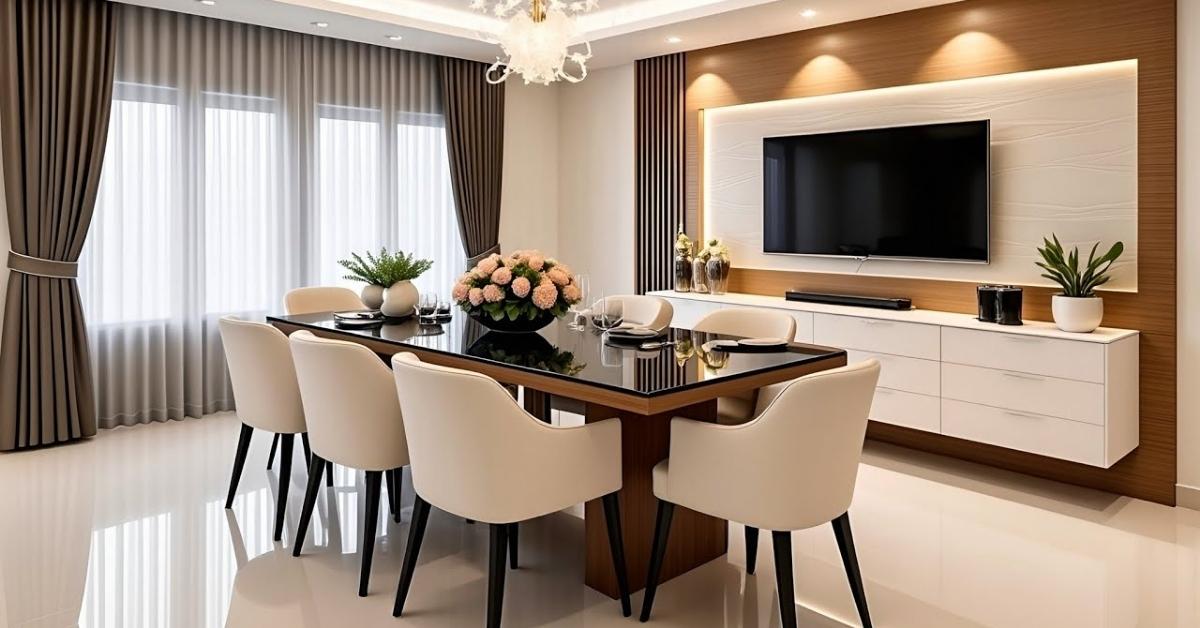
There’s something quietly frustrating about a dining room that functions fine but never really pulls you in. You set the table, the food is great and yet the space feels like an afterthought. It’s not always about money or square footage. It usually comes down to a few specific choices: lighting that’s too harsh, Dining Room Decor Ideas furniture that’s too big or too sparse, walls that are blank when they shouldn’t be, or a table surrounded by chairs that don’t feel like they belong together.
If your dining room is doing the bare minimum or if you’re starting fresh in a new apartment and want a space that actually invites people to linger, this list is built for you. These aren’t abstract “mood board” ideas. They’re setups that work in real rooms, with real constraints, and real budgets.
In 2026, dining rooms are shifting away from the formal, matching-everything approach. The direction is more layered: mix of materials, flexible lighting, and spaces that feel warm enough to stay in long after dinner.
A Round Table With Upholstered Chairs in a Small Square Room

A round table in a small or square dining room does something a rectangular one can’t: it removes the sense that the table is dominating the space. Without sharp corners claiming visual territory, the room feels more open even if nothing else changes. Pair it with upholstered chairs boucle, linen, or velvet and the setup shifts from functional to genuinely inviting.
This works best in rooms under 150 sq ft where a long rectangular table would create cramped walkways. The round shape also means everyone sits equidistant from each other, which genuinely improves how conversation flows at dinner. One pendant centered above anchors the arrangement without needing any additional lighting infrastructure.
A Long Farmhouse Table With Mixed Bench and Chair Seating
Mixing a bench on one side with individual chairs on the other solves a specific problem: fitting more people around the table without making the room feel cramped. Benches slide in and out easily, they’re stackable when not in use, and they add a visual asymmetry that keeps the room from looking too catalog-rigid.
The key is keeping the materials connected to a raw oak bench next to stained oak chairs, or a painted bench alongside wood-leg chairs in a similar tone. This setup is especially useful in long, narrow dining rooms where the table runs parallel to one wall and you need the bench side to sit flush without blocking a walkway.
Statement Pendant Lighting Centered Over the Table

Lighting is probably the most underused tool in dining room design. A single overhead statement pendant, whether it’s a cluster of exposed bulbs, a wide rattan shade, or a sculptural metal piece does two things at once: it defines the dining zone as a dedicated space, and it changes the quality of light at the table from flat to warm and directional.
The rule most people get wrong: the bottom of the pendant should hang 28–34 inches above the tabletop. Too high and it loses its intimacy. Too low and it blocks sightlines across the table. This is one I’d actually recommend investing in first, because it affects how every other element in the room reads.
A Gallery Wall Behind the Table Instead of Above It
Most people put art above the table or leave the wall blank. Putting a gallery wall on the long wall directly behind the table, the one you face when seated, creates a backdrop that makes the room feel curated without feeling formal.
The arrangement works best when the frames are all in one finish (black, brass, or natural wood) but the art inside varies: photos, prints, even small mirrors mixed in. This setup is excellent for renters because it requires no paint and can be rearranged when you move. It also solves the “bare dining room wall” problem that’s common in apartments with limited architectural detail.
A Sideboard or Buffet for Storage and Visual Balance

A sideboard along one wall adds horizontal visual weight that a dining room often needs. Without it, the eye goes straight to the table and stops there’s no visual layering. With it, the room reads as a complete space rather than a table floating in a box.
Practically, a sideboard solves real storage problems: extra dishware, table linens, serving pieces, wine. Look for one that’s lower than the table (around 32–36 inches is typical) so it doesn’t compete visually. A mirror hung above it adds depth and bounces light, especially useful in dining rooms that don’t get much natural light.
Dark Paint on One Accent Wall to Add Depth
In an otherwise neutral dining room, one dark wall charcoal, deep navy, forest green, or terracotta changes the spatial read dramatically. The wall appears to recede, making the room feel deeper. The table and chairs in front of it become more defined, almost staged.
This works especially well when the dark wall is the one opposite the entrance, so it’s the first thing you see when you walk in. It doesn’t require painting the whole room and doesn’t make the space feel smaller, it makes it feel more deliberate. For renters, peel-and-stick panels in similar tones exist, though the effect is slightly less seamless.
Layered Lighting: Pendant Plus Sconces or Candles

A single overhead light leaves no room to adjust the mood. Layering your lighting a pendant above the table, sconces on one wall, and candles at table level gives you control over how the room feels at 7pm versus 9pm. This is the difference between a room that’s lit and a room that feels considered.
The most practical version: pendant on a dimmer, plug-in sconces (no electrician needed) on either side of the sideboard or gallery wall, and a few taper candles in simple holders on the table. The result is a dining room that works for Tuesday takeout and Saturday dinner parties equally well.
Read More About : 28 Small Space Dining Room Ideas That Actually Make the Most of What You Have
A Rug Anchoring the Table That’s Larger Than You Think
The single most common dining room rug mistake: buying one that’s too small. When chairs are pulled out, they should still sit fully on the rug not hanging half-off the edge. That means you typically need a rug that’s at least 8×10 for a six-person table, or 6×9 for a four-person setup.
A rug in a dining room does more than add texture; it defines the seating zone as its own contained space within the larger room. In open-plan layouts, this is especially useful because it signals where dining ends and living begins without needing a wall to do it. Natural fiber rugs (jute, sisal, seagrass) are durable and easy to clean, which matters in a space where food is involved.
Mixing Wood Tones Instead of Matching Everything

The instinct to match all wood tones in a dining room with the same stain on the table, chairs, sideboard often produces rooms that feel static. Mixing tones (a lighter table with darker chairs, or a stained table with painted white chairs) creates contrast that makes the room feel more curated and less like it came out of a single box.
The constraint is keeping something consistent: if you’re mixing tones, anchor the room with one material that repeats a brass hardware finish, a consistent chair leg style, or a rug that ties the shades together. I’ve noticed this style tends to work best when you have at most two or three distinct wood tones rather than four or five.
Open Shelving on One Dining Room Wall
Open shelving in a dining room solves the decorating-and-storage problem at the same time. Floating shelves along one wall display your nicer dishware, glassware, or a few plants and art objects turning functional items into part of the room’s visual story.
This works especially well in smaller dining rooms where a sideboard would feel too heavy. Three or four shelves staggered vertically take up no floor space and add significant visual interest. The practical upside: things you actually use are accessible and visible, which tends to mean they get used more.
A Velvet or Boucle Upholstered Bench as a Third Seating Option

A bench at one short end of the table instead of a chair is an underrated way to add seating without the visual bulk of another piece of furniture. A velvet or boucle bench in a warm tone (camel, dusty rose, sage) also introduces texture into a room that’s often dominated by hard surfaces: wood, metal, ceramics.
This is particularly useful in rooms where you want to seat an extra person occasionally without committing to six full chairs. The bench can also double as storage if it’s the ottoman style with a lid. Position it at the end of the table closest to the wall so it doesn’t block walkways.
Hanging Plants or Trailing Vines From Ceiling Hooks
Trailing plants hung above the table bring an organic element that most dining rooms lack entirely. Pothos, strings of pearls, or trailing philodendrons in simple ceramic pots hung at varying heights add life and movement without taking up any table or floor space.
This is a good solution for rooms with high ceilings that feel cavernous. The hanging plants pull the eye downward and make the overhead space feel used rather than empty. In my experience, this works best when the pots are neutral (white, terracotta, or natural woven) so they don’t compete with everything else happening in the room.
A Vintage or Thrifted Table as the Dining Room’s Main Character

A vintage table, especially one with some wear, an unusual shape, or a finish you wouldn’t find at a chain store does something a new table can’t easily replicate: it gives the room a sense of history. Paired with more modern chairs, the contrast becomes intentional rather than mismatched.
Vintage tables are typically less expensive than new equivalents, often more solidly built, and frequently available in shapes (oval, pedestal, gate-leg) that work better in awkward rooms. The practical constraint: check the size carefully before you buy. A 60-inch oval in person is often larger than it appears in photos.
Wainscoting or Board-and-Batten on Dining Room Walls
Wainscoting or board-and-batten gives a dining room architectural detail it may otherwise lack. The lower half of the wall gets paneling either painted the same color as above for a subtle texture effect, or painted a contrasting color for a more defined look.
This is one of the more labor-involved ideas on this list, but also one of the most lasting. It solves the “bare walls look” problem without art, and adds a sense of structure that makes furniture feel intentionally placed within the room rather than just sitting in it. For a faster version, large-scale wallpaper in the lower half achieves a similar visual effect.
Mirrored Wall or Large Mirror to Visually Double the Space

A large mirror on one dining room wall, ideally the one opposite a window reflects light and the rest of the room, making the space read as significantly larger than it is. This is especially effective in square or windowless dining rooms.
The shape matters: an arched or round mirror introduces a softer silhouette in a room full of rectangular furniture. A full-length floor mirror leaned against the wall is the most flexible version with no hardware, easy to reposition, and useful for renters. The only placement to avoid is directly opposite seating, which creates an awkward reflection dynamic when people are eating.
Industrial-Style Dining Room With Metal Chairs and Exposed Materials
The industrial dining room looks like black metal chairs, raw wood table, exposed brick or concrete, Edison bulb pendants are particularly well-suited to loft apartments or any room with some existing architectural texture (exposed pipes, high ceilings, concrete floors). The key is balance: warm materials (wood, leather, warm bulbs) against the harder elements so the space doesn’t feel cold.
Practically, metal chairs are easier to clean than upholstered ones and tend to be more durable in high-use rooms. The visual weight of metal is lower than solid wood, so even though the chairs may look substantial in photos, they take up less visual space in the room.
Read More About : 21 LED Strip Lighting Ideas for a Bathroom Aesthetic That Actually Works
Botanical or Maximalist Wallpaper on One Wall

A single wallpapered wall in a dining room especially in a bold botanical print, graphic pattern, or deep jewel-toned color gives the room a focal point without requiring any art, shelving, or architectural work. The key is letting everything else recede: plain chairs, a simple table, minimal accessories.
This is an especially good solution for new builds or rental apartments where the walls are perfectly smooth and neutral but completely characterless. Peel-and-stick wallpaper has improved significantly in recent years and is now a legitimate option for renters looking for the same effect without permanent commitment.
A Console Table Behind Seating for Extra Surface Space
In a dining room where a full sideboard feels too large, a narrow console table (14–16 inches deep) along one wall provides a serving surface, display area, or bar setup without claiming much floor space. It’s practical for small rooms and visually lighter than a buffet.
Position it behind the seating so it’s accessible during meals, bottles, extra plates, candles without requiring anyone to leave the table. A console also works under a window without blocking natural light, which a taller sideboard would.
All-White Dining Room With Textural Variation

An all-white dining room isn’t as risky as it sounds, provided the textures vary enough to keep it from reading as flat. Linen chair cushions, a rough ceramic centerpiece, a jute rug, and matte painted walls in the same white family create a cohesive look that’s calm and spacious.
This setup is particularly good for small rooms or rooms with low ceilings, where adding color would compress the space. The practical requirement: invest in chairs and a rug that are either washable or easy to spot-clean, because white in a dining room is a commitment to maintenance.
Slim Dining Chairs With a Visible Back Design
The chair back is the most visible element in a dining room, especially when the chairs are pushed in. Choosing a chair with a distinctive back, a Wishbone-style curve, a vertical slat pattern, and a geometric cutout turns a functional piece of furniture into part of the room’s visual texture.
Slim chairs also have a practical benefit: they take up less floor space when the table is not in use, which matters in rooms that double as a walkthrough space between kitchen and living room. The visual effect is lighter and more open than a solid-back chair.
A Centerpiece That’s Functional, Not Just Decorative

Most dining room centerpieces are purely decorative and quietly annoying; they get moved every time there’s actual food on the table. A functional centerpiece, a wooden tray with a small plant, two taper candles, and a bowl of seasonal fruit, stays on the table because it earns its place.
The tray format is particularly useful because it groups several smaller objects into one cohesive unit, making it easy to pick up and move as a single piece rather than shifting items individually. Keep the height low (under 10 inches) so it doesn’t break sightlines across the table.
Curtains That Pool Slightly for a More Elevated Look
Floor-length curtains in a dining room hung close to the ceiling rather than directly above the window frame make the room feel taller than it is. A slight puddle at the floor (1–2 inches of extra fabric) signals intention rather than miscalculation.
Natural linen or cotton in an undyed or neutral tone works best for dining rooms because it diffuses natural light softly rather than blocking it. Sheer panels under a heavier curtain give you control: sheers for daytime privacy, the full panel for evening atmosphere. This setup transforms the window from a utilitarian element into a design feature.
A Dining Room That Doubles as a Work-From-Home Space

If your dining room sits empty for most of the day, designing it to function as a work zone without making it feel like an office is one of the more practical approaches in a small apartment. A slim console or rolling cart under one end of the table stores a laptop, cables, and papers. A basket or tray corrals the work items so they can be cleared in under a minute.
The furniture choice matters here: avoid heavy decorative tables with carved legs (they look wrong with a laptop on them) and instead go for clean-lined tables in wood or stone-look surfaces that feel neutral in both contexts.
Rattan or Wicker Chairs Mixed With a Modern Table
Rattan chairs around a modern table bring an organic softness to a room that might otherwise feel too sleek or minimal. The material contrast of woven natural fiber against a smooth wood, lacquer, or stone table surface creates visual interest without requiring any additional decoration.
Rattan dining chairs are also lighter than solid wood chairs, which makes rearranging the room easier. They work well in rooms that get good natural light, where the weave of the material catches light and casts subtle patterns across the floor.
Built-In Corner Banquette for a Small or Awkward Dining Space

A corner banquette L-shaped upholstered bench built into or placed in a corner is the most space-efficient dining setup available. It seats more people than a comparable number of individual chairs would, uses corners that are otherwise dead space, and can include storage in the bench base.
This is specifically useful for apartments or homes where the dining area is a corner of the kitchen or living room rather than its own dedicated room. A banquette with a small square table seats four comfortably in a footprint that individual chairs couldn’t. The visual effect is cozy and intentional rather than like furniture crammed into a corner.
Warm Metallic Accents Through Hardware and Accessories
Brass, bronze, or antique gold finishes tied through multiple elements: light fixture, cabinet hardware, picture frame edges, candle holders add warmth to a dining room without requiring any bold color choices. It’s a subtle shift that changes how the room reads in evening light particularly.
The constraint: pick one metallic finish and repeat it in at least three places. Mixing brass and chrome in the same room creates visual noise. Brass has become the dominant choice in current dining room design, largely because it reads warm rather than cold, and ages more gracefully than polished chrome.
Textured Plaster or Limewash Paint for Depth Without Color

Limewash or textured plaster paint gives dining room walls dimension that flat paint simply doesn’t have. The finish varies slightly across the surface, catching light differently depending on time of day which means the room looks slightly different in morning light versus candlelight. The effect is depth without committing to a color.
This is especially effective in older buildings with imperfect walls, where the variation in the limewash finish actually works with rather than against the imperfections. In 2026, this finish will appear in dining rooms of all styles, not just Mediterranean or European-influenced spaces because the warmth it adds is difficult to achieve with any other paint approach.
What Actually Makes These Dining Room Decor Ideas Work
The details vary, but what connects the strongest dining rooms is a balance of three things: light that’s dimmable and layered, furniture that fits the room’s actual proportions rather than what looks good in photos, and at least one element a rug, a wall treatment, a standout chair that signals intention.
Most dining room problems come down to scale (furniture too large or too small for the room), light (too flat or too harsh), or a lack of visual anchoring (nothing to draw the eye and define the space). Solving any one of these three will noticeably change how the room feels.
Dining Room Decor Setup Guide
| Setup | Best Room Size | Space Type | Primary Problem Solved | Budget Level |
| Round table + upholstered chairs | Under 150 sq ft | Small/square | Cramped layout, poor flow | Mid |
| Long table with bench + chairs | Medium/large | Rectangular | Limited seating capacity | Low–Mid |
| Statement pendant | Any | Any | Flat or harsh lighting | Mid |
| Gallery wall | Small–Medium | Apartment/rented | Blank, characterless walls | Low |
| Sideboard + mirror | Medium | Any | No storage, poor light | Mid |
| Dark accent wall | Any | Any | Lack of depth or focus | Low |
| Banquette | Under 120 sq ft | Corner/nook | Dead corner, tight footprint | Mid–High |
| Limewash paint | Any | Older buildings | Flat walls, no texture | Low–Mid |
| Open shelving | Small | Apartment | No storage + bare walls | Low |
| Rattan chairs + modern table | Medium | Any | Too sleek or cold feel | Mid |
Common Dining Room Decor Mistakes That Make the Space Feel Off
Hanging the pendant too high.
The bottom of any pendant over a dining table should hang 28–34 inches above the tabletop. Higher than that and it loses its connection to the table entirely it just becomes ceiling clutter.
Buying a rug that’s too small.
When chairs are pulled out for seating, all four legs should still be on the rug. If you can only afford a smaller rug, it’s better to skip it entirely than have chairs half-hanging off the edge.
Centering the table in the room instead of the room’s usable space.
If a door swings into one end of the room, or a hallway cuts through, center the table relative to the usable zone, not the room’s geometric center. This is a layout mistake that affects every meal.
Choosing chairs that are too tall for the table.
Standard dining table height is 29–30 inches. Standard chair seat height is 17–19 inches. If the table is on the shorter end and the chairs are on the taller end, seated posture becomes uncomfortable within 20 minutes.
Over-accessorizing the table.
A centerpiece that takes up more than 30% of the table surface is a practical problem, not just an aesthetic one. It limits the number of dishes that can be placed on the table during a meal.
FAQ’s
What is the most important element to get right in a dining room?
Lighting specifically, having a pendant or overhead fixture on a dimmer that sits 28–34 inches above the tabletop. This single decision affects how every other element in the room reads, and it’s the fastest way to shift the room from functional to genuinely inviting.
How do I make a small dining room feel larger?
Use a round table instead of rectangular to remove corner bulk, hang curtains from ceiling height rather than above the window, add a mirror on the wall opposite any natural light source, and choose slim-profile chairs with visible legs rather than solid-base seating.
Can I mix dining chair styles, or does everything need to match?
Mixing works well and often looks more interesting than a matching set as long as one element stays consistent. That might be the chair leg finish, the seat height, or a shared material like wood or upholstery fabric. Two to three distinct chair styles in one room is a reasonable maximum before it starts to feel chaotic rather than curated.
What size rug do I need for a dining room?
For a four-person table, an 8×10 is usually the minimum. For a six-person table, go 9×12. The rule: when chairs are pulled out, all four chair legs should still be on the rug. Measure your table and add 24–30 inches on each side to find the right rug size.
Is it better to have a sideboard or open shelving in a dining room?
It depends on the room’s size and what you’re storing. A sideboard works better when you have items you’d rather keep hidden (extra dishes, linens, cables from a speaker system) and when the room is large enough to handle a piece of furniture along one wall. Open shelving is better in smaller rooms, for people who want to display dishware or plants, and for anyone who prefers an airier visual feel.
What’s the difference between limewash and regular paint for dining room walls?
Regular flat or eggshell paint produces a uniform, one-dimensional surface. Limewash is applied in layers and creates variation in the finish. Some areas pick up more color, others stay lighter which gives the wall a sense of texture and depth that responds to changing light throughout the day. It costs more than standard paint but requires no additional materials or art to make the wall feel interesting.
How do I choose a dining room pendant light?
The fixture’s diameter (in inches) should roughly equal the table’s width plus 12. So for a 36-inch-wide table, look for a pendant in the 48-inch range. For round tables, the pendant diameter should be about half the table’s diameter. On a dimmer switch, most pendant styles work; the key is the size relationship with the table, not the specific design.
Conclusion
A dining room that works well doesn’t need to be large, expensive, or formally decorated. It needs a clear sense of scale, light that can be adjusted for different times of day, and at least one design decision that makes the room feel like it was thought through rather than assembled from whatever was available.
Start with one or two ideas that address a specific problem in your space whether that’s lighting, seating capacity, bare walls, or an awkward layout. Small changes made with intention tend to do more than a full room overhaul done quickly. Pick the one that fits your room first, and build from there.
